Published on: 2026-05-13
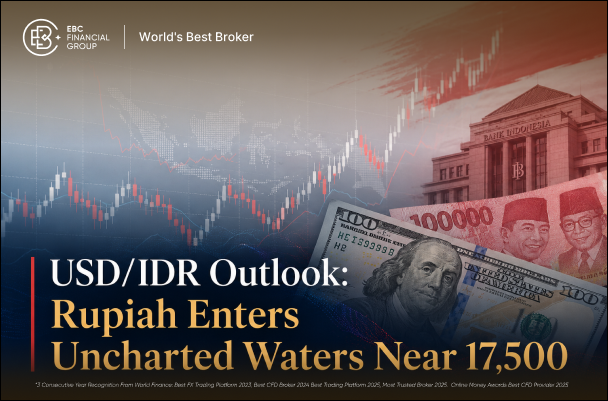
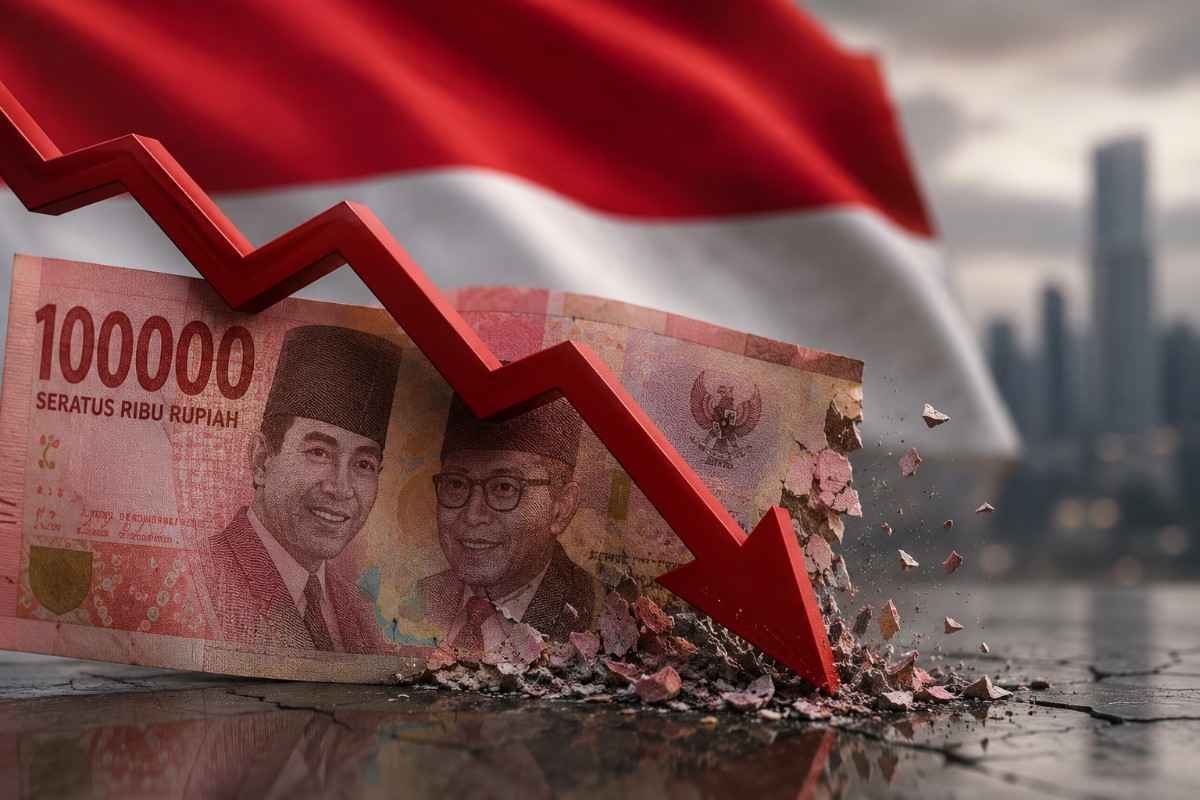
The USD/IDR outlook has entered its most fragile phase in years. The pair struck an all-time high of 17,558 in May before pulling back toward 17,500 on May 13, leaving USD/IDR just below record territory as Bank Indonesia fights to restore confidence.
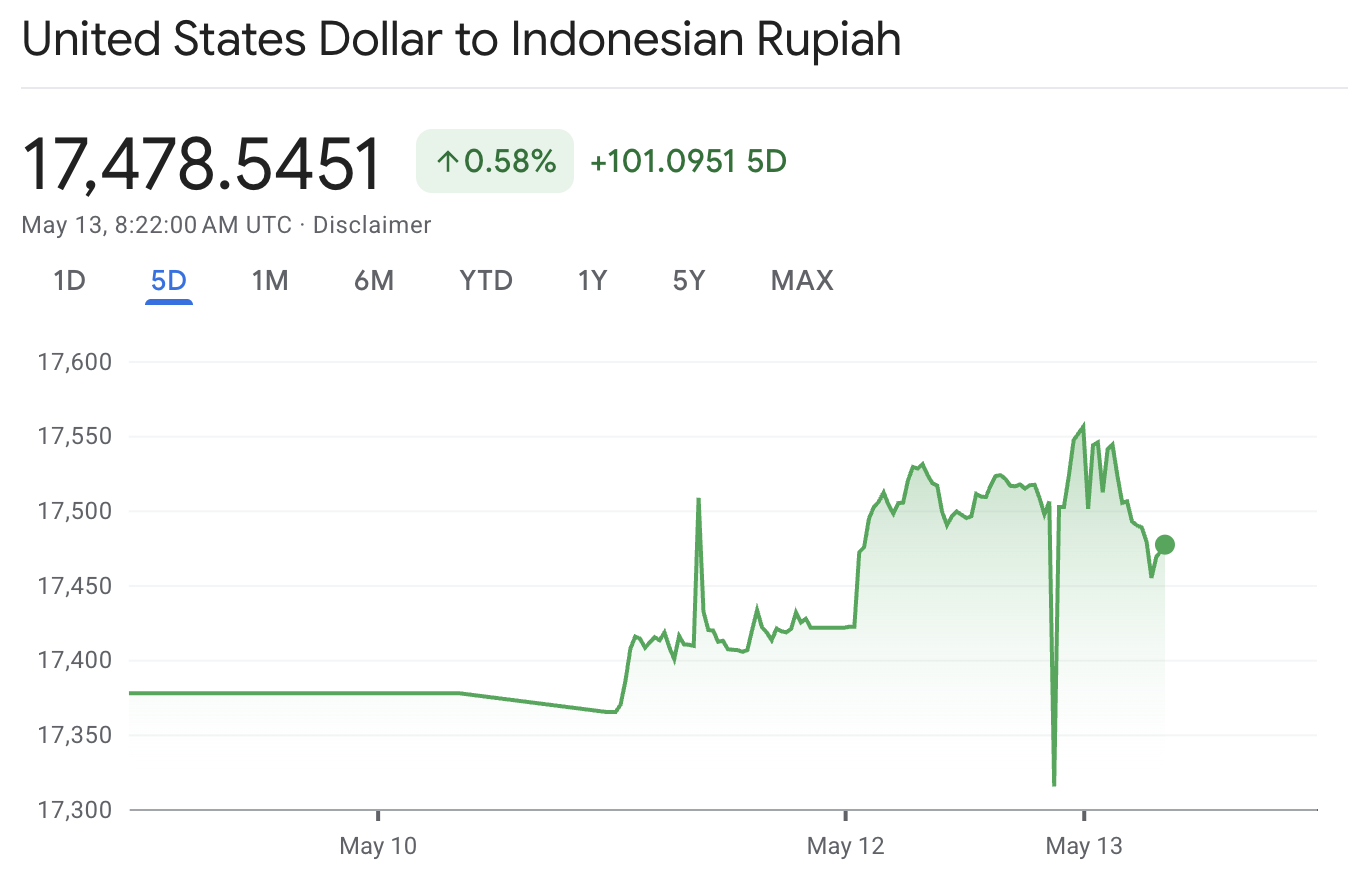
This is no longer a simple Dollar-strength trade. The Rupiah is being squeezed by seasonal Dollar demand, thin liquidity, corporate hedging flows and rising scrutiny over Indonesia’s policy credibility. Bank Indonesia is now defending more than an exchange rate.
It is defending the market’s confidence that volatility can be contained before it becomes self-reinforcing.
USD/IDR remains near record territory, with recent market data showing the pair close to the 17,558 zone before pulling back toward the high-17,400s.
Seasonal Dollar demand is intensifying, driven by Hajj-related needs, dividend repatriation and foreign debt payments.
Bank Indonesia is intervening across spot, offshore NDF and domestic DNDF markets to stabilise the Rupiah.
BI has kept its policy rate at 4.75%, with the Deposit Facility at 3.75% and Lending Facility at 5.50%.
Indonesia’s economy still has a growth cushion, with Q1 2026 GDP expanding 5.61% year on year.
Forecasts remain sharply divided, from a recovery range of 16,000–16,900 to stress-case projections above 18,000 by year-end.
The break above 17,000 changed USD/IDR’s market structure. A level that once acted as psychological resistance has become a reference point for hedgers, importers and momentum-driven traders.
That matters because currency pressure often accelerates after a long-defended level fails. Importers bring forward Dollar purchases. Corporates with external debt increase hedging. Foreign investors reduce local-currency exposure until volatility stabilises. These flows create a liquidity vacuum where price action moves faster than macro fundamentals.
Bank Indonesia’s transaction rate page showed the Dollar quoted at 17,601.57 on the sell side and 17,426.43 on the buy side on May 13, confirming how stretched the trading range has become.
BI has already moved beyond verbal support. The central bank has pledged stronger offshore intervention through NDF markets, onshore intervention through spot and DNDF markets, and secondary-market purchases of government securities. Its foreign exchange reserves stood at $146.2 billion at end-April, equivalent to 5.8 months of imports or 5.6 months of imports and government external debt servicing.
The policy challenge is delicate. A rate hike could support the Rupiah by improving the yield buffer, but it would also tighten financial conditions when the government is trying to protect growth. Keeping rates unchanged preserves domestic momentum, but it leaves BI more dependent on intervention, liquidity management and capital-flow support.
That is why USD/IDR is now a credibility trade. The market is not only asking whether BI has enough reserves. It is asking whether intervention can slow the move without signalling stress.
Indonesia’s fundamentals are not collapsing. The economy expanded 5.61% in Q1 2026, with GDP reaching IDR 6,187.2 trillion at current prices and IDR 3,447.7 trillion at constant prices.
Yet FX markets trade forward confidence, not backward GDP. Investors are watching the Prabowo administration’s fiscal direction, central bank independence and ability to maintain macro discipline while funding large spending priorities. Fitch Ratings revised Indonesia’s sovereign outlook to negative in March, citing risks around policy consistency and fiscal credibility.
That has added a policy-risk premium to the Rupiah. Strong growth may limit the downside, but it does not remove the market’s concern that fiscal expansion, higher oil prices and global Dollar strength could keep pressure on Indonesia’s external balance.
| Scenario | End-2026 USD/IDR View | Market Signal |
|---|---|---|
| Recovery case | 16,000–16,900 | Fiscal credibility improves and capital inflows stabilise |
| Base case | Around 17,500 | Weakness persists amid policy and export risks |
| Bearish case | Around 17,750 | Statistical trend models show mild further depreciation |
| Stress case | Above 18,000 | Bullish USD/IDR momentum extends |
The dispersion shows how uncertain the Rupiah path has become. The bullish Rupiah case depends on BI credibility, stabilising fiscal signals and softer US yields. The bearish case assumes Dollar demand remains sticky while investors demand a wider premium for Indonesian assets.
| Level | Signal |
|---|---|
| 17,558 | Record stress zone |
| 17,500 | Immediate credibility line |
| 17,250 | First stabilisation support |
| 17,000 | Former resistance, now psychological floor |
| Below 17,000 | Stronger evidence of BI-led stabilisation |
The technical bias remains Dollar-positive while USD/IDR holds above 17,000. A sustained move above 17,558 would reopen upside risk and force markets to price a deeper Rupiah shock. A retreat below 17,250 would suggest intervention is beginning to restore two-way liquidity.
The Rupiah is weakening because seasonal Dollar demand, foreign debt payments, dividend repatriation and global risk aversion are hitting the market at the same time. Policy credibility concerns have added another layer of pressure.
Yes. BI is intervening through spot markets, offshore NDFs, domestic DNDFs and government bond purchases to smooth volatility and support confidence in the Rupiah.
It could if Dollar demand remains elevated and USD/IDR sustains a break above the 17,558 stress zone. Stronger intervention or a softer Dollar could delay that move.
It helps, but it is not enough. FX markets respond to liquidity, capital flows, policy credibility and interest-rate differentials. Growth provides a cushion, not immunity.
The USD/IDR outlook remains fragile after the Rupiah entered uncharted territory near 17,558. Indonesia is not facing a growth crisis, but its currency market is pricing a sharper test of liquidity and credibility.
Bank Indonesia has the tools to slow disorderly depreciation. The harder task is restoring confidence before seasonal Dollar demand, hedging pressure and policy-risk premiums reinforce each other. Until USD/IDR breaks below 17,250, the Rupiah remains exposed to further volatility.