Published on: 2026-03-09
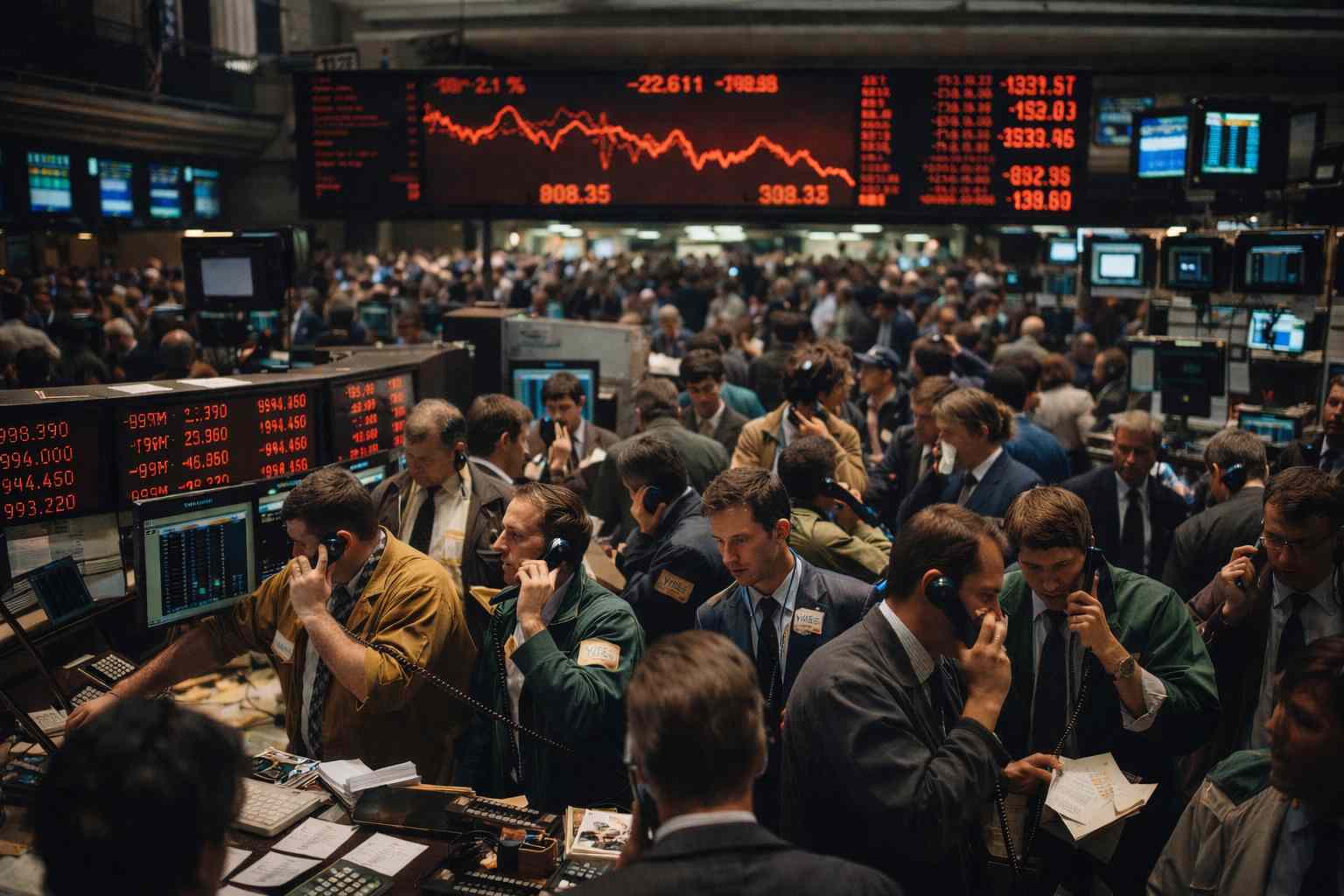
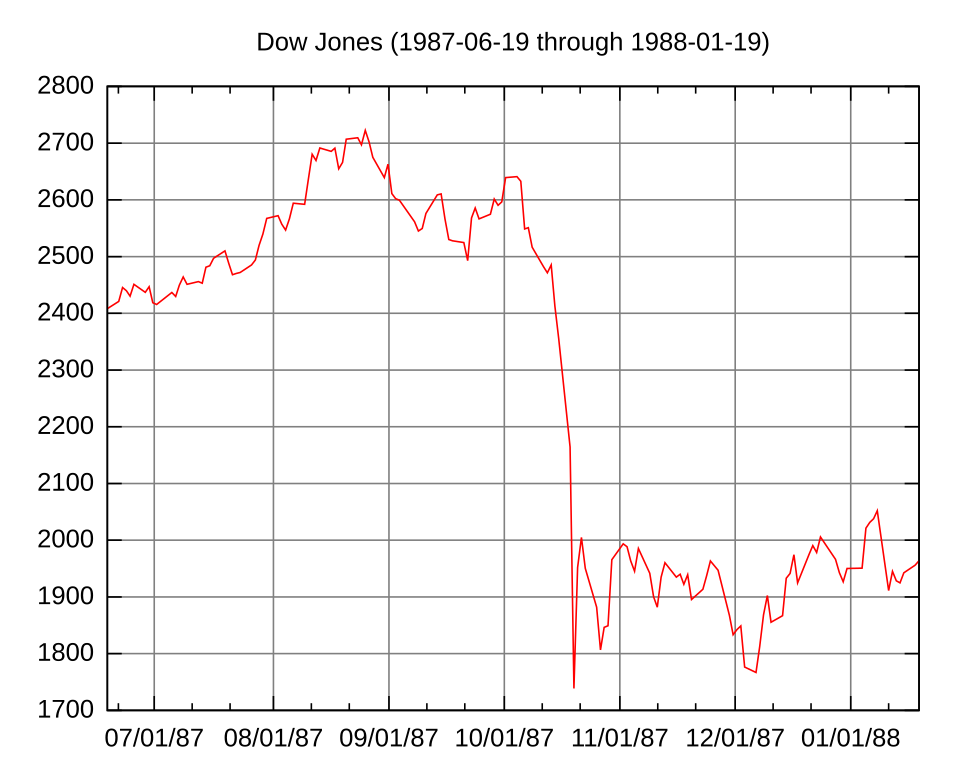
Black Monday refers to October 19, 1987, when the Dow Jones Industrial Average fell 22.6% in a single session, still the largest one-day percentage decline in its history.
The S&P 500 declined by approximately 20% on the same day. More than a historic market collapse, Black Monday showed how fast panic can spread when heavy selling meets weak liquidity and unstable market structures.
That history feels relevant again on March 9, 2026. Asian stocks opened sharply lower after oil surged above $114 a barrel amid fears of supply disruptions in the Middle East.
Black Monday was the stock market crash of October 19, 1987, when share prices fell sharply across major global markets in a single day. The selloff began in Asia, spread through Europe, and then hit the United States, showing how closely connected financial markets had become.
This event is important because it altered the understanding of market crashes. It revealed that price declines may result not only from economic weakness or adverse news, but also from heavy selling that strains market liquidity and overwhelms trading systems.
In response to Black Monday, regulators and exchanges implemented enhanced safeguards, such as trading halts and improvements to clearing and settlement systems, to mitigate the risk of disorderly market declines.
Black Monday did not happen without warning. In the few months before the crash, U.S. stocks had risen very quickly. By late August 1987, the Dow had gained about 44% in just seven months, leaving valuations stretched and the market more vulnerable to negative surprises.
In mid-October, confidence weakened after the U.S. reported a larger-than-expected trade deficit, the dollar fell, and investors began to question whether the market had gone too far, too fast.
The crash became far worse because market systems were not prepared for that level of selling. Trading bottlenecks, slow information flow, and heavy margin calls added pressure.
As a result, Black Monday became more than a normal correction. It turned into a market-wide breakdown driven by a mix of economic concerns, automated selling, and weak trading infrastructure.
The Dow Jones Industrial Average fell from 2,246.73 on October 16, 1987, to 1,738.74 on October 19, 1987, a drop of 508 points, or 22.6% in one trading session. That remains the largest one-day percentage decline in Dow history.
| Dow Metric | Black Monday 1987 |
|---|---|
| Previous Close | 2,246.73 |
| October 19, 1987 Close | 1,738.74 |
| One-Day Point Loss | 508 |
| One-Day Percentage Loss | 22.6% |
This is why Black Monday remains such a defining event in market history: the scale of the drop was extraordinary, both in points and percentage terms.
Market crashes frequently follow periods of strength rather than weakness. In 1987, the preceding surge in equity prices fostered a belief that stocks could withstand negative developments. This confidence intensified the subsequent reversal when market sentiment shifted.
The wider trade deficit, weaker dollar, and policy uncertainty did not cause the crash on their own. But they changed how investors viewed the market. What had been seen as a strong uptrend quickly became a reason to cut risk, and investors began selling instead of buying dips.
Portfolio insurance was designed to protect investors from downside risk, but in practice it made the selloff worse. As prices fell, the strategy triggered more selling, which pushed prices down even further.
It was a clear example of how a defensive tool can become destabilizing when too many investors use it at the same time.
The Federal Reserve’s 2007 review found that trading systems during that time were badly strained, information was hard to gather, and margin calls further drained liquidity.
The lesson was simple: when markets are under pressure, liquidity and market function cannot be taken for granted.
While current market conditions do not replicate those of 1987, several warning signs are similar. Investors are once again contending with external shocks, concentrated market leadership, significant thematic positioning, and elevated volatility.
Note: Although none of these indicators guarantees a market crash, their combination can increase market fragility during periods of weakened confidence, according to analysts.
The most visible warning sign is a fresh macro shock. Rising oil prices and fears of supply disruption have pushed Asian equities sharply lower, reminding investors how quickly geopolitics can feed into inflation concerns, growth worries, and weaker market sentiment.
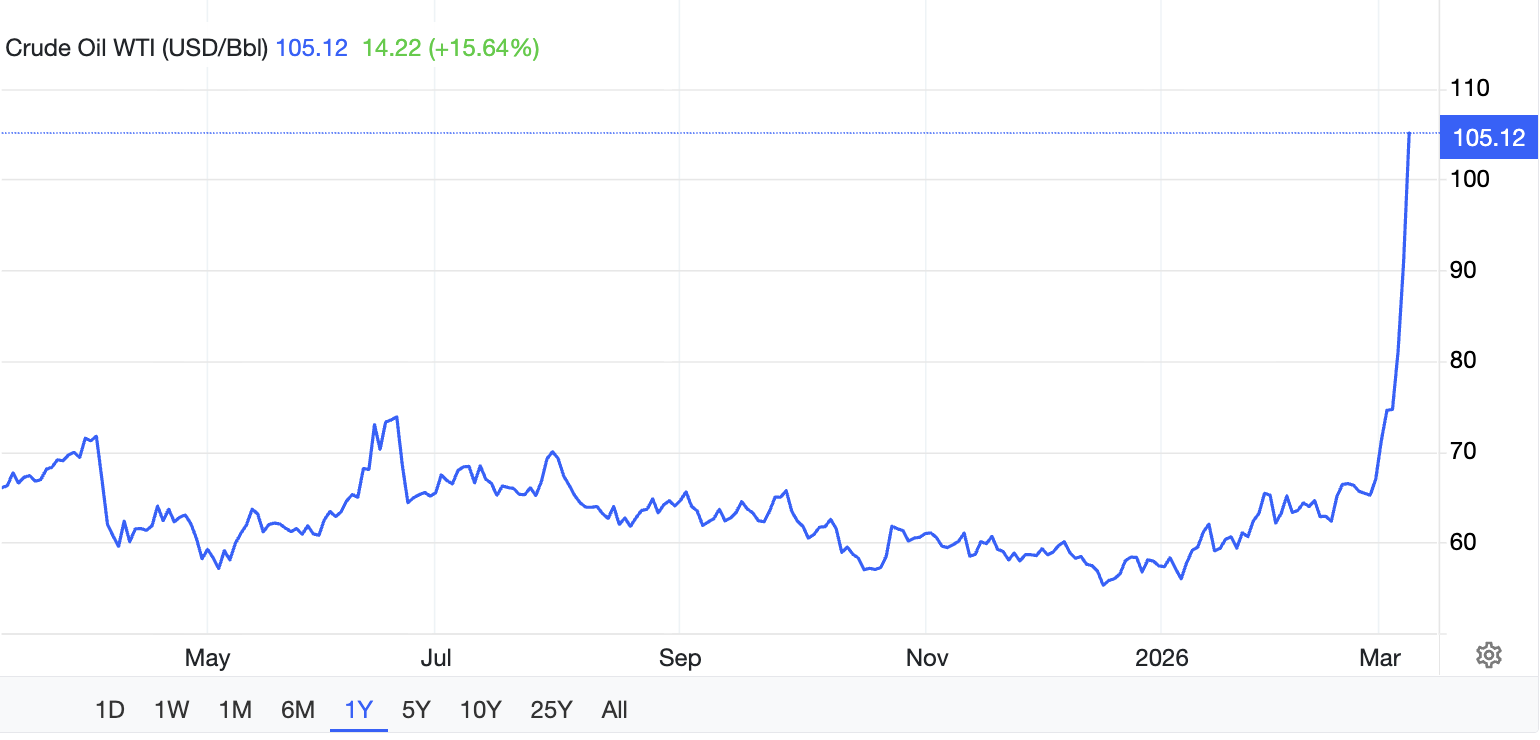
When an external shock occurs during periods of already cautious market positioning, selling pressure can propagate more rapidly across regions and sectors.
Market concentration continues to pose a significant risk. According to S&P Dow Jones Indices, as of January, the revenue-weighted S&P 500 index holds 22.3% less exposure to the Magnificent 7 compared to the standard index, highlighting the ongoing dominance of a small group of stocks within the benchmark.
Today’s market still depends heavily on fast, rules-based capital flows. The names are different from 1987, but the logic is familiar.
Goldman Sachs said AI-related hyperscaler capex has recently reached about 0.8% of GDP and could rise to $700 billion in 2026, matching late-1990s telecom-cycle peaks.
The most recent selloff did not occur in a stable market environment. Volatility was already elevated, indicating that investors had been pricing in uncertainty prior to this new shock.
This is significant because markets characterized by unstable sentiment are typically more susceptible to abrupt declines when new negative information emerges.
| Signal | 1987 | March 2026 |
|---|---|---|
| Immediate shock | Trade deficit worries, falling dollar, policy stress | Oil shock tied to Middle East supply disruption |
| Market backdrop | Dow up 44% in seven months before the crash | High concentration in mega-cap leadership and elevated AI capex expectations |
| Selling pressure | Portfolio insurance accelerated downside | Fast, rules-based trading and crowded themes can still intensify moves |
| Visible market damage | Dow -22.6%, S&P 500 about -20% on Oct. 19 | Nikkei below -7%, Kospi -7.4%, U.S. futures below -2% early Mar. 9 |
| Market safeguards | Few tools to slow a cascade | Circuit breakers at 7%, 13%, and 20%, plus single-stock LULD bands |
Black Monday showed that markets do not fall only because of weak fundamentals. When liquidity dries up and selling overwhelms trading systems, losses can accelerate much faster than investors expect.
During a broad market selloff, fear can simultaneously affect multiple regions and asset classes. While diversification is beneficial over the long term, it may provide limited protection during acute market shocks.
Black Monday serves as a reminder that investors should establish risk management plans prior to periods of heightened volatility. Position sizing, liquidity awareness, and disciplined decision-making are most critical when markets move unexpectedly quickly.
Modern markets are equipped with circuit breakers and more robust controls compared to 1987. While these mechanisms can slow the onset of panic, they cannot entirely prevent significant losses when market confidence deteriorates.
Black Monday was caused by a combination of stretched valuations, macroeconomic stress, a falling dollar, trade-deficit concerns, and heavy program-based selling tied to portfolio insurance. Weak market infrastructure then made the selloff worse.
A one-day collapse on the scale of 1987 is less likely because markets now have circuit breakers and stronger trading controls. But sharp air pockets are still possible when macro shocks, crowded positioning, and fast selling happen at the same time.
The clearest warning signs today are the oil shock, sharp losses across Asia, high concentration in a small group of market leaders, and a market that still relies heavily on fast, rules-based flows. Though its not a sure sign, analysts are paying close attention to these details.
No. The crash was severe, but it did not lead to a depression. One reason was the Federal Reserve’s visible liquidity support, which helped stabilize market functioning and confidence.
Black Monday was more than a historic market crash. It was a warning about how quickly confidence can break when a crowded market meets a macroeconomic shock and fragile trading conditions.
The lesson from 1987 is not that every sharp selloff becomes a catastrophe. It is that investors should pay attention to the structure beneath the market, not just the headlines above it.
Today’s warning signs deserve close attention, even though current conditions are not identical to those of 1987. Oil prices have moved above $114 per barrel, Asian equities have fallen sharply, volatility remains elevated, and concentration risk persists.
None of that guarantees another Black Monday, but it explains why the lessons from 1987 still matter for investors today. Afterall, it is better safe than sorry.
Disclaimer: This material is for general information purposes only and is not intended as (and should not be considered to be) financial, investment or other advice on which reliance should be placed. No opinion given in the material constitutes a recommendation by EBC or the author that any particular investment, security, transaction or investment strategy is suitable for any specific person.