Published on: 2025-12-11
Updated on: 2025-12-11
Gold remains a foundational asset for investors who seek diversification, inflation protection and a store of value.
This article explains what gold ETFs are, the different ways to gain exposure, how to buy them step by step, the costs and risks involved, and why some brokers, including EBC Financial Group, provide ETF exposure via CFDs.
Gold has been one of the best performing assets in 2025. Professional and private investors are reassessing allocations as central banks and market participants continue to use gold for balance sheet diversification. Choosing the right vehicle to gain exposure can materially affect returns and costs.
A gold exchange traded fund or ETF provides investors with tradable shares that reflect exposure to gold. Some ETFs hold physical bullion and track the price of gold. Other ETFs hold equity shares of companies that mine gold. ETFs trade on exchanges and can be bought or sold through most brokerage accounts in the same way as stocks. Physical gold ETFs are primarily used for price tracking. Mining ETFs offer leveraged exposure to the industry and tend to be more volatile.
There are three practical categories to know about.
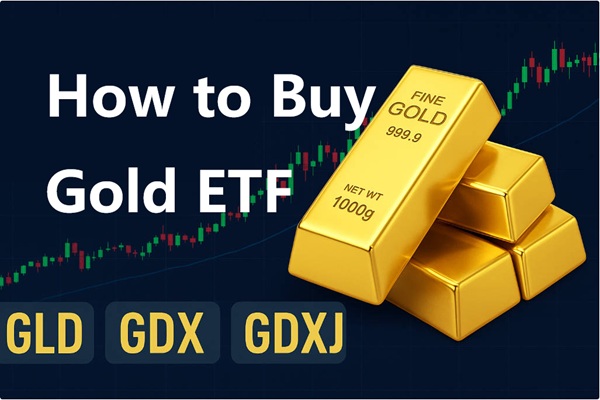
These funds hold allocated gold bullion in vaults and seek to match the price of spot gold less expenses. SPDR Gold Shares GLD is the largest and most widely traded example. The fund had assets under management of about 141 billion US dollars as of 8 December 2025. GLD does not pay income.
These funds hold shares of gold mining companies rather than bullion. GDX and GDXJ from VanEck are widely used examples. Mining ETFs can outperform physical gold when mine earnings expand, but they are more sensitive to equity market sentiment and company level risks. GDX had total net assets around 24 billion US dollars as of 10 December 2025. GDXJ had total net assets around 9 billion US dollars on the same date.
Some brokers offer CFD instruments that follow the price of listed ETFs. Contracts for difference allow traders to take long or short positions and to use leverage. EBC Financial Group provides CFD access to gold ETF exposures for clients who prefer trading flexibility through margin accounts. CFD positions generally incur overnight financing charges if held across the daily cut off time.
| Product | Typical objective | Expense ratio or management fee | Typical investor profile |
|---|---|---|---|
| SPDR Gold Shares GLD | Track spot gold price via physical bullion | Gross expense ratio 0.40 per cent as of Dec 2025. | Long term holders seeking price exposure and low turnover. |
| VanEck Gold Miners ETF GDX | Exposure to large and mid gold miners | Gross expense ratio about 0.51 per cent. | Investors seeking higher growth potential and comfortable with share price volatility. |
| VanEck Junior Gold Miners ETF GDXJ | Exposure to junior miners with higher volatility | Gross expense ratio about 0.51 per cent. | Traders or investors seeking higher risk reward and willing to accept company specific risks. |
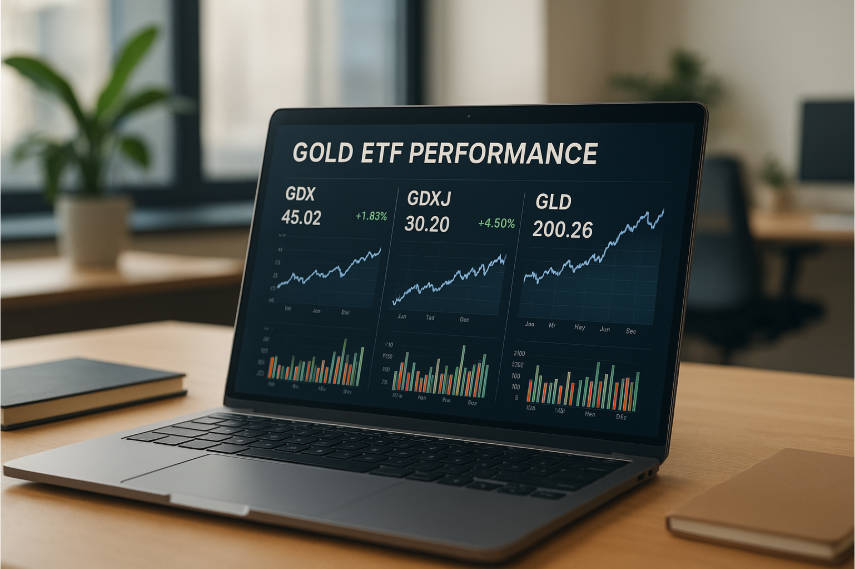
Decide whether you want direct price exposure to bullion or equity style exposure via miners. For price tracking choose a physical ETF such as GLD. For leveraged growth potential choose a miners ETF such as GDX or GDXJ. If you intend to trade tactically or use leverage then consider CFDs offered by regulated brokers like EBC Financial Group.
Look for a broker that is regulated in your jurisdiction, that publishes transparent fees and that supports the product you want to trade. If you plan to use CFDs check financing rates and margin requirements. CFD providers charge overnight funding for positions kept past the daily cut off time. Typical overnight funding methods are described by major CFD providers.
Use prudent position sizing rules. A common approach is to risk no more than one to two per cent of account equity on a single trade. For buy and hold allocations determine the percentage of portfolio to allocate to gold according to your risk tolerance. Rebalance periodically. Use limit orders to control execution price where appropriate.
If you buy an ETF on exchange use your equity trading ticket and choose market or limit order. If you trade via a CFD select the ETF CFD instrument offered by your broker and choose long or short exposure. Beware that CFD trades can use leverage which magnifies both gains and losses.
Set stop loss and take profit levels. For ETFs held long term monitor macro drivers such as interest rate expectations, US dollar strength and central bank buying patterns. For CFDs monitor margin levels daily to avoid unexpected liquidations.
Costs differ by vehicle and provider. The main items to consider are fund expense ratios, brokerage commissions, bid ask spreads, and CFD overnight financing charges. GLD published a gross expense ratio of 0.40 per cent as of December 2025. GDX and GDXJ show a gross expense ratio near 0.51 per cent. CFD financing rates typically use a benchmark reference plus or minus a margin and vary across brokers. Always check the provider fee schedule before trading.
| Feature | Physical gold ETF ownership | ETF CFD trading via broker |
|---|---|---|
| Ability to hold long term | Very suitable for long term holding | Possible but overnight financing makes long term ownership expensive |
| Ability to short the ETF | Only via margin or borrow facilities which may be limited | Shorting is straightforward via CFDs subject to margin limits |
| Leverage availability | Generally limited or not available for cash purchases | Widely available at broker specified margin rates |
| Costs for long term holders | Expense ratio and commission only | Expense ratio may be embedded in CFD pricing plus daily financing charges |
| Regulation and custody | Fund holds bullion in regulated vaults | CFD user does not own underlying asset; position is a contract with broker |
As of 10 December 2025 SPDR Gold Shares GLD was trading near 387 US dollars per share. GDX and GDXJ have experienced large year to date returns in 2025 as miners responded to higher gold prices and sector rotation. GDX had net assets of about 24 billion US dollars and GDXJ about 9 billion US dollars on 10 December 2025. These figures illustrate the market size and liquidity available to investors. Past performance is not a guarantee of future returns.
Gold price volatility and macroeconomic shocks can produce fast drawdowns. Mining ETFs add company and operational risk. CFD trading adds counterparty risk and financing cost risk. Tracking error can occur for funds that hold derivatives or use optimisation techniques. Always understand product structure and check the fund prospectus and the broker risk disclosure.
Confirm the precise ETF ticker and read the latest fact sheet.
Check expense ratios and assets under management.
Review brokerage fees and CFD financing terms if applicable.
Set clear stop loss and take profit levels and plan position sizing.
Revisit allocation periodically and rebalance as needed.
GLD tracks physical gold price and aims to reflect bullion value. GDX and GDXJ track gold mining companies and therefore add equity market and company specific risk while offering higher growth potential.
EBC Financial Group offers exposure to popular gold ETFs including GLD, GDX and GDXJ through CFD instruments. For direct ETF ownership invest through a standard brokerage account that provides access to listed ETFs.
GLD charges a gross expense ratio around 0.40 per cent annually. Trading commissions and bid ask spreads add to cost. Always check the fund prospectus and your broker fees for complete cost information.
Gold mining ETFs are generally less safe than physical gold for capital preservation because they carry company risk and equity market exposure. Mining ETFs can offer stronger upside during gold rallies but also larger losses during market stress.
CFD overnight financing is calculated using a benchmark rate plus or minus a spread set by the broker. Charges vary by provider and by the instrument held. Always review the broker financing page before opening a leveraged CFD.
Buying a gold ETF is straightforward if you start with clear objectives. Decide whether you need physical price tracking or mining equity exposure. Select a regulated broker and confirm fees and product structure.
For traders who need flexibility and leverage, CFD exposure exists through brokers such as EBC Financial Group but this brings additional ongoing costs and counterparty considerations. Finally, review the prospectuses and broker disclosures referenced above before committing capital.
Disclaimer: This material is for general information purposes only and is not intended as (and should not be considered to be) financial, investment or other advice on which reliance should be placed. No opinion given in the material constitutes a recommendation by EBC or the author that any particular investment, security, transaction or investment strategy is suitable for any specific person.