Published on: 2026-04-09
Updated on: 2026-04-09
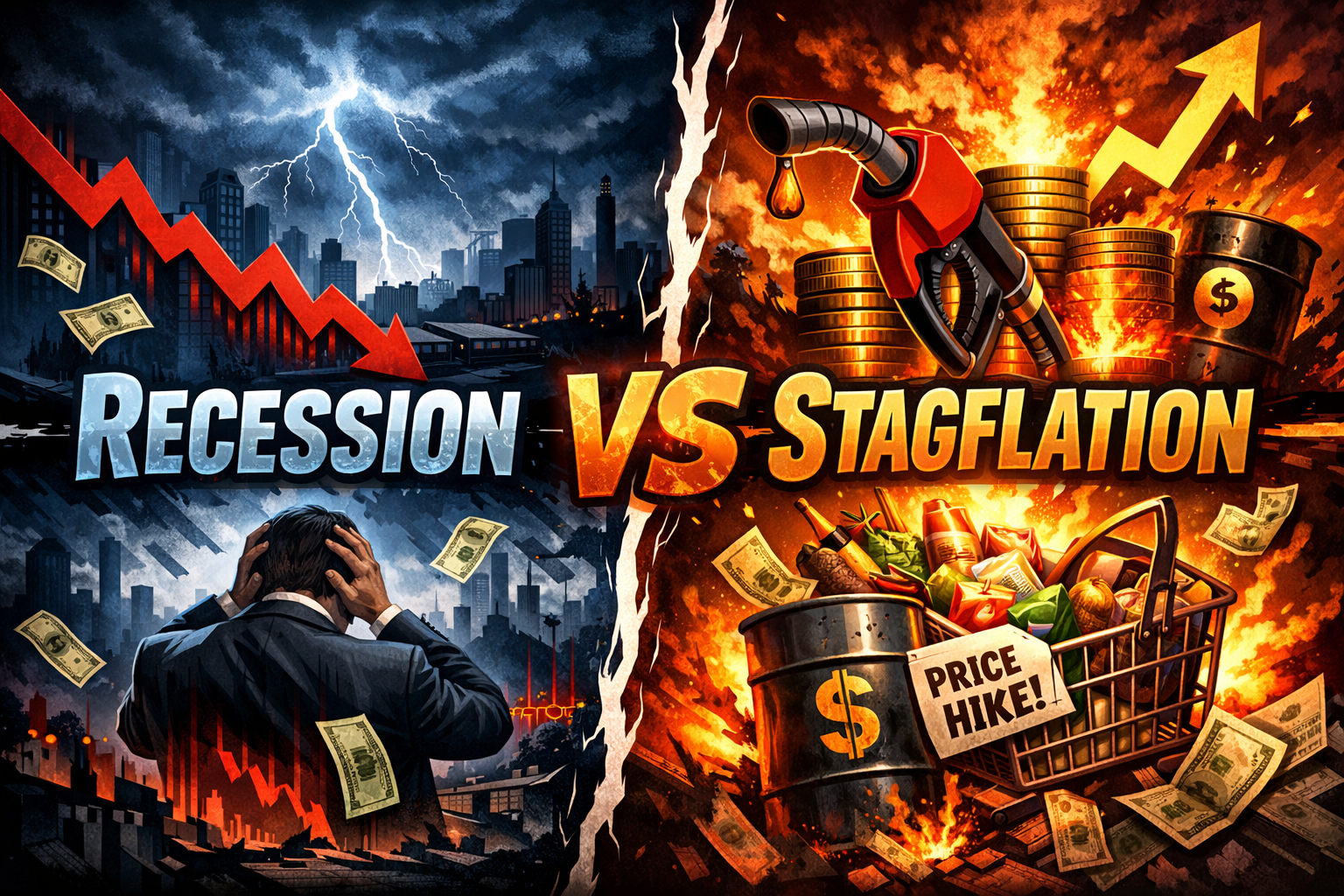
Understanding the difference between a recession and stagflation is critical for traders navigating the financial markets in 2026. While both scenarios involve economic slowdowns, the underlying causes, market impacts, and investment strategies differ significantly.
Misinterpreting one for the other can lead to costly portfolio mistakes, particularly in volatile sectors such as energy, technology, and inflation-sensitive assets.
Recession is characterised by contracting GDP, low inflation, and rising unemployment.
Stagflation combines stagnant growth with high inflation, creating a challenging investment environment.
Asset performance varies: defensive stocks and bonds perform better in recessions, while commodities and inflation-linked securities perform better in stagflation.
Traders should monitor key indicators such as CPI, unemployment rates, and yield curves to adjust strategies.
Understanding market signals can preserve capital and help capture alpha in both economic regimes.
A recession is generally defined as a sustained period of economic contraction, often measured by two consecutive quarters of negative GDP growth. In a typical recession, consumer spending declines, corporate earnings fall, and unemployment rises.
Key market signals:
Inverted yield curves: an early warning of economic contraction
Rising unemployment: indicating cooling labour markets
Falling corporate earnings: signalling weaker business activity.
Central banks usually respond to a recession by cutting interest rates to stimulate borrowing and consumption. Traders often rotate into defensive sectors, such as utilities, healthcare, and consumer staples ETFs, while increasing allocations to safe-haven assets, such as US Treasuries or the US dollar.
Stagflation occurs when economic growth stagnates while inflation remains persistently high. This situation is particularly challenging because traditional policy tools, such as lowering interest rates, may worsen inflation.
Key market signals:
Supply disruptions (energy, raw materials, or logistics bottlenecks)
Rising production costs are passed to consumers.
Policy missteps or delayed intervention
Traders need to adjust their portfolios during stagflation. Inflation-linked assets such as Treasury Inflation-Protected Securities (TIPS), gold, and energy commodities often outperform, while traditional bonds may underperform as interest rates rise. Sectors such as energy and materials may also provide better returns than growth-oriented technology stocks during stagflationary periods.
Indicators to Monitor:
Consumer Price Index (CPI): High CPI readings indicate inflationary pressures.
Non-Farm Payrolls (NFP): Declining employment signals recession.
Yield Curve Spreads: Inversion signals potential economic slowdown.
Practical Trading Approaches:
During a recession: Focus on defensive equities, US Treasuries, and dividend-paying stocks. ETFs like Vanguard Utilities ETF (VPU) or iShares U.S. Consumer Staples ETF (IYK) can offer stability.
During stagflation: Allocate to inflation-hedged assets, gold ETFs (e.g., GLD), energy commodities, and TIPS. Avoid long-duration bonds, which are sensitive to rising rates.
Economists often use the Misery Index to quantify the extent of stagflation. It sums the unemployment rate (u) and inflation rate (π):
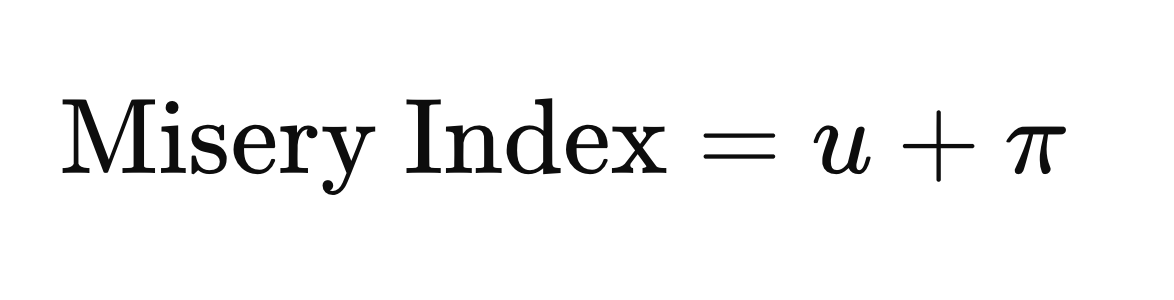
Where:
u = Unemployment rate (%)
π = Inflation rate (%)
Example:
If the unemployment rate is 6% and inflation is 4%, then: M=6+4=10
A higher Misery Index indicates a more difficult economic environment, while a lower value suggests that conditions are relatively comfortable.
In a recession, unemployment rises while inflation typically falls. In stagflation, both rise simultaneously, creating a “perfect storm” for portfolios. Monitoring this index can help traders anticipate shifts and adjust exposure to equities, bonds, and commodities.
Technically, stagflation is a specific type of recession. While a standard recession usually features falling prices (deflation), stagflation is a recession in which inflation remains high. Traders often call this "the worst of both worlds" because traditional safety nets like bonds often fail to protect your capital.
For most traders, stagflation is more dangerous. In a recession, the "Fed Put" usually kicks in, interest rates drop, and stocks eventually rebound. In stagflation, central banks may be forced to raise rates even as the economy shrinks, creating a "no-man's land" for both equity and bond investors.
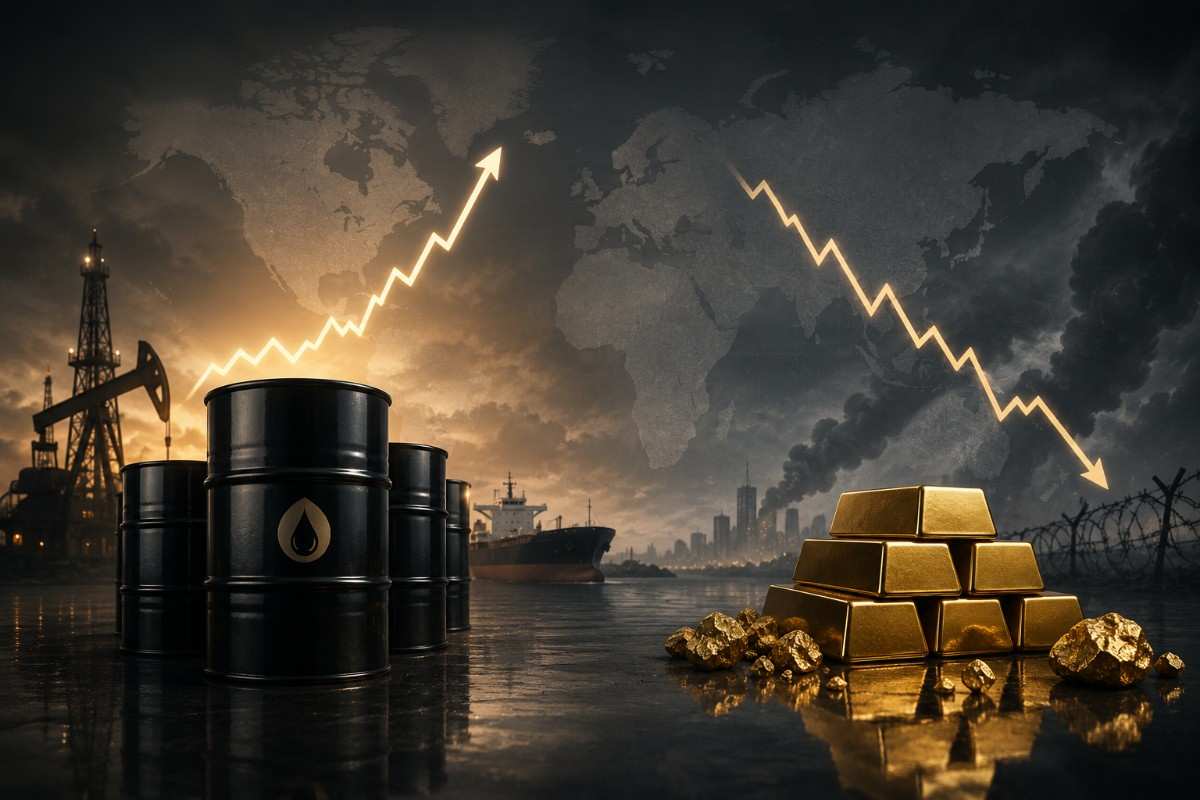
Historically, yes. Gold is often the "star performer" during stagflation because it acts as a hedge against both currency devaluation and economic instability. In 2026, we’ve seen gold reach new highs as traders move away from paper assets eroded by sticky inflation.
Geopolitical conflicts often cause "Supply-Shocks," specifically in energy. High oil prices act as a tax on consumers (slowing growth) while simultaneously raising transportation costs (inflating prices). This is the primary driver of stagflation fears in the first half of 2026.
Navigating the markets in 2026 requires a clear understanding of the distinction between recession and stagflation. While both involve economic slowdowns, the presence or absence of inflation dramatically changes portfolio strategies. Traders who monitor key indicators, adjust allocations to defensive or inflation-hedged assets, and remain flexible are better positioned to preserve capital and capture opportunities.
Disclaimer: This material is for general information purposes only and is not intended as (and should not be considered to be) financial, investment or other advice on which reliance should be placed. No opinion given in the material constitutes a recommendation by EBC or the author that any particular investment, security, transaction or investment strategy is suitable for any specific person.