Published on: 2026-04-09
Updated on: 2026-04-09
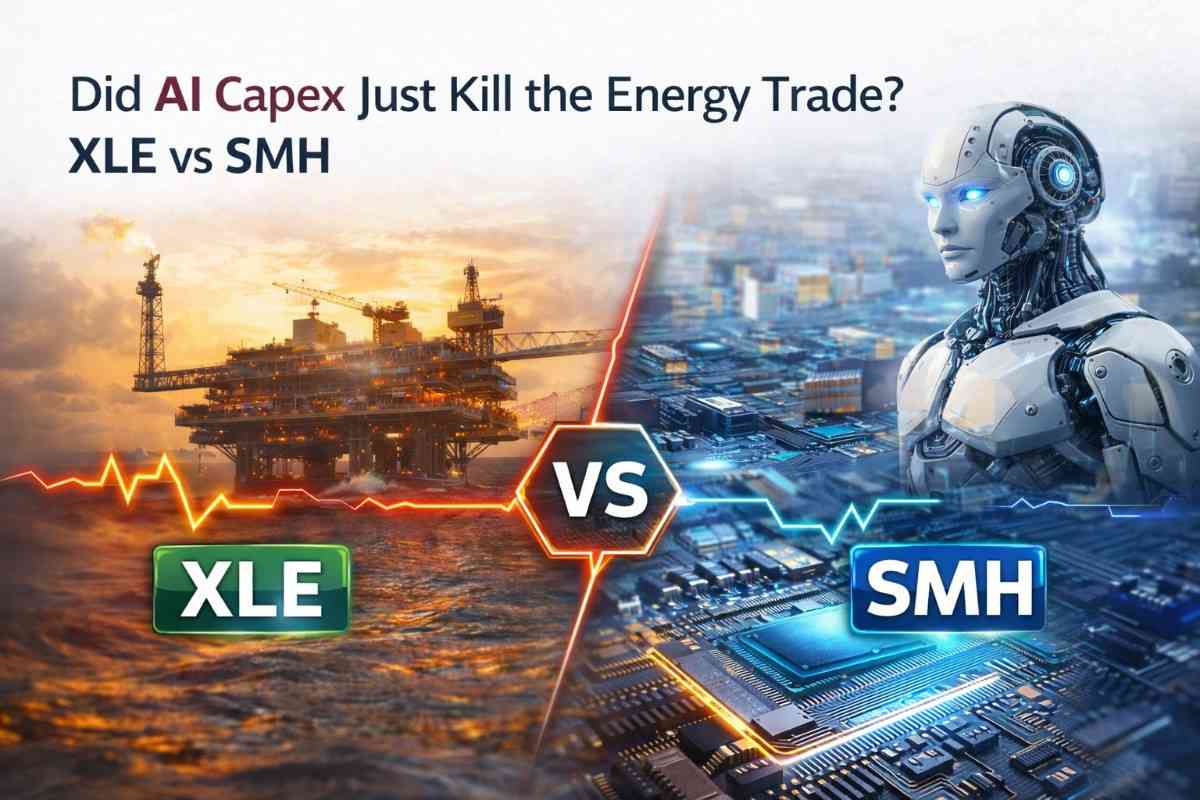
AI capital expenditure has shifted the market’s immediate edge to semiconductors, while still bringing a slower but notable benefit to gas, power, and some energy cash-flow businesses.
SMH maintains the immediate strategic advantage because AI revenue is first reflected in cloud and semiconductor demand. In the latest reported quarter, Azure revenue rose 39%, Google Cloud revenue rose 48%, and AWS revenue rose 24%.
AI demand continues to support the energy sector, with the most direct impact seen in gas and electricity rather than crude oil alone.
Geopolitics remains the dominant short-term driver for XLE.
Capex fatigue is real. Analysts are questioning whether AI investment is scaling faster than visible monetisation, suggesting semiconductors could still face valuation pressure even as demand remains strong.
| Metric | XLE | SMH |
|---|---|---|
| Market Price | $58.05 as of Apr. 8, 2026 | $422.92 as of Apr. 8, 2026 |
| Assets / Total Net Assets | $40.64B as of Apr. 8, 2026 | $46.36B as of Apr. 8, 2026 |
| Expense Ratio | 0.08% | 0.35% |
| Holdings | 22 | 26 |
| 1-Year Return | 35.23% as of Mar. 31, 2026 | 81.85% as of Mar. 31, 2026 |
| Latest Published YTD Return / Change | 37.82% as of Mar. 31, 2026 | 17.43% as of Apr. 8, 2026 |
| Top Concentration | Exxon 23.41%, Chevron 17.20% | Nvidia 19.23%, TSMC 11.59%, Broadcom 8.06% |
| 30-Day SEC Yield | 2.49% as of Apr. 7, 2026 | 0.28% as of Apr. 8, 2026 |
*This table snapshot uses current fund pages from State Street and VanEck.
SMH effectively represents AI monetization at the hardware level. NVIDIA comprises 19.23% of the fund, while TSMC and Broadcom bring the top three holdings to a combined 38.88%.
As a result, earnings revisions from accelerators, foundry utilization, advanced packaging, networking silicon, and memory intensity are reflected in the ETF more quickly than electricity demand impacts XLE.
In summary, SMH realizes revenue before XLE benefits from increased fuel demand.
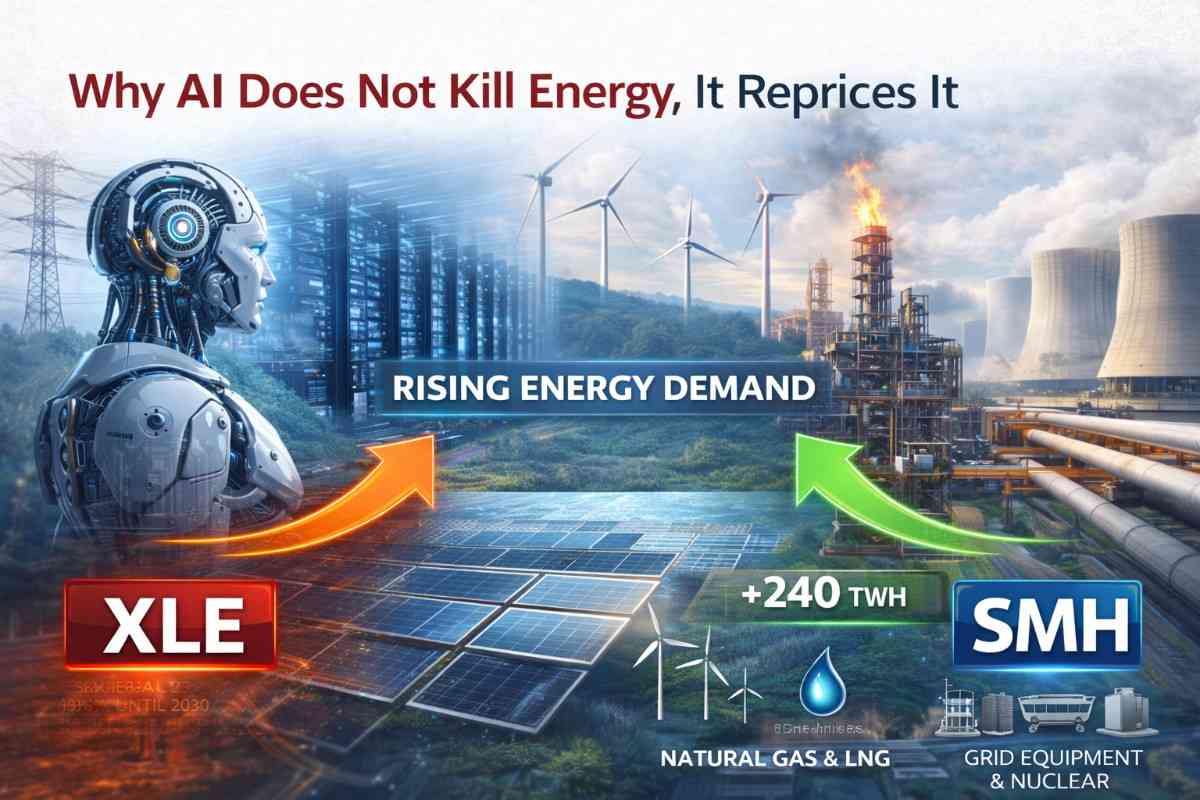
The energy paradox is clear: AI requires chips, and chips require power, cooling, transmission, backup generation, and fuel. The IEA projects that data-center electricity consumption will double to approximately 945 TWh by 2030, growing about 15% annually from 2024 to 2030.
IIn the United States, data center electricity consumption is projected to increase by around 240 TWh by 2030 versus 2024 levels, making the U.S. the single largest contributor to global growth in data center power demand. That rising load supports the broader energy complex, even if the first equity response still tends to favour semiconductor suppliers and cloud platforms.
A key distinction is that AI demand supports electricity and power fuels more directly than it supports crude oil itself. The IEA expects renewables to meet about half of global data center demand growth through 2035, while dispatchable sources led by natural gas also play a crucial role.
That points investors more toward natural gas, LNG, pipelines, grid equipment, and selected nuclear-linked projects than toward broad oil-sensitive energy exposure alone.
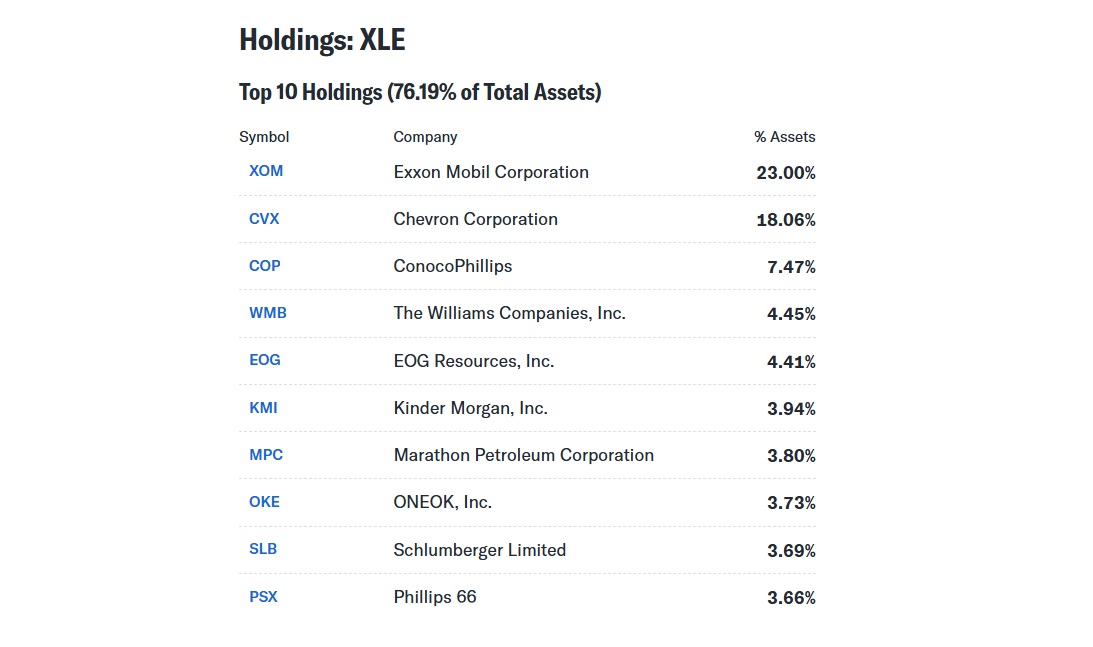
XLE is not a direct play on power scarcity. It is a concentrated large-cap energy ETF dominated by oil majors and liquid-fuels exposure. Exxon and Chevron alone account for 40.55% of the fund, and the fund's industry mix is 90.92% oil, gas, and consumable fuels versus 9.08% energy equipment and services.
This structure means XLE participates in the AI-related energy market primarily through upstream cash flow, LNG opportunities, and some midstream exposure, rather than through regulated utilities, transmission expansion, or merchant power pricing.
This distinction is important because EIA’s January 2026 outlook projected the U.S. generation mix for 2026 at 39% natural gas, 18% nuclear, and 8% solar. AI-driven grid stress supports that mix, but XLE still excludes the utilities and transmission owners that benefit most directly from retail pricing, grid congestion, or line-buildout constraints.
XLE holds hydrocarbon companies whose equity performance remains heavily influenced by oil prices, refining margins, and geopolitical events. Therefore, while AI may broadly support the energy sector, its impact on XLE is more limited.
Recent price action illustrates the point. In its April 7, 2026 Short-Term Energy Outlook, the EIA said Brent averaged $103 per barrel in March and reached almost $128 on April 2 after the de facto closure of the Strait of Hormuz.
The same outlook estimated production shut-ins averaged 7.5 million barrels per day in March and could peak at 9.1 million barrels per day in April, with Brent peaking at $115 per barrel in the second quarter under its base assumptions. Oil shocks of that scale can lift XLE quickly even when the AI-power thesis itself has not changed.
The reverse is also true. XLE can lose short-term momentum quickly when the geopolitical risk premium unwinds from oil, even if AI-driven electricity demand remains firm.
That is why the near-term XLE trade is still more sensitive to crude-price headlines than to the slower valuation uplift that comes from data center demand.
| Company | Latest AI Demand Signal | Capex Signal | Why It Matters |
|---|---|---|---|
| Microsoft | Azure revenue +39%; demand exceeds supply | $37.5B in FY26 Q2, with roughly two-thirds of capex in short-lived assets such as GPUs and CPUs | Fast monetisation remains visible, but analyst scrutiny of returns is rising |
| Amazon | AWS revenue +24% | Continued AI infrastructure investment remains a priority, but the Q4 2025 earnings release did not specify a 2026 capex target | Confirms AWS demand strength, but gives less direct capex visibility than some peers |
| Alphabet | Google Cloud revenue +48%; backlog reached $240B | 2026 CapEx expected at $175B to $185B | Confirms persistent hyperscaler demand and unusually large planned infrastructure spend |
| Meta | Full-year 2025 capex $72.22B | 2026 capital expenditures expected at $115B to $135B | Shows that consumer internet platforms are now major AI infrastructure spenders |
*Table figures are taken from the latest company earnings materials and call transcripts.
The market is now questioning whether current spending levels can be sustained without eroding returns. In Microsoft’s January 28, 2026 earnings call, analysts pressed management on whether capital expenditures were running ahead of visible monetisation, even as the company said demand continued to exceed supply.
That matters because strong demand does not end the valuation debate. Microsoft, Amazon, Alphabet, and Meta all continue to signal heavy AI infrastructure investment, but investors are increasingly separating revenue growth from returns on capital. If that distinction sharpens, SMH can still lead on revenue exposure while facing tighter valuation support.
This scenario could make XLE more attractive. If hyperscalers continue to spend, energy costs increase, and markets prioritize cash-yield discipline over ongoing multiple expansion, the broader energy sector could improve its risk-adjusted potential.
No. AI capital expenditure has reduced XLE’s relative performance compared to SMH because semiconductors monetize AI demand first.
SMH includes companies that immediately benefit from selling the compute stack. XLE holds companies whose AI-related benefits are delayed, indirect, and still subject to oil price volatility.
Natural gas has a stronger structural connection because it is dispatchable and is expected to play a major role in meeting rising data center load, especially in the United States.
AI capital expenditure did not end the energy trade. It altered the timing and focused attention on the most relevant segments of the energy sector.
Currently, SMH benefits from the initial wave, while XLE maintains slower, more macro-driven risk-adjusted potential as power scarcity, fuel demand, or capex fatigue become more significant than enthusiasm for compute alone.
Disclaimer: This material is for general information purposes only and is not intended as (and should not be considered to be) financial, investment or other advice on which reliance should be placed. No opinion given in the material constitutes a recommendation by EBC or the author that any particular investment, security, transaction or investment strategy is suitable for any specific person.