Published on: 2026-05-22
Updated on: 2026-05-22
IBM’s quantum rally now depends on proof, not funding headlines. Anderon, IBM’s proposed quantum foundry, needs customers, outside capital, and final CHIPS terms to justify a lasting premium.
The first test is demand. IBM’s proposed quantum foundry has policy backing, but no public revenue, customer, or margin profile yet.
The second test is cash flow. IBM is committing capital to Anderon after the $11.59 billion Confluent deal, while debt and dividends still draw on the same balance sheet.
The third test is Software growth. Q1 Software revenue rose 11%, giving IBM the operating base to fund quantum if momentum holds.
IBM’s quantum bet is competing with Confluent, dividends, and debt discipline for the same financial capacity, making software growth and free cash flow the real test behind the rally.
IBM stock is now carrying value for a quantum business that has not yet shown revenue. Customers, cash flow, and software growth will decide whether the market priced that future too early.
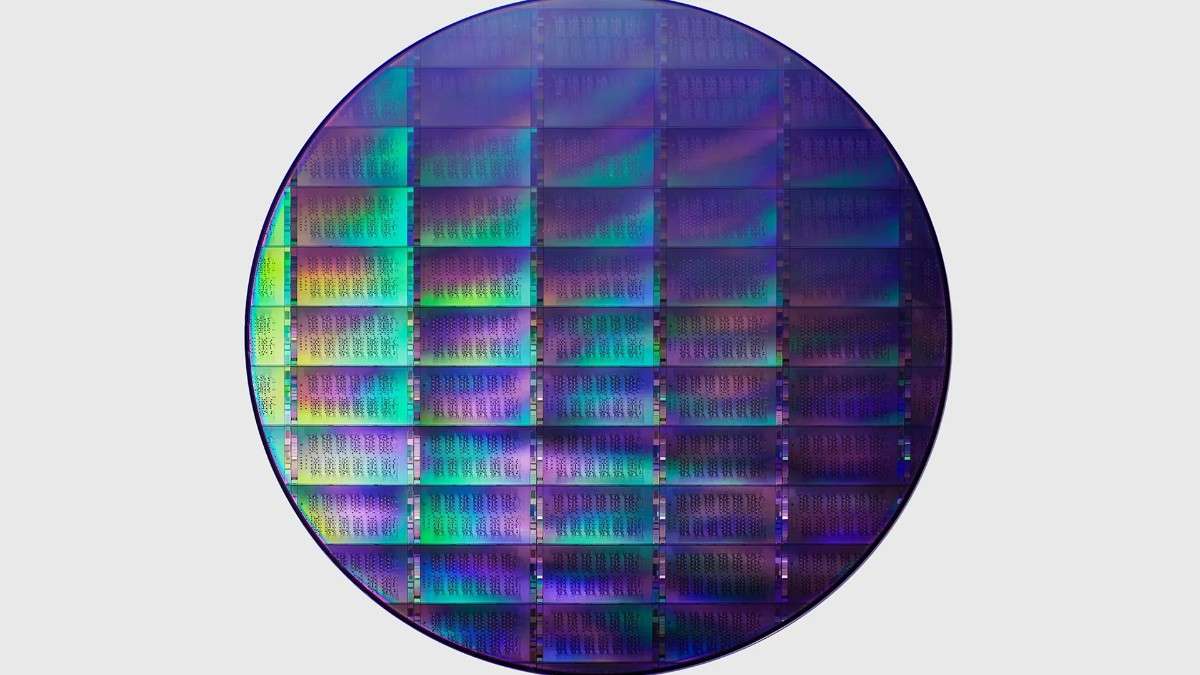
Policy support lit the fuse. Customer demand decides whether the IBM stock rally lasts.
Anderon shifts IBM’s quantum story from research to manufacturing. IBM and the U.S. Department of Commerce announced a Letter of Intent for a standalone quantum foundry, backed by a proposed $1 billion CHIPS incentive and IBM’s planned $1 billion cash contribution. The facility is expected to support 300-millimeter quantum wafer production in Albany, New York. (IBM SEC Filing)
The re-rating comes from what a foundry can become: capacity, supply-chain control, and possible ecosystem power. The missing proof is commercial. Anderon has not yet shown public customer commitments, revenue targets, margin structure, or production economics.
That is the first test from here. If external quantum hardware customers commit to Anderon, IBM gains commercial validation. If the foundry stays mostly within IBM’s ecosystem, the stock has priced a future asset before that asset has proven market pull.
The bull case is not that IBM suddenly became a pure quantum stock. It is that IBM may control a scarce manufacturing layer before quantum demand becomes obvious. Scarcity can support valuation before revenue arrives. It cannot replace revenue forever.
Anderon is not a free quantum option. IBM’s planned $1 billion contribution comes after the $11.59 billion Confluent acquisition, while dividends and debt still compete for the same cash flow.
IBM has room to carry the bet. Q1 revenue reached $15.9 billion, free cash flow was $2.2 billion, and the company returned $1.6 billion to shareholders through dividends. Management also expects full-year constant-currency revenue growth above 5% and about $1 billion in year-over-year free cash flow growth in 2026.
The balance sheet makes execution tighter. IBM ended March with total debt of $66.36 billion, up from $61.26 billion at the end of 2025. Confluent strengthens IBM’s AI-data strategy, but it also adds integration pressure before Anderon spending scales.
| Capital Signal | Latest Reading | Stock Implication |
|---|---|---|
| Q1 free cash flow | $2.2 billion | Gives IBM funding capacity before Anderon scales |
| Q1 dividends | $1.6 billion | Keeps shareholder returns as a major cash claim |
| Confluent purchase price | $11.59 billion | Adds AI-data upside and integration pressure |
| Total debt | $66.36 billion | Leaves less room for execution mistakes |
| IBM Anderon commitment | $1 billion | Quantum spending now needs visible return potential |
If IBM keeps expanding free cash flow while Software absorbs Confluent, Anderon stays framed as upside. If cash conversion weakens or debt pressure rises, the quantum bet becomes a capital allocation problem.
Quantum lifted the multiple, but IBM’s software business still has to earn it.
IBM’s Q1 results gave the rally a stronger base than a pure thematic trade. Software revenue rose 11%, Red Hat grew 13%, Automation rose 10%, and Data revenue increased 19%. Infrastructure also rose 15%, helped by a 51% increase in IBM Z.
That separates IBM from smaller quantum stocks. A pure quantum company can trade on funding, future contracts, and technology probability. IBM has to defend its re-rating with current earnings quality.
| IBM Growth Driver | Q1 Performance | Why It Affects the Quantum Rally |
|---|---|---|
| Software | Up 11% | Main valuation anchor |
| Red Hat | Up 13% | Supports hybrid cloud and enterprise AI demand |
| Data | Up 19% | Reinforces the Confluent and AI-infrastructure case |
| Infrastructure | Up 15% | Adds operating leverage through IBM Z |
| IBM Z | Up 51% | Strong cycle boost, but less durable than recurring Software growth |
If Software keeps compounding, Anderon remains an option IBM can afford to carry. If Software slows while IBM absorbs Confluent and funds quantum manufacturing, the stock starts paying for a future asset while the current engine loses speed.
The May 2026 IBM stock rally does not make IBM a pure quantum stock.
IBM’s valuation still rests on Software, Consulting, Infrastructure, free cash flow, dividends, debt control, and acquisition execution. Quantum expands the upside case, but it does not replace the operating model.
Trump’s role sits in the policy channel, not IBM’s earnings line. The Anderon announcement fits into a federal push to build U.S. quantum capacity, which can attract capital and customers before revenue appears.
That setup can lift valuation early, but it gives the stock less room for disappointment. IBM brings enterprise customers, cash flow, fabrication experience, and a long quantum record that smaller quantum names often lack. The market has now placed value on a business that still needs customers, revenue visibility, and production economics.
The stock does not need another quantum headline. It needs evidence that Anderon is becoming a business.
| Signal to Watch | Bullish Reading | Bearish Reading |
|---|---|---|
| Final CHIPS terms | Funding details confirm strong federal backing | Terms are delayed, reduced, or less favorable |
| Anderon customers | External quantum vendors commit to the foundry | Customer visibility remains limited |
| Outside capital | New investors join Anderon | IBM carries most of the funding burden |
| Software growth | Growth stays near double digits | Growth slips while quantum spending rises |
| Free cash flow | IBM tracks its 2026 cash-flow increase target | Cash conversion weakens after Confluent |
| Debt trend | Debt stabilizes after acquisition funding | Leverage stays elevated into new investment cycles |
The first phase was price reaction. The next phase is proof.
IBM stock is harder to chase after the May 2026 move because the price has already absorbed part of the Anderon premium. A stronger case would come from either a pullback toward support or new proof that Anderon can attract external customers. The longer-term case still depends on software growth, free cash flow, dividends, and debt control.
Quantum is still a small part of IBM’s financial contribution, but a larger part of its valuation debate after the Anderon announcement. IBM’s valuation still depends mainly on Software, Consulting, Infrastructure, free cash flow, dividends, and debt control. Anderon adds upside, but it has not yet shown customers, revenue visibility, or margin economics.
If Anderon fails to attract external customers, the quantum premium becomes harder to defend. IBM would fall back on software growth, consulting stability, free cash flow, and debt control as its main valuation drivers. That still gives the stock a core earnings base, but it removes the strongest argument for a post-May 2026 re-rating.
The rally has already priced part of IBM’s quantum future. Anderon now has to show customers, revenue visibility, and returns before the market decides IBM stock paid for that future too soon.