Published on: 2026-04-15
Updated on: 2026-04-15
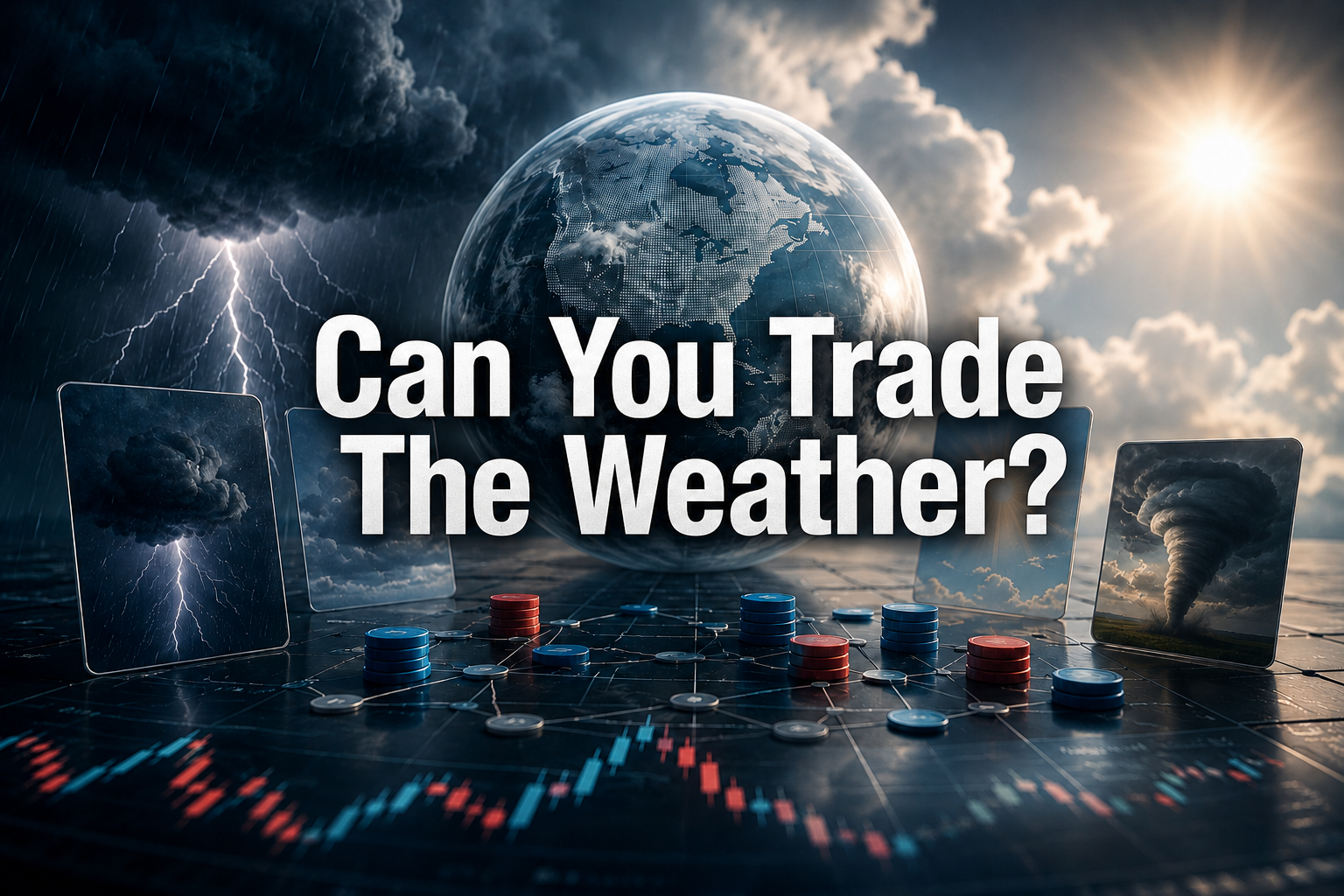
Catastrophe bonds are no longer a niche corner of structured finance. As climate shocks, insured losses, and reinsurance costs rise, catastrophe bonds have become an important capital-markets tool for insurers, reinsurers, and governments seeking protection against extreme events.
They allow sponsors to transfer disaster exposure into capital markets while giving investors access to a return stream driven more by hurricanes, earthquakes, and other defined perils than by economic growth or corporate earnings.
The market is large enough to matter. The NAIC says the outstanding catastrophe bond market reached roughly $56.7 billion as of June 30, 2025, while the Insurance Information Institute reported $23.874 billion in property cat bond issuance and $25.805 billion in total insurance-linked securities issuance in 2025.
Catastrophe bonds, often called cat bonds, are a form of insurance-linked securities. They allow an entity exposed to disaster risk to transfer part of that risk to investors through a bond-like structure.

If no qualifying event occurs, investors receive coupon payments and principal at maturity. If a specified event does occur, some or all of the principal may be used to compensate the sponsor.
In a standard structure, the sponsor enters into an insurance contract with a special purpose vehicle, or SPV. The SPV issues bonds to investors, invests the proceeds in highly rated collateral, and uses collateral returns plus premium payments from the sponsor to fund periodic coupons. If the trigger is met, the collateral is released to the sponsor.
That is why catastrophe bonds are best understood as bond-like instruments wrapped around insurance risk. They use the language of coupons, principal, and maturities, but their economic logic is closer to reinsurance than to corporate debt.
| Element | What it does | Why it matters |
|---|---|---|
| Sponsor | Transfers catastrophe risk | Seeks protection against extreme losses |
| SPV | Issues the bond and holds collateral | Separates the risk-transfer structure |
| Investors | Provide capital and receive coupons | Earn yield in exchange for event risk |
| Trigger | Defines when losses are paid out | Determines whether principal is at risk |
Insurers and reinsurers issue catastrophe bonds because they need protection against rare but severe losses that can pressure balance sheets. The American Academy of Actuaries notes that cat bonds serve as an additional source of capital for catastrophic events rather than a simple replacement for traditional reinsurance.
They also become more valuable when traditional reinsurance capacity is expensive or constrained. Capital markets are far larger than the global reinsurance sector, so catastrophe bonds allow sponsors to tap a broader pool of risk-bearing capital.
Governments use them as well. The World Bank’s catastrophe bond platform has provided protection for countries including Mexico, Jamaica, Chile, the Philippines, Colombia, and members of the Pacific Alliance, showing that sovereign disaster financing is now part of the same market architecture.
That sovereign role matters. A government facing a major hurricane or earthquake may need immediate liquidity for reconstruction, emergency services, and public infrastructure. Catastrophe bonds help secure that funding before disaster strikes instead of relying only on budget reallocations or outside aid.
Investors buy catastrophe bonds because the coupons can be attractive. The World Bank lists potential yield enhancement as a core investor benefit, while the American Academy of Actuaries says cat bonds can offer higher-yield potential than many traditional fixed-income assets.
Diversification is the second major reason. Disaster risk is not driven by the same forces that move credit spreads, GDP growth, or central-bank policy. The Actuaries also note that cat bonds are generally considered to have little to no correlation with other capital markets, while the World Bank highlights the opportunity to gain exposure to new perils and geographic regions.
A third attraction is their rate structure. The NAIC notes that cat bonds are generally issued as floating-rate securities, which means they have been less exposed to rising interest rates than many long-duration conventional bonds.
This explains why institutional demand has remained strong. The NAIC says 2025 brought record quarterly issuance, participation from both repeat and first-time sponsors, and durable two-sided demand from investors seeking diversified insurance risk.
Catastrophe bonds are not free yield. Investors are being paid to absorb tail risk, which means they can lose interest, principal, or both if a defined catastrophe occurs and the trigger conditions are met.
That makes the trigger central to the investment case. World Bank materials describe cat bonds as paying out when a disaster event meets predefined criteria, while the Actuaries identify four main trigger types: indemnity, industry loss index, modeled loss, and parametric.
Each trigger type balances speed, transparency, and basis risk differently. Basis risk deserves close attention because a bond can be triggered by a modeled or parametric event that does not fully match the sponsor’s actual losses. The reverse can also happen.
For investors, pricing depends not only on the peril itself but also on how the trigger is designed. This is why catastrophe bonds require specialist analysis. Investors are underwriting model assumptions, geographic concentration, trigger mechanics, and collateral structure, not just weather or seismic activity.
Recent issuance data show that catastrophe bonds have become a meaningful institutional market. According to the NAIC, the second quarter of 2025 alone saw about $10.5 billion of new risk issued across 38 transactions and 58 tranches, while the outstanding cat bond market rose to about $56.7 billion.
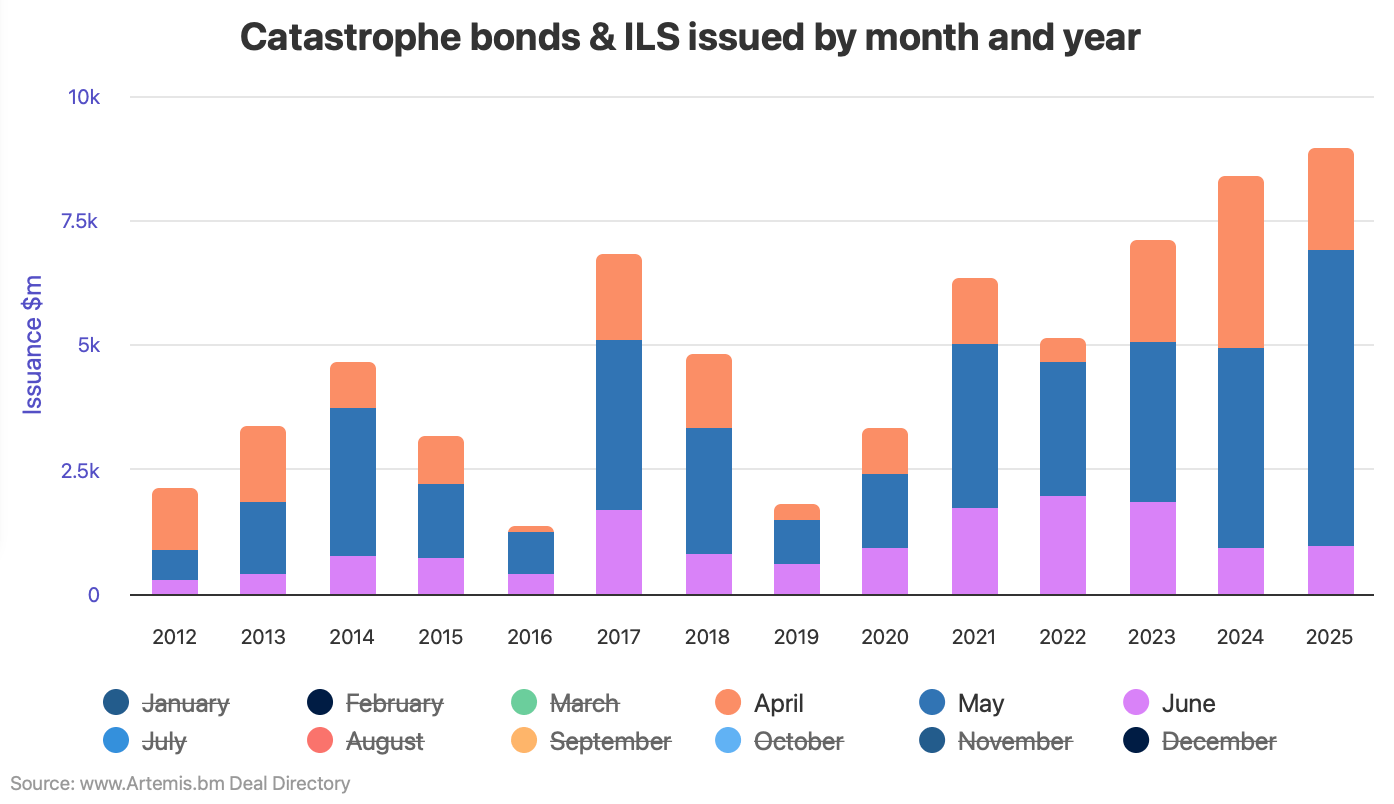
The III data tell a similar story. Property cat bond issuance reached $23.874 billion in 2025, accounting for 92.5% of total insurance-linked securities issuance that year. That concentration shows catastrophe risk remains the core of the broader ILS market.
The sovereign segment has expanded as well. The World Bank says Jamaica’s 2024 catastrophe bond renewed $150 million of hurricane coverage, Mexico’s 2024 structure provided $595 million of protection against hurricanes and earthquakes, and Chile received $630 million of earthquake cover.
Yes. Investors can lose some or all principal if a qualifying catastrophe occurs and the trigger conditions are met.
They are typically issued by insurers, reinsurers, corporations with concentrated disaster exposure, and governments seeking protection against extreme events.
Yes. Investors generally receive periodic coupons funded by collateral income and premium payments from the sponsor.
Because catastrophe risk is generally less correlated with traditional equity and credit-market drivers than most mainstream assets.
Both transfer risk, but catastrophe bonds move it into capital markets through securities, while reinsurance is usually a direct contract between an insurer and a reinsurer.
Catastrophe bonds convert disaster risk into investable capital-markets exposure. Sponsors issue them to secure protection against rare but severe events, while investors buy them for yield, diversification, and access to a risk stream that behaves differently from most traditional bonds.
That is why catastrophe bonds matter more today than they did a decade ago. They are no longer a curiosity within alternative assets. They are now a mature risk-transfer market linking insurance balance sheets, sovereign disaster planning, and institutional portfolio construction.
Disclaimer: This material is for general information purposes only and is not intended to be financial, investment, or other advice. No opinion in this material constitutes a recommendation by EBC or the author that any investment, security, transaction, or strategy is suitable for any specific person.