Published on: 2026-04-24
Meta Platforms stock is under pressure, but the move does not look like a rejection of the business. It looks more like a test of how much patience investors still have for big AI spending before the payoff becomes visible.
The company remains one of the strongest advertising businesses in global technology. What has changed is the market’s tolerance for capital expenditure. Investors are no longer willing to reward AI ambition on its own. They want to see whether that spending is lifting revenue, protecting margins, and improving cash flow.
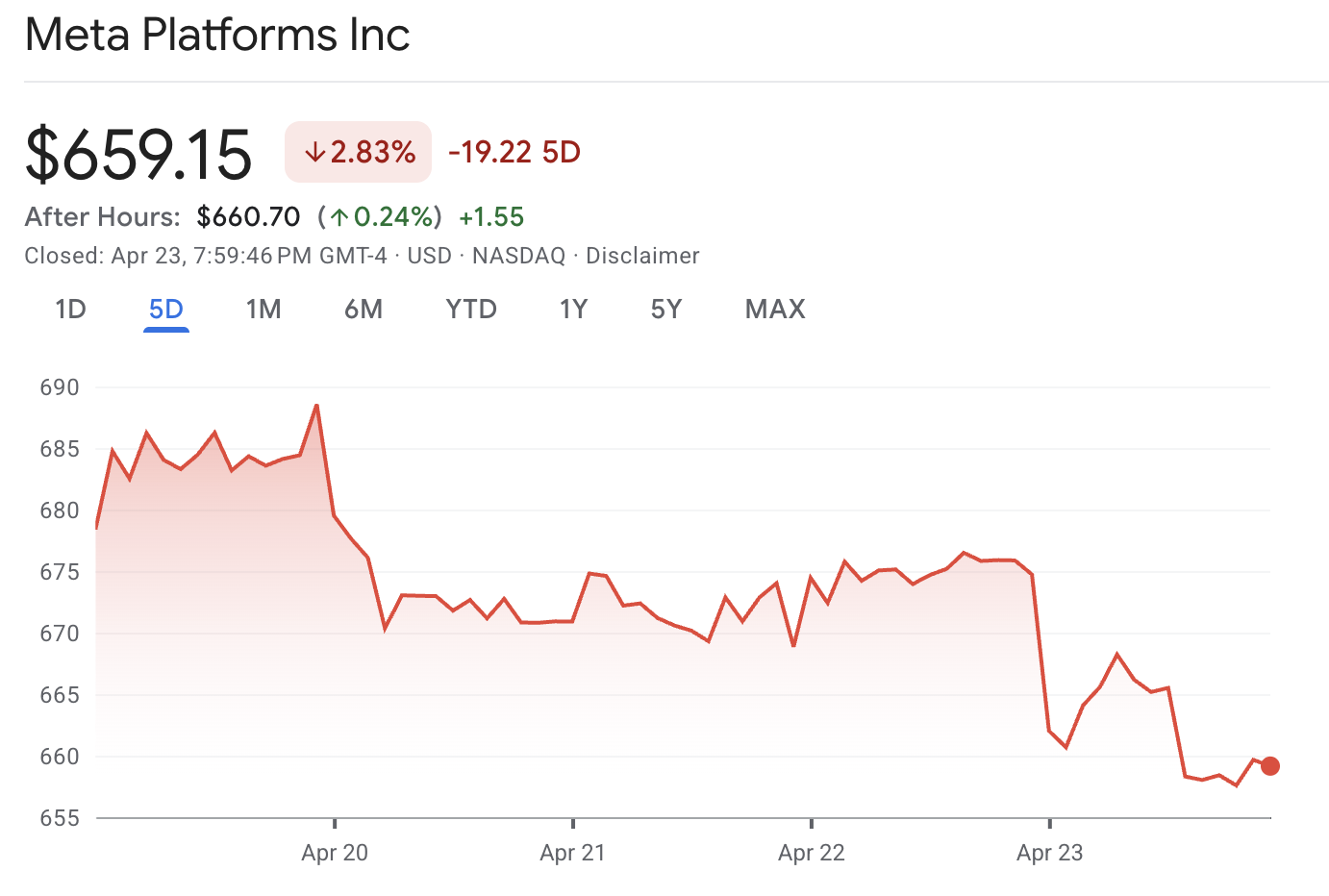
META recently traded near $659, down about 2.3%, after moving between $653.20 and $671.97 during the session. With a market value still close to $1.7 trillion, this is not yet a broken chart. It is a stock pausing before a major earnings test.
Meta Platforms reports first-quarter 2026 results after the market closes on 29 April 2026. That date matters because investors are looking for more than broad language about AI. They want evidence that AI is already making the ad business stronger, not simply making data centres more expensive.
Meta Platforms’ Q4 revenue rose 24% year-on-year to $59.89 billion, showing the core business remains healthy.
The pressure comes from spending, with 2026 capital expenditure expected around $115 billion to $135 billion.
Meta is reportedly cutting about 10% of its workforce, or roughly 8,000 jobs, while cancelling around 6,000 open roles.
A recovery likely needs strong ad growth, firm margin guidance, and clearer AI monetisation signals.
A move back above the $670 to $680 area would suggest buyers are returning.
Meta Platforms is not falling because advertisers have disappeared. The numbers suggest the opposite.
In the fourth quarter of 2025, revenue reached $59.89 billion, up 24% from a year earlier. Full-year revenue rose 22% to $200.97 billion. Ad impressions across Meta’s Family of Apps increased 18% in the quarter, while the average price per ad rose 6%.
That is a solid operating backdrop. But even strong fundamentals do not always protect a stock when expectations are high and spending is rising quickly.
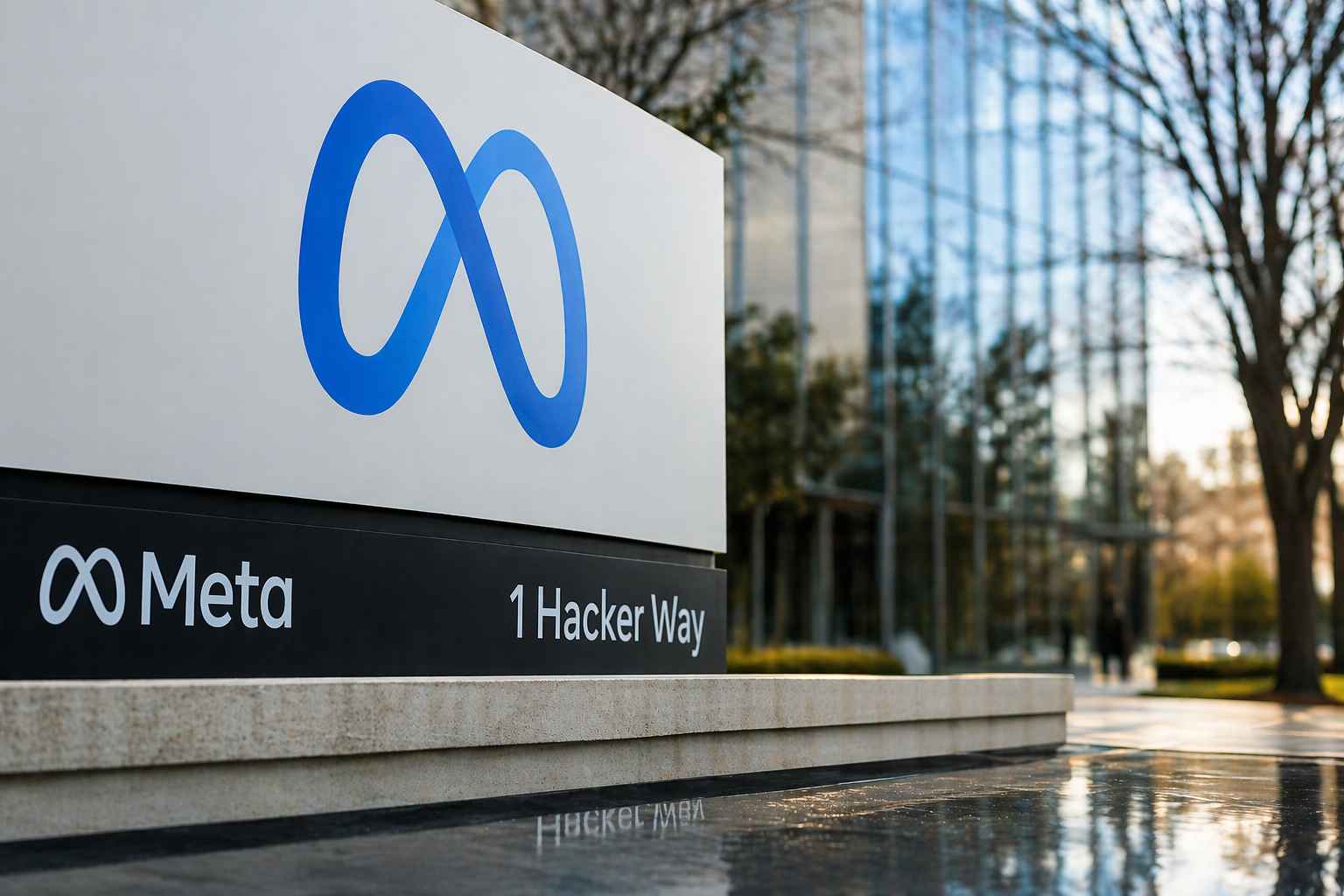
Meta is preparing to spend heavily on AI infrastructure while also cutting jobs to protect efficiency. The company is expected to cut about 8,000 employees, or roughly 10% of its workforce, with layoffs starting around 20 May 2026. It also plans to leave about 6,000 open roles unfilled. The cuts come as Meta prepares for 2026 capital expenditure of about $115 billion to $135 billion, much of it tied to AI infrastructure and data centres.
That is the trade-off investors are watching: Meta is reducing labour costs while redirecting capital toward a much larger AI buildout.
For Meta, AI is no longer just a growth theme. It has become the central question for the stock’s valuation.
The bullish case is easy to understand. AI can improve ad targeting, automate creative tools, strengthen recommendations, increase engagement, and make Meta’s platforms more valuable to advertisers. If that happens, the company can spend heavily while still defending margins.
The risk is that spending rises faster than revenue. If that happens, Meta may start to look less like a high-margin platform company and more like an infrastructure-heavy technology business. That would not ruin the long-term story, but it could limit how much investors are willing to pay for the stock.
This is why the earnings call matters. Investors will watch revenue and earnings per share, but they will listen even more closely to what management says about AI returns.
| Metric | Latest Signal |
|---|---|
| Recent share price | $659.15 |
| Intraday high | $671.97 |
| Intraday low | $653.20 |
| Market capitalisation | About $1.7 trillion |
| P/E ratio | About 29.2x |
| Q4 2025 revenue | $59.89 billion |
| FY2025 revenue | $200.97 billion |
| Q1 earnings date | 29 April 2026 |
The first requirement is advertising strength. Meta needs to show that marketers are still spending across Facebook, Instagram, WhatsApp, Threads, and Reels. A soft quarter would make AI capex look heavier. A strong quarter would make the spending cycle easier to defend.
The second requirement is margin discipline. Meta has earned investor trust before through cost control, especially during its “year of efficiency.” The latest job cuts suggest management wants to preserve that credibility. But the market will want numbers, not promises.
The third requirement is a clearer AI payback story. Meta does not need to prove that every AI project is profitable today. It does need to show that AI is improving the business in measurable ways. Better ad conversion, stronger engagement, improved pricing, or lower operating intensity would all help.
The fourth requirement is Reality Labs containment. Investors may tolerate heavy AI infrastructure spending if it strengthens the core advertising business. They are less forgiving when large losses sit far from near-term monetisation. Any sign that Reality Labs losses widen too quickly could weigh on sentiment.
The recent low near $653 is the first level to watch. A break below $650 would suggest sellers are becoming more aggressive. On the upside, the stock needs to reclaim the $670 to $680 area to show that buyers are stepping back in.
| Level | Why It Matters |
|---|---|
| $653 | Recent intraday support |
| $650 | Break below this would weaken sentiment |
| $670 to $680 | First recovery zone |
| Above $680 | Would suggest renewed buying momentum |
| Below $650 | Raises risk of a deeper correction |
It can be, but only if earnings support the story.
Meta still has scale, pricing power, and one of the strongest digital advertising platforms in the world. Revenue growth remains solid, and ad pricing is improving. The issue is valuation. At nearly 29x earnings, investors are paying for growth, execution, and discipline. That means Meta does not need to be perfect. It does need to be convincing.
A bullish earnings outcome would include strong Q1 revenue, confident Q2 guidance, stable margins, and evidence that AI is improving ad performance. That combination could push the stock back through the $670 to $680 zone.
A weaker outcome would look different. If management raises spending expectations without giving investors a clearer revenue bridge, the market may stay cautious. In that case, Meta could remain under pressure even if headline revenue looks healthy.
Meta still has the revenue growth, platform scale, and advertising strength investors want from a mega-cap technology stock. But the market has moved on from rewarding AI ambition alone. Meta now has to show that its spending can produce better ads, stronger engagement, and durable margins.
The stock can recover. But the next move depends less on hype and more on evidence. Earnings on 29 April will decide whether this dip becomes a buying opportunity or the start of a longer debate over Meta’s AI cost curve.