Published on: 2026-03-10
Although many beginner portfolios appear diversified, closer analysis often reveals a concentration of underlying holdings in a single country.
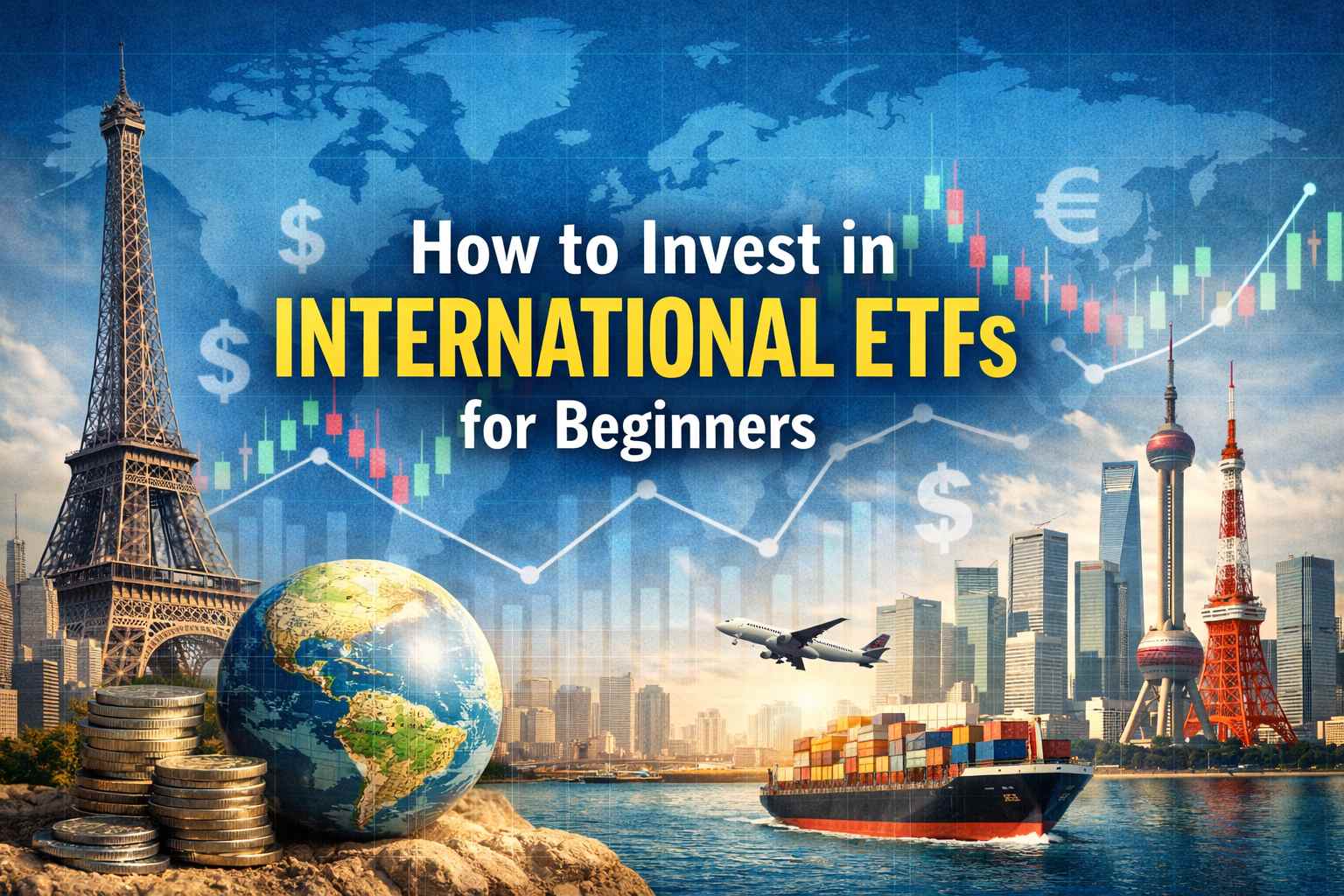
Understanding how to invest in international ETFs is increasingly important, as many investors who believe they are diversified across sectors remain concentrated in one country, currency, and market cycle.

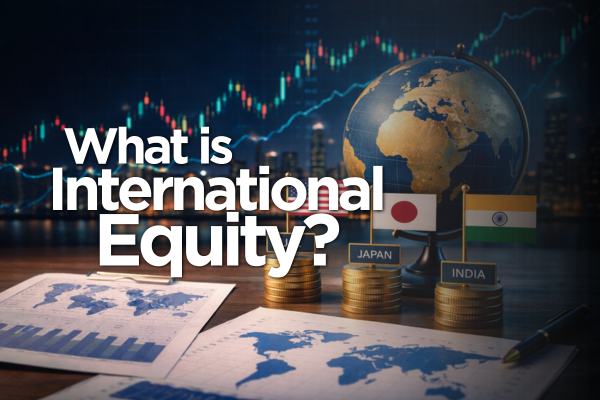
International ETFs offer an accessible means for beginners to overcome home-market bias and gain exposure to regions including Europe, Asia, Latin America, and emerging markets, without requiring research and purchase of individual foreign securities.
International ETFs are exchange-traded funds that invest in markets outside an investor’s home country, giving investors exposure to foreign stocks or bonds through a single trade.
They help diversify a portfolio across regions, industries, and currencies without requiring the purchase of individual overseas securities.
VXUS – a broad international ETF covering both developed and emerging markets outside the United States
IXUS – another broad ex-U.S. ETF with exposure across global developed and emerging economies
VEA – a developed-markets ETF focused on countries such as Japan, the U.K., Germany, and Australia
VWO – an emerging-markets ETF with exposure to economies such as China, India, Brazil, and Taiwan
BNDX – an international bond ETF investing in investment-grade bonds outside the United States with U.S. dollar hedging
International ETFs address a fundamental portfolio challenge. While most beginners recognize the importance of diversification across companies and sectors, many still concentrate their equity risk within a single country.
The distinction between international, global, and country-specific ETFs matters. An international ETF usually excludes U.S. companies. A global ETF can include both U.S. and non-U.S. holdings. A country- or regional-ETF narrows exposure to a single market, such as Japan, Brazil, or Europe.
For beginners, this hierarchy is significant because broader funds reduce the risk associated with adverse developments in a single economy, election, or policy environment.
The primary consideration should be the intended role of the ETF within the portfolio, rather than selecting a specific ETF.
For broad, long-term diversification, a total international ETF such as VXUS or IXUS is often the most straightforward starting point. Both provide exposure to developed and emerging markets outside the United States within a single investment.
For lower-volatility exposure, developed-market ETFs such as VEA typically offer greater stability. These funds focus on mature markets, including Japan, the United Kingdom, Canada, and Western Europe, where liquidity is higher, and policy risk is generally lower.
For higher growth potential, an emerging-market ETF such as VWO may serve as a smaller satellite holding. This approach provides access to rapidly expanding economies but also introduces greater currency, political, and regulatory risks.
For additional stability, international bonds may be incorporated. BNDX offers exposure to investment-grade foreign bonds with U.S. dollar hedging, which helps mitigate currency fluctuations.
A comprehensive fund comparison should consider exposure, cost, and scale collectively.
| ETF | Main Exposure | Best Use for Beginners | Current Cost / Scale |
|---|---|---|---|
| VXUS | Broad developed + emerging ex-U.S. stocks | One-fund international equity core | 0.05% expense ratio; about $120.7B ETF net assets |
| IXUS | Broad developed + emerging ex-U.S. stocks | Broad alternative with thousands of holdings | 0.07% expense ratio; about $53.5B net assets |
| VEA | Developed markets only | Lower-risk international stock core | 0.03% expense ratio; about $222.0B total assets |
| VWO | Emerging markets only | Satellite growth allocation | 0.06% expense ratio; about 6,288 holdings and $117.8B net assets |
| BNDX | Investment-grade international bonds, USD hedged | Reducing portfolio swings | 0.07% expense ratio; about 6,612 holdings |
The figures above come from official fund pages, prospectuses, and provider fact sheets.
The practical implication is clear: most beginners do not require multiple international ETFs. A single broad ex-U.S. fund is typically sufficient.
A second fund is warranted only when a specific portfolio objective exists, such as increasing exposure to emerging markets or enhancing stability through international bonds.
Currency risk: Returns can fall when foreign currencies weaken against the U.S. dollar, even if the local market rises.
Tax risk: International ETFs may be subject to foreign withholding taxes, which can reduce overall returns.
Liquidity risk: Some overseas markets are less liquid, which can lead to greater price swings and higher trading costs.
Trading-hour risk: Different market hours can create wider gaps and more volatility during fast-moving conditions.
Allocation risk: Emerging-market ETFs carry more risk than broad developed-market ETFs, so position size matters.
Time-horizon risk: International ETFs often need time to perform across full market cycles, not just a few months.
For those seeking to move beyond passive investing, EBC Financial Group provides access to more than 100 ETF CFDs across equity, bond, thematic, and leveraged categories, including EEM, EFA, EWT, EWW, TIP, VNG, and SOXX.
| Code | ETF / Instrument |
|---|---|
| AGG.P | iShares Core US Aggregate Bond ETF |
| BIL.P | SPDR Bloomberg Barclays 1-3 Month T-Bill ETF |
| BSV.P | Vanguard Short-Term Bond Index Fund |
| DGRO.P | iShares Core Dividend Growth ETF |
| DIA.P | SPDR Dow Jones Industrial Average ETF Trust |
| EEM.P | iShares MSCI Emerging Markets ETF (USD) |
| EFA.P | iShares MSCI EAFE ETF (USD) |
| EWT.P | iShares MSCI TAIWAN ETF |
| EWW.P | iShares MSCI Mexico ETF |
| EWY.P | iShares MSCI SOUTH KOREA ETF |
| EWZ.P | iShares MSCI BRAZIL ETF |
| FVD.P | First Trust Value Line Dividend Index Fund |
| FXI.P | iShares CHINA LARGE-CAP ETF |
| GDX.P | VanEck Vectors Gold Miners ETF |
| GDXJ.P | VanEck Junior Gold Miners ETF |
| GLD.P | SPDR Gold Shares ETF |
| HDV.P | iShares Core High Dividend ETF |
| HYG.P | iShares iBoxx $ High Yield Corporate Bond Fund |
| IEMG.P | iShares Core MSCI Emerging Mkts ETF |
| IJH.P | iShares S&P Midcap 400 Index Fund |
| IJR.P | iShares Core S&P Small-Cap ETF |
| ITOT.P | iShares Trust S & P 1500 |
| IVE.P | iShares S&P 500 Value ETF |
| IVV.P | iShares Core S&P 500 ETF (USD) |
| IVW.P | iShares S&P 500 Growth ETF |
| IWB.P | iShares Russell 1000 ETF |
| IWD.P | iShares Russell 1000 Value ETF |
| IWF.P | iShares Russell 1000 Growth ETF |
| IWM.P | iShares Russell 2000 ETF |
| IWN.P | iShares Russell 2000 Value ETF |
| IWS.P | iShares Russell Mid-Cap Value ETF |
| LQD.P | iShares iBoxx $ Investment Grade Corporate Bond ETF |
| MDY.P | SPDR S&P Midcap 400 ETF |
| RSP.P | Invesco S&P 500 Eql Wght ETF |
| SCHB.P | Schwab US Broad Market ETF |
| SCHD.P | Schwab US Dividend Equity ETF |
| SCHF.P | Schwab International Equity ETF |
| SCHG.P | Schwab US Large-Cap Growth ETF |
| SCHX.P | Schwab US Large-Cap ETF |
| SDY.P | SPDR S&P Dividend ETF |
| SPDW.P | SPDR Portfolio Developed World ex-US ETF |
| SPY.P | SPDR S&P 500 ETF Trust |
| SPYG.P | SPDR Portfolio S&P 500 Growth ETF |
| SPYV.P | SPDR Portfolio S&P 500 Value ETF |
| TIP.P | iShares TIPS Bond ETF |
| UNG.P | United States Natural Gas Fund ETF |
| URA.P | Global X Uranium ETF |
| USO.P | United States Oil Fund LP ETF |
| VB.P | Vanguard Small-Cap ETF |
| VDE.P | Vanguard Energy ETF |
| VEA.P | Vanguard FTSE Developed Markets ETF |
| VEU.P | Vanguard FTSE All World ex US Index Fund Investor Sha |
| VGT.P | Vanguard Information Technology ETF |
| VHT.P | Vanguard Health Care ETF |
| VIG.P | Vanguard Dividend Appreciation Index Fund |
| VNQ.P | Vanguard Real Estate Index Fund |
| VO.P | Vanguard Mid-Cap ETF |
| VOE.P | Vanguard Mid-Cap Value Index Fund |
| VOO.P | Vanguard S&P 500 ETF |
| VT.P | Vanguard Total World Stock Index Fund |
| VTI.P | Vanguard Total Stock Market ETF |
| VTV.P | Vanguard Value Index Fund |
| VUG.P | Vanguard Growth Index Fund |
| VWO.P | Vanguard Emerging Markets Stock Index Fund |
| VXF.P | Vanguard Extended Markets Index Fund |
| VYM.P | Vanguard High Dividend Yield Index Fund |
| XLB.P | Materials Select Sector SPDR |
| XLE.P | Energy Select Sector SPDR Fund |
| XLF.P | Financial Select Sector SPDR Fund |
| XLI.P | Industrial Select Sector SPDR Fund |
| XLK.P | Technology Select Sector SPDR Fund |
| XLP.P | Consumer Staples Select Sector SPDR |
| XLU.P | Utilities Select Sector SPDR Fund |
| XLV.P | Health Care Select Sector SPDR |
| XLY.P | Consumer Discretionary Select Sector SPDR Fund |
| AAXJ.OQ | iShares MSCI All Country Asia |
| ACWI.OQ | iShares MSCI ACWI ETF |
| BND.OQ | Vanguard Total Bond Market Index Fund |
| BNDX.OQ | Vanguard Total International Bond ETF |
| DVY.OQ | iShares Select Dividend ETF |
| EMB.OQ | iShares JP Morgan USD Emerging Markets Bond ETF |
| IBB.OQ | iShares BIOTECHNOLOGY ETF |
| ICLN.OQ | iShares Global Clean Energy ETF |
| IEI.OQ | iShares 3-7 Year Treasury Bond ETF |
| INDY.OQ | iShares India 50 ETF |
| IUSG.OQ | iShares Core S&P US Growth ETF |
| IUSV.OQ | iShares Core S&P US Value ETF |
| MCHI.OQ | iShares MSCI China ETF |
| PFF.OQ | iShares Preferred and Income Securities ETF |
| QQQ.OQ | Invesco QQQ Trust Series 1 |
| SHV.OQ | iShares Barclays Short Treasury Bond Fund |
| SHY.OQ | iShares 1-3 Year Treasury Bond ETF |
| SKYY.OQ | First Trust ISE Cloud Computing Index Fund |
| SMH.OQ | VanEck Semiconductor ETF |
| SOXX.OQ | iShares Semiconductor ETF |
| TLT.OQ | iShares 20+ Year Treasury Bond ETF |
| TQQQ.OQ | ProShares UltraPro QQQ ETF |
| VCIT.OQ | Vanguard Intermediate-Term Corporate Bond ETF |
| VCSH.OQ | Vanguard Short-Term Corporate Bond Idx Fd |
| VXUS.OQ | Vanguard Total International Stock Index Fund |
Register on EBC’s official website and create your User Portal account.
Complete identity verification by submitting the required KYC documents in the portal.
Choose your account type, such as a demo account or a live trading account, based on your experience and goals.
Wait for onboarding approval and sign any account documents required by compliance.
Deposit funds and log in to MT4 or MT5 to start trading once the account is activated.
Yes. Broad, low-cost international ETFs can help beginners diversify beyond the U.S. and access global growth. The main risks are currency moves, taxes, and political uncertainty.
An international ETF invests outside the United States. A global ETF includes both U.S. and international holdings. For U.S.-based investors, international ETFs offer more targeted foreign diversification.
Developed-market ETFs are usually the better starting point because they invest in larger, more stable economies. Emerging-market ETFs offer higher growth potential but also higher volatility and risk.
There is no fixed rule, but some international exposure improves diversification. A portfolio with no non-U.S. holdings is heavily dependent on a single market and a single economic cycle.
Yes. EBC Financial Group offers access to 100+ ETF CFDs, including products such as EEM, EFA, FXI, TIP, VNG, and SOXX. These are better suited to active trading than long-term investing.
International ETFs constitute one of the most accessible methods for beginners to construct a portfolio that is less reliant on a single country, currency, or equity cycle.
The most effective starting point is typically a broad, low-cost ex-U.S. fund, rather than a narrow country-specific or thematic investment. This type of fund enhances diversification across both developed and emerging markets.
For beginners, understanding this distinction is essential, as it differentiates investing from trading and should be considered prior to any capital allocation.
Disclaimer: This material is for general information purposes only and is not intended as (and should not be considered to be) financial, investment or other advice on which reliance should be placed. No opinion given in the material constitutes a recommendation by EBC or the author that any particular investment, security, transaction or investment strategy is suitable for any specific person.