Published on: 2026-07-14
Updated on: 2026-07-14
Wall Street is quietly rewriting its script on enterprise software, and Atlassian is currently the poster child for the comeback. In a sudden, high-volume trading session, Atlassian stock surged more than 8%, catching short-sellers off guard and breathing life into a sector that has spent most of the year in the penalty box.
For months, a dark cloud hung over the entire software sector. The prevailing narrative among institutional investors was simple, if perhaps overly dramatic: generative artificial intelligence was going to kill the traditional subscription model. The theory went that if AI could write code and automate workflows, companies would need far fewer employees, which would decimate seat-based licensing for tools like Jira and Confluence.
But today’s aggressive rally suggests the market might have overplayed its hand. As traders rotate capital out of expensive semiconductor names and back into beaten-down cloud platforms, Atlassian stock is suddenly looking like a highly attractive bargain.
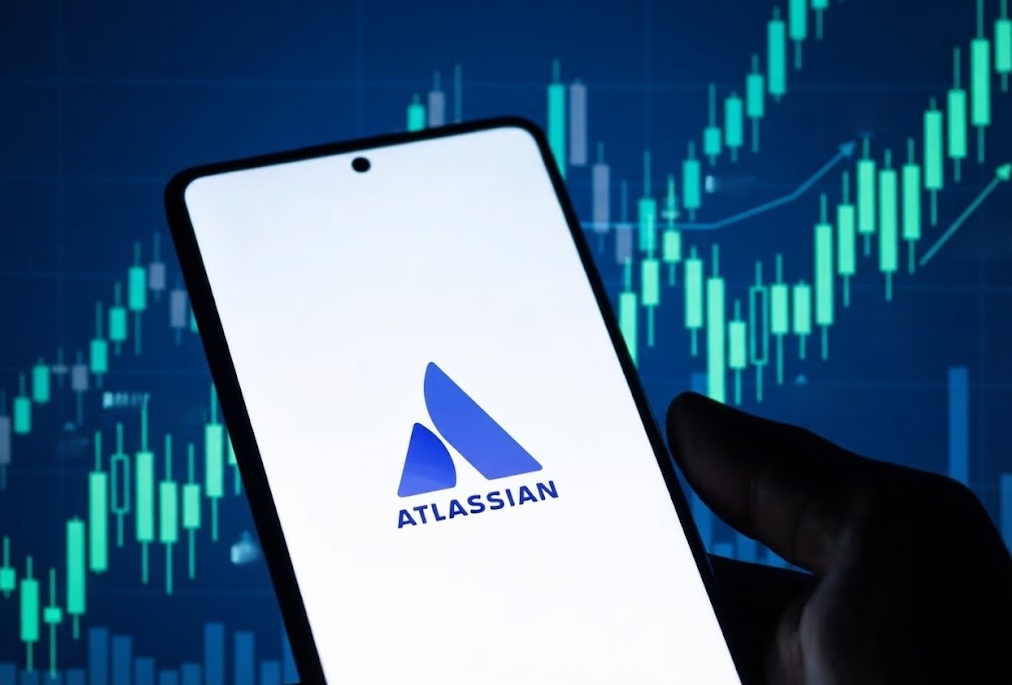
This isn’t just a random blip on a quiet trading day. The sharp upward move in Atlassian stock is the result of a perfect storm of shifting market mechanics and a realization that the company's fundamentals are far healthier than its depressed valuation suggested.
Several factors converged to fuel the buying frenzy:
The Great Tech Rotation: Portfolio managers are locking in massive profits from hardware and chip stocks that have carried the market for the last eighteen months. That money has to go somewhere, and oversold enterprise software providers with steady cash flows are the natural beneficiaries.
The AI Threat is Being Recalibrated: Recent earnings updates from major software peers have shown that instead of shrinking contract sizes, companies are actually spending more to integrate AI features. This has completely changed the risk calculation for Atlassian, which is rolling out its own AI companion, Rovo.
Extreme Multiple Compression: Prior to this run, the company was trading at multiples not seen since its pre-pandemic days. For value-seeking hedge funds, the downside protection had simply become too strong to ignore.
This shift in sentiment shows that while hardware gets the hype, the software layer is where the actual day-to-day work of global business gets done.
If you look past the daily market swings, the core financial health of the business tells a highly compelling story. In its latest quarterly reporting, Atlassian posted a 32% year-over-year increase in total revenue, crossing the $1.79 billion mark. Wall Street had expected a much softer number, particularly given the broader macroeconomic headwinds that have forced many companies to tighten their IT budgets.
What really stands out to analysts, however, is the company's gross margin profile. Even while investing heavily in its ongoing cloud migration strategy and building out new data centers, Atlassian managed to maintain an adjusted gross margin of roughly 86%.
To put that into perspective, most legacy players in the enterprise software space operate with margins in the mid-to-high 70s. This premium margin structure gives the company immense flexibility. It means they can aggressively fund research and development for new AI initiatives without having to sacrifice their overall profitability or take on expensive debt.
Furthermore, the migration of large-scale enterprise customers from on-premise servers to the cloud is continuing at a steady clip. This transition is crucial because cloud customers historically generate higher lifetime value and are far easier to upsell with new features and security add-ons.
The biggest hurdle for Atlassian stock over the past year hasn’t been its execution—it has been a crisis of faith. Skeptics argued that if a developer can use an AI agent to do the work of three people, companies will cut their Jira seat counts by two-thirds.
But talk to any engineering manager on the ground, and they will tell you a very different story. AI isn't reducing the need for project management; if anything, it is making it more chaotic. Because developers can now write code at three times the speed, organizations are suddenly flooded with a massive volume of new software updates, pull requests, and documentation.
This is where Atlassian's ecosystem becomes even more critical. Who is going to coordinate all of these automated workflows? How do teams track what these AI agents are actually building? The answer lies in platforms like Confluence and Jira.
Co-founder and co-CEO Mike Cannon-Brookes has repeatedly pointed out that more code inevitably requires more collaboration, governance, and tracking. Today's market action suggests that the investing public is finally starting to believe him.
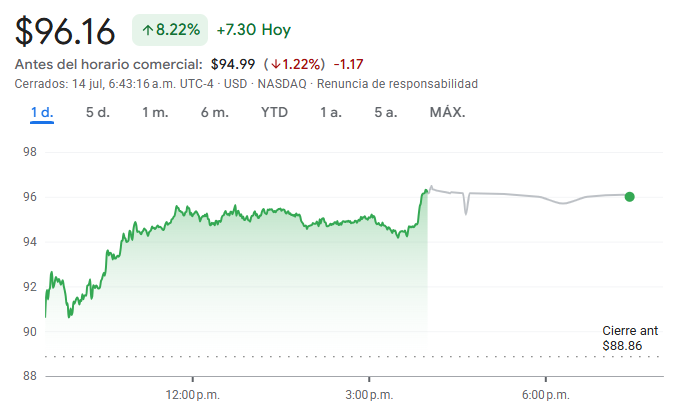
With the stock breaking through key resistance levels, equity research desks are busy revising their outlooks. The consensus on the street has leaned back toward a "buy" rating, with many analysts pointing out that the risk-reward skew is heavily tilted to the upside.
Even under conservative growth models that assume a slowdown in corporate IT spending, the math behind the company's valuation remains highly supportive. With a customer base that includes over 300.000 organizations worldwide—and a highly sticky product suite that is notoriously painful for a company to migrate away from—Atlassian has a defensive moat that few software firms can match.
As the macroeconomic picture stabilizes and fears of a hard economic landing fade, companies are likely to unlock their paused software budgets. When that happens, enterprise-wide deployments and contract expansions should accelerate, providing another potential catalyst for the share price.
The 8% jump in Atlassian stock is a healthy reminder that the market eventually tires of purely speculative narratives. While the panic over generative AI destroying the software sector made for great headlines, it didn't align with how actual enterprises operate.
Atlassian is proving that it isn't a victim of the AI revolution—it is a facilitator of it. By maintaining exceptional margins, steadily executing its cloud migration roadmap, and proving that its tools are more necessary than ever in an AI-assisted world, the company has successfully changed the conversation. For investors who had the stomach to buy during the recent downturn, today's rally feels like the beginning of a very welcome reality check for Wall Street.