Published on: 2026-07-14
Updated on: 2026-07-14
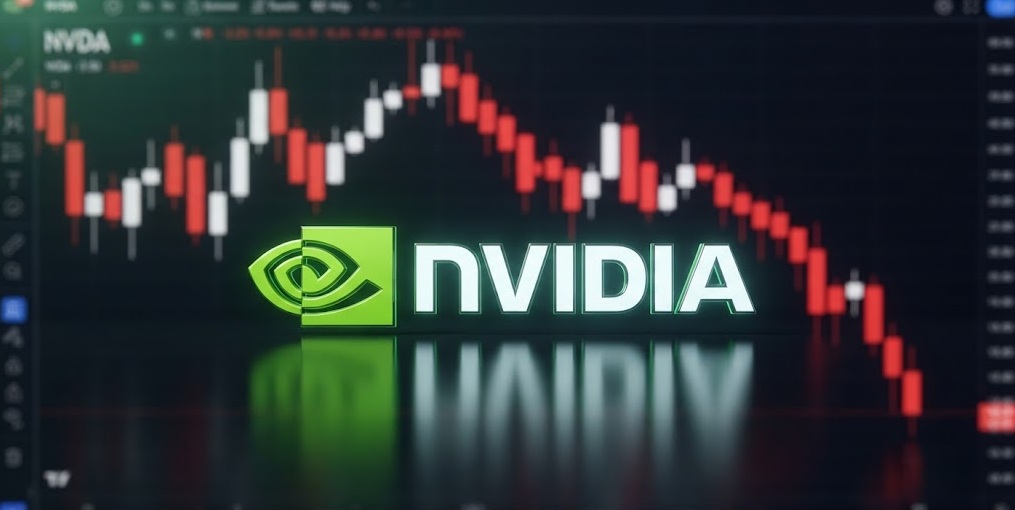
The semiconductor giant Nvidia Corp. (NASDAQ: NVDA) experienced a sharp reality check as the trading session wrapped up, leaving investors and analysts closely parsing the market’s latest signals. Nvidia’s stock slipped by 3.52%, closing at $203.53 per share—a noticeable slide from its previous close of $210.96. With the company's valuation hovering at a colossal $4.93 trillion, even a single-digit percentage drop wipes out billions in market value, triggering a cascade of queries across trading desks.
As retail investors and institutional funds alike react to the sudden dip, the central question dominating financial forums is clear: why is Nvidia stock price down today?
While a single-day drop is rarely a death knell for a company that has practically monopolized the artificial intelligence hardware market, this latest Nvidia stock drop is the result of a complex cocktail. Rumors of product delays, rising manufacturing costs, and broader anxieties over AI capital expenditure have converged to pressure the stock. Below, we break down the key catalysts behind today’s downward movement.
One of the most persistent worries quietly eating away at investor confidence is the soaring cost of production. Nvidia’s cutting-edge graphic processing units (GPUs)—which power modern AI supercomputers—rely heavily on High-Bandwidth Memory (HBM).
Supply Chain Commitments: Nvidia has committed a staggering $119 billion to secure its supply chain, but the soaring costs of HBM are raising alarms about the company's long-term gross margins.
Pricing Power vs. Expense: While analysts from Bank of America argue that Nvidia’s pricing power can easily offset these component expenses, the mere whisper of compressed margins has been enough to trigger automated sell programs.
For some, this cost creep is a major clue explaining why is Nvidia stock price down today. Although Nvidia is expected to command incredibly high margins on its upcoming next-generation Rubin architecture, the short-term financial pressure from suppliers like SK Hynix and Micron remains a thorn in NVDA's side.
In the highly sensitive semiconductor space, rumors can move billions of dollars in seconds. Over the weekend, reports circulated from industry research firm SemiAnalysis suggesting that Nvidia’s upcoming Kyber NVL144 architecture could face delays extending into 2028.
Although an Nvidia spokesperson quickly countered the reports, telling that the company's "roadmap is intact," the seeds of doubt were already sown.
Blackwell Ultra and Rubin: Target shipping dates for Blackwell Ultra chips are ramping up fast and the Vera Rubin architecture remains officially on track for late 2026, but the market is currently priced for absolute perfection.
The Cost of "Perfection": When a stock trades at such a premium, even unverified whispers of a product delay can send risk-averse institutional players looking for the exit.
This brief communication gap has undoubtedly added to the speculative pressure, answering in part why is Nvidia stock price down today.
Beyond Nvidia's internal dynamics, a broader semiconductor market selloff has been brewing. The core of this anxiety lies in the immense capital expenditure (capex) budgets of "Hyperscalers" like Microsoft, Meta, and Amazon. These tech behemoths have spent hundreds of billions of dollars purchasing Nvidia's hardware, but Wall Street is starting to demand proof of return on investment (ROI).
Amazon recently made headlines by borrowing another $25 billion, causing a minor selloff in AI-related debt. Investors are increasingly worried that if these giant tech firms begin to slow down their hardware acquisition cycles, Nvidia's revenue growth could hit a wall. This overarching macroeconomic anxiety is a fundamental reason why is Nvidia stock price down today.
For years, Nvidia has traded at astronomical valuations, propelled by astronomical growth. However, recent Discounted Cash Flow (DCF) analyses suggest that the NVDA share price is starting to align closely with its actual intrinsic value.
| Metric | Value |
| Current Share Price | $203.53 |
| Estimated DCF Intrinsic Value | ~$220.00 |
| 52-Week Trading Range | $162.02 - $236.54 |
| Price-to-Earnings (P/E) Ratio | 34.85 |
With the stock trading so close to its intrinsic value of around $220. Nvidia no longer offers the massive "margin of safety" that value investors look for. The market is no longer willing to buy NVDA at any price, leading to a natural AI stock correction. This shift in investor sentiment—moving from speculative euphoria to disciplined valuation checks—is a silent contributor to why is Nvidia stock price down today.
From a technical perspective, Nvidia's stock has faced resistance near its 52-week high of $236.54. As the price showed signs of cooling, derivatives traders stepped in to capitalize on the downward momentum.
Activity in the options market on Monday revealed heavy volume in bearish calendar put spreads, specifically targeting a retreat to the $195 level. When massive blocks of put options are bought, market makers are forced to sell the underlying stock to hedge their books, accelerating the downward pressure on the NVDA share price. This technical feedback loop explains why is Nvidia stock price down today from a mechanical trading standpoint.
While short-term traders focus on the immediate slide, major Wall Street institutions advise looking at the bigger picture. Bank of America recently highlighted that Nvidia is currently trading at a highly attractive discount compared to peers like Microsoft and Apple.
Historic Discount: Nvidia's price-to-earnings ratio on a next-12-months basis is hovering near 18.69—almost half of its 10-year average of 36.90.
Dominant Moat: Nvidia’s massive ecosystem, software integration (CUDA), and direct supply-chain commitments ensure it remains the undisputed king of AI hardware for the foreseeable future.
Analysts expect that Nvidia’s upcoming earnings report in August will act as a major catalyst to clear up the noise, reassure the market on margins, and potentially reverse the recent Nvidia stock drop.
Nvidia (NVDA) is confirmed as a CFD through EBC, covering the chip design segment of the AI infrastructure buildout. The full catalog is on EBC's stock CFD page. All positions are leveraged - review the instrument's margin requirement before entering positions during earnings season.
Today's pullback in Nvidia is not a sign of structural failure, but rather a healthy breather for a stock that has carried the weight of the entire tech sector on its shoulders. The convergence of rising high-bandwidth memory costs, unsubstantiated delay rumors, and general market exhaustion over AI infrastructure spending created the perfect storm.
Ultimately, understanding why is Nvidia stock price down today requires stepping back from the daily ticker tape. For long-term investors, this minor correction might just be the "juicy discount" they've been waiting for to build their positions.