Published on: 2026-07-14
Updated on: 2026-07-14
The Mexican peso traded near 17.5 to the dollar in mid-July, supported by high interest rates and Mexico’s role in North American supply chains. The July 1 USMCA review confirmed a different kind of risk to that picture, one rooted in trade policy rather than monetary policy.
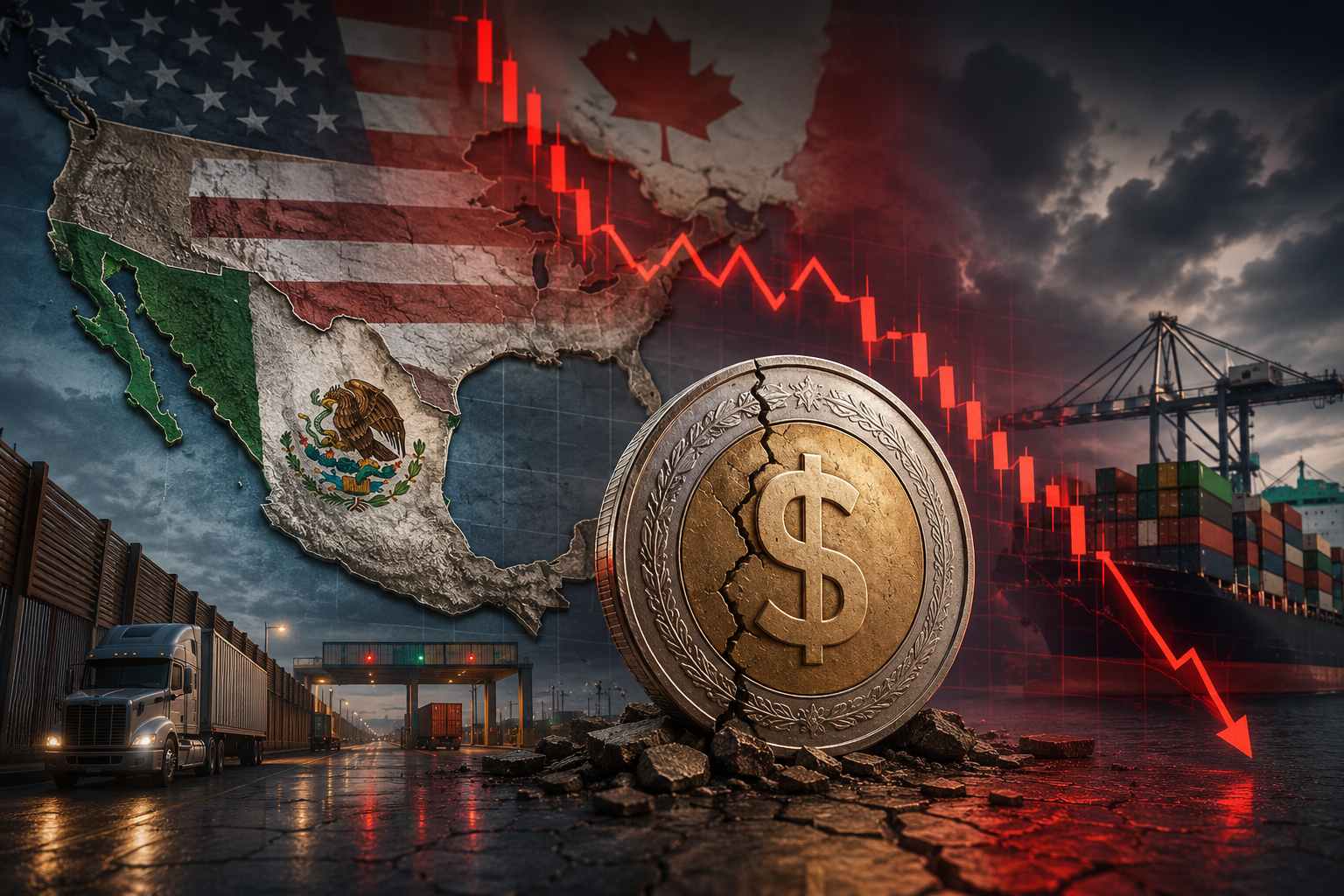
Here, we will walk through what the review changed, why a trade agreement can move a currency at all, and how these forces could shape USD/MXN in the months ahead. The central question is whether trade uncertainty can outweigh Mexico’s rate advantage.
USMCA was not renewed at its July 1, 2026 review but stays in force through 2036; with no clean 16-year extension, the three countries now move to annual reviews.
Compliance is the peso's tariff shield: the share of Mexican exports certified as compliant jumped from about 45% to roughly 85% in a year once non-compliant goods faced US tariffs.
The real threat is a tighter shield, not a collapse. The US has proposed raising auto content from 75% to 82% with a new 50% US rule, pushing some output outside duty-free access.
Trade uncertainty can lift USD/MXN through a risk premium before any rule changes, and can slow the nearshoring investment the peso relies on.
Banxico's 6.50% rate against 3.37% inflation still rewards the carry, but yield cannot offset trade risk. The next signal is the US-Mexico round in the week of July 20, 2026.
The USMCA is North America’s main trade agreement, and it carries an unusual feature: a scheduled joint review six years after it took effect, where the three governments decide whether to extend it. That review took place virtually on July 1, 2026.
US Trade Representative Jamieson Greer said Washington would not renew the pact in its current form, so it was not extended at the review, although it stays fully in force through July 1, 2036, with tariffs, rules of origin and investment protections unchanged. Because the extension was withheld, the treaty now requires annual reviews until the three countries agree to renew it for another 16 years.
Mexico’s Economy Secretary Marcelo Ebrard described the result as continuity under yearly review, while Canada backed a full renewal, and a further US-Mexico round is set for Mexico City in the week of July 20, 2026. The 2026 review changed no rule on its own, but it changed the cadence: North American trade terms are now revisited every year rather than settled for the next decade.
A currency reflects confidence in an economy’s future, and few economies are as tied to one trading partner as Mexico is to the United States, which buys more than 80% of its goods exports.
When trade access looks secure, companies invest, dollars arrive through exports and foreign direct investment, and the peso tends to strengthen. When that access is in doubt, investors attach a risk premium, demanding extra compensation to hold pesos, which lifts USD/MXN.
The July review did not touch a single tariff, yet it planted that doubt, which is part of why the peso held near 17.5 even as the dollar broadly weakened, with USMCA uncertainty offsetting some of the gain. Currencies price expectations, so a shift in the odds of trade friction can move the peso before any rule changes.
Autos show this mechanism most clearly, because vehicles and parts rank among Mexico’s largest exports and sit at the centre of the review. To enter the US tariff-free, a vehicle must currently meet a 75% North American content threshold under USMCA’s rules of origin, a level already stricter than the NAFTA regime it replaced.

US negotiators have reportedly proposed lifting that bar to 82% and adding a requirement that 50% of a vehicle’s value originate specifically in the United States.
Vehicles that fail to qualify face US tariffs, so tighter rules translate directly into Mexico tariff risk for plants built around integrated cross-border supply chains. Because the sector drives a large share of export earnings, even a partial move in that direction would send outsized signals to the peso.
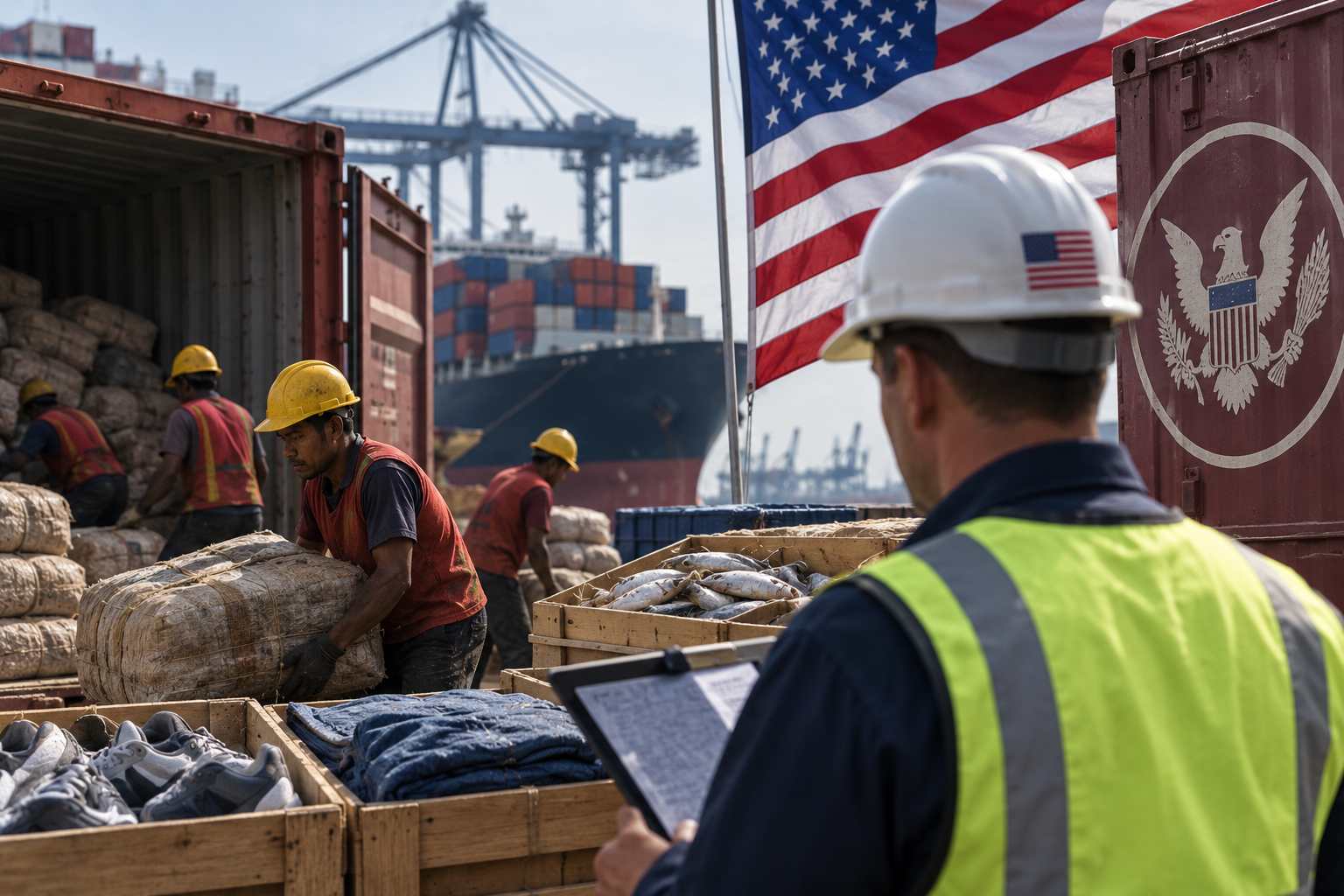
The peso’s calm rests on a quiet fact: staying inside USMCA is what keeps most Mexican goods out of US tariffs. Once Washington began taxing imports that fall outside the agreement in 2025, the share of Mexican exports certified as compliant jumped from about 45% to roughly 85% within a year, as firms rushed to qualify.
Compliant goods still cross the border largely duty-free, so the review’s real threat is not a sudden end to the deal, which runs to 2036 and would need six months’ notice to exit, but a tightening of the rules that decide what counts as compliant.
Lifting auto content to 82% with a 50% US share, for instance, would push some Mexican output back outside that duty-free line. The risk to watch is a shrinking shield rather than a cliff, set against an annual review that keeps uncertainty high and can slow the nearshoring investment the peso leans on.
Much of the peso’s resilience comes from the carry trade, in which investors borrow a low-yielding currency and hold a higher-yielding one to pocket the difference.
Banxico held its policy rate at 6.50% in June, and headline inflation later eased to 3.37% for the full month, leaving the peso with a positive real-rate cushion that rewards carry investors and helps explain why the peso stayed strong even after Banxico cut rates.
A yield advantage, though, pays investors for interest-rate risk, not for trade-policy risk. Banxico has listed trade disruptions and a weaker peso among its upside inflation risks, so a trade shock could keep Mexican rates higher for longer, supporting carry even as it signals stress.
If a trade premium rises faster than the yield on offer, peso carry trade positions can unwind quickly, and with Banxico signalling a pause, the rate side has less fresh support to give. Carry can cushion the peso, but it cannot fully insure it against a trade shock.
No single path is guaranteed, so it helps to weigh a few outcomes rather than a forecast. The table sketches how different negotiation results could feed through to USD/MXN.
| Scenario | What supports it | Peso read-through |
|---|---|---|
| Trade risk contained | Talks continue, USMCA stays in force, and there is no major tariff escalation. | Carry and nearshoring remain supportive; USD/MXN stays broadly rangebound. |
| Rules tighten, deal survives | Auto-content rules become stricter, but negotiations do not break down. | Selective pressure on autos and FDI headlines; USD/MXN becomes more volatile. |
| Uncertainty escalates | Talks drag on, tariff threats rise, and annual reviews become entrenched. | The risk premium increases; USD/MXN can rise even while Banxico rates remain high. |
Real markets rarely follow one lane, and the eventual outcome may blend these as the annual cycle unfolds.
The nearest catalyst is the July 20 week round in Mexico City, where the tone on autos and rules of origin will set the mood. After that, the signals worth following are tariff language from Washington, the pace of foreign investment into Mexican factories, and whether Banxico ties trade risk to its rate path.
US demand data belongs on the list too, since a slowdown would hurt Mexico’s exports regardless of the review, a channel covered in how tariffs affect the US dollar. Progress toward a later extension would ease the risk premium, while a stretched-out annual cycle would keep it in place.
No. It remains in force through July 1, 2036. The July 1, 2026 review did not produce a 16-year extension, so the countries move to annual reviews while current tariffs and rules stay unchanged.
Mexico’s peso is tied to trade access, exports, autos, nearshoring and investor confidence in US-Mexico supply chains. Doubt over those rules raises the risk premium investors attach to Mexican assets.
It can, if carry demand, Banxico’s 6.50% rate advantage and nearshoring inflows stay strong enough to offset trade risk. The balance depends on how the annual reviews and bilateral talks progress.
Tariff threats, stricter auto content rules, weaker US demand, further Banxico rate cuts or broad US dollar strength could each pressure the peso, and more so in combination.
The US-Mexico bilateral round in Mexico City during the week of July 20, 2026, which should show how quickly outstanding issues are resolved.
For most of the past two years, reading the peso meant watching Banxico and the Fed. The 2026 review adds a second lens: how securely Mexico holds its place in North American supply chains. Neither lens has flashed red so far, but the balance of influence is tilting from interest rates toward trade policy, reshaping how traders weigh Mexican peso risk.
Following the annual reviews, starting with the July 20 week round, is becoming as much a part of watching the peso as tracking the next rate decision.