Published on: 2023-11-22
Updated on: 2026-04-30
Box theory is a trading framework that turns sideways price action into a clear plan for entry, exit, stop-loss, and breakout confirmation. Instead of asking whether a market “looks strong,” box theory trading asks a sharper question: is price still trapped inside a range, or has it escaped with enough momentum to start a new trend?
The method became famous through Nicolas Darvas, a dancer and self-taught investor who used price ranges, volume, and growth-stock selection to trade momentum. Modern markets are faster, but the same rhythm remains visible across stocks, forex, gold, crypto, and indices: consolidation, breakout, retest, and continuation.

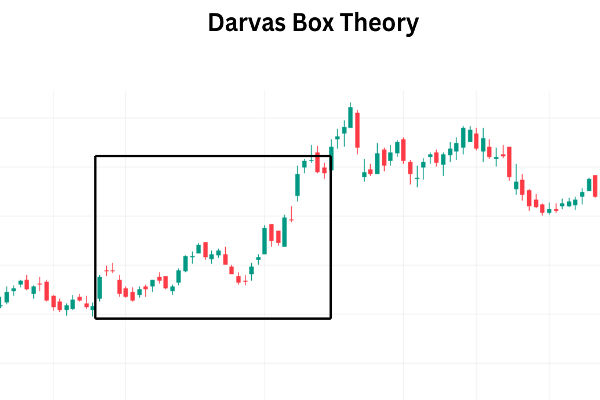
Box theory defines a range using the recent high as the box top and the recent low as the box bottom.
A valid box breakout needs a close outside the range, stronger participation, and a supportive trend context.
The Darvas box theory works best in strong markets, especially when leading stocks form higher boxes.
False breakouts are the main risk, particularly during news events or thin liquidity.
A strong-box trading strategy defines the entry, stop-loss, target, and invalidation before entry.
Box theory treats consolidation as a rectangle. The upper boundary is resistance. The lower boundary is support. While price trades inside the box, buyers and sellers are balanced. When the price closes above the box top, demand has absorbed supply. When the price closes below the box bottom, support has failed.
The method does not predict the future. It shows where price must prove itself. Traders wait for confirmation and manage risk around the box.
Box theory in trading is a technical analysis method based on support, resistance, and breakout behaviour. A box forms when price repeatedly stalls near the same upper level and rebounds from the same lower level. The range may last days, weeks, or months, depending on the timeframe.
In an uptrend, boxes act like steps. Price breaks above one box, forms a higher box, then attempts another breakout. In a downtrend, price breaks support, forms a lower box, and continues if sellers remain in control.
This makes box theory useful for trend-following and risk management. It shows where momentum begins and where the trade thesis becomes wrong.
The Darvas box theory was developed by Nicolas Darvas, not “Nicolas Davas,” a common spelling mistake. Darvas used price and volume to identify stocks making new highs, then drew boxes around recent highs and lows to define entry and exit points.
His book, How I Made $2,000,000 in the Stock Market, made the method famous. The exact profit claim is less important than his process: strong industries, volume confirmation, and rising price structure.
A trading box should be easy to see. If the range needs to be forced, the setup is weak. The cleanest boxes usually have at least two reactions near resistance and two near support.
For example, a stock trades between $95 and $105 for three weeks. If the price closes at $107 on stronger volume, the breakout is active. Since the box height is $10, the initial measured target is near $115. If the price falls back below $105, the breakout has failed.
A box breakout strategy should answer four questions: where is the entry, the stop, the target, and the confirmation?
A clean breakout closes near the session high, expands on volume, and holds above former resistance. A weak breakout clears the box briefly, loses momentum, and falls back into the range.
False breakouts are the biggest weakness of the box method trading approach. A price spike above resistance can trigger late buying before sellers force price back into the box.
This distinction is critical in forex box trading. Currency pairs often break out of a range during inflation data, central bank speeches, or session openings. A candle-close filter helps traders avoid temporary liquidity sweeps.
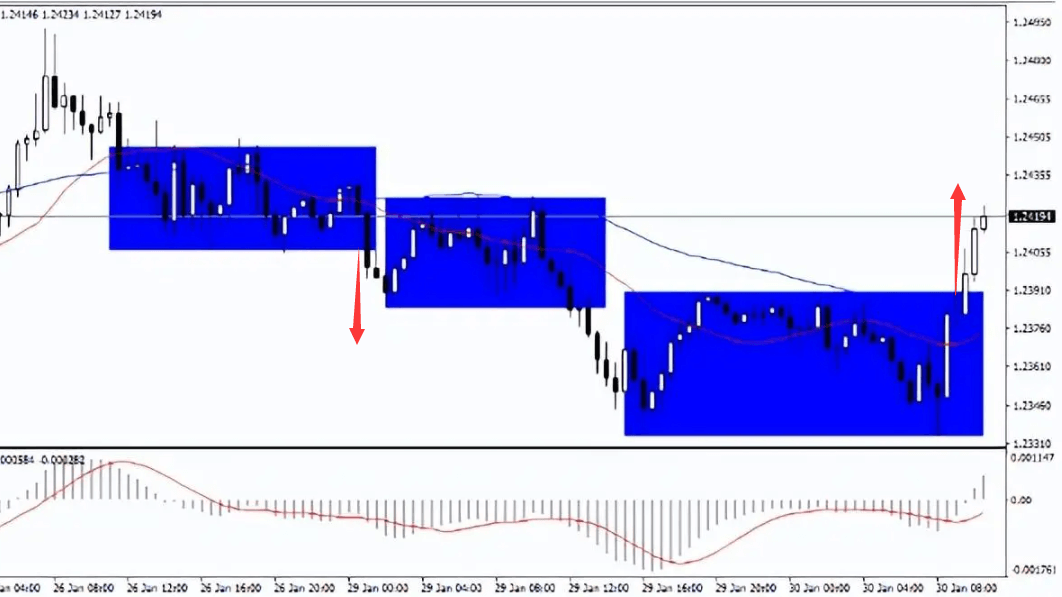
Modern markets have not made box trading obsolete. They have made confirmation more important. Algorithmic orders, options hedging, and event-driven liquidity can quickly push prices beyond obvious levels. The breakout that matters is the one that holds.
NVIDIA provided a clear 2026 example. In late April 2026, the NVIDIA stock pushed to record highs after breaking from a multi-month range, supported by renewed enthusiasm for AI infrastructure. The lesson is that a breakout carries more weight when sector momentum, volume, and price structure align.
Gold offers a different case. After sharp safe-haven gains in 2025, precious metals remained elevated into 2026 as geopolitical uncertainty, central-bank buying, and investor demand supported prices. Boxes often form after fast rallies while traders wait for the next catalyst.
The first mistake is entering before confirmation. Touching the box top does not constitute a confirmed breakout.
The second mistake is ignoring volume. A breakout without participation can fail quickly because demand is not strong enough to hold the range break.
The third mistake is drawing boxes too tightly. Normal volatility can look like a breakout if the box is built around every minor swing.
The fourth mistake is using box theory without a market context. A bullish box in a weak sector or during a risk-off session is less likely.
Box theory uses support and resistance to define a trading range. Traders watch for the price to break above or below the box to identify a possible trend shift.
The Darvas box theory is the version popularised by Nicolas Darvas. It focuses on strong stocks that form ranges, break into higher boxes, and confirm momentum with volume.
Yes, but forex box trading needs stricter confirmation. Currency pairs can create false breakouts around major data releases and session opens, so traders often wait for a candle to close outside the range.
Box theory remains useful because it turns market noise into structure. It defines support, resistance, breakout levels, and invalidation before emotions take over.
The best box trading strategy is not complicated. Wait for a clear range, demand a confirmed breakout, respect false signals, and size risk before entry. Used correctly, the box is a disciplined way to trade momentum without losing control of downside risk.
Disclaimer: This material is for general information purposes only and is not intended as (and should not be considered to be) financial, investment or other advice on which reliance should be placed. No opinion given in the material constitutes a recommendation by EBC or the author that any particular investment, security, transaction or investment strategy is suitable for any specific person.