Published on: 2026-05-08
Updated on: 2026-05-08
Asia's largest oil buyers have been leaning on workarounds to limit the impact of high oil prices, shielding not only their own economies but their neighbours in urgent need of supply.
The measures range from bilateral agreements with Tehran to tapping cargoes of Russian and Iranian oil already on the water. Additional export curbs are likely up for discussion if needed, said analysts.
According to Kpler, Chinese imports through the critical waterway fell to about 222,000 bpd in April, a sharp dip from 4.45 million bpd before the war. India's supplies through this route also plunged.
Overall oil imports to Asia, which takes 85% of Gulf crude shipments, plunged 30% in April on the year, to their lowest since October 2015. The disruption has spurred fiscal strains across the region.
Once-deep discounts for grades like Russia's ESPO or Iranian crude have turned into premiums. According to JP Morgan, US blockade could leave "far less room for workaround trade".
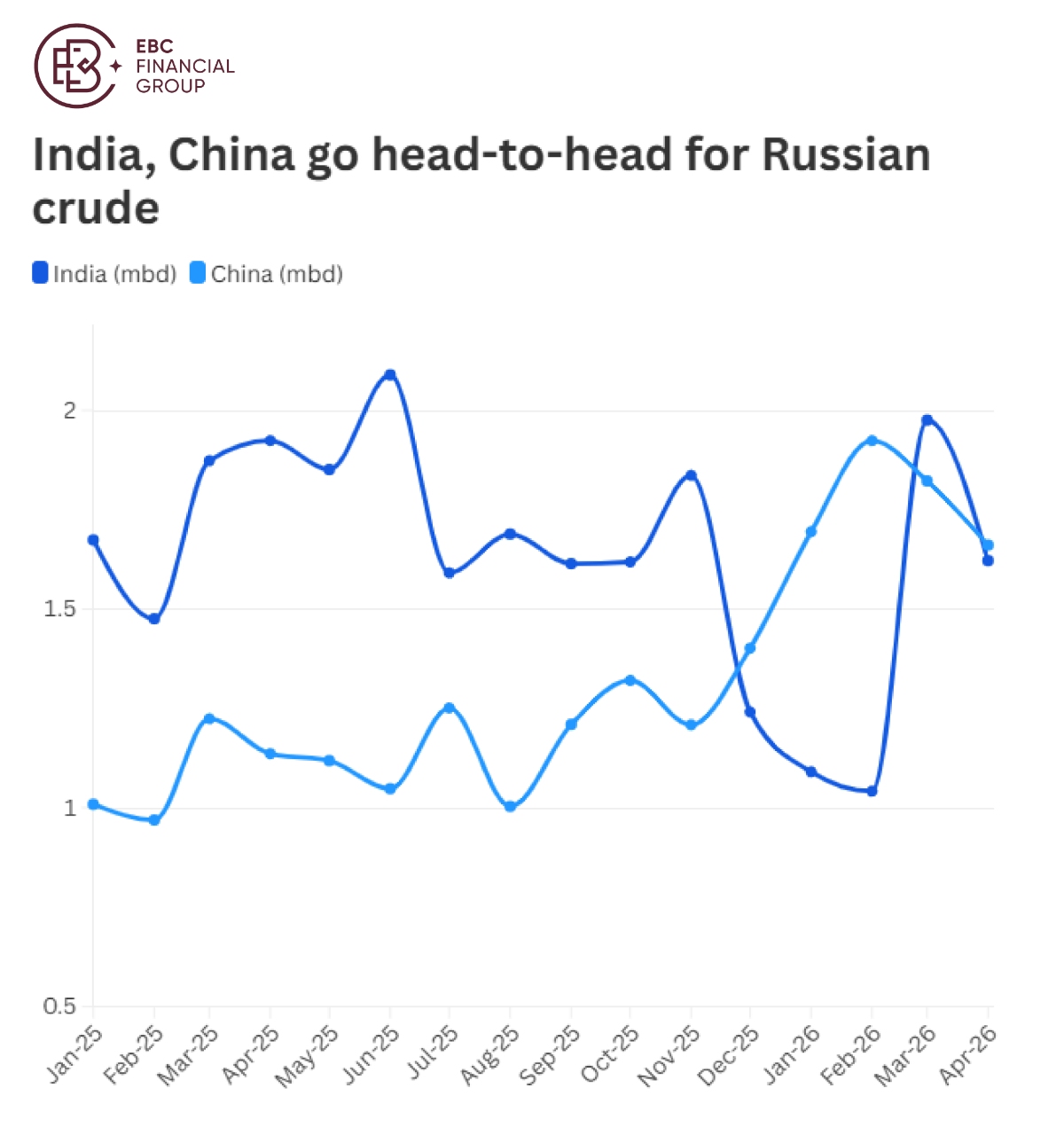
While New Delhi needs to strike a favourable deal with the Trump administration, Russian crude becomes more critical for India given the tight oil reserves and underdeveloped renewable energy.
Putin is considering to travel to China in the first half of this year, with both sides preparing to deepen economic and defence ties. Kremlin has signalled readiness to boost energy exports to its strategic partner.
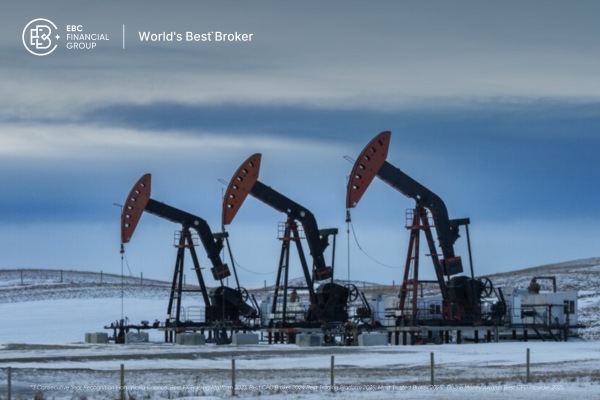
The US has become the top crude exporter again, but this supply cushion is rapidly being pushed to its limits. Shale producers are struggling to keep up while domestic inventories are depleting.
Drillers are holding off on investment as it is hard to predict where markets are headed next. Apart from that, infrastructure and shipping constraints cap how much crude can consistently leave the US Gulf Coast.
The Middle East producers seek to reroute more flows to bypass the Strait, but developing pipelines involves not only massive investment in infrastructure, but transnational agreements that take time to materialise.
The alternative option has showed its vulnerability after Saudi's East-West pipeline and the port of Fujairah (the end-point of the UAE pipeline) both have been attacked by Iran earlier.
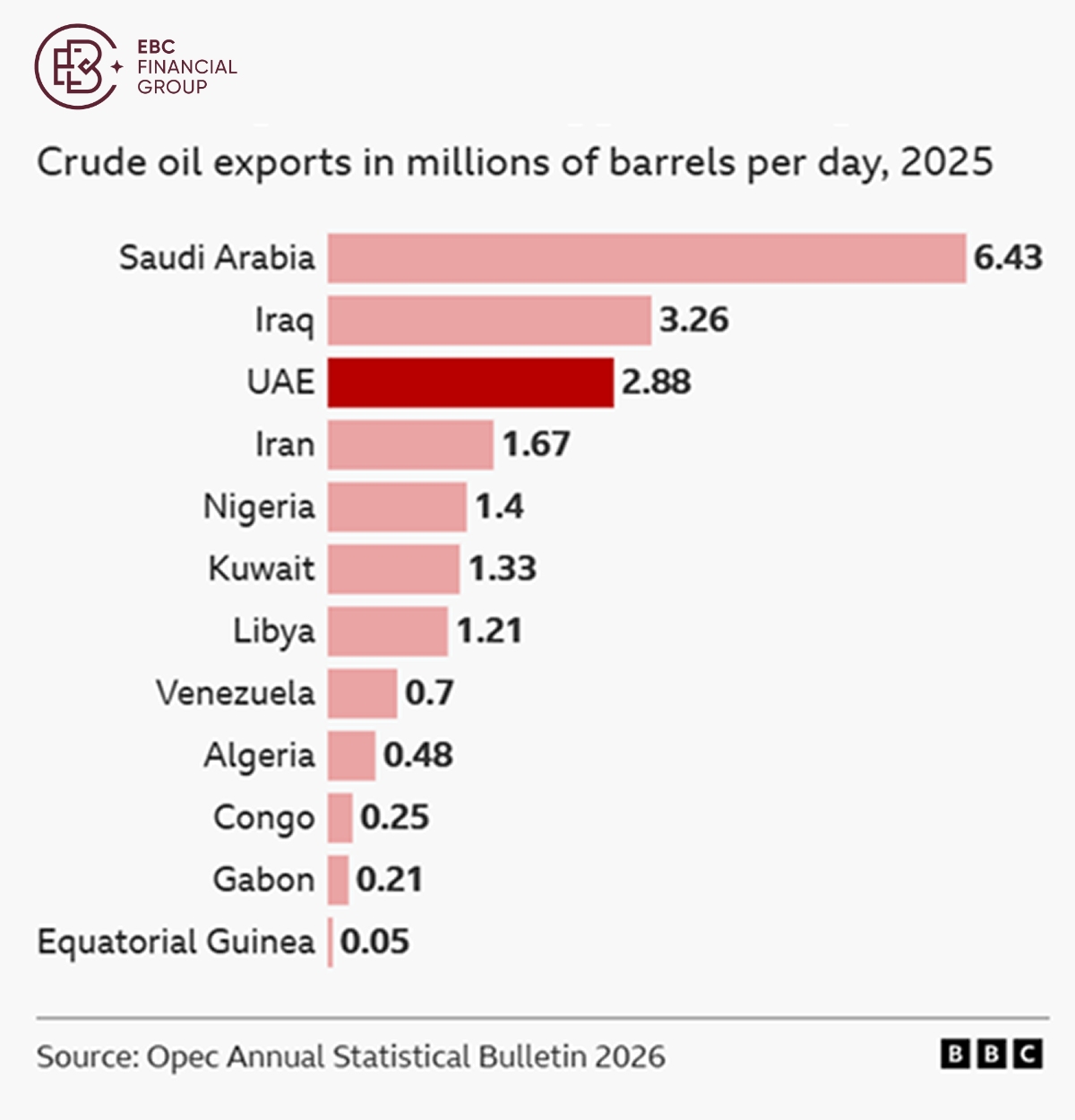
Announcement of UAE leaving the OPEC adds to uncertainties in the long run. The country was the world's third biggest oil exporter, behind Saudi Arabia and Iraq in 2025, according to the latest OPEC data.
Several days following the decision, ADNOC has outlined plans to award 200 billion dirhams worth of projects from 2026 to 2028, speeding up its spending plan for the ramp-up of production capacity.
In short, supply from outside the region is vital to filling a gap which may exist longer. The mid-cap energy stocks in North America presumably outperform Big Oil in a bull market, such as EOG Resources and Suncor Energy.
Investors are piling into clean power funds at the fastest pace in five years, according to Morningstar data, as the wars involving Russia and the Middle East accelerate a push for energy transition.
"Investors are pricing the cost of relying on imported fuels in a world that keeps springing geopolitical surprises," said Charles de Boissezon, global head of equity strategy at Société Générale.
iShares Global Clean Energy ETF has been on par with Vanguard Energy ETF this year. The former declined for a 5th consecutive year in 2025 due to high borrowing costs for capital-intensive projects and political uncertainties.
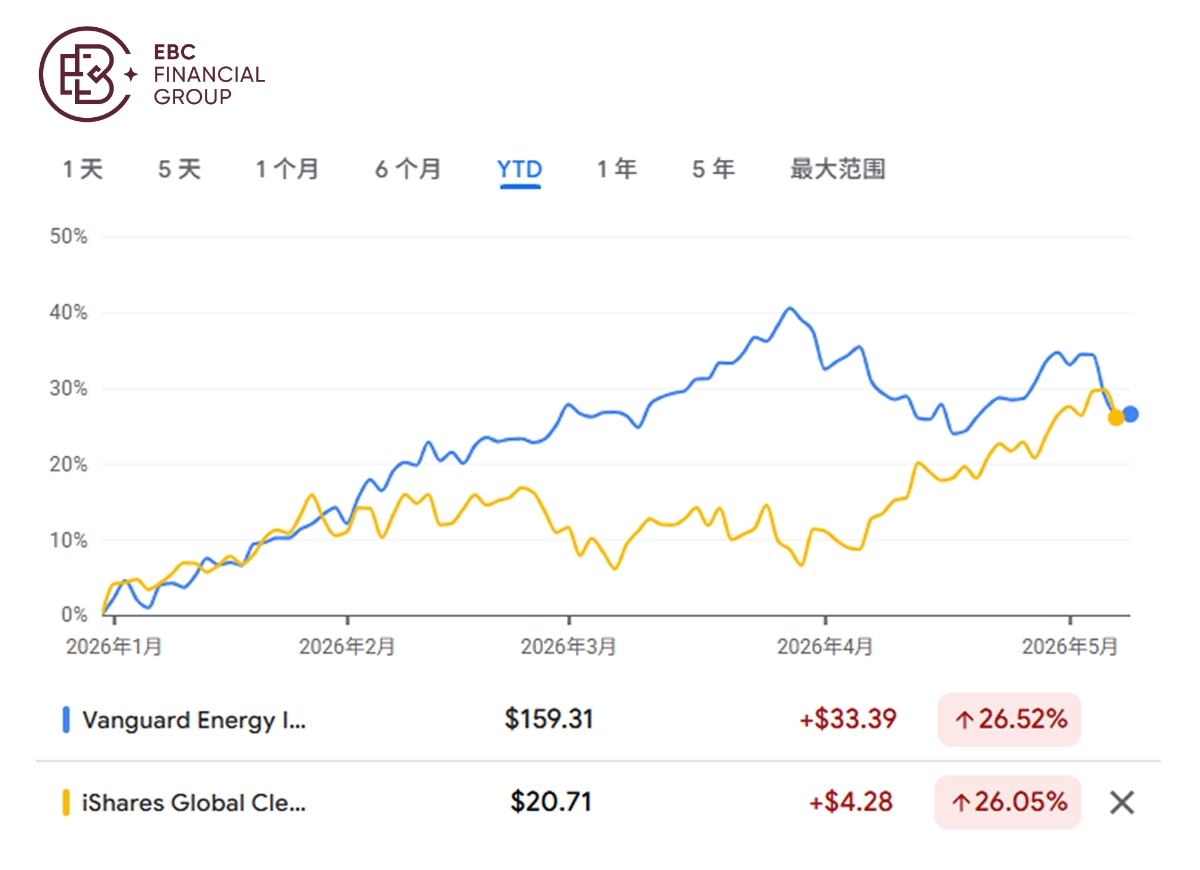
Bernstein analyst Deepa Venkateswaran suggested that while fossil fuel companies receive a boost in the short term, the consequent demand destruction bolsters the case of thriving renewables and electrification.
Despite the Trump administration's opposition to wind and solar power, clean energy funds also benefit across the pond. For the year, NextEra Energy has been up around 16%.
In the US, nuclear power development is undergoing the most significant revitalization in decades, driven by the massive build-out of infrastructure for AI. The ongoing energy crisis helps reinforce the trend.
IEA chief Fatih Birol says Europe erred by phasing out nuclear power, underscoring potential role of nuclear in resilience, in line with EU chief Ursula von der Leyen's speech made in March.
Disclaimer: This material is for general information purposes only and is not intended as (and should not be considered to be) financial, investment or other advice on which reliance should be placed. No opinion given in the material constitutes a recommendation by EBC or the author that any particular investment, security, transaction or investment strategy is suitable for any specific person.