Published on: 2026-03-25
Updated on: 2026-03-25
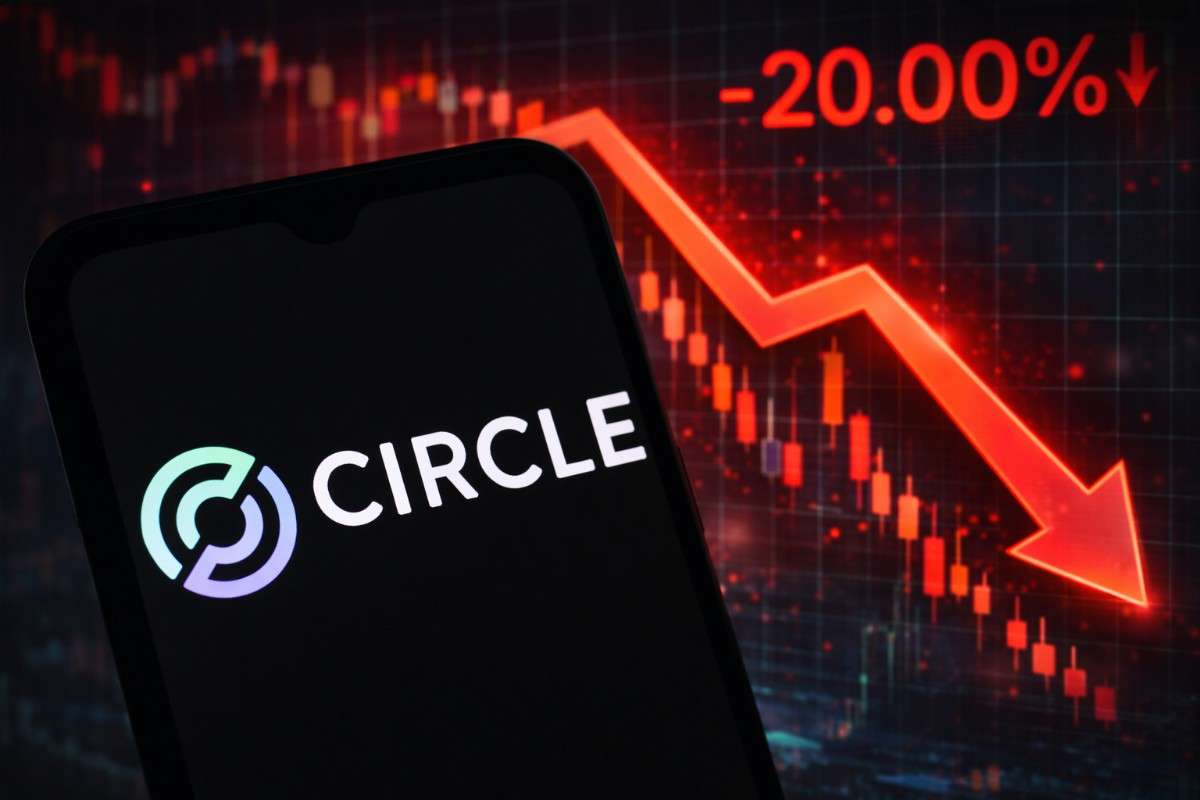
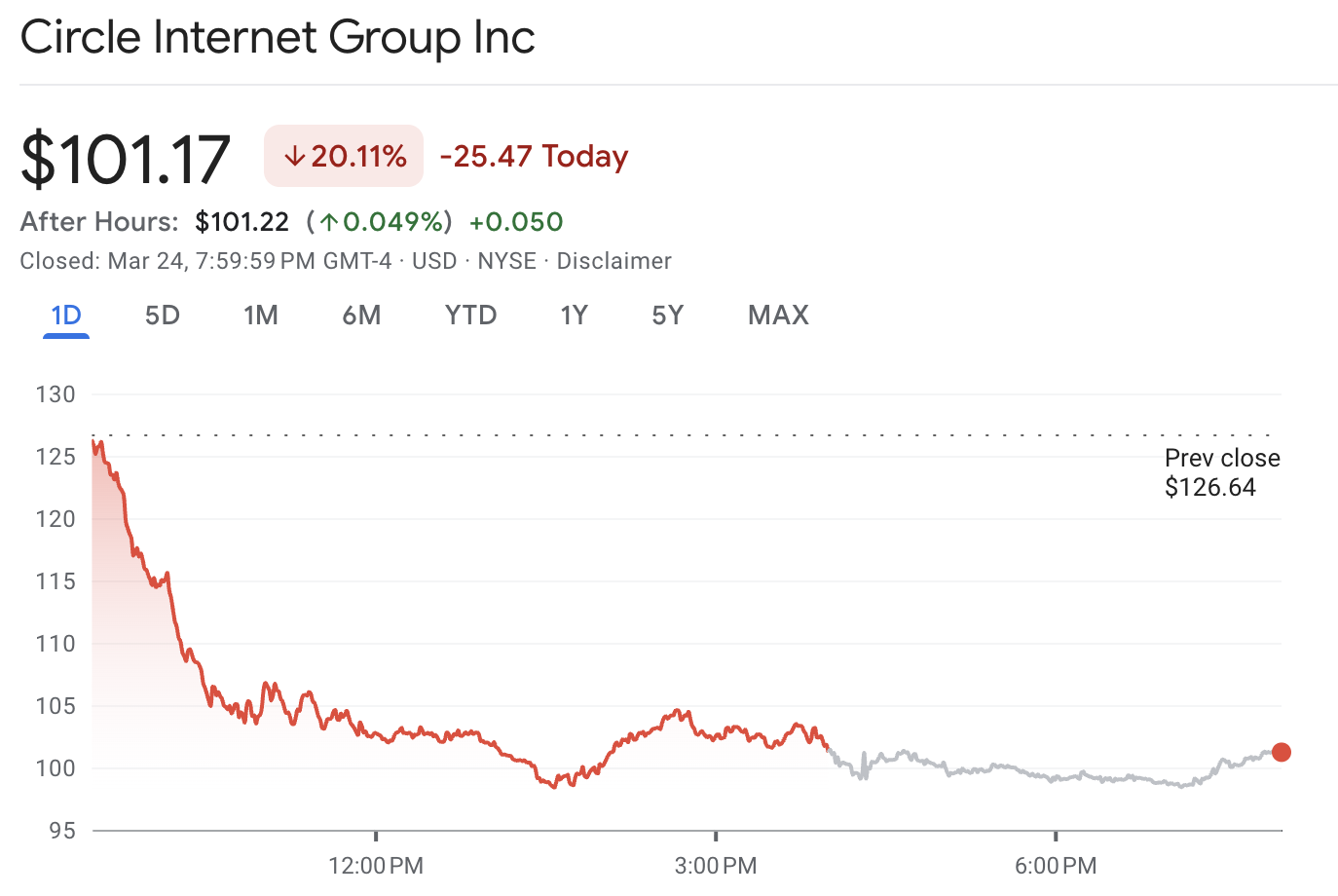
Circle stock fell about 20% on March 24, with CRCL dropping to $101.17 after trading as low as $98.34, as investors reacted to reports that revised Senate language around the CLARITY Act could sharply limit yield-style rewards on stablecoin balances.
The important detail is that this was not a sudden collapse in Circle's operating business. The market was reacting to potential impacts on future USDC growth, user acquisition, and partner distribution economics.
For context, Circle's stock had already surged significantly by mid-March, and the market had regarded stablecoin legislation as a substantial long-term benefit. The new draft language changed that mood by raising the risk that stablecoin adoption may grow under tighter limits than investors had assumed.
The market sold Circle because the draft policy shift threatened one of the clearest ways to keep USDC attractive to consumers and trading platforms: rewards.
Reports on Tuesday indicated that the latest Senate compromise would limit stablecoin rewards on holdings, affecting both Circle and Coinbase. That matters because investors have been valuing Circle as a stablecoin adoption story, not just as a pass-through holder of reserves.
Circle's own filings clarify why the market reaction was so strong. The company indicates that USDC circulation is a significant contributor to its reserve income.
Additionally, its partnership with Coinbase aims to enhance the usage and liquidity of USDC. Circle also notes that the amount of USDC held on Coinbase influences how reserve income is distributed and affects distribution costs.
That means anything that makes USDC balances harder to win or retain can matter to growth assumptions even before it shows up in reported revenue.
What changed was not Circle's legal status, nor the legality of USDC itself. What changed was the market's view of the likely shape of U.S. stablecoin policy if the Senate compromise holds. The proposed draft would limit yield-like programs on stablecoin balances, particularly those resembling bank deposit interest.
For Circle, the affected part of the business is the commercial layer around USDC, especially growth channels that benefit from rewards, partner incentives, and exchange distribution.
Circle's year-end results highlight the significant growth of the core USDC engine. By the end of 2025, the amount of USDC in circulation reached $75.3 billion. In fiscal year 2025, total revenue and reserve income increased to $2.7 billion, with reserve income in the fourth quarter reaching $733 million.
Lastly, what remains uncertain is just as important. The bill is not finalized, and reports suggest that regulators will play a crucial role in determining what constitutes a permissible reward versus a disallowed yield-like inducement. That leaves plenty of room for implementation risk, even if the broad direction is now clearer than it was a week ago.
| Metric | Latest reading | Why it matters |
|---|---|---|
| March 24 close | $101.17 | Shows the full-day damage from the bill shock |
| One-day move | -20.1% | Largest immediate signal of how seriously investors took the draft |
| March 17 close | $132.31 | Stock was much higher just a week earlier |
| 1-week move | -23.5% | Shows how quickly sentiment reversed |
| February 24 close | $61.37 | Even after the selloff, the stock is still far above late-February levels |
| 1-month move | +64.9% | Tells you this is also a reset after a huge run-up |
Circle stock was not falling from a low base. It was falling after a powerful rally that had already priced in a friendly regulatory path and strong USDC growth. When the regulatory story changed, even slightly, the stock had much room to fall.
| Level Type | Price / Zone | What it means |
|---|---|---|
| Support | $98.34 | Tuesday’s intraday low and the first area where selling found buyers |
| Resistance | $101–$102 | First near-term resistance around the latest trade after the initial collapse |
| Invalidation | $126.6–$126.8 | Pre-shock zone matching the prior close and session open; a move back here would invalidate the bearish reaction |
For the next session, $98.34 is the first key support. That was the low point of intraday trading on Tuesday, where the first wave of selling met buyers. If that level breaks, it would suggest the market is still repricing the bill risk rather than stabilizing after a one-day shock.
On the upside, the first near-term resistance is $101 to $102, the area around the latest trade following the stock's initial collapse. Above that, the major invalidation level is $126.6 to $126.8, which lines up with the pre-shock zone, including the prior close and session open.
A recovery back into that range would suggest investors no longer view the draft as materially changing Circle's medium-term growth outlook.
The first thing to watch is the bill itself. The CLARITY Act is still moving through the legislative process, and Barron's noted that it still faces political hurdles. That means the current market reaction is based on a proposed direction, not a final enacted rule.
The second thing to watch is whether lawmakers or regulators carve out more room for activity-based rewards. Investors' Business Daily reported that the draft language has faced criticism for being vague, potentially leading to future clarifications that could significantly impact Circle and Coinbase.
The third aspect to monitor is the growth of USDC itself. Circle projects a 40% multi-year compound annual growth rate (CAGR) in USDC circulation and forecasts other revenue between $150 million and $170 million for fiscal 2026. If Circle continues to grow its circulation strongly despite the legislative noise, the market may eventually recover some confidence.
No. The market reaction was primarily due to reported limits on stablecoin rewards and yield programs, not a ban on USDC itself.
Not directly. Circle has not separately disclosed revenue exposure to reward programs.
The latest public financial results do not show that. Fiscal 2025 revenue and reserve income rose 64%, and adjusted EBITDA rose 104%. The stock move reflects lower regulatory confidence, not a sudden deterioration in reported results.
In conclusion, Circle stock declined because the market viewed the stablecoin bill shock as a threat to USDC's growth economics, particularly its rewards-linked distribution.
What matters now is whether the Senate maintains the stricter reward language and if the final framework allows enough leeway for USDC to continue growing through major partner channels.
Disclaimer: This material is for general information purposes only and is not intended as (and should not be considered to be) financial, investment or other advice on which reliance should be placed. No opinion given in the material constitutes a recommendation by EBC or the author that any particular investment, security, transaction or investment strategy is suitable for any specific person.