Published on: 2026-03-31
Updated on: 2026-03-31
The Iran Reverse Indicator is a nickname for taking the opposite side of the market's first reaction to Iran-related headlines. It is not a formal market indicator, and the evidence is mixed: it worked best when traders were unwinding a short-lived fear spike, but it broke down when Iran-related news started affecting real oil supply and shipping flows.
| Quick reference | Answer |
|---|---|
| What is it? | Informal contrarian shorthand: fade the first move on Iran headlines. |
| Is it official? | No. It is market slang, not a published model or standard technical indicator. |
| When did it look effective? | January 2020 and parts of April 2024, when panic eased quickly and prices reversed. |
| When did it fail? | March 2026, when oil stayed above $100 and equities remained under pressure. |
| Reliability verdict | Useful as a sentiment clue, weak as a standalone signal. |
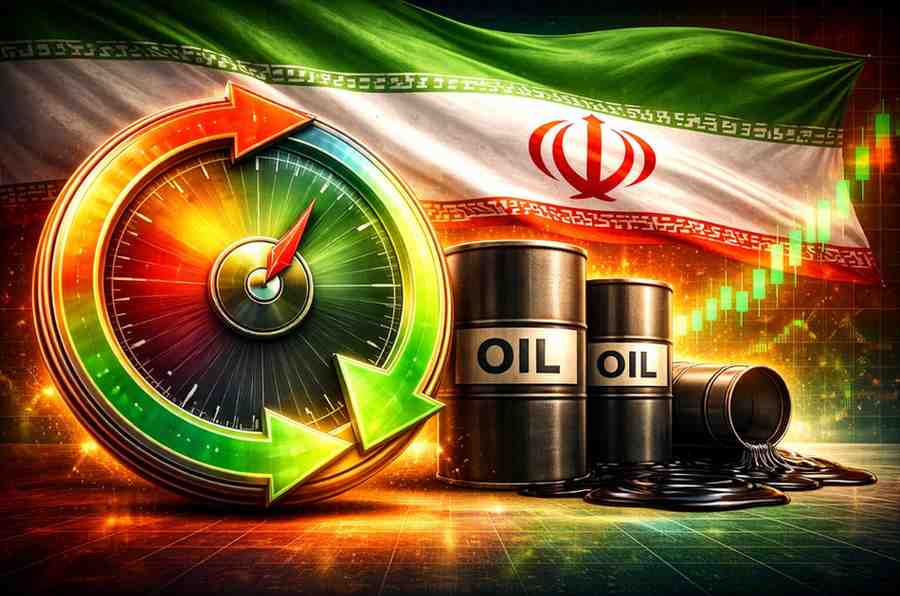
In simple terms, it is a contrarian idea. The logic is simple. A dramatic Iran headline often makes traders rush into oil, sell stocks, and buy defensive assets.
If the market views the event as largely symbolic or already factored in, oil prices may decrease, and equities could rebound. That is the "reverse."
Firstly, Iran headlines can move petrol prices, airline costs, inflation expectations, and borrowing costs. The Strait of Hormuz was responsible for over one-quarter of the global seaborne oil trade and about one-fifth of the world's oil and petroleum product consumption in 2024 and early 2025.
Therefore, even a short disruption in this region can quickly impact household budgets and business expenses.
The current backdrop shows why the signal is under scrutiny. On March 30, 2026, U.S. crude closed at $102.88 a barrel, while the S&P 500 fell 0.4% and the Nasdaq dropped 0.7% as investors questioned how quickly Persian Gulf energy flows could normalize. That is not just a sentiment wobble. It is a macro shock with inflation implications.

The intuition behind the Iran Reverse Indicator is simple. When initial headline prices suggest a worst-case scenario and subsequent information indicates containment, markets often revert to the mean.
That happened on January 8, 2020. After Iran fired missiles at U.S. bases in Iraq, oil initially surged, and stock futures fell, but the move reversed as investors priced de-escalation. U.S. stocks finished higher, and oil gave back much of its early spike.
A similar, though less clean, pattern appeared on April 15, 2024. Oil fell after Iran attacked Israel as traders reduced part of the geopolitical risk premium, and most Gulf stock markets ended higher as investors judged the damage limited and escalation risk contained. That was another case where the first move overstated the lasting economic hit.
This hand-built sample, from April 2024 to March 2026, demonstrates the usefulness of the idea, though it is not without flaws.
| Date | Headline setup | What markets did next | Did the “reverse” idea work? |
|---|---|---|---|
| April 15, 2024 | Iran attacked Israel, but damage was seen as limited | Brent fell about 0.2% to 0.8% as risk premium came out | Yes |
| June 23, 2025 | Iran hit a U.S. base in Qatar, but did not hit tanker traffic | Oil settled down more than 7% | Yes |
| March 23, 2026 | Threatened strikes on Iranian energy infrastructure were postponed | Oil fell over 13%, stocks rallied | Yes |
| March 25, 2026 | Markets priced possible de-escalation | S&P 500 rose 0.5%, Brent fell 3% to $97.26 | Yes |
| March 26, 2026 | Hopes faded, Hormuz pressure returned | S&P 500 fell 1.7%, Brent rose 4.8% to $101.89 | No |
| March 30, 2026 | Fresh positive talk hit before the open, but supply fears stayed | S&P 500 fell 0.4%, U.S. crude rose to $102.88 | No |
In these six headline-heavy episodes, four fit the reversal pattern, and two did not, giving a rough hit rate of 67%. That is good enough to respect, but nowhere near strong enough to trust unquestioningly.
The Iran reverse indicator works best when the market is trading on fear of escalation, not actual lost supply. That usually happens in three situations.
Firstly, although the event was dramatic, its impact was limited. This occurred after the April 2024 attack when oil prices decreased, as traders determined that the broader regional risk had not escalated as much as many feared.
Second, the retaliation avoids energy infrastructure. That was clear on June 23, 2025, when oil dropped more than 7% after Iran attacked a U.S. base in Qatar but did not disrupt tanker traffic through Hormuz. The market quickly took out some of the oil war premium.
Third, the market is reacting more to words than to facts. On March 23 and March 25, 2026, the markets rallied, and oil prices fell when traders observed a possible pause in fighting or a delay in strikes. At those moments, the market acted precisely as the "reverse indicator" group had anticipated.
The problem is that this is not a true indicator with a formula. It is a mood-based shortcut. Once the market starts focusing on real-world supply disruption, shipping bottlenecks, or inflation, the old reversal habit loses power.
That is what happened in late March 2026. The market stopped reacting only to headlines and started reacting to the bigger issue: whether oil and gas could move normally through the Gulf. On March 26, stocks fell sharply, and Brent climbed above $100 as hopes for de-escalation gave way to concerns about the Strait of Hormuz.
On March 30, even positive political messaging could not stop oil from climbing and the S&P 500 from slipping. In other words, the market was no longer treating Iran headlines as a quick fade trade. It was pricing a genuine macro risk.
That is the key test. If the conflict threatens flows, freight, or inflation, the reverse indicator becomes much less reliable.
The honest answer is sometimes, but not enough to trust on its own. It should be viewed as a sentiment indicator rather than a complete trading signal.
A better use for it is as a filter, not a trigger. If you see a sharp oil spike or stock selloff after an Iran headline, the next question should be simple: Was anything actually lost, blocked, or damaged in a way that changes supply?
If the answer is no, the odds of reversal improve. If the answer is yes, the signal becomes much weaker.
No. It is informal market slang for a contrarian trade around the Iran headlines.
Because the first move often prices the worst plausible outcome. If follow-up information suggests limited damage or quick de-escalation, oil can lose part of its risk premium, and equities can recover.
Usually better for broad risk sentiment than for energy itself. Equities can rebound on de-escalation headlines, even while oil remains firm, if shipping routes or physical supply remain at risk.
The Iran Reverse Indicator is best seen as a trading meme that focuses on countering the market's initial response to headlines from Iran, rather than being a reliable indicator.
It can work when fear is temporary, but when Iran-related news changes oil flows, inflation risk, or shipping access, the market may not snap back at all.
Disclaimer: This material is for general information purposes only and is not intended as (and should not be considered to be) financial, investment, or other advice on which reliance should be placed. No opinion given in the material constitutes a recommendation by EBC or the author that any particular investment, security, transaction, or investment strategy is suitable for any specific person.