Published on: 2026-03-26
Inflation is often discussed as a temporary economic force that rises and falls with supply and demand. However, in recent years, economists and investors have increasingly focused on a more persistent form known as sticky inflation.
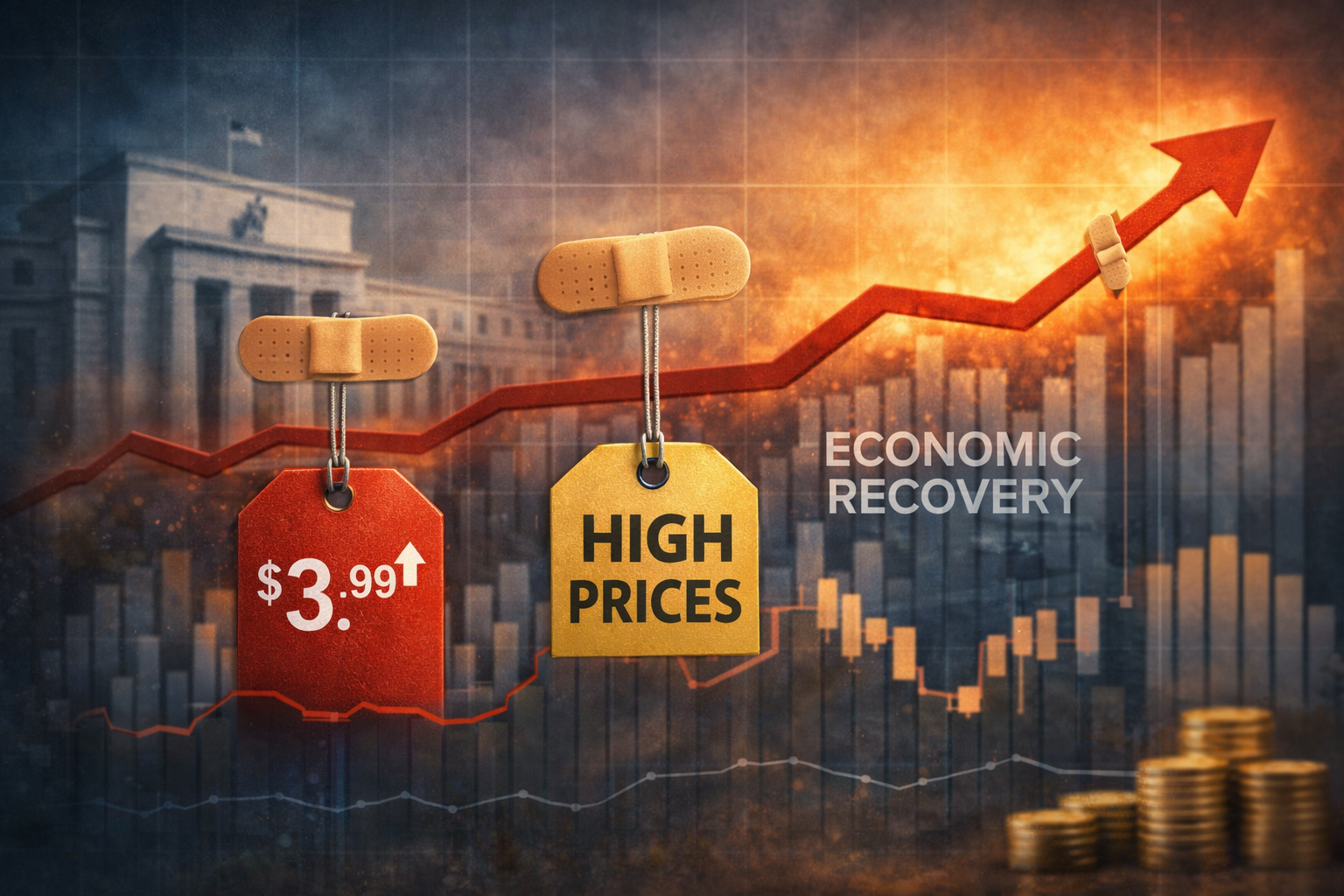
Sticky inflation refers to price increases that do not fall easily, even after the original causes of inflation begin to fade. This has become a key concern in the post-pandemic economy, where inflation has remained above central bank targets despite aggressive policy tightening.
Sticky inflation refers to price increases that persist and resist falling.
It is driven by wages, housing costs, and long-term contracts.
Sticky inflation makes it harder for central banks to control inflation.
It often leads to higher interest rates for longer periods.
Certain sectors, such as energy and defence, may perform better in this environment.
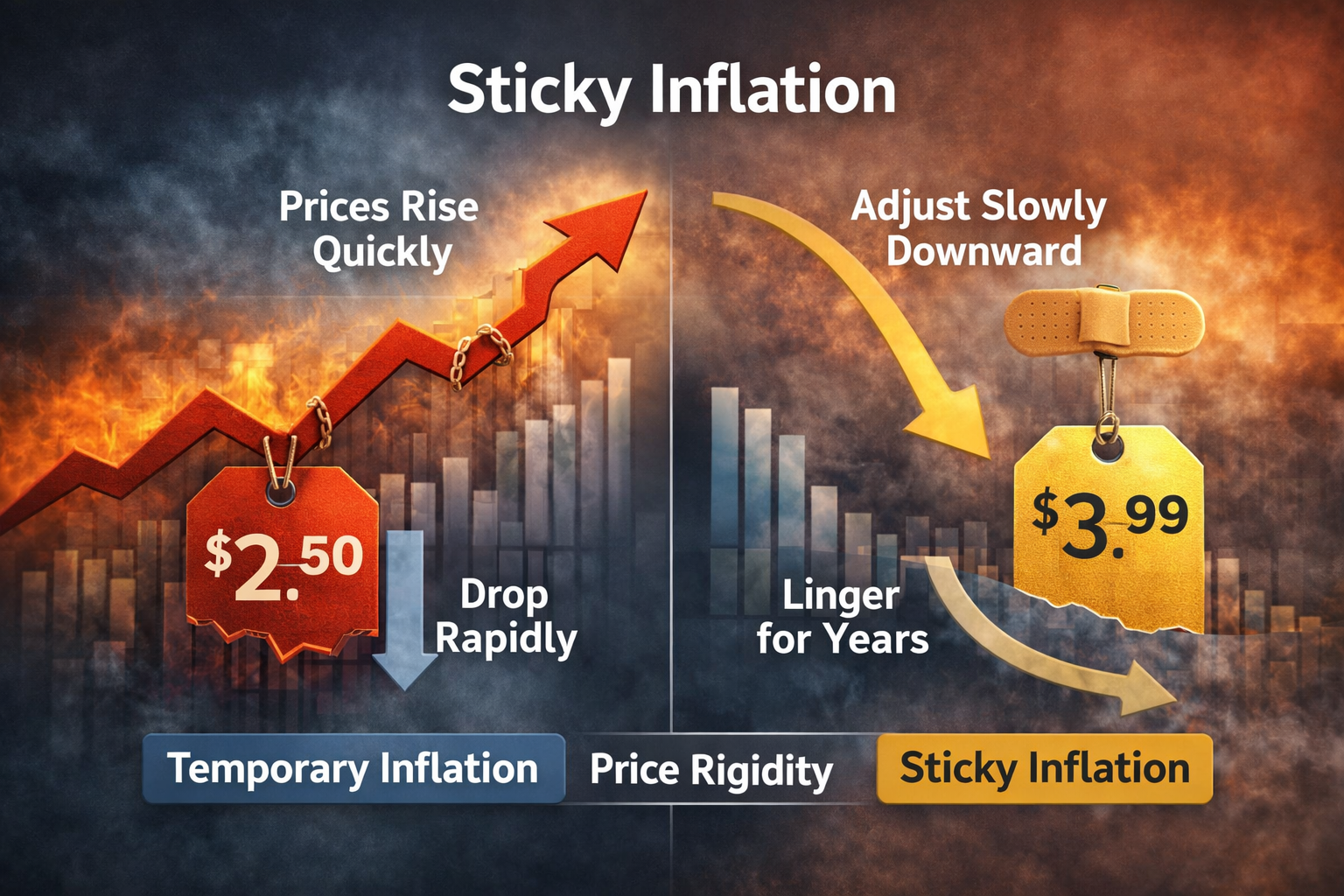
Sticky inflation is a type of inflation in which prices remain elevated and adjust slowly downward, even as economic conditions improve.
In simple terms, once prices go up, they tend to stay high. Unlike temporary inflation, which fades quickly, sticky inflation lingers for years and becomes embedded in the economy.
Economically, it is closely linked to “price rigidity,” where wages and prices do not respond quickly to changes in demand or policy.
This is why inflation can remain high even after fuel prices fall or supply chains recover.
Understanding the difference between sticky and transitory inflation is crucial.
For example, fuel prices can fall quickly when oil supply increases. However, rent or wages usually do not decrease once they have risen.
This difference explains why inflation can remain elevated even when headline indicators start to cool.
Sticky inflation is not driven by a single factor. It results from structural forces within the economy that prevent prices from adjusting quickly.
Wages are one of the biggest drivers of sticky inflation. Once salaries increase, they rarely decrease.
Labour shortages in sectors such as healthcare, construction, and services push wages higher. Businesses then raise prices to maintain profit margins, creating a lasting inflation effect.
Housing is one of the most important contributors to sticky inflation.
Rent and property prices are typically adjusted infrequently due to long-term contracts. Once they increase, they tend to remain high for extended periods, keeping overall inflation elevated.
Many prices in the economy are locked in through contracts, such as wages, leases, and service agreements.
These contracts prevent prices from adjusting quickly, even when demand weakens. As a result, inflation becomes “sticky,” making it difficult to reverse.
Persistent supply issues, such as energy bottlenecks and supply chain restructuring, can keep production costs elevated.
Even when demand stabilises, these structural constraints continue to push prices higher.
When businesses and consumers expect inflation to continue, they adjust their behaviour.
Workers demand higher wages, and companies raise prices in anticipation of future cost increases. This creates a self-reinforcing cycle known as a wage-price spiral.
Sticky inflation has a direct and lasting impact on financial markets.
Central banks such as the Federal Reserve aim to control inflation by raising interest rates.
When inflation is sticky, policymakers may need to keep rates elevated for an extended period. This reduces liquidity and puts pressure on stock valuations.
Companies face higher input costs due to wages, rent, and materials.
Businesses with strong pricing power can pass these costs to consumers, while others experience shrinking profit margins. This leads to divergence in stock performance.
Despite aggressive interest rate hikes over the past year, inflation has not fully returned to target levels. Structural factors such as labour shortages, housing supply constraints, and energy demand continue to keep prices elevated.
At the same time, governments are running large fiscal deficits, which may limit how aggressively central banks can tighten policy.
This has led to a “higher for longer” interest rate environment, which directly affects stock market valuations and investor sentiment.
Sticky inflation requires a different investment approach compared to short-term inflation shocks.
Focus on companies with strong pricing power.
Consider exposure to real assets such as commodities.
Diversify across sectors and regions.
Be cautious with long-duration growth stocks.
Monitor central bank policy closely.
Companies that can maintain margins despite rising costs are better positioned in a sticky inflation environment.
Sticky inflation refers to prices that remain high and do not fall easily, even when economic conditions improve. It is driven by factors such as wages, housing costs, and long-term contracts that prevent prices from adjusting quickly.
Sticky inflation is more persistent than normal inflation. While temporary inflation may decline as supply improves, sticky inflation remains elevated because key costs, such as wages and rents, do not decline easily.
Sticky inflation is difficult to control because it is driven by structural factors such as labour markets and housing markets. These factors do not respond quickly to interest rate changes, making policy measures less effective in the short term.
The energy and defence sectors often perform well during sticky inflation, driven by strong pricing power and government spending. Companies that can pass higher costs to consumers also tend to outperform.
Sticky inflation forces central banks to keep interest rates higher for longer. This helps control inflation but can slow economic growth and reduce stock market valuations.
Sticky inflation is a persistent form of inflation in which prices remain elevated and decline slowly. It is driven by wages, housing costs, and structural economic factors. For investors, sticky inflation signals a shift toward a higher-interest-rate environment, increased market volatility, and greater sector divergence. Understanding this concept is essential for navigating modern financial markets effectively.
Disclaimer: This material is for general information purposes only and is not intended as (and should not be considered to be) financial, investment or other advice on which reliance should be placed. No opinion given in the material constitutes a recommendation by EBC or the author that any particular investment, security, transaction or investment strategy is suitable for any specific person.