Published on: 2026-04-20
In stock trading, MOMO is shorthand for momentum. It describes a stock or other asset that is already moving strongly higher or lower, where traders expect the move to continue for a period because price strength, participation, and sentiment remain aligned.
Rather than focusing mainly on valuation or long-term fundamentals, momentum trading focuses on price behaviour, volume expansion, and market sentiment to identify short- to medium-term opportunities. It is most common in active trading around breakouts, earnings reactions, and fast news-driven moves.
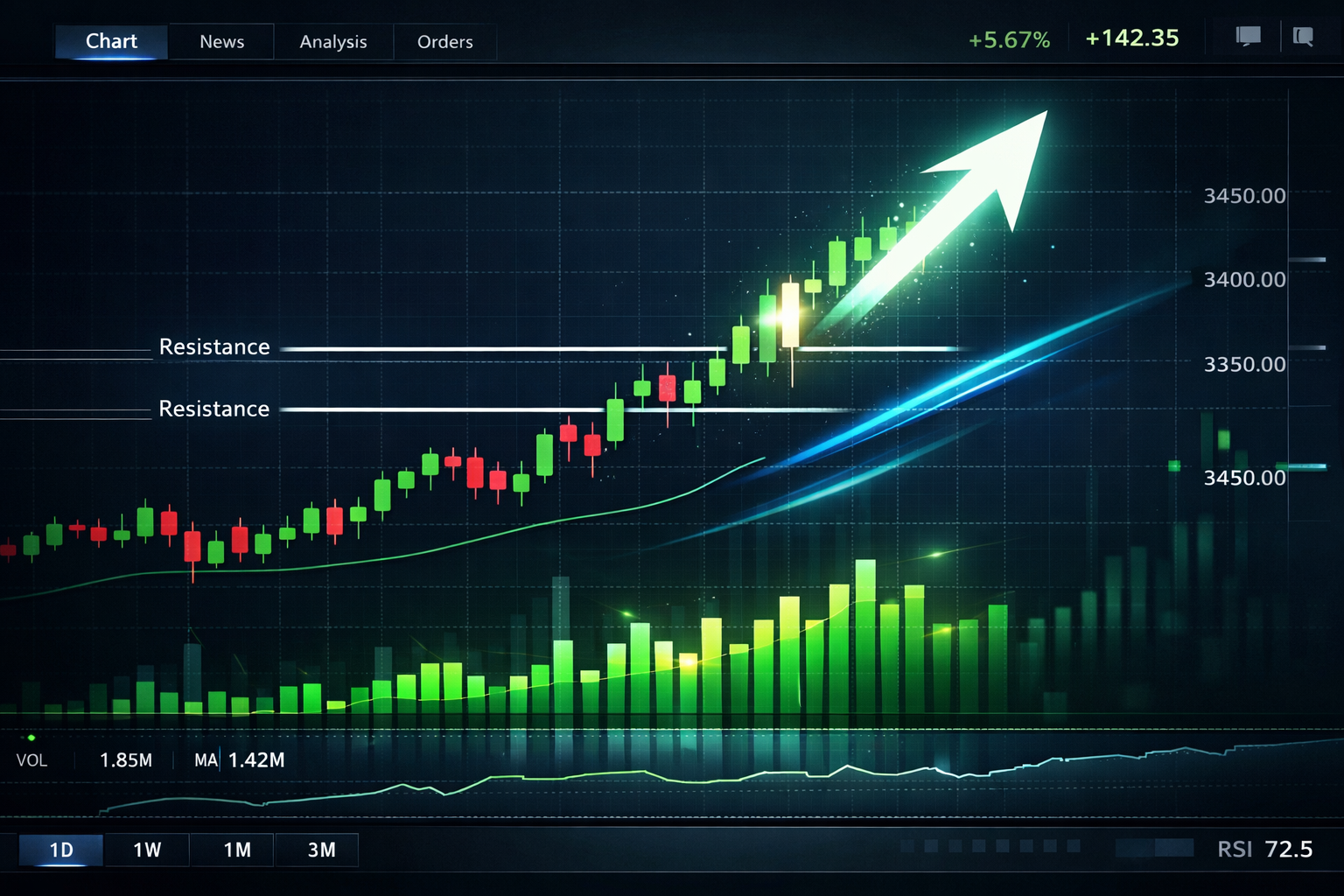
MOMO is trader slang for momentum.
It focuses on trend continuation rather than intrinsic value.
Volume, volatility, and catalysts help validate momentum setups.
Momentum can build quickly but can also reverse sharply.
Risk control matters because MOMO trades often move fast.
“MOMO” is informal market slang, not a formal investing framework. In practice, traders use it to describe a stock that is moving with unusual speed and participation, often after a catalyst such as earnings, guidance, macroeconomic data, or a major news headline.
Momentum traders try to join a move that is already underway. If a stock is rising strongly, they may buy with the expectation that the trend will continue. If a stock is falling sharply, they may short it in anticipation of further downside pressure.
This behaviour is rooted in the idea that strong price moves can attract additional traders, increase liquidity, and temporarily reinforce the existing trend. MOMO trading is therefore less about what a company should be worth and more about how the market is behaving at the moment.
Momentum trading is not random speculation. It is a structured approach built around observable market behaviour.
Directional price movement: The asset is already trending strongly upward or downward.
Volume confirmation: Trading volume expands, suggesting broader participation behind the move.
Technical trigger: Price breaks through a key level, continues a trend, or reacts sharply to a catalyst.
Continuation thesis: Traders expect the move to extend before momentum fades.
Exit discipline: Traders define where the idea is wrong before entering the position.
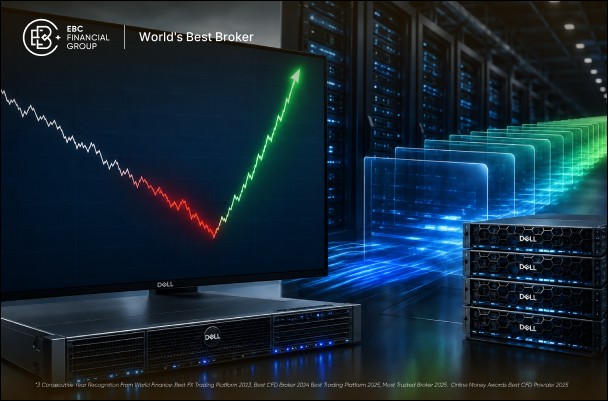
For example, if a semiconductor stock reports strong earnings, gaps higher at the open, and breaks above a long-standing resistance level on heavy volume, momentum traders may enter long positions with the expectation that buying pressure will continue.
Momentum rarely appears in isolation. It usually begins with a catalyst that changes expectations or order flow.
Corporate earnings surprises or updated guidance
Macroeconomic data releases, such as inflation, employment, or interest rate expectations
Sector rotation into areas attracting heavy investor attention
Company-specific headlines, regulatory developments, or analyst upgrades
A short squeeze or other forced covering dynamic
For instance, a strong earnings report can trigger a sharp upward move in a stock, while a weak forecast can create downside momentum if sellers overwhelm buyers. In both cases, traders watch whether price and volume confirm that the move has real follow-through.
Momentum trading can be applied across different time horizons.
This approach focuses on capturing price movement within a single trading session. Traders rely on real-time volume, liquidity, and fast execution to enter and exit quickly.
Swing traders hold positions for several days or weeks, aiming to capture extended momentum after breakouts, earnings reactions, or broader sector moves.
This strategy reacts to breaking news or macroeconomic events that cause a rapid repricing. It can create strong opportunities, but it also carries wider spreads, fast reversals, and higher event risk.
Although momentum trading is heavily price-action driven, traders often use technical tools to confirm the quality of a setup.
These indicators are not predictive on their own. They are most useful when combined with price action, volume, and a clear catalyst.
A practical example of MOMO trading might look like this:
A large-cap technology company reports earnings above expectations.
The stock gaps higher at market open.
Trading volume jumps well above its recent average.
Price breaks through a major resistance level.
Momentum traders enter positions, reinforcing the move.
The stock continues trending higher for several sessions before consolidating.
This type of setup is common in stocks, exchange-traded funds, and sector leaders when news materially changes market expectations.
Momentum trading can create attractive short-term opportunities, but it also carries meaningful risk.
False breakouts, where the price reverses soon after entry
Late entries, where traders buy after most of the move has already happened
High volatility, which can turn a winning setup into a losing trade quickly
Liquidity shifts, especially in smaller-cap or crowded names
Overreaction to news, which can distort the price in the short term
Emotional trading, especially when the fear of missing out takes over
For that reason, traders typically pair MOMO setups with predefined risk limits, stop-loss orders, and disciplined position sizing.
Momentum trading and fundamental investing differ in both purpose and decision-making.
Both approaches can exist within the same broader portfolio, but they require different tools, time commitments, and psychology.
MOMO means momentum. Traders use it as shorthand for a stock or other asset that is moving strongly and may continue in the same direction for a period.
Typical triggers include earnings surprises, macroeconomic data, analyst upgrades or downgrades, sector rotation, and sudden changes in market sentiment.
No. MOMO trading can be used intraday or over several days and weeks. The difference is the time horizon, not the core idea of trading a strong existing move.
Common tools include volume analysis, moving averages, RSI, MACD, and support or resistance levels. These help traders confirm whether the move has enough strength to continue.
They define the trade thesis in advance, use stop-loss orders, avoid oversized positions, and look for confirmation from both price and volume before entering.
MOMO in stock trading refers to momentum-based trading, where traders try to capitalise on strong existing price movement rather than long-term intrinsic value. MOMO setups are often driven by catalysts such as earnings, macroeconomic news, sector rotation, or changes in sentiment.
While momentum can create strong short-term opportunities, it can also unwind quickly. Traders who use MOMO effectively usually focus on price, volume, confirmation, and disciplined risk control.