Published on: 2026-05-13
Updated on: 2026-05-13
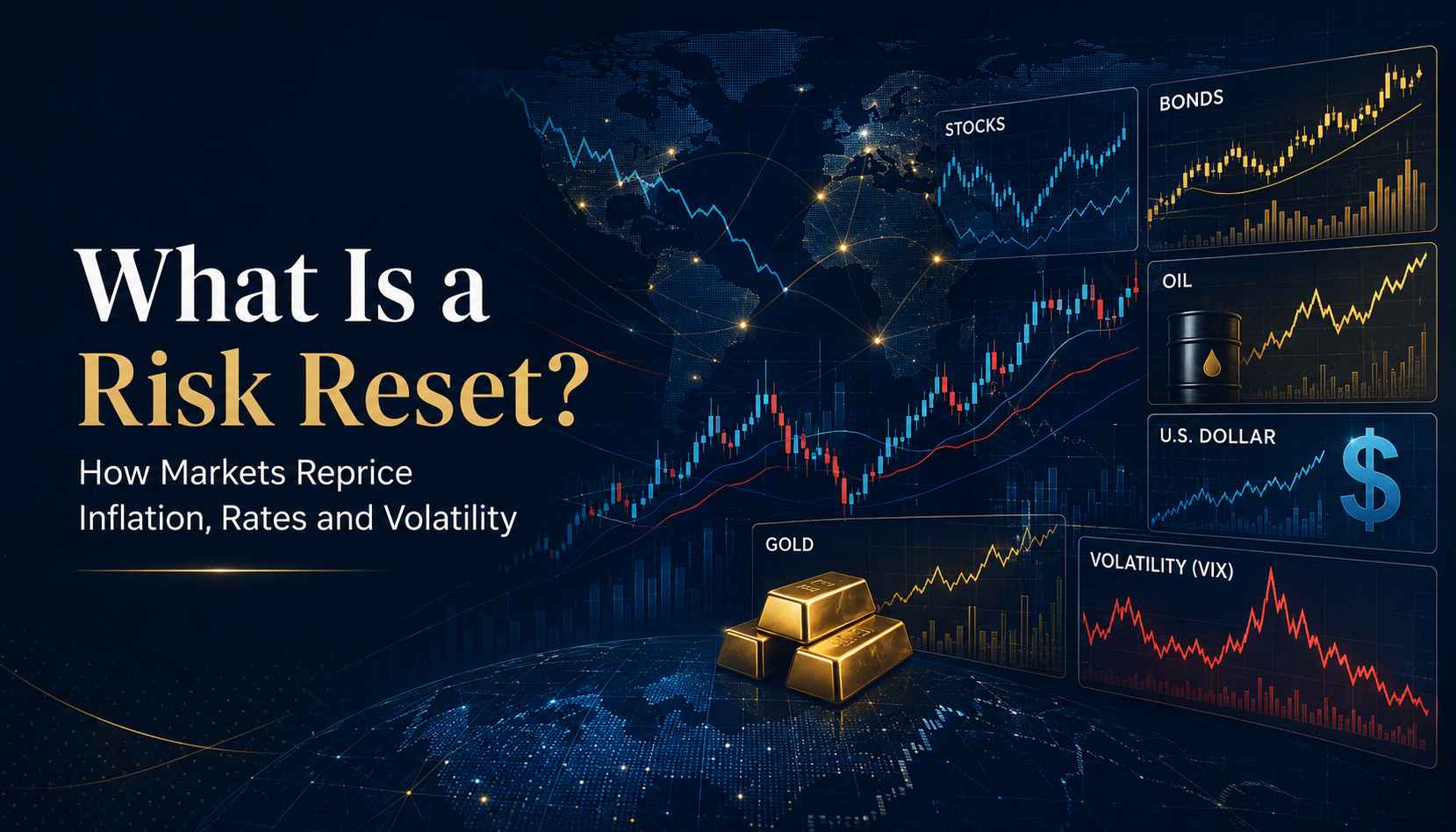
A risk reset occurs when markets decide that the old price of risk no longer fits the new macro reality. It is not simply a selloff, a correction or a burst of volatility. It is a broader repricing process in which investors reassess the returns they need to hold equities, bonds, commodities, currencies, credit and safe-haven assets.
The concept matters in 2026 because markets are reassessing inflation, rate-cut expectations, oil risk and volatility at the same time. April U.S. CPI rose 0.6% month-on-month and 3.8% year-on-year, while core CPI increased 2.8%over the same period.
The Federal Reserve has kept the federal funds target range at 3.50% to 3.75%, and Brent crude remains above the $100 zone, reinforcing the link between energy prices, inflation risk and monetary policy.
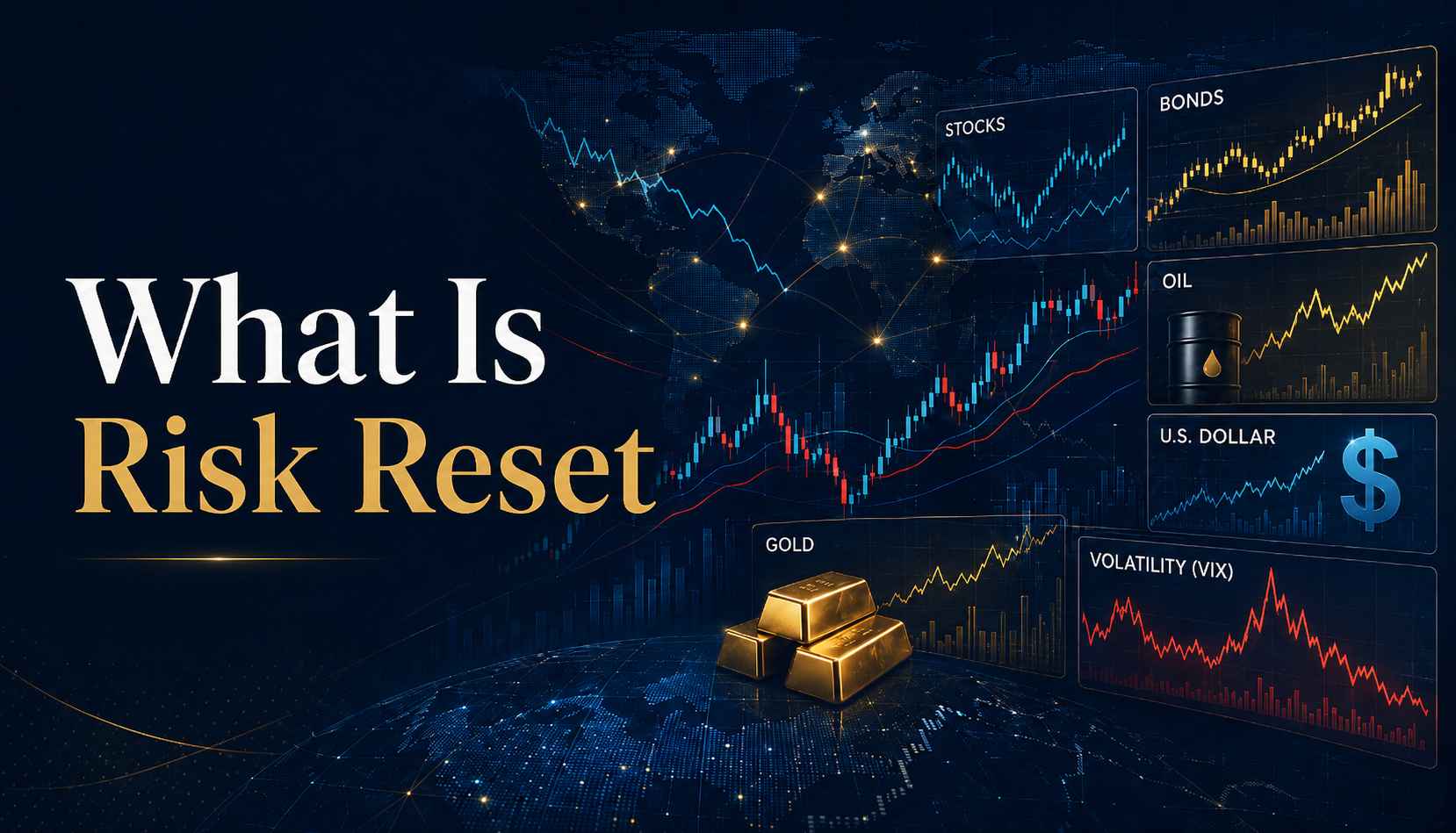
A risk reset is the market’s way of recalculating uncertainty. When investors believe inflation will stay higher, interest rates will remain elevated, oil will stay expensive or liquidity will tighten, they demand more compensation for holding risky assets.
That compensation appears in different ways:
Equity investors may demand lower price-to-earnings multiples.
Bond investors may require higher yields.
Credit investors may demand wider spreads.
Currency traders may move toward the U.S. dollar.
Commodity markets may price larger supply or inflation premiums.
A risk reset does not mean every asset must fall at the same time. Oil can rise because of supply pressure while equities fall because of weaker margins.
Gold can attract defensive demand while long-duration bonds weaken if inflation risk dominates. The key signal is not that all assets move in one direction. The key signal is that the same macro shock appears across several markets.
Markets are built on assumptions. Investors assume inflation will follow a certain path, central banks will react in a predictable way, earnings will grow at a reasonable pace and liquidity will remain available.
A risk reset begins when one of those assumptions breaks.
Inflation is one of the most powerful triggers because it changes expectations for interest rates. When inflation runs hotter than expected, markets reduce the probability of near-term rate cuts. Bond yields can rise or remain elevated, and higher discount rates reduce the present value of future corporate earnings.
That is why a CPI print can move far more than the Treasury market. It can affect equities, the U.S. dollar, gold, credit spreads and emerging-market assets in the same session. April’s U.S. CPI data showed this pressure clearly, with energy contributing meaningfully to the monthly increase in headline inflation.
Oil shocks create a second channel. Higher crude prices raise fuel, shipping and input costs. For households, they reduce disposable income. For companies, they pressure margins unless higher costs can be passed through. For central banks, they create a policy dilemma because energy inflation can rise even as growth slows.
This is why oil is not only a commodity story. It becomes a rates story, a consumer story and a volatility story. When energy prices stay elevated, markets reassess inflation expectations, corporate profitability and the likely path of monetary policy at the same time.
A risk reset usually moves through markets in stages. The sequence is not always perfect, but the transmission mechanism is consistent.
| Stage | Market Signal | What It Means |
|---|---|---|
| Shock | CPI surprise, oil spike or geopolitical event | The old macro assumption breaks |
| Rates | Bond yields rise or rate cuts are delayed | Discount rates move higher |
| Dollar | U.S. dollar strengthens | Investors seek liquidity and yield |
| Equities | Valuation multiples compress | Growth and high-beta stocks weaken |
| Credit | Spreads widen | Investors demand more compensation for default risk |
| Havens | Gold, cash or short-duration assets attract flows | Capital shifts toward protection |
This chain explains why a narrow shock can become a broad market event. A hotter inflation print may begin in bonds, but it can quickly move into equities through valuation pressure. It can also affect currencies through dollar demand and credit markets through higher funding costs.
A risk reset is often confused with a market crash. The difference lies in liquidity, speed and disorder.
| Term | Meaning |
|---|---|
| Risk reset | Markets reprice risk because inflation, rates, oil or liquidity assumptions change |
| Correction | A decline of about 10% from recent highs, usually in equities |
| Crash | Disorderly selling with sharp liquidity stress |
| Capitulation | Forced selling after investor confidence breaks |
| Regime shift | A longer-term change in inflation, rates, growth or policy conditions |
A risk reset can be orderly. Equities may fall, yields may rise, the dollar may strengthen and credit spreads may widen without creating a full crisis. A crash begins when liquidity disappears, selling becomes forced and price discovery breaks down.
This distinction matters because professional investors do not only watch index levels. They watch whether markets are still functioning. Credit spreads, funding liquidity, Treasury-market depth and volatility hedging often reveal whether repricing is controlled or becoming unstable.

Equities usually absorb a risk reset through valuation pressure. Higher interest rates reduce the value investors assign to future earnings, which is why expensive growth stocks and high-beta sectors often weaken first.
The second channel is earnings quality. When oil prices rise or financing costs stay high, companies with weak margins, high debt or cyclical revenue become more vulnerable. Investors become less willing to pay premium multiples for uncertain growth.
Bonds are often the first place where a risk reset becomes visible. If markets believe inflation will remain sticky, rate-cut expectations fade and yields stay elevated. Shorter maturities respond more directly to central-bank pricing, while longer maturities reflect inflation, growth and fiscal concerns.
Oil can be both the trigger and the amplifier. When crude rises because of supply risk, it feeds inflation expectations and weakens consumer purchasing power. Industrial commodities may behave differently. They can fall if investors worry that higher rates and energy costs will slow global growth.
Gold can benefit from defensive demand during a risk reset, especially when investors seek protection from geopolitical risk or currency volatility. However, gold does not always rise cleanly. Higher real yields can limit its upside because gold does not offer income.
The U.S. dollar often strengthens during a risk reset because it combines liquidity, yield and reserve-currency status. A stronger dollar can then tighten global financial conditions, especially for borrowers and economies with dollar-denominated liabilities.
The strongest risk-reset signals appear when several indicators move together. Investors typically monitor:
CPI, core inflation and inflation expectations;
Federal Reserve guidance and rate-cut pricing;
Treasury yields and yield-curve shifts;
oil prices and energy supply risk;
the U.S. dollar index;
credit spreads and funding liquidity;
VIX and equity volatility;
gold, cash and short-duration flows;
earnings revisions and margin guidance.
No single indicator confirms a risk reset. The signal becomes stronger when higher oil, higher yields, a firmer dollar, weaker equities and wider credit spreads all point in the same direction.
The 2026 market backdrop fits the risk-reset framework because inflation, oil and policy expectations are moving together. Markets are no longer focused only on growth or earnings momentum. They are also pricing inflation persistence, oil-price exposure, central-bank restraint and liquidity conditions.
That environment changes how investors think about risk. Assets that looked attractive when rate cuts seemed close can look expensive when inflation proves sticky. Companies that looked resilient when input costs were stable can face pressure when energy prices rise. Bonds that looked positioned for easing can sell off if markets push rate-cut expectations further into the future.
A risk reset does not mean markets are broken. It means the cost of holding risk has changed. The danger increases only when investors refuse to adjust valuations until the adjustment becomes disorderly.
Risk reset means markets are repricing the return investors demand for holding risky assets. It usually happens when inflation, interest rates, oil prices, liquidity or geopolitical risks change enough to make previous valuations look too generous.
No. A risk reset can be orderly, while a crash involves disorderly selling and liquidity stress. A risk reset becomes more dangerous when selling turns forced, credit spreads widen sharply and market depth deteriorates.
Common triggers include hotter inflation data, delayed central-bank rate cuts, oil-price shocks, higher bond yields, stronger dollar demand, geopolitical stress and weakening liquidity. The trigger matters less than whether it spreads across multiple asset classes.
A risk reset is the market’s recalculation of uncertainty. It occurs when inflation, interest rates, oil prices, liquidity or geopolitics change enough to make old valuations look too generous.
The concept matters because it explains why one macro shock can travel across asset classes. A hotter CPI print can move bonds. Higher oil can reshape inflation expectations. A delayed Fed cut can support the U.S. dollar. A stronger dollar can tighten global liquidity. Wider credit spreads can reveal deeper stress.
Risk reset is not panic. It is price discovery under a new macro regime. When the assumptions behind risk change, the price of risk must change with them.