Published on: 2023-12-18
Updated on: 2026-04-28
Investment banking is the area of finance that helps companies, governments, and institutions raise capital, issue securities, buy or sell businesses, and restructure debt. In practice, an investment bank turns major corporate decisions into executable market transactions.
That role matters more in 2026 because capital markets are active again after a slower deal cycle. Companies are returning to IPO markets, large mergers are reshaping industries, and many borrowers are refinancing debt raised during the low-rate period. Global IPOs raised $171.8 billion in 2025, up 39% year on year, while global M&A reached one of its strongest years on record.
Investment banking connects issuers with capital. Companies and governments use investment banking services to raise capital through equity, debt, and private placements.
An investment bank advises on major transactions. These include IPOs, mergers, acquisitions, divestitures, restructurings, and refinancing.
IBD in finance refers to the Investment Banking Division. It usually covers advisory, equity capital markets, debt capital markets, leveraged finance, and restructuring.
Investment banking differs from commercial banking. Commercial banks focus on deposits and loans; investment banks focus on capital markets and strategic transactions.
The industry is changing in 2025–2026. AI listings, private credit, refinancing needs, and megadeals are reshaping how investment banks compete.
An investment bank helps large clients raise money and complete complex financial transactions. It acts as an adviser, underwriter, arranger, and market intermediary.
For example, if a technology company wants to list on a stock exchange, an investment bank helps value the business, prepares investor materials, tests demand, sets the IPO price, and sells shares to institutional investors. If the same company later wants to buy a smaller rival, the bank may advise on valuation, negotiation, financing, and regulatory strategy.
This is the simplest definition of investment banking: it connects companies that need capital or advice with investors, buyers, sellers, and lenders who can support the transaction.
Equity capital markets teams help companies raise money by selling shares. Their best-known product is the initial public offering, or IPO. They also manage follow-on offerings, rights issues, block trades, and convertible securities.
In an IPO, the investment bank studies comparable companies, tests investor demand, builds the order book, and advises on final pricing. A strong IPO is not only about raising money. It must also create a stable shareholder base and leave enough value for the stock to trade well after listing.
Debt capital markets teams help companies and governments borrow money through bonds, syndicated loans, and other credit products. This service has become more important as higher interest rates force borrowers to refinance older debt at higher costs.
The bank advises on maturity, coupon, currency, credit rating strategy, investor demand, and timing. A poorly timed bond issue can raise borrowing costs. A well-structured one can extend maturities, reduce refinancing pressure, and strengthen the balance sheet.
Mergers and acquisitions, or M&A bankers advise companies that want to buy, sell, merge, or separate businesses. Their work includes valuation, buyer screening, negotiation strategy, due diligence support, financing advice, and shareholder communication.
Restructuring bankers work with companies under financial pressure. They help renegotiate debt, sell assets, raise rescue capital, or reorganise the capital structure. When markets tighten, restructuring becomes one of the most important areas of investment banking.
Investment banking products are the tools used to raise capital, manage transactions, or reduce financial risk.
These products show why investment banking is more than “deal making.” It is a system for matching capital, risk, timing, and strategy.
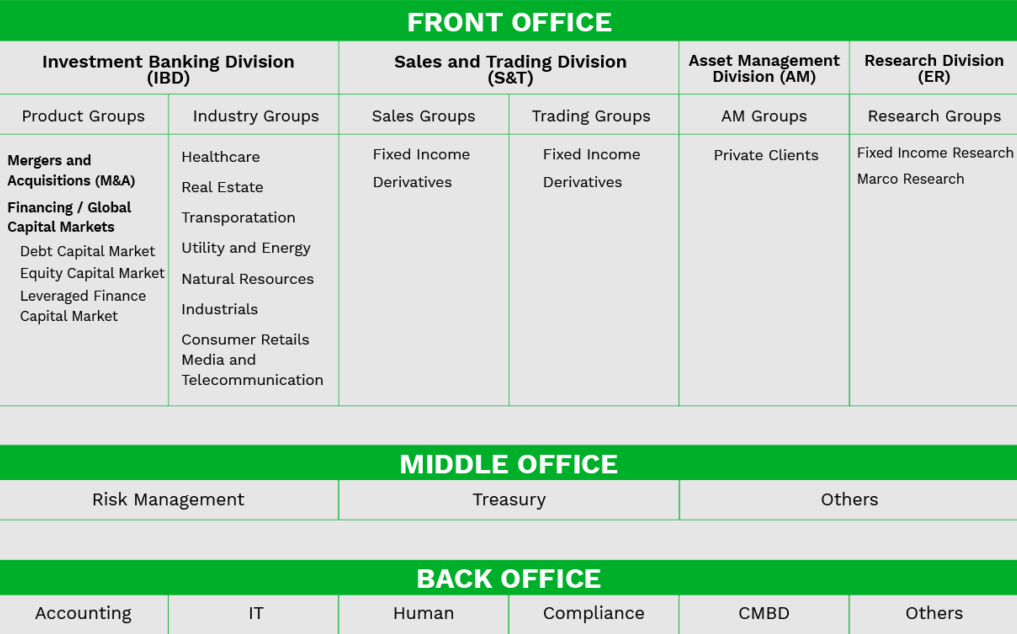
IBD finance means Investment Banking Division. It is a part of an investment bank that handles corporate finance advisory and capital raising.
IBD usually has two types of teams. Coverage bankers focus on industries such as technology, healthcare, energy, consumer, financial institutions, and industrials. Product bankers focus on transaction types such as M&A, equity capital markets, debt capital markets, leveraged finance, and restructuring.
The best results usually come when both sides work together. A healthcare coverage banker understands the client’s industry. A debt capital markets banker understands bond investor demand. A restructuring banker understands creditor negotiations. Together, they shape the right transaction.
Investment bankers spend much of their time analysing companies, building valuation models, preparing pitch books, speaking with clients, coordinating due diligence, and managing deal execution.
Junior bankers usually handle financial modelling, company research, presentations, and transaction documents. Senior bankers focus more on client relationships, negotiation, board advice, and winning mandates. The job is demanding because deals involve large sums of money, strict deadlines, legal risk, and constant market changes.
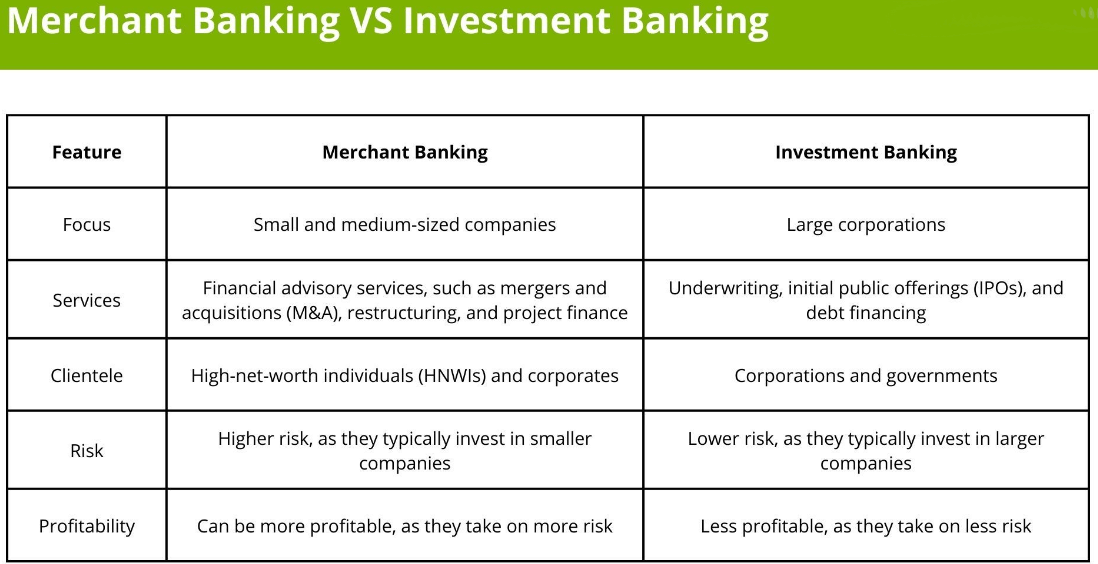
The difference between commercial and investment banking is especially important. A commercial bank takes deposits and lends money. An investment bank arranges capital markets transactions and advises on strategic deals.
Some large financial groups do both. They may have a commercial banking arm, an investment banking division, asset management, wealth management, and trading operations under one parent company. The functions remain different even when the brand name is the same.
Investment banks earn fees when transactions happen. They collect advisory fees for mergers, acquisitions, and restructurings. They earn underwriting fees when they help sell new shares or bonds. They may also earn placement fees, financing fees, and trading spreads.
This model creates conflicts that must be controlled. A bank advising on an IPO wants the company to raise money at a strong valuation, but it also needs investors to accept the price. A bank that provides research, trading, lending, and advisory services must separate confidential client information from public market activity.
The investment banking industry is entering a more selective but active cycle. IPO markets recovered in 2025, but investors still favoured companies with strong earnings, credible governance, and clear growth plans. The United States raised about $45.5 billion in IPO proceeds, while Asia-Pacific produced seven of the top 10 global IPOs by proceeds.
M&A also recovered, led by large transactions. Global M&A rose 41% to $4.81 trillion in 2025, with 70 megadeals above $10 billion contributing $1.53 trillion. The third quarter was especially active for $10 billion-plus transactions, including major deals in gaming, aviation leasing, mining, and energy assets.
Fees did not rise evenly across the industry. Global investment banking fees fell 1% in the first half of 2025 to $60.5 billion, with weaker syndicated lending partly offset by stronger activity in Asia-Pacific. That contrast shows the industry’s reality: big headlines do not always mean broad fee growth.
Investment banking helps large clients raise money and complete major financial transactions. It includes IPOs, bond issues, mergers, acquisitions, private placements, restructuring, and strategic advice.
An investment bank advises companies and governments, values businesses, structures deals, underwrites securities, finds investors, arranges financing, and supports major transactions from planning to execution.
Investment banking products include IPOs, follow-on share offerings, bonds, syndicated loans, convertible bonds, private placements, M&A advisory, restructuring advice, and selected derivatives.
Commercial banks focus on deposits, lending, payments, and everyday banking. Investment banks focus on capital raising, securities issuance, mergers, acquisitions, restructuring, and institutional investors.
Yes. Investment banking is a major area of finance. It sits within financial services and focuses on corporate finance, capital markets, valuation, transaction execution, and institutional advisory work.
Most pure investment banks do not take household deposits like commercial banks. Large universal banks may combine deposit-taking, lending, investment banking, trading, and wealth management under one group.
Investment banking helps large clients raise capital, complete strategic deals, and make financial decisions that require market access and technical expertise. It is not ordinary banking. It does not revolve around deposits, credit cards, or branch services.
The clearest way to understand investment banking is to focus on its purpose. Commercial banks move money through the banking system. Investment banks move companies through the capital markets. They price risk, structure transactions, connect issuers with investors, and turn strategy into executable finance.