Published on: 2026-05-12
UPL’s latest results gave the market what it had been waiting for: growth, margin repair and a visible cut in debt. Yet UPL stock is still not trading like a clean recovery story, because investors are asking a harder question than whether revenue has improved. They are asking whether the balance sheet, India weakness and restructuring risk still deserve a discount.
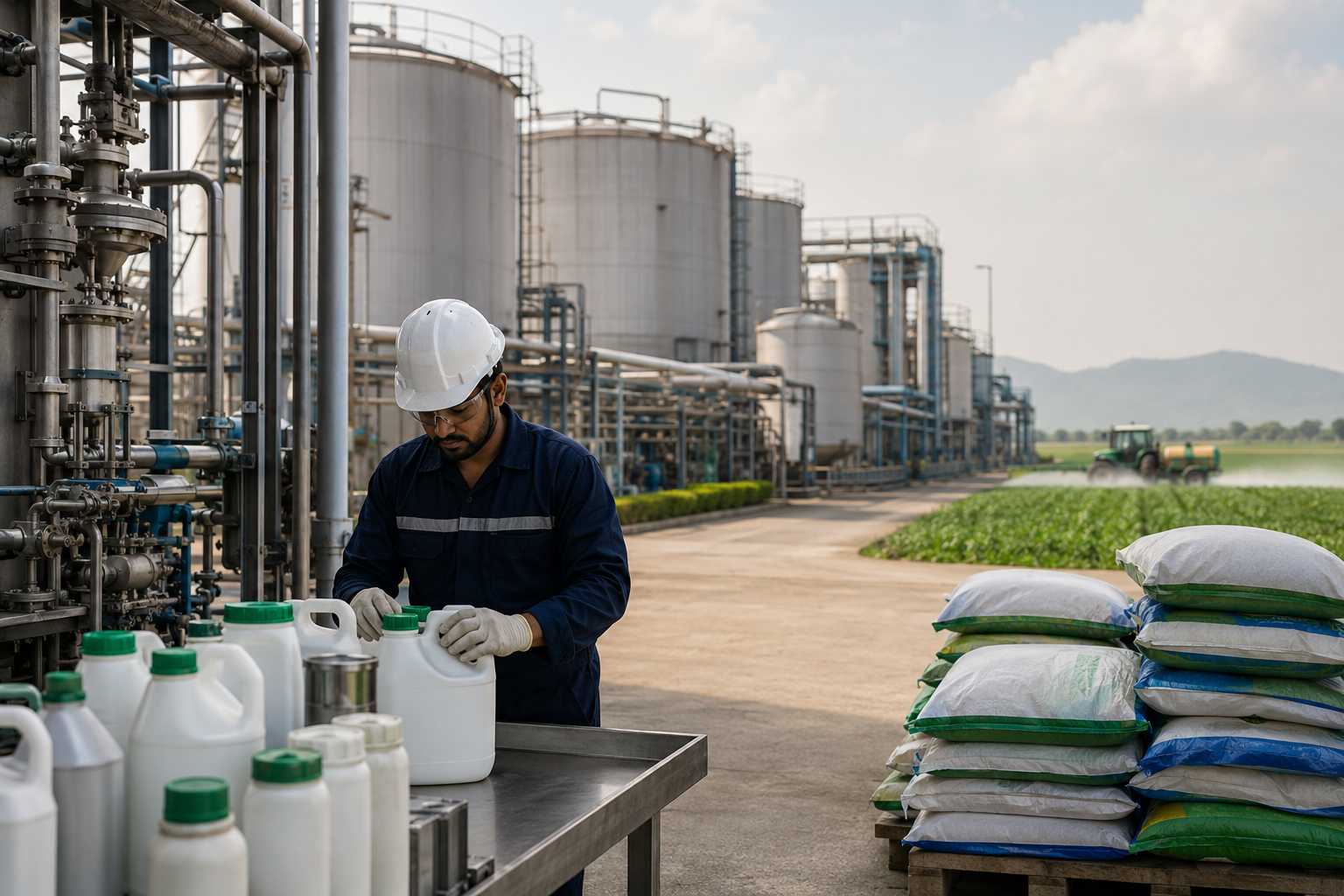
The tension is clear in the numbers. UPL reported an 18% rise in quarterly revenue to ₹18,335 crore, helped by a recovery in global crop-protection demand and stronger seeds growth, while full-year revenue rose 11% to ₹51,839 crore.
Full-year EBITDA reached ₹9,588 crore, with an 18.5% margin, and gross debt declined by $850 million from March 2025. India sales, however, fell 9%, showing that the recovery is still uneven.
| Metric | Latest figure | What it shows |
|---|---|---|
| Quarterly revenue | ₹18,335 crore | Global crop-protection recovery is feeding through |
| Quarterly revenue growth | 18% | Demand has improved after the agrochemical downturn |
| Annual revenue | ₹51,839 crore | Full-year sales returned to growth |
| Full-year EBITDA | ₹9,588 crore | Margin recovered to 18.5% |
| Gross debt reduction | $850 million | Balance-sheet repair has begun |
| India sales | -9% | Domestic demand remains a weak spot |
| Advanta revenue growth | 23% | Seeds business remains a stronger growth lever |
The renewed attention around UPL stock is not just about one good quarter. It is about whether the company has moved from damage control into a genuine earnings recovery cycle.
Since FY2024, India-listed agrochemical stocks have faced global destocking, China-led pricing pressure and working-capital strain.
UPL’s latest update suggests that the worst of the global crop-protection downturn may be easing, especially outside India. North America and Europe helped support the recovery, while Advanta’s 23% revenue growth gave the company a second growth engine beyond chemicals.
That is the bullish reading. The more cautious reading is that UPL is still a global agrochemical stock listed in India, not a pure Indian rural-demand play. The India business declined even as international markets recovered, which means the UPL share price is being driven by global pricing, debt and restructuring confidence as much as domestic agriculture sentiment.
The strongest positive in UPL’s latest update is the $850 million reduction in gross debt. For a company that has been judged heavily on leverage, that number changes the conversation. It shows that stronger cash flows and operating recovery are beginning to repair the balance sheet.
It does not end the debate. UPL debt remains central to valuation because memory of the previous downcycle is still fresh. Investors want proof that debt can keep falling without relying on a perfect pricing environment, aggressive working-capital release or asset restructuring.
That is why the stock has not escaped its discount easily. Revenue growth can lift sentiment for one quarter; debt discipline must hold for several.
The other reason investors remain cautious is the UPL restructuring announced in February 2026. The company proposed merging UPL SAS and UPL Corp into a new independently listed entity, UPL Global, creating a unified global crop-protection platform. UPL Limited would continue to hold businesses including formulations, R&D, Superform and Advanta.
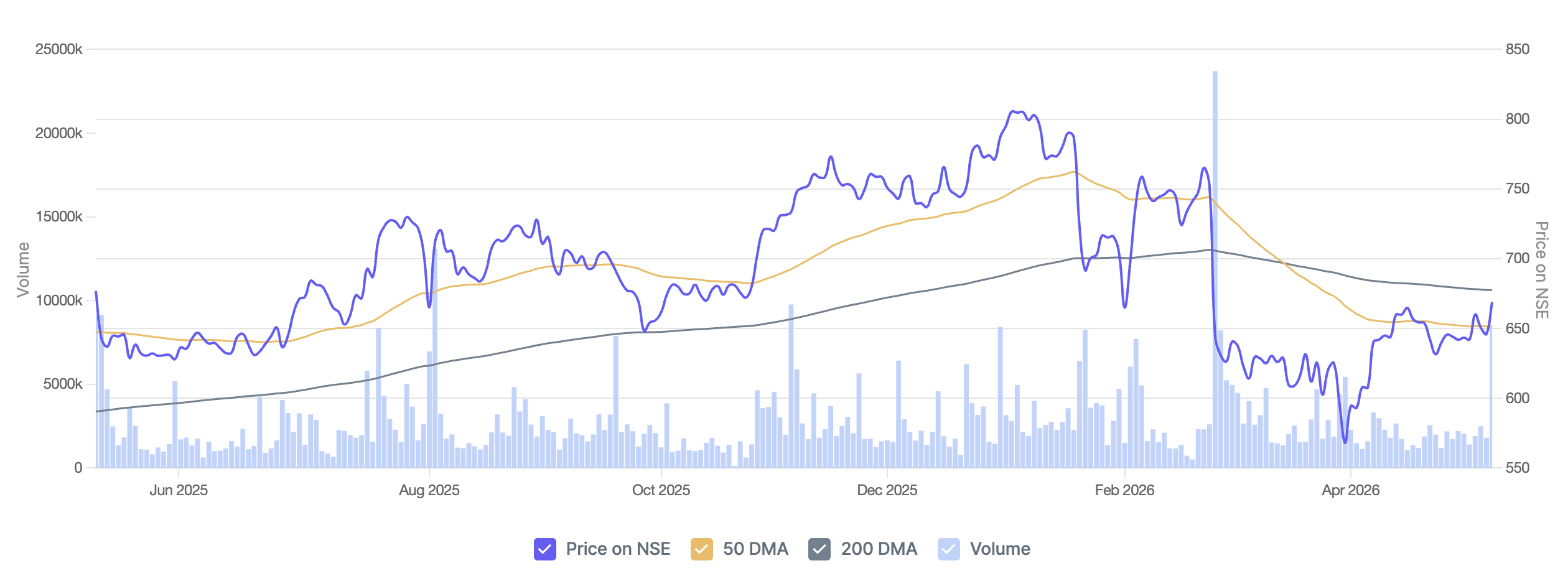
The market reaction was harsh. UPL shares fell 10% to ₹677 after the announcement, with concerns around leverage, dilution and structure. Nuvama also downgraded the stock to “Hold,” reinforcing the view that restructuring alone does not solve the debt question.
The proposed UPL demerger could still unlock value if it makes the company easier to understand and gives investors cleaner visibility into crop protection, seeds and specialty businesses. But the market is not rewarding the plan in advance. It wants evidence that the new structure simplifies ownership, protects minority shareholders and does not leave debt in the wrong place.
The bull case for UPL stock is now stronger than it was earlier in the cycle. If global agrochemical demand continues to improve, UPL could move from a balance-sheet concern to a recovery candidate.
The risk case is equally straightforward. India sales are weak, memory of the crop-protection downcycle remains fresh, and restructuring adds complexity at a time when investors want clarity.
If pricing softens again, if working-capital pressure returns or if UPL Global raises fresh questions about leverage, the market may hesitate to assign a higher multiple.
First, investors will watch whether gross debt continues to decline after the latest $850 million reduction. Second, India sales need to stabilise, because a continued domestic decline weakens the India-listed recovery narrative.
Third, EBITDA margins must hold near recent levels without relying only on short-term cost relief. Fourth, the UPL Global restructuring must become clearer in terms of debt allocation, minority protection and listing timelines.
If those pieces align, the market may treat UPL as a credible turnaround among India-listed agrochemical stocks. If they do not, the 18% revenue growth may be seen as a rebound inside a still-fragile cycle.
UPL reported quarterly revenue of ₹18,335 crore, annual revenue of ₹51,839 crore and full-year EBITDA of ₹9,588 crore, with an 18.5% margin. India sales declined 9%, while Advanta revenue grew 23%.
UPL shares fell after the company announced plans to merge UPL SAS and UPL Corp into UPL Global. Investors reacted to concerns around leverage, dilution and structural complexity.
UPL is India-listed, but its earnings are global. The latest results showed international recovery supporting growth while India sales declined, making the stock sensitive to global crop-protection demand as well as domestic agriculture trends.
UPL stock now carries a sharper market question than “did earnings improve?” The better question is whether the company can turn one strong recovery phase into a cleaner balance-sheet story.
The latest results show genuine progress: 18% quarterly revenue growth, stronger EBITDA, Advanta momentum and a large debt reduction. The unresolved issues are just as visible: weak India sales, restructuring uncertainty and a leverage profile the market has not fully forgiven. The next rerating trigger is unlikely to come from revenue alone.
It will come from proof that UPL can reduce debt further, keep margins steady and make the UPL Global structure easier for investors to value.