Published on: 2026-05-11
Aerospace supply chain stocks are becoming one of the market’s quieter industrial breakouts, supported by jet engine demand, aircraft delivery delays, and rising maintenance needs across global fleets. The appeal is not just new aircraft production; aerospace supply chain stocks are benefiting from the bottlenecks that keep older planes flying longer.
For investors, the story is shifting toward aerospace suppliers with engine exposure, certified parts, and recurring MRO revenue. Strong jet engine demand, longer backlogs, and tight component supply are turning aerospace supply chain stocks into a focused industrial theme rather than a broad airline recovery trade.
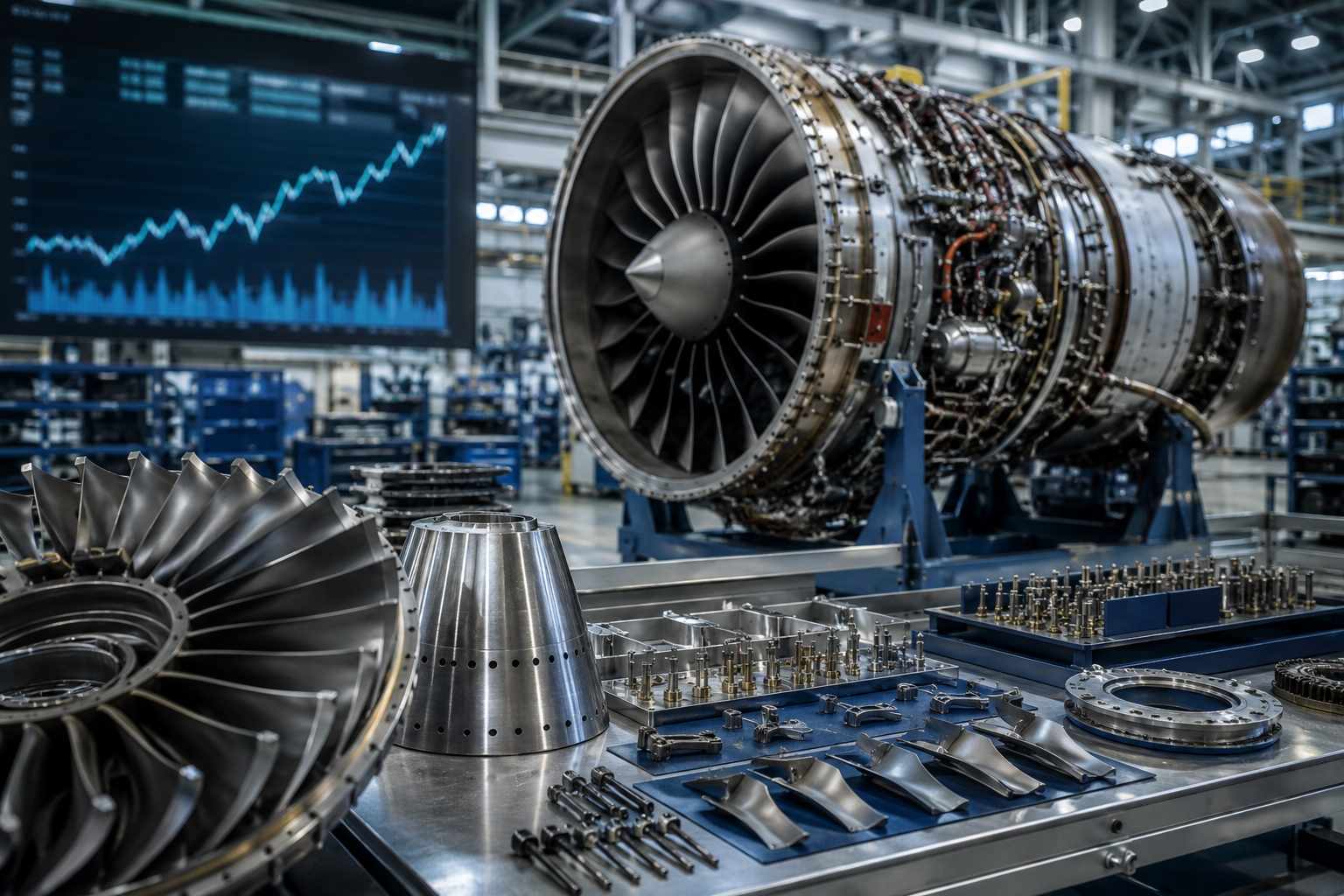
Aerospace supply chain stocks are gaining attention as jet engine demand, maintenance backlogs, and aircraft delivery delays lift demand for critical components.
Howmet Aerospace’s Q1 2026 revenue rose 19% to $2.31 billion, while adjusted EPS climbed 42% to $1.22.
Howmet’s Engine Products revenue jumped 29%, showing where the strongest demand is concentrated.
The global aviation maintenance, repair, and overhaul market exceeded $136 billion in 2025 and is projected to approach $193 billion by the end of the decade.
The sector’s upside is supported by backlog visibility, but valuation risk is rising after sharp share-price gains.
The post-pandemic commercial aviation recovery has moved through two clear market phases. The first, in 2022 and 2023, was driven by passenger demand rebounding faster than the industry expected.
The second, defining 2025 and 2026, is being shaped by a constraint that airline demand cannot solve quickly: Boeing and Airbus have struggled to deliver new aircraft at the pace carriers need them.
Boeing’s production challenges are well documented. Airbus has faced its own engine supply issues, partly tied to Pratt & Whitney GTF inspections that forced hundreds of aircraft out of service. The combined effect has been a global fleet older than it would otherwise be, flying more hours per frame, and requiring more frequent maintenance.
For companies supplying the parts, services, and components that keep engines running, this is not a headwind. It is a sustained demand tailwind with pricing power attached.
Jet engines sit at the center of the aerospace supply chain because they require high-value materials, precision components, and recurring maintenance. Engine parts operate under extreme heat, pressure, and safety standards, which makes certification difficult and replacement demand sticky.
Once a supplier is embedded in an engine platform, revenue can last for years through original equipment sales and aftermarket service. That is why the current market is rewarding engine-exposed suppliers.
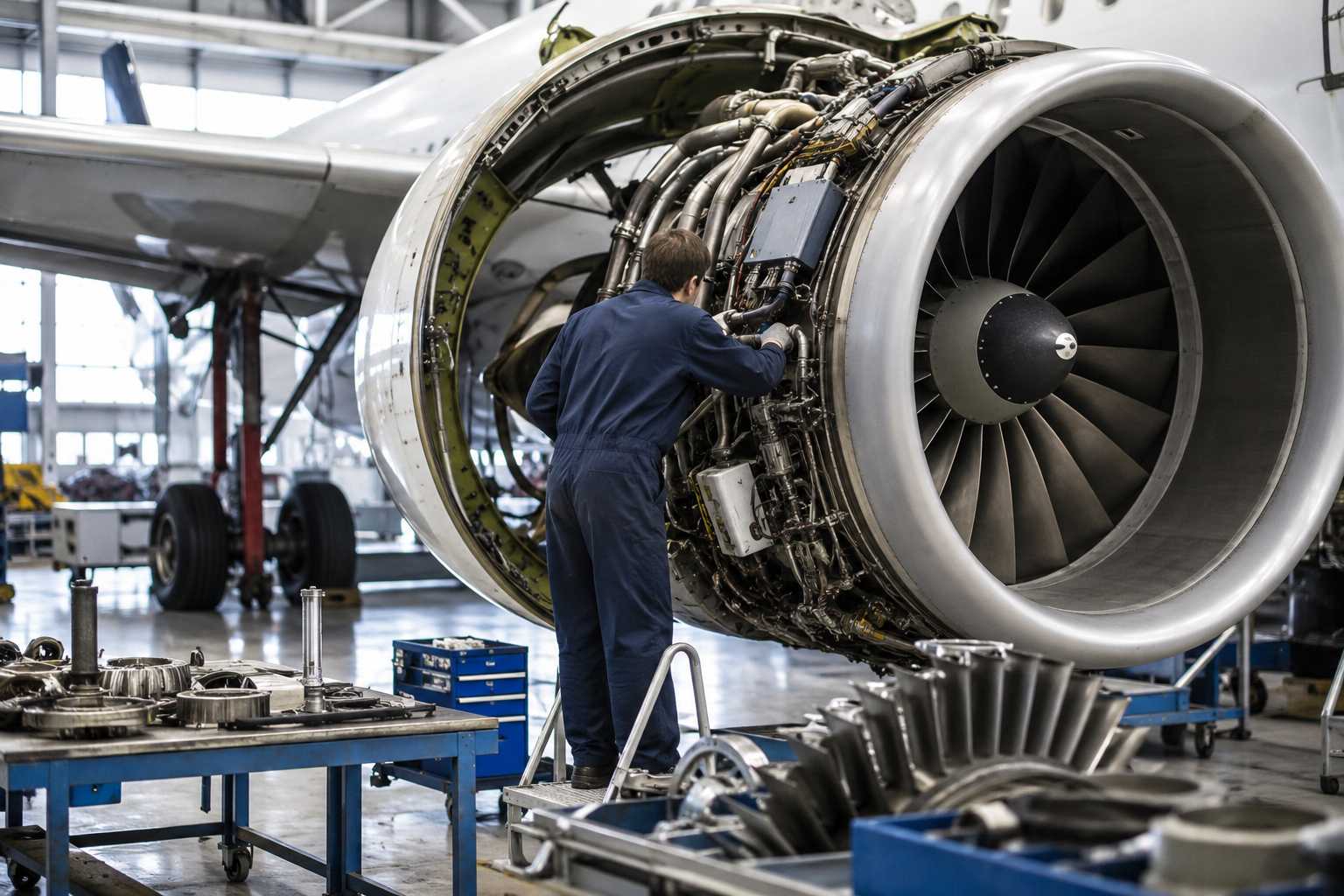
Airlines are still expanding fleets, but production constraints mean aircraft deliveries cannot always keep pace with demand. When planes stay in service longer, engine maintenance, spare parts, and certified replacement components become more important.
This shifts value from airlines and aircraft manufacturers toward suppliers with scarce capacity.
Boeing’s Q1 2026 results show the scale of backlog still flowing through the system. Commercial Airplanes delivered 143 aircraft in the quarter, while backlog included more than 6,100 aircraft valued at a record $576 billion. Airbus had a reported backlog of 9,031 aircraft at the end of March 2026, equal to roughly 10.4 years of production coverage based on its 2026 delivery target.
Howmet Aerospace has become the clearest current example of the theme. The company reported Q1 2026 revenue of $2.31 billion, up 19% year over year. Adjusted EPS rose 42% to $1.22, while adjusted EBITDA increased 32% to $740 million.
The company also lifted full-year 2026 guidance, with revenue now expected between $9.58 billion and $9.73 billion.
The strength was concentrated where investors want to see it. Howmet’s Engine Products segment generated $1.25 billion in revenue, up 29% from a year earlier. Segment adjusted EBITDA rose 44%, and the segment margin expanded to 36.6%.
Fastening Systems revenue also increased 14% to $471 million, reflecting demand across commercial and defense aerospace.
That mix explains why Howmet has drawn market attention. It is not just growing. It is growing in the highest-quality parts of aerospace demand: engines, fasteners, and mission-critical components.
As of early May 2026, HWM traded near $270, with a market value of about $109 billion and a trailing P/E ratio above 62, showing that investors have already priced in a substantial earnings runway.
| Company | Supply Chain Exposure | Current Market Signal |
|---|---|---|
| Howmet Aerospace | Engine components, fasteners, airframe structures, gas turbines | Q1 revenue up 19%, Engine Products revenue up 29% |
| GE Aerospace | Jet engines, commercial services, military engines | Installed base of roughly 50,000 commercial and 30,000 military aircraft engines |
| RTX | Pratt & Whitney engines, Collins Aerospace systems, defense platforms | Q1 sales up 9%, backlog at $271 billion |
| TransDigm | Proprietary aircraft components and aftermarket parts | Fiscal first-half sales up 16.2% |
| HEICO | Replacement parts, repair, avionics, aftermarket components | Flight Support sales rose 15% in fiscal Q1 2026 |
GE Aerospace reinforces the same message at larger scale. The company operates with an installed base of approximately 50,000 commercial and 30,000 military aircraft engines, giving it deep exposure to recurring services demand. As of early May 2026, GE Aerospace traded near $297, with a market value around $310 billion.
RTX also shows the aftermarket pattern. Q1 sales rose 9% to $22.1 billion, adjusted EPS increased 21%, and backlog reached $271 billion, including $162 billion of commercial backlog. Within Pratt & Whitney, sales rose 11%, supported by a 19% increase in commercial aftermarket sales.
The maintenance, repair, and overhaul market is the backbone of the aerospace supplier story. MRO spending is less visible than aircraft orders, but it can be more durable.
Airlines cannot defer safety-critical maintenance indefinitely. Engines must be inspected, repaired, and fitted with approved parts regardless of short-term market sentiment.
The global aviation MRO market exceeded $136 billion in 2025, up 8% from 2024. Spending is expected to approach $193 billion by the end of the decade, supported by aging fleets, maintenance-heavy aircraft, reliability challenges on newer platforms, and labor and material shortages.
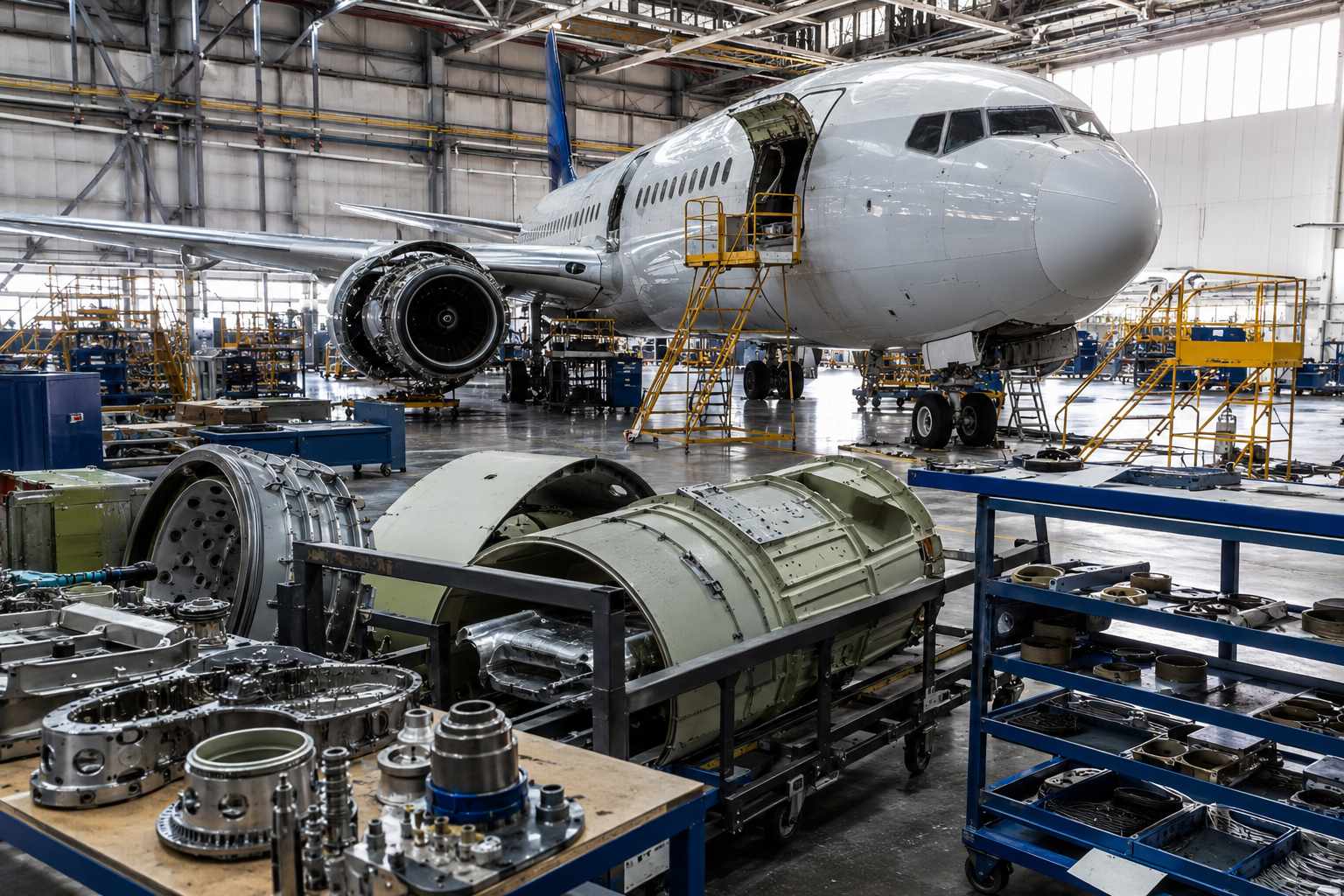
This creates a powerful feedback loop for suppliers. Aircraft delivery delays keep older planes flying. Older planes require more maintenance. More maintenance increases demand for spare parts, repairs, and certified components.
Companies with approved product lines and strong supplier relationships can convert that demand into margin expansion.
The aerospace supply chain can offer a cleaner earnings profile than airlines. Airlines face fuel-price volatility, labor costs, fare competition, and cyclical travel demand.
Suppliers face their own risks, but they may benefit from scarcity. When capacity is tight and certification barriers are high, customers have fewer alternatives.
Airframers also carry production risk. Aircraft manufacturers must manage final assembly, regulatory requirements, supplier coordination, and delivery schedules. Component makers are not immune to these challenges, but the strongest suppliers often sell into multiple platforms and markets.
A company serving commercial aerospace, defense aerospace, and gas turbines has more ways to absorb volatility.
That is why the “quiet breakout” matters. Investors are not only buying the aerospace cycle. They are buying the bottlenecks inside the cycle.
The aerospace supply chain trade is supported by strong demand, but the risk profile is becoming less forgiving as valuations rise and expectations build.
Valuation risk: Strong earnings momentum has pushed some suppliers to premium multiples. Howmet’s trailing P/E above 62 shows how much future growth investors are already discounting. Any disappointment in margin, guidance, or production timing could trigger a sharp repricing.
Execution risk: Material shortages, labor constraints, quality issues, and engine durability challenges can increase maintenance demand, but they can also disrupt production. Suppliers must add capacity without damaging margins or creating working-capital pressure.
End-market risk: If airline profitability weakens, travel demand slows, or fuel costs stay elevated, investors may reassess the pace of fleet expansion. Defense exposure can cushion some pressure, but it does not remove cyclicality.
Supply-chain concentration risk: Aerospace components often rely on specialized materials, certified facilities, and narrow supplier networks. A bottleneck in one part of the chain can delay output across multiple platforms.
Aerospace supply chain stocks are rising because the strongest part of the aviation cycle is no longer limited to new aircraft orders. Jet engine demand, spare parts, fasteners, and MRO spending are creating earnings leverage beneath the surface of the airline and airframer headlines.
The trade remains attractive because backlogs are long, maintenance needs are rising, and certified aerospace components are difficult to replace. The caution is valuation. This is a high-quality industrial theme, but not a low-expectation one.
For investors, the key is to focus on suppliers with real pricing power, recurring aftermarket exposure, and evidence that revenue growth is converting into margin expansion.