Published on: 2026-02-26
Updated on: 2026-02-26
Commodities are basic physical goods, typically natural resources or raw materials, that can be bought and sold in markets and are largely interchangeable regardless of who produces them. In simple terms, a commodity is a standardised raw material used as an input in the production of goods and services.
Unlike branded consumer products, commodities have minimal differentiation. One unit of a commodity is generally equivalent to another unit of the same grade or quality. Because commodities are standardised, they can be traded globally using transparent pricing systems.
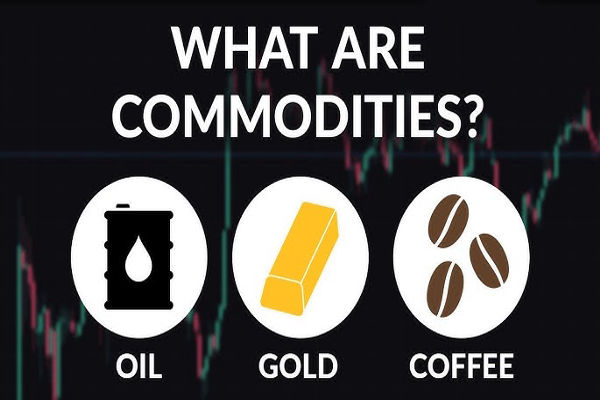
Examples include: Crude oil, Gold, Wheat, Natural gas, Copper, Coffee.
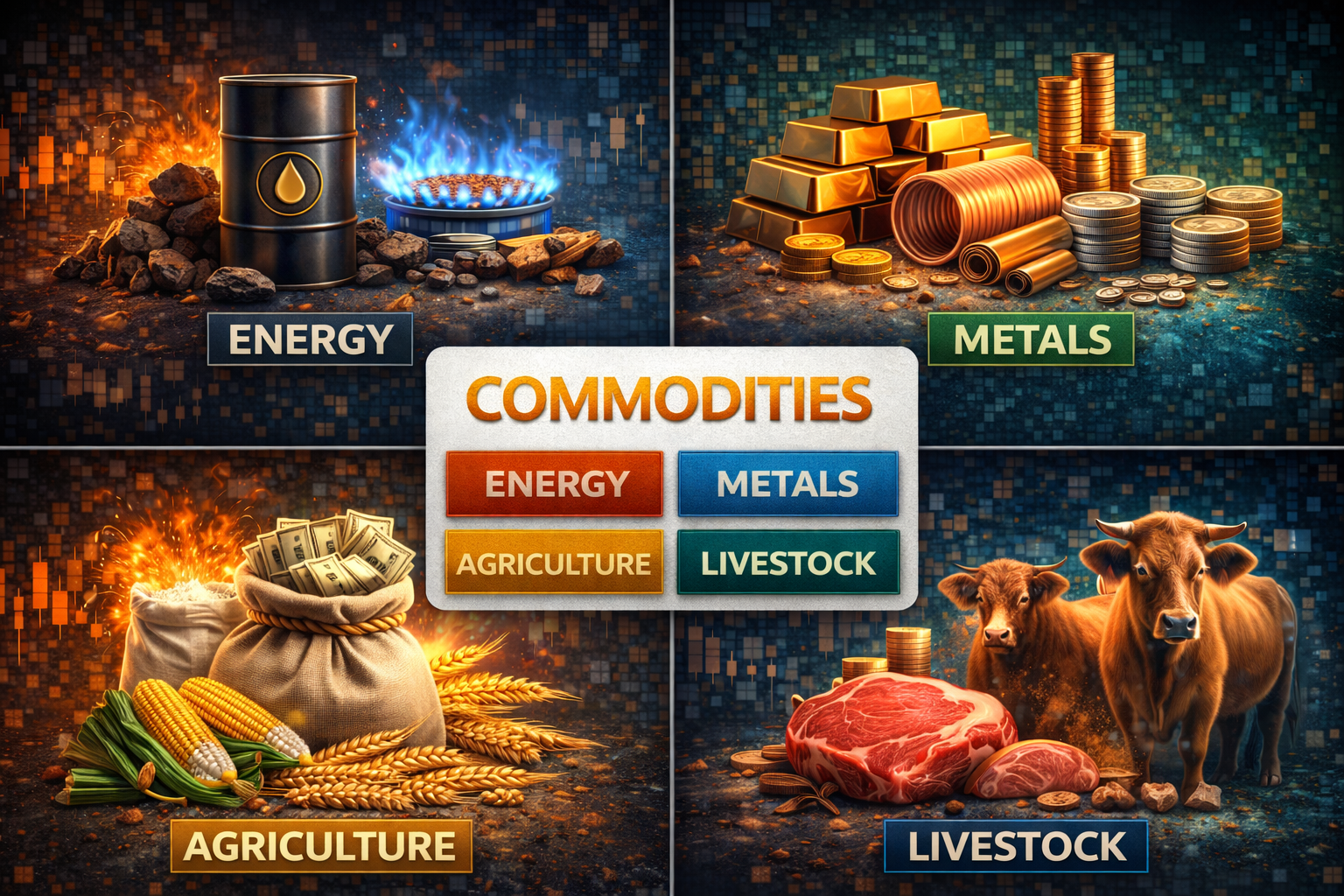
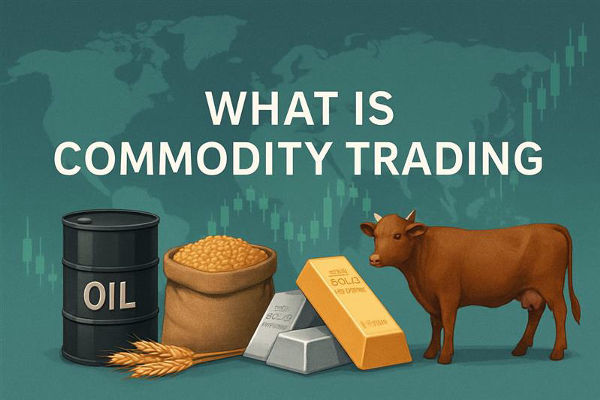
Commodity markets are generally divided into four major categories.
Energy commodities power transportation, manufacturing, and electricity generation. Common examples:
Crude oil
Natural gas
Coal
Energy prices often influence inflation and economic growth expectations.
Metals are widely used in construction, manufacturing, and technology. They are often divided into:
Precious metals (gold, silver): sometimes viewed as haven assets.
Industrial metals (copper, aluminium): closely tied to economic activity.
Agricultural commodities include crops grown for food and industrial use. Examples include:
Wheat
Corn
Soybeans
Coffee
Sugar
Prices are highly sensitive to weather patterns and seasonal cycles.
Livestock commodities represent animals raised for food production. Examples include:
Cattle
Hogs
These markets respond to feed costs, disease outbreaks, and consumer demand trends.
Commodity prices are primarily determined by supply and demand dynamics. Markets continuously adjust prices based on expectations about availability and consumption.
Supply refers to how much of a commodity is available. Supply changes due to:
Weather conditions affecting crops
Mining or drilling output
Geopolitical disruptions
Production costs
Government policies
For example, drought conditions may reduce agricultural output, limiting supply.
Demand reflects how much consumers and industries need a commodity. Demand rises when:
Economies grow
Industrial production increases
Energy consumption expands
Population demand rises
Strong economic activity typically increases demand for energy and industrial metals.
Commodity exchanges enable buyers and sellers worldwide to agree on fair prices through trading. These prices adjust constantly as new information enters the market. Because commodities are globally traded, events in one region can affect prices worldwide.
Imagine global wheat production falls due to severe drought.
Supply decreases.
Food producers compete for limited wheat.
Buyers are willing to pay higher prices.
Wheat prices rise globally.
Food costs increase, contributing to inflation.
This example shows how commodity markets connect real-world events directly to financial prices.
Most investors do not buy or store physical commodities. Instead, they gain exposure through financial instruments. Common methods include:
Commodity exchange-traded funds (ETFs)
Futures contracts
Commodity-focused mutual funds
Shares of energy or mining companies
These instruments allow participation in commodity price movements without handling physical goods.
Commodities are commonly traded using futures contracts, which are agreements to buy or sell a commodity at a predetermined price on a future date. Originally, futures helped producers and buyers manage price uncertainty.
Example: A farmer locks in a selling price for crops months before harvest, reducing income uncertainty regardless of future market prices.
Today, traders also use futures for speculation and hedging.
Supply: The total quantity of a commodity available in the market at a given time.
Demand: The level of consumer or industrial need for a commodity that influences its price.
Futures Contract: A standardised agreement to buy or sell a commodity at a predetermined price on a specified future date.
Inflation Hedge: An asset expected to maintain or increase its value during periods of rising inflation.
Volatility: The degree to which a commodity’s price fluctuates over a period of time.
Spot Price: The current market price at which a commodity can be bought or sold for immediate delivery.
For traders and investors, understanding commodities is essential because commodity price movements often signal broader economic trends. Rising oil prices can affect inflation expectations, agricultural shortages can move currencies, and gold prices frequently reflect shifts in risk sentiment.
Even traders who never directly trade commodities are affected by them, as commodity markets influence stocks, bonds, and central bank policy decisions. Commodities influence multiple areas of financial markets.
Inflation Signals: Rising commodity prices often lead to higher production and consumer costs, contributing to inflation trends.
Portfolio Diversification: Commodity prices often move differently from stocks and bonds, helping diversify investment portfolios.
Currency Movements: Countries that export commodities frequently see their currencies influenced by commodity price changes.
Economic Indicators: Industrial metals and energy demand can signal economic expansion or slowdown.
Market Volatility Opportunities: Commodity markets can experience strong price swings, creating trading opportunities but also higher risks.
Beginner traders can approach commodities using a structured framework:
Monitor global supply disruptions.
Track economic growth trends.
Watch seasonal patterns in agriculture.
Observe geopolitical developments
Understand demand cycles
A useful mental model is:
Stocks reflect a company's performance, while commodities reflect global resource demand. Understanding this distinction helps explain why commodity markets sometimes move independently from equities.
While commodities often benefit from inflation, individual commodities may still fall due to oversupply or weakening demand.
Prices may appear unpredictable, but they largely reflect supply-demand fundamentals and macroeconomic conditions.
Most commodity investing occurs through financial contracts rather than physical ownership.
Energy, metals, and agricultural commodities respond to different economic drivers and risks.
Commodity markets can be highly volatile because prices are influenced by factors such as weather, geopolitics, and global trade disruptions.
Commodities provide essential raw materials used in energy production, manufacturing, and food supply. Their prices influence production costs, inflation, and global economic stability.
They can be useful for learning macroeconomic relationships, but beginners should understand that commodity markets can be volatile and influenced by unpredictable external factors.
Weather events, geopolitical tensions, supply disruptions, economic cycles, and currency fluctuations can rapidly shift expectations of supply and demand, driving sharp price movements.
Stocks represent ownership in companies, while commodities represent physical resources. Commodity prices depend mainly on global supply and demand rather than corporate performance.
Gold is viewed as a store of value during periods of uncertainty because investors often allocate capital to it when confidence in currencies, financial systems, or economic growth declines.
Commodities are the foundational resources that power economies and support global production. From energy and metals to agriculture and livestock, these raw materials influence inflation, economic growth, and financial market behaviour.
The key takeaway is straightforward: while stocks track businesses, commodities track the essential resources the world depends on. Recognising this relationship helps traders better understand market cycles and the forces shaping global financial markets.
Disclaimer: This material is for general information purposes only and is not intended as (and should not be considered to be) financial, investment or other advice on which reliance should be placed. No opinion given in the material constitutes a recommendation by EBC or the author that any particular investment, security, transaction or investment strategy is suitable for any specific person.