Published on: 2026-01-30
Updated on: 2026-01-30
SanDisk stock jumped about +17% after hours to around $631 after reporting a robust earnings beat and issuing Q3 guidance that came in far above consensus.
For context, SanDisk's fiscal Q2 reported adjusted EPS of $6.20 on $3.03 billion in revenue, beating estimates of about $3.62 and $2.69 billion, respectively.
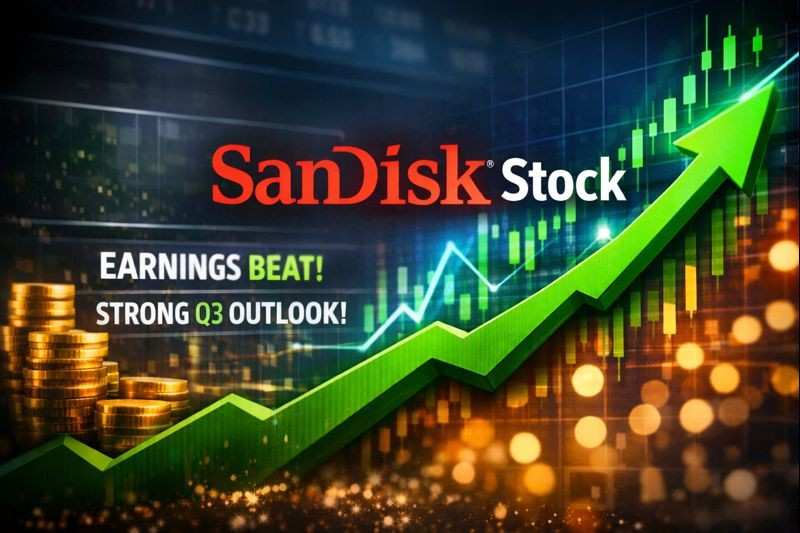
Additionally, SNDK guided fiscal Q3 adjusted EPS of $12 to $14 and revenue of $4.4 billion to $4.8 billion, versus Street expectations near $5.11 and $2.93 billion.
That kind of move is unusual for a company that already had a powerful run into the print, which is why the guidance matters more than the headline beat.
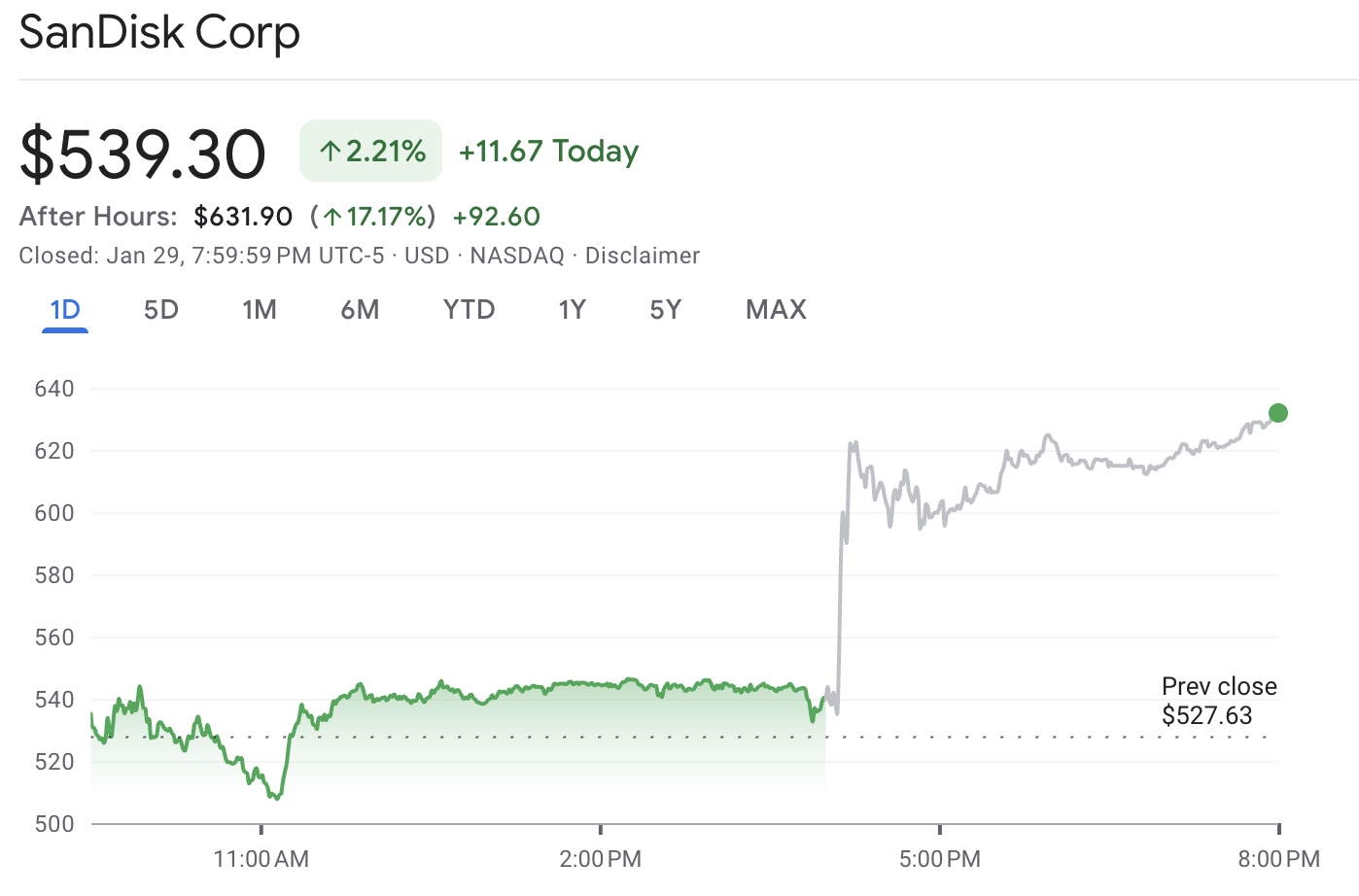
As mentioned above, SanDisk stock jumped after hours because the company not only beat estimates but also raised guidance. It changed our expectations for what this cycle can achieve in flash memory technology.
In late trading, shares were shown around $631 and up roughly 17% after the regular session ended near $539.
Investors believe demand is not only strong, but also getting stronger.
Investors believe that the product mix and pricing have improved enough to boost earnings potential quickly.
Both points hinge on guidance, not the quarter that just ended.
SanDisk's fiscal Q2 (the December quarter) beat estimates on both revenue and adjusted earnings per share.
| Metric (Fiscal Q2) | Reported | Street expectation | What the gap signaled |
|---|---|---|---|
| Adjusted EPS | $6.20 | $3.62 | Profitability ramped faster than modeled. |
| Revenue | $3.03B | $2.69B | Demand and pricing held up across core markets. |
The numbers support the same message: enterprise flash demand is rising, and SanDisk is capturing more value per unit shipped.
| Metric | Q2 actual | Q3 midpoint guide | Implied change |
|---|---|---|---|
| Revenue | $3.03B | $4.6B | About +52% sequential (approx.) |
| Adjusted EPS | $6.20 | $13 | About +110% sequential (approx.) |
The real story is the outlook for fiscal Q3.
SanDisk forecasted Q3 revenue between $4.4 billion and $4.8 billion, with adjusted earnings per share ranging from $12 to $14, greatly surpassing analyst predictions.
When guidance beats by this much, traders usually assume one of two things is happening. The company either has a substantial number of orders secured or price increases are occurring more rapidly than anticipated by the market.
In this case, management commentary points to both.
A significant part of the optimistic outlook concerns advancements in AI infrastructure. AI training and inference workloads need fast storage and large pools of flash, especially in enterprise SSDs.
That has been a theme across the sector, but SanDisk is now saying the demand is strong enough that customers are talking longer contracts.
During the call, management indicated that discussions are shifting from quarterly deals to multi-year agreements, which typically occur when buyers are concerned about tight supply.
SanDisk's CEO said the quarter's performance reflected a better product mix and accelerating enterprise SSD deployments.
This matters because, in memory, minor modifications in the mix can result in substantial profit variations, particularly during rising prices.
Recent reports indicate that data center sales have surged significantly, reaching approximately $440 million, with strong sequential and year-over-year growth.
Even if consumer demand remains stable, an increase in data center demand can significantly influence earnings, as these products typically offer better financial returns.
The storage and memory complex has been trying to answer one key question: Is the AI boom a cyclical spike, or a multi-year re-rating of storage content and pricing?
SanDisk's print leaned toward the second interpretation.
The company highlighted increased demand for memory technologies supporting AI workloads.
Data-center sales are a fast-rising area, reaching $440 million, up 64% sequentially and 76% YoY.
The deeper story is not just units. It is a mix of pricing power.
If that mix holds, earnings can grow faster than revenue because enterprise SSD and high-end solutions typically carry stronger margins than commoditized consumer channels.
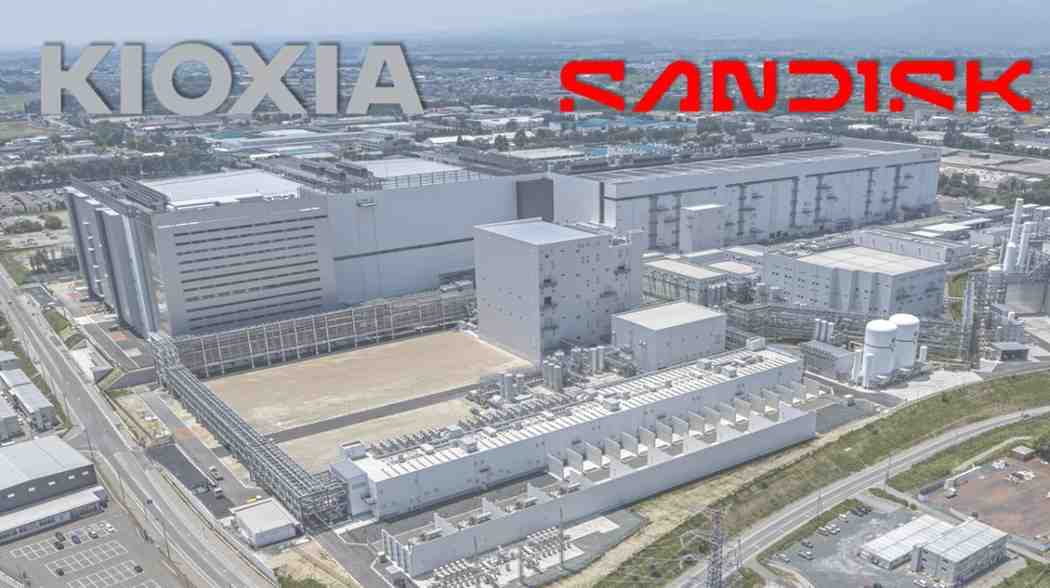
SanDisk also extended its NAND flash memory joint venture with Kioxia through 2034, and the WSJ noted an associated $1.17 billion payment over 2026 to 2029 tied to manufacturing services and supply.
This is not a headline that moves a stock on its own. It does, however, support the broader investment case that SanDisk is trying to lock in supply and manufacturing alignment as AI demand rises.
| Indicator | Latest reading | Market implication |
|---|---|---|
| RSI (14) | 64.67 | Momentum is strong but not fully extreme, although some indicators flagged overbought conditions. |
| MACD (12,26) | 13.96 | Trend momentum is positive after the breakout. |
| MA50 | 495.60 | Price is well above intermediate trend support. |
| MA200 | 353.98 | Long-term trend remains decisively positive. |
Because SNDK pushed to fresh highs after hours, many pre-earnings resistance levels matter less than the new "acceptance" zone.
| Framework | S1 | Pivot | R1 | Notes |
|---|---|---|---|---|
| Classic pivots | 540.13 | 543.44 | 546.59 | These levels were calculated off pre-breakout action, so they matter mainly if price "fills" back toward the close area. |
| Fibonacci pivots | 540.97 | 543.44 | 545.91 | Similar use case, more relevant if volatility compresses after the initial reaction. |
The prior highs near $546 to $547 are the "old ceiling." If the price holds above that zone in regular hours, it often becomes support.
The area after hours, around $631, becomes the first new reference point because it anchors new positioning.
SanDisk is benefiting from tightness in flash memory supply, but memory cycles can turn quickly if supply ramps too fast. The key is not only demand but also whether the industry keeps capacity additions under control.
A good tell is how often management references:
tight supply conditions
longer contracts
firmer pricing
SanDisk has done that, which is one reason the market reacted so strongly.
AI build-outs can create bursts of purchasing that appear to be a new baseline, until customers digest the inventory.
The best way to judge durability is the tone around:
backlog
repeat orders
multi-quarter visibility
SanDisk's comments on multi-year talks are supportive, but the market will want to see it reflected in future results, not just in one quarter of guidance.
A swift rise in income can generate its own problems. Fulfillment, yields, and product transitions must remain effective. In memory, execution mistakes can show up as margin misses, even when demand is strong.
SanDisk beat Q2 estimates and then guided Q3 revenue and adjusted EPS far above what analysts were expecting.
SanDisk reported $3.03B in revenue and $6.20 in adjusted EPS for the December quarter, both above consensus estimates.
SanDisk projected $4.4B to $4.8B in revenue and $12 to $14 in adjusted EPS for fiscal Q3.
Yes. AI-driven data center demand and a strong ramp in enterprise SSD deployments are the key drivers.
In conclusion, SanDisk stock jumped after hours because Q3 guidance was not just strong; it was defining. It was in a different league than the market's baseline view.
The next move from here will depend on whether investors treat this as a one-quarter surge or the start of a longer period where AI-driven storage demand keeps supply tight and pricing firm.
If management continues to back up the multi-year demand story with numbers, the rally can extend. If the market sees signs of a typical memory cycle returning, volatility can rise quickly because expectations have been sharply lifted.
Disclaimer: This material is for general information purposes only and is not intended as (and should not be considered to be) financial, investment or other advice on which reliance should be placed. No opinion given in the material constitutes a recommendation by EBC or the author that any particular investment, security, transaction or investment strategy is suitable for any specific person.