Published on: 2026-04-16
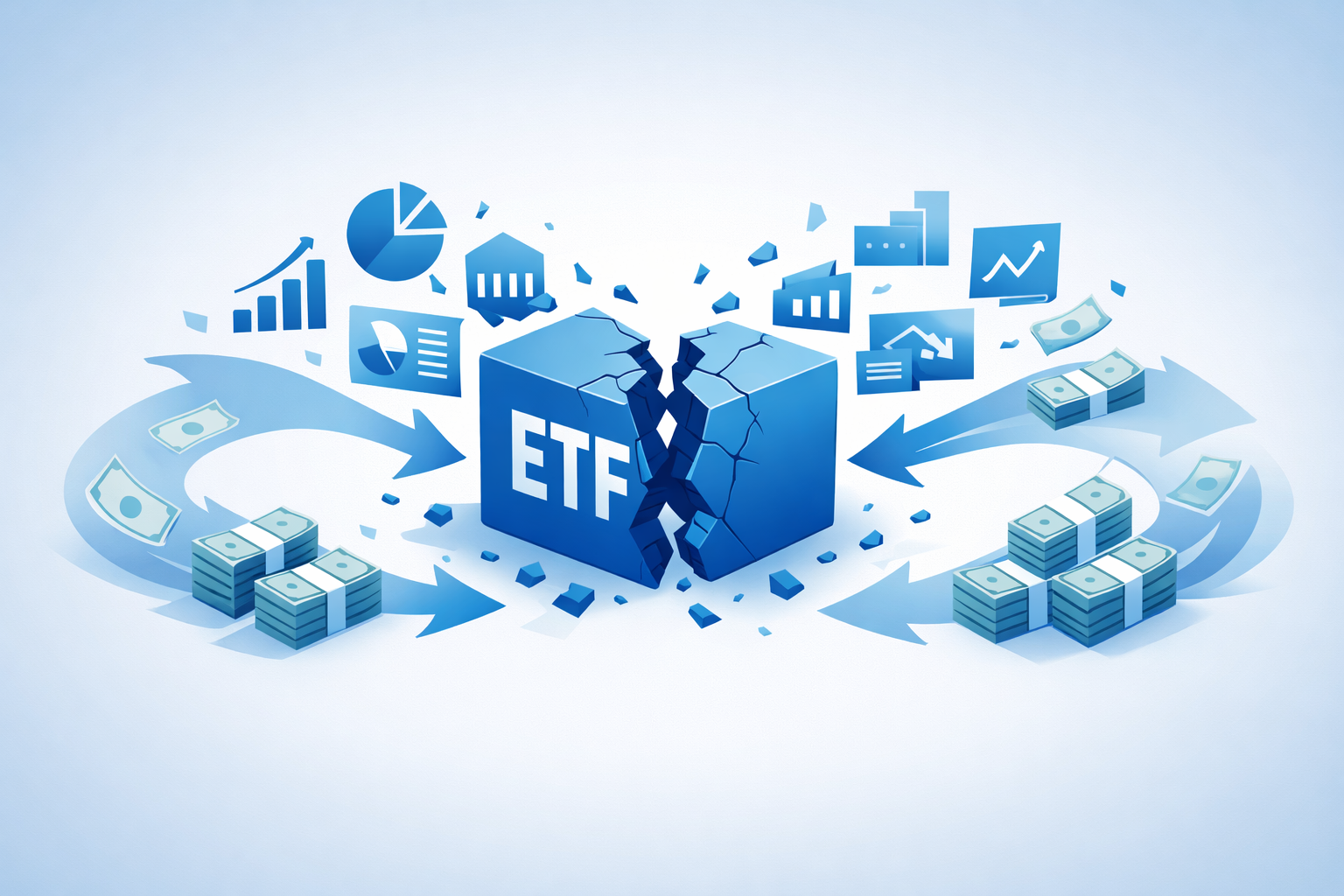
ETF liquidation is a structured process in which an exchange-traded fund (ETF) is closed by its issuer, its assets are sold, and the proceeds are returned to investors. While this may sound alarming at first, ETF liquidations are typically orderly events driven by business decisions rather than financial distress.
ETF liquidation means the fund is closed, and assets are sold off
Investors usually receive cash based on the fund’s net asset value (NAV)
Liquidation is often caused by low demand or insufficient assets under management (AUM)
Trading conditions may worsen as the final trading date approaches.
Early action can help investors avoid liquidity and pricing risks.
ETF liquidation occurs when a fund provider, such as BlackRock or Vanguard, decides to shut down an ETF that no longer meets its commercial or strategic objectives.
Unlike a market crash or fund failure, liquidation is a planned closure. The issuer announces the decision in advance and provides a clear timeline for investors.
ETF closures are usually business decisions tied to economic viability, product overlap, or weak investor demand, not a sudden collapse of the fund itself.
Low Assets Under Management (AUM)
Smaller funds may not generate enough fees to justify operational costs.
Weak Trading Volume
Low liquidity reduces investor interest and market efficiency.
Strategic Product Changes
Issuers may streamline their offerings or replace underperforming strategies.
Shifts in Market Trends
For example, thematic ETFs tied to short-lived trends (e.g., niche tech or post-pandemic sectors) may lose relevance over time.
ETF closures remain a normal part of the market. Recent closure notices and ETF closure trackers show that smaller, niche, or lower-demand products are more likely to be shut down when they fail to attract enough assets or trading interest.
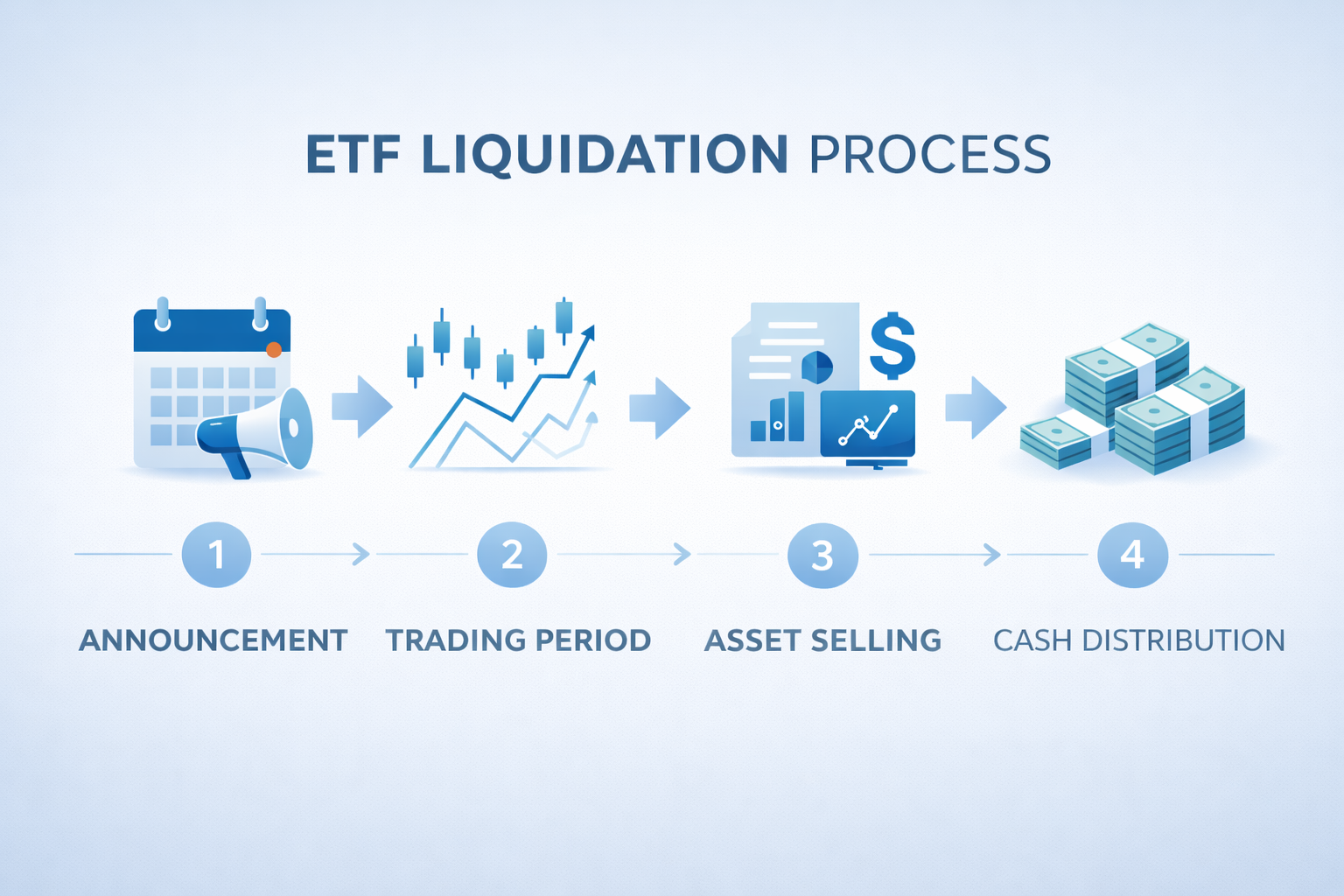
Understanding the liquidation timeline helps investors make informed decisions.
The issuer publishes a notice detailing:
Final trading date
Liquidation date
Expected cash distribution timeline
Investors can still:
Sell ETF shares on the exchange before the final trading cutoff.
Exit positions at prevailing market prices while exchange trading remains available
The exact cutoff depends on the issuer’s notice and the exchange. As the closure approaches, liquidity can weaken, bid-ask spreads can widen, and some issuers may stop accepting creation orders before the liquidation date.
The fund manager sells all underlying assets, which may include:
Equities
Bonds
Commodities
This process determines the final net asset value (NAV).
After assets are sold:
Investors receive cash in their brokerage accounts.
Payment is based on their proportional ownership.
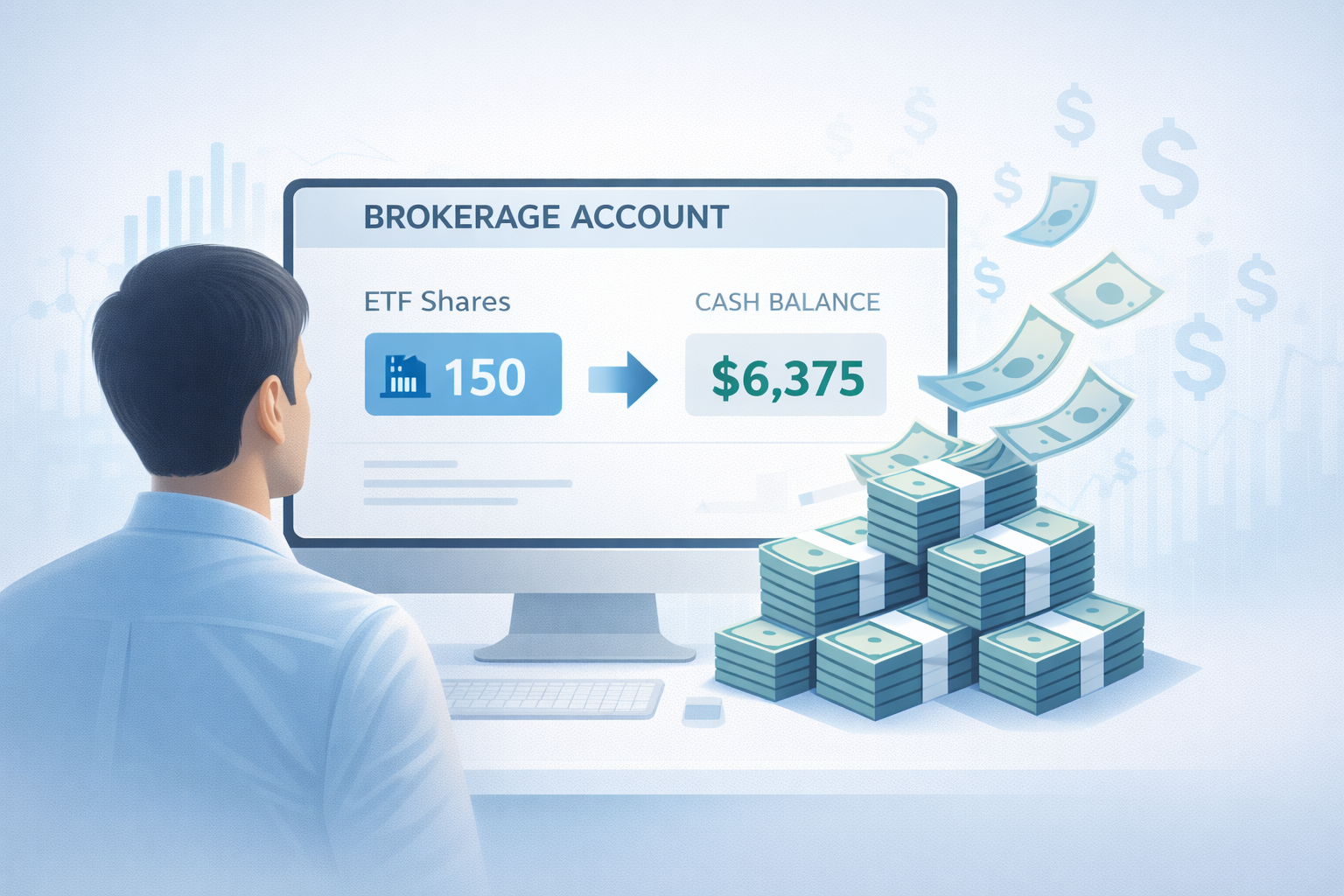
When an ETF is liquidated, your investment is not lost. Instead:
Your share of the ETF is converted into cash.
The amount depends on the final NAV.
Funds are deposited into your brokerage account.
Important Considerations:
Market Impact: If the ETF holds illiquid assets, realised sale prices may differ from recent market levels
Taxes: Capital gains or losses may apply, depending on your jurisdiction, account type, and holding period
This depends on market conditions, the ETF’s liquidity, and how much control you want over your exit price.
Avoid widening bid-ask spreads.
Reduce exposure to price dislocations.
Maintain control over execution price.
Simplicity, no action required
Final NAV may closely reflect fair value in highly liquid ETFs
Although generally low-risk, investors should remain aware of:
Liquidity Risk: Trading volume may drop significantly
Tracking Error: ETF price may diverge from the underlying value
Execution Risk: Selling late may result in unfavourable pricing
Yes, in most cases, your money is returned based on the ETF’s net asset value. Liquidation is a controlled process, not a collapse. However, the final amount depends on market prices at the time of asset sales.
Selling early can help you avoid liquidity issues and pricing inefficiencies. However, if the ETF holds highly liquid assets, waiting for the final cash distribution may not significantly impact your returns.
Cash is typically distributed within a few days to a couple of weeks after the liquidation date. The exact timeline depends on how quickly the underlying assets are sold and settled.
Yes, losses are possible if the ETF’s value has declined before liquidation or if assets are sold at lower prices. However, liquidation itself does not inherently destroy value; it simply converts holdings into cash.
If you take no action, you will usually receive the cash distribution automatically upon the fund's liquidation. However, once the final trading cutoff has passed, you may no longer be able to sell the ETF on the exchange, so you lose control over the timing of the exit.
ETF liquidation is a routine but important event in the lifecycle of exchange-traded funds. While it may initially raise concerns, it is typically a well-managed process that ensures investors receive the fair value of their holdings.
Understanding the timeline, risks, and available actions allows investors to navigate ETF closures confidently and make informed decisions that protect capital and optimise execution.
Disclaimer: This material is for general information purposes only and is not intended as (and should not be considered to be) financial, investment or other advice on which reliance should be placed. No opinion given in the material constitutes a recommendation by EBC or the author that any particular investment, security, transaction or investment strategy is suitable for any specific person.