Published on: 2026-02-27
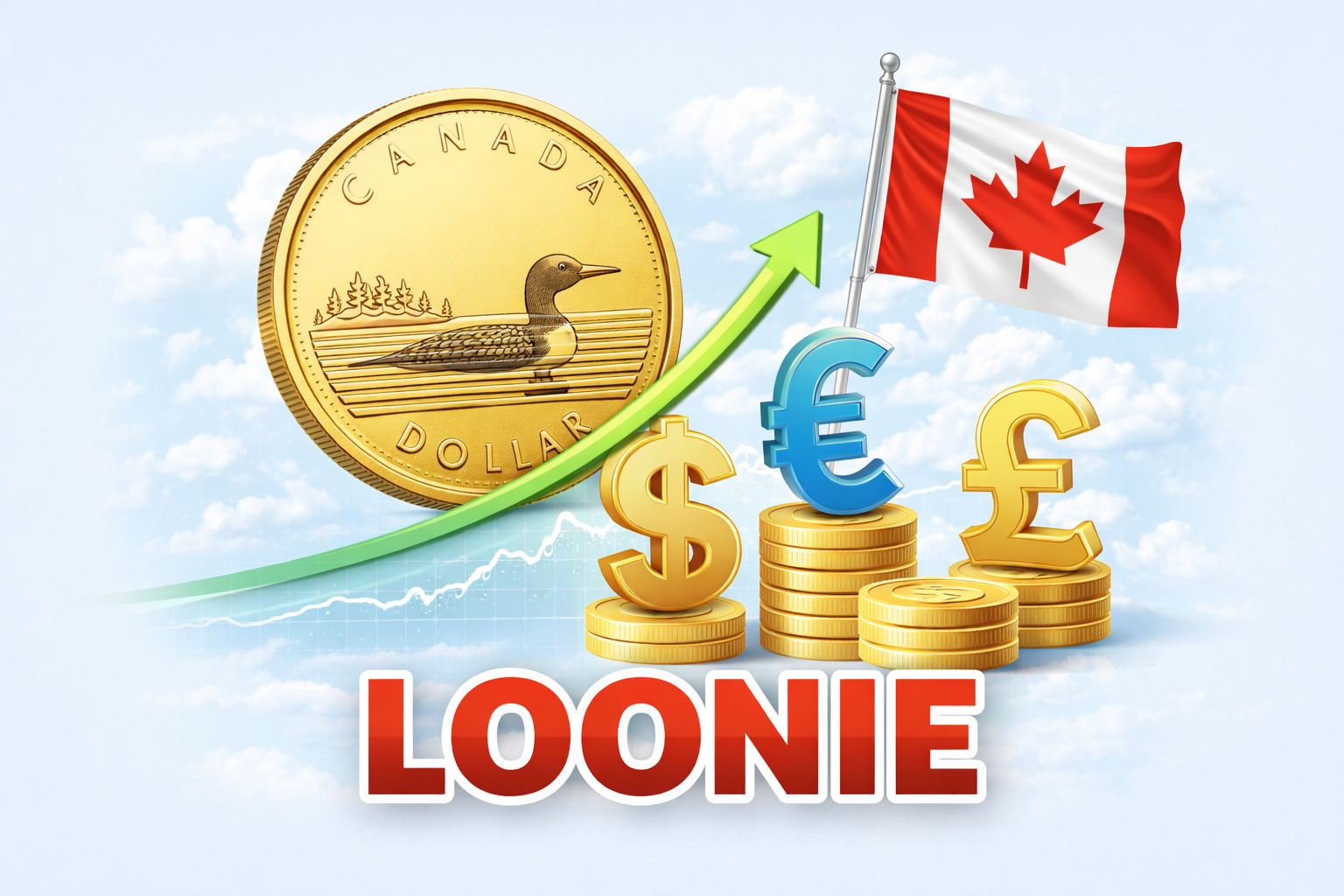
Loonie is the nickname traders use for the Canadian dollar (CAD). So when you hear “The loonie is strengthening today,” it simply means the Canadian dollar is rising in value compared to other currencies.
The term is commonly used across financial news, analyst reports, and forex trading discussions. Although informal, it is widely accepted even in professional market commentary.

CAD stands for Canadian Dollar, the official currency of Canada. It is considered one of the world’s actively traded currencies because Canada has:
A stable political and economic environment
Strong banking regulations
Significant natural resource exports
Deep trade integration with the United States
These characteristics make CAD an important participant in global foreign exchange markets. The Canadian dollar is classified as a major currency, meaning it is widely traded and highly liquid compared to smaller or emerging-market currencies.
The nickname comes from Canada’s one-dollar coin, introduced in 1987, which features an image of a loon, a native Canadian bird.
Shortly after the coin entered circulation, Canadians began referring to it as the loonie. Over time, the nickname expanded beyond the coin itself and became shorthand for the entire Canadian currency.
Today, economists, journalists, and traders regularly use the term when discussing currency movements.
The nickname is most commonly used in forex (foreign exchange) trading, where currencies are traded in pairs. The most widely traded CAD pair is USD/CAD (comparing the US dollar against the Canadian dollar). Traders interpret movements like this:
| Market Movement | Meaning |
| USD/CAD rises | Canadian dollar weakens |
| USD/CAD falls | Canadian dollar strengthens |
Because forex markets move quickly, traders rely on shorthand terminology. Using names like 'loonie' allows for faster communication during market analysis and trading sessions.
The Canadian dollar is often described as a commodity currency, meaning its value is closely connected to natural resource exports.
Canada is one of the world’s largest producers and exporters of crude oil and energy products. Since international buyers must obtain Canadian dollars to purchase these exports, commodity demand can influence the strength of the Canadian dollar.
A simplified relationship often observed in markets:
Rising oil prices → stronger Canadian export revenues → increased demand for CAD
Falling oil prices → weaker export income → reduced demand for CAD
While the relationship is not perfect, oil price trends frequently correlate with movements in the loonie, making energy markets important for CAD traders.
Bank of Canada monetary policy decisions play a major role. Higher interest rates may attract international investors seeking better returns, increasing demand for CAD.
Energy exports contribute significantly to Canada’s economy, making commodity cycles an important driver of currency movements.
Because the United States is Canada’s largest trading partner, US economic data, including employment, growth, and consumer spending, often impacts CAD indirectly.
Inflation affects expectations about future interest rate decisions, which can quickly move currency markets.
During periods of market uncertainty, investors sometimes move capital toward perceived safe-haven currencies, which can influence commodity-linked currencies like CAD.
Forex markets commonly use nicknames for efficiency and familiarity.
| Currency | Nickname |
| Canadian dollar | Loonie |
| Australian dollar | Aussie |
| New Zealand dollar | Kiwi |
| British pound | Cable |
| US dollar | Greenback |
The loonie is not a separate currency. It is simply a nickname, like saying “bucks” instead of “dollars.” All official financial systems, banking operations, and international transactions still use CAD.
Commodity Exposure: CAD allows traders to gain indirect exposure to commodity trends through currency markets rather than trading raw materials directly.
Trading Opportunities: CAD pairs can experience noticeable volatility during oil price shocks, interest rate announcements, inflation releases, and major global economic events. These movements create both opportunities and risks for traders.
Forex: The global decentralised market where currencies are traded.
Currency Pair: Two currencies quoted together showing relative value.
Commodity Currency: A currency influenced by natural resource exports.
No. The official name is the Canadian dollar (CAD). “Loonie” is an informal nickname widely used by traders, analysts, and financial media.
Nicknames simplify communication. Since forex markets move rapidly, shorthand terminology allows traders to discuss currencies quickly and efficiently.
Canada exports large quantities of crude oil. Changes in oil prices can affect export revenues and global demand for the Canadian dollar, thereby influencing exchange rates.
Yes. CAD is one of the most actively traded currencies globally, and USD/CAD is considered a major currency pair followed by institutional and retail traders.
The Bank of Canada oversees monetary policy, including interest rate decisions aimed at controlling inflation and maintaining economic stability.
The loonie (CAD) is more than just trading slang; it represents a globally significant currency shaped by commodities, interest rates, and international trade relationships.
For beginner traders, understanding currency nicknames is an important step toward interpreting forex discussions and market commentary. Recognising what moves the loonie helps traders better understand how global economics connects directly to currency price movements.
Disclaimer: This article is for educational purposes only and does not constitute financial or investment advice. Trading and investing involve risk, and market conditions can change rapidly. Always conduct your own research or consult a qualified financial professional before making trading decisions.