Published on: 2026-06-15
Updated on: 2026-06-15
The Nikkei 225 forecast now sits at a level where confidence starts to feel dangerous. The US-Iran peace deal has cut Japan’s oil-risk premium, AI-linked shares are pulling the index toward 70,000, and late buyers have almost no margin for error. Another record matters less than one clean signal: 70,000 must hold.

The Nikkei 225’s move above 69,000 has turned 70,000 into the next confirmation level, not a completed breakout.
The US-Iran peace deal has reduced Japan’s oil risk premium, giving the rally a macro driver beyond headline momentum.
Technology carries 56.96% of the Nikkei 225, making AI and semiconductor breadth the rally’s biggest strength and risk.
The base-case target is 76,000 by end-2026 if earnings hold, oil remains contained, and BOJ tightening stays gradual.
A rejection near 70,000, followed by a break below 68,000-69,000, would turn momentum into exhaustion.
The Nikkei remains an entry point only if 70,000 holds as support. Until then, it is a chase. A touch of 70,000 proves nothing. A hold above it decides whether 76,000 is a forecast or a fantasy.
| Signal | Level | What it means |
|---|---|---|
| Current rally zone | Above 69,000 | Breakout pressure is now driving sentiment |
| Confirmation level | 70,000 | Needs a weekly close and follow-through buying |
| Base-case target | 76,000 | Defensible if oil relief, AI earnings and BOJ patience hold |
| Bull-case range | 80,000-82,000 | Needs broader participation beyond semiconductors |
| Failure zone | 68,000-69,000 | A break below this band weakens the breakout thesis |
| Main catalyst | US-Iran peace deal | Lower oil-risk supports margins and BOJ flexibility |
| Main risk | BOJ repricing | Faster tightening would pressure high-multiple leaders |
A failed 70,000 push, followed by a 68,000-69,000 break, would imply that buyers arrived late.
A 76,000 Nikkei target works only if earnings continue to justify the valuation. The index trades on a 24.03 PER, 2.83 PBR, 11.77% ROE and 1.36% dividend yield, leaving little room for disappointment. At these multiples, momentum alone is not enough.
A move from around 69,500 to 76,000 implies roughly 9% upside. That is not an extreme forecast. It needs oil risk to stay contained, AI-linked earnings to hold up, and the BOJ to normalise without forcing a valuation reset.
The index has already gained 31.76% year-to-date, following gains of 26.18% in 2025 and 19.22% in 2024. That track record attracts more buyers, but it also raises the cost of being late.
The 80,000-82,000 range requires a higher standard of proof: a weekly close above 70,000, broader sector breadth, and sustained foreign inflows. Without those signals, 80,000 is not the forecast. It is the temptation.
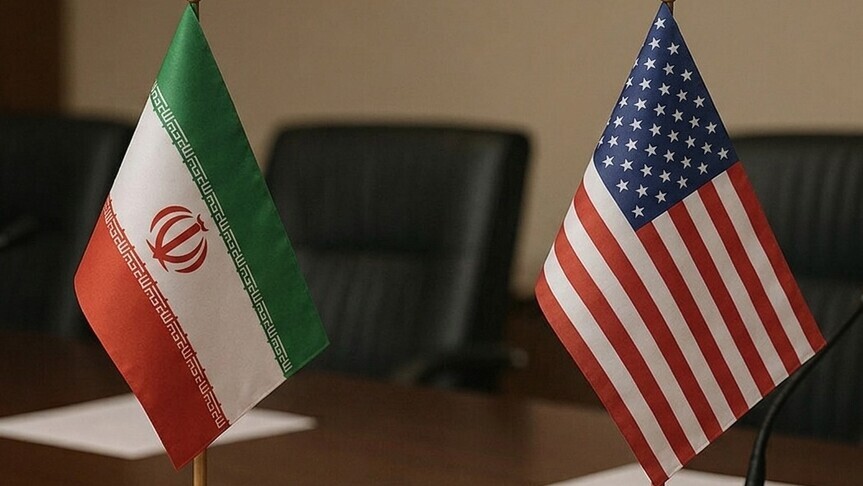
Oil relief gave the Nikkei rally its missing macro excuse. The US-Iran agreement lowered the immediate threat around the Strait of Hormuz, pulling crude prices lower and turning Japan’s energy exposure from a market risk into a short-term tailwind. The deal still needs execution, which keeps 70,000 as a test rather than a victory lap.
Brent crude fell by more than $3 to $83.88, while WTI dropped to $80.93. For Japan, that is not just a commodity move. Lower oil prices support margins, ease inflation anxiety, and give the BOJ less reason to sound aggressive.
U.S. Energy Information Administration data show that total oil flows through the Strait of Hormuz averaged 20.9 million barrels per day in 1H25, equal to about 20% of global petroleum liquids consumption and one-quarter of global maritime traded oil. The same chokepoint carried 11.4 Bcf/d of LNG, or more than 20% of global LNG trade, in 1H25. A failed deal would hit the Nikkei fast because the rally has already spent the oil-relief dividend.
The Nikkei’s strength is real, but it is not evenly distributed. Technology accounts for 56.96% of the index, making Japan’s benchmark a high-beta expression of AI, chips and automation. That gives the rally speed, not safety.
As of the latest Nikkei monthly factsheet, prepared May 29, 2026 and based on previous month-end data, Fast Retailing carried 9.99%, Advantest 9.52%, SoftBank Group 9.09%, and Tokyo Electron 7.95%. When four names carry that much weight, 70,000 can arrive quickly and still rest on a narrow base.
The next leg needs proof outside the obvious winners. Financials, consumer names, materials and capital goods do not need to lead, but they need to participate. Narrow leadership breaks records; broad leadership keeps them.
The BOJ does not need to sell a single share to pressure the Nikkei. A faster-rate path would lift discount rates, squeeze high-multiple technology names, and challenge the valuation premium underpinning the 70,000 run. Gradual normalisation is manageable; sudden repricing is the danger.
The April policy statement kept the overnight call rate at around 0.75%, while three dissenters argued for moving closer to 1.0%. Near 70,000, the Nikkei has little tolerance for a BOJ that sounds less patient. Even a small hawkish shift can hit the leadership names first.
Japan’s data still gives the BOJ room to move carefully. Real GDP expanded at an annualised 1.8% in Q1 2026, while April inflation eased to 1.4% from 1.5% in March. Growth supports earnings; softer inflation reduces the need for shock tightening.
The cleanest warning is a failed 70,000 push followed by a break below 68,000-69,000. That would say one thing clearly: buyers arrived late. A record headline loses power fast when the market cannot defend the level that drew everyone in.
Oil is the second pressure point. A breakdown in the US-Iran deal, delayed Hormuz traffic, higher insurance costs or renewed regional escalation would push Japan’s energy-risk premium straight back into equities. A rally lifted by oil relief cannot ignore an oil reversal.
Leadership is the third risk. If semiconductor names fade and other sectors fail to absorb the rotation, the Nikkei loses both speed and depth. A price-weighted benchmark can climb quickly on concentrated strength and fall just as quickly when the same stocks turn.
The BOJ is the final trigger. A move toward 1.0% would not break the rally on its own if delivered calmly. The damage would come from guidance that makes the next hikes feel faster, closer or less dependent on incoming inflation data.
A 70,000 test looks likely if current momentum holds. The real signal is not the touch. A weekly close above 70,000, followed by buyers defending that level, would turn the move from a headline spike into a confirmed breakout.
The base-case forecast is 76,000 by the end of 2026. The bull case sits at 80,000-82,000 if 70,000 becomes support, breadth improves, oil risk stays contained, and BOJ tightening remains gradual. A failed breakout keeps the bear case near 64,000-66,000.
It can still be an entry point, but only with confirmation. A weekly hold above 70,000 would keep the 76,000 base case alive; buying before that signal means accepting a thinner cushion and higher reversal risk.
The deal cut the immediate oil-risk premium attached to Japan. Lower crude prices ease imported inflation pressure, support corporate margins and reduce the need for a more aggressive BOJ. AI-linked shares then amplified the move through the Nikkei’s concentrated index structure.
A failed 70,000 test would be the first warning. The rally becomes more vulnerable if oil rebounds, the BOJ sounds less patient, or semiconductor leaders reverse. A break below 68,000-69,000 after a 70,000 push would say buyers arrived late.
The BOJ gets the next word, but price gets the final say. A weekly hold above 70,000 keeps 76,000 in play; a break back through 68,000-69,000 says the late buyers paid for the headline.