Published on: 2026-04-15
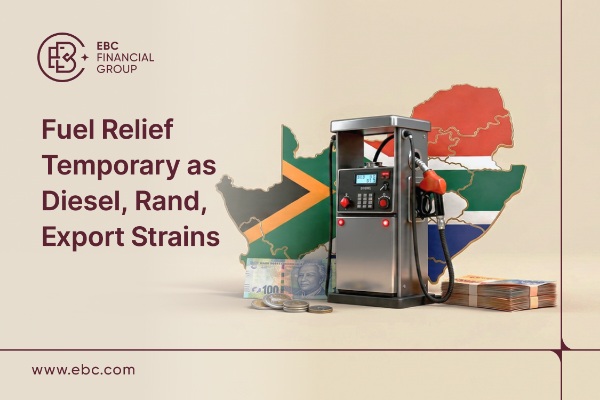
EBC Financial Group (EBC) notes that South Africa's fuel levy relief may reduce the tax component of pump prices for just over a month, but it is arriving alongside three strains that can offset temporary support: a large diesel price jump, a weaker currency that lifts the USD import bill, and export supply chains that rely heavily on road freight at the same time that logistics capacity remains constrained. The government has temporarily reduced the general fuel levy by R3 per litre from 1 April 2026 to 5 May 2026, lowering the general fuel levy for petrol from R4.10 per litre to R1.10 per litre and for diesel from R3.93 per litre to R0.93 per litre for the period.
The timing matters because the regulated April price reset has already delivered a large diesel shock: diesel rose by R7.37 per litre (0.05% sulphur) and R7.51 per litre (0.005% sulphur), while petrol rose by R3.06 per litre from 1 April 2026 according to the DMRE's April 2026 fuel price adjustment release. During the levy-cut window, the Department of Mineral and Petroleum Resources (DMRE) states the fuel levy in the price structure is 129.0 cents per litre for petrol and 116.0 cents per litre for diesel, underscoring that the relief is explicitly time-bound inside the regulated price formula.
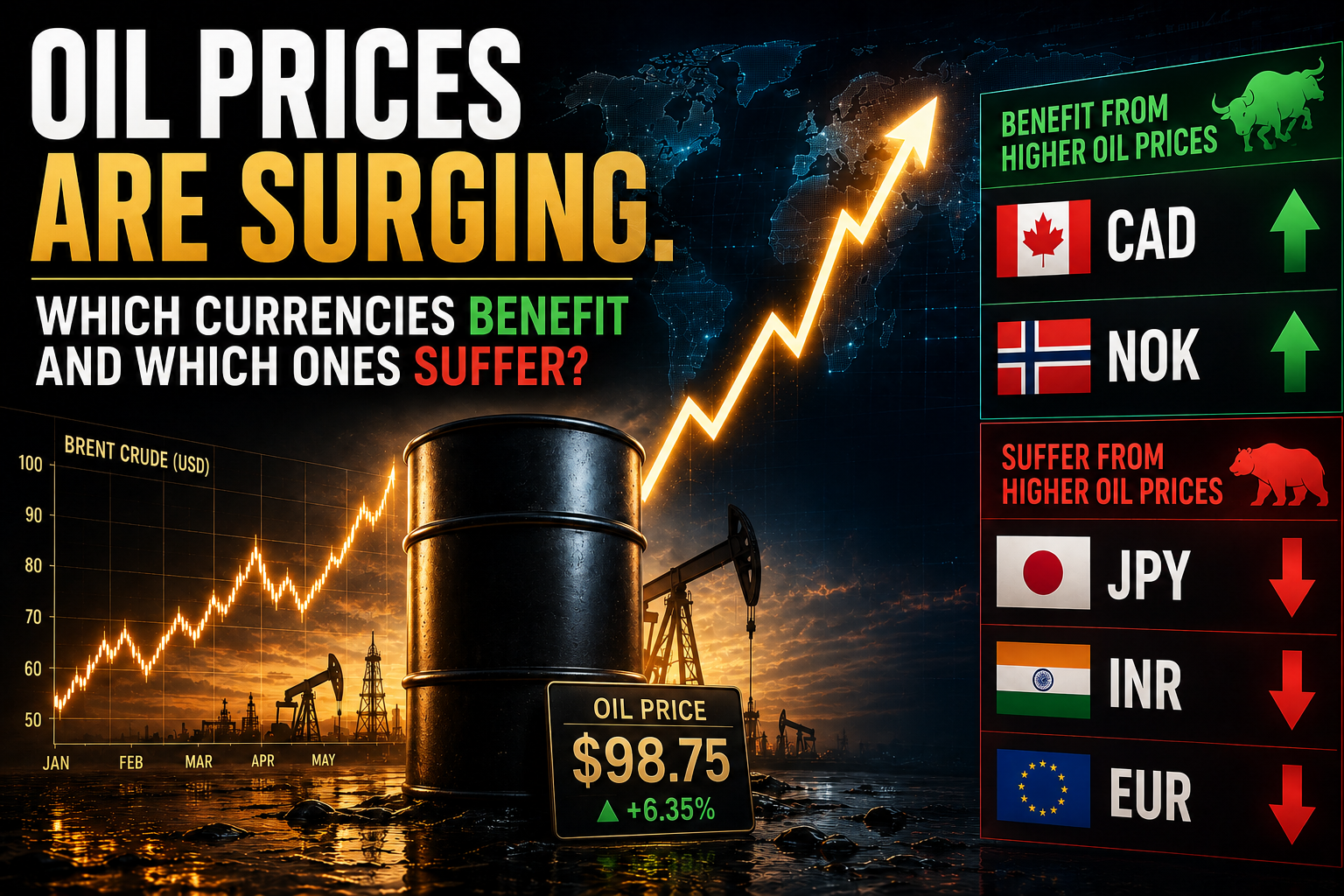
Official price calculation shows why the levy cut is not designed to be a permanent offset when global inputs move quickly. Over the period used for April pricing, the average Brent crude oil price increased to USD 93.67 from USD 69.08, whilst the average exchange rate weakened from 16.00 to 16.64 ZAR per United States dollar (USD) according to DMRE data. The department's breakdown shows international refined product prices added R9.49 per litre to diesel's Basic Fuel Price (BFP), and currency weakness added 78.07 cents per litre to diesel BFP in the same review. In parallel, the policy constraint is that government has described the levy cut as fiscally neutral and has indicated it plans to recover the revenue through other measures, highlighting that the relief is not designed as an open-ended subsidy.
David Precious, Senior Market Analyst at EBC Financial Group, said, "The levy cut trims the tax line for a month, but it does not change the pricing maths. Diesel is set by global refined product costs and paid for in United States dollars (USD). When Brent is higher, and the South African rand (ZAR) is weaker, local pump-price pressure can compound quickly, even with temporary tax relief."
Diesel tends to transmit into the economy faster than petrol because it underpins road freight, industrial transport and heavy equipment used across mining and agriculture. When diesel rises by R7.51 per litre in a single regulated adjustment, the risk that higher diesel costs feed into prices is that transport-intensive goods and services can push prices higher sooner than household fuel spending alone would suggest.
The South African Reserve Bank (SARB) has explicitly flagged the inflation channel. In its March 2026 Monetary Policy Committee (MPC) statement, SARB projected fuel inflation over 18% for the second quarter and expected headline inflation to accelerate to around 4% in the second quarter, given the oil price shock. SARB also described the Middle East conflict-driven oil shock as a supply shock that raises prices whilst weakening demand, which is a difficult mix for growth-sensitive sectors. With the levy reduction expiring on 5 May 2026 and the underlying inputs recalculated monthly, exchange-rate moves remain a key swing factor in the regulated fuel price formula.
The export strain is not only about demand, but also about the cost and reliability of moving goods to ports. South Africa recorded a preliminary trade balance surplus of R36.9 billion in February 2026, driven by exports of R168.1 billion and imports of R131.2 billion, inclusive of trade with Botswana, Eswatini, Lesotho and Namibia (BELN). However, a higher fuel import bill can narrow that buffer, and higher diesel costs can land directly on export supply chains that depend on road transport. South Africa shipped a record 3.05 million metric tonnes of citrus in 2025, and the Citrus Growers Association of Southern Africa (CGA) has said the industry relies on trucks to move 95% of citrus to ports, increasing sensitivity to diesel prices and availability.
Bulk exports illustrate the second constraint: export volumes are shaped by rail and port capacity. A South African parliamentary report, following a Richards Bay Coal Terminat (RBCT) briefing to the Portfolio Committee on Mineral and Petroleum Resources said coal exports from RBCT rose 11% to 57.66 million metric tonnes in 2025 but remained below the 76 million tonnes recorded in 2017, with the shortfall linked to limited capacity at state-owned Transnet to haul commodities to export markets. When freight costs rise while physical capacity is constrained, exporters can face a squeeze between higher logistics costs and limited flexibility to increase volumes.
"Temporary relief can soften one adjustment, but it cannot offset a sustained move in oil prices or the exchange rate," Precious added. "Diesel feeds directly into freight and export logistics, so the strain often appears first in transport-heavy parts of the economy, before it spreads more broadly through prices."
EBC Financial Group provides access to oil commodity instruments including Brent Crude Spot (XBRUSD) and West Texas Intermediate Crude Spot (XTIUSD), which reflect the global pricing signals that feed into South Africa's fuel import costs and monthly pump-price resets.