Published on: 2023-10-25
Updated on: 2026-05-12
International credit rating agencies help investors judge whether a government, bank, company, or bond issuer can repay debt on time. Their ratings influence borrowing costs, bond prices, bank risk models, and investor confidence across global markets.
This matters more in 2025 and 2026 because debt is no longer cheap. Governments are refinancing large fiscal deficits, companies are rolling over pandemic-era borrowing, and investors are demanding clearer signals on default risk. A rating change can affect more than one bond. It can reshape a country’s yield curve, weaken a currency, or raise funding costs for an entire sector.
A credit rating is an opinion on creditworthiness. It assesses a borrower's ability and willingness to meet financial obligations, such as interest payments, bond repayments, or loan commitments.
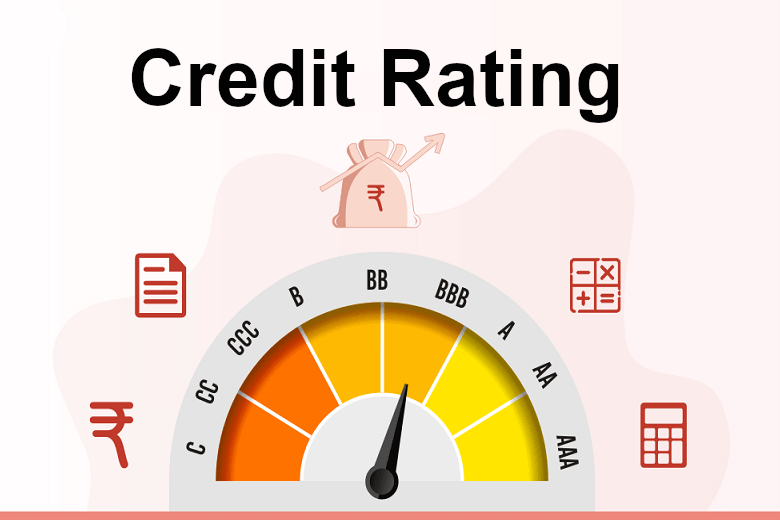
A credit rating agency studies the issuer’s financial position, cash flow, debt burden, business model, governance, and market conditions. It then expresses the result through rating symbols such as AAA, AA, A, BBB, BB, B, CCC, CC, C, or D.
The higher the rating, the lower the expected credit risk. The lower the rating, the higher the risk that investors may face delayed payment, default, or weaker recovery if the borrower fails.
A rating is not a guarantee. It is not investment advice. It is a structured credit opinion that helps investors compare risk across different issuers and debt instruments.
This is where the credit reference agency definition often causes confusion. A credit reference agency usually collects credit histories on individuals or businesses for lenders. A credit rating agency focuses on issuers and debt securities in capital markets. One supports consumer and commercial lending decisions. The other supports bond, sovereign, bank, and institutional credit analysis.
International credit rating agencies are rating organisations whose opinions are used across borders by investors, banks, funds, regulators, insurers, and governments.
They provide a common language for credit risk. A fund manager in Singapore, a pension fund in London, and a bank in New York can all use the same rating scale to compare a US Treasury bond, a Japanese bank bond, a Brazilian corporate note, or a Gulf sovereign sukuk.
The best-known international rating agencies are S&P Global Ratings, Moody’s Ratings, and Fitch Ratings. These three dominate sovereign ratings, bank ratings, international company credit ratings, and structured finance ratings.
Still, they are not the only recognised agencies. The US Securities and Exchange Commission lists several credit rating agencies currently registered as nationally recognised statistical rating organisations, including A.M. Best, DBRS, Demotech, Egan-Jones, Fitch, HR Ratings, Japan Credit Rating Agency, KBRA, Moody’s, S&P Global Ratings, and Pacific Credit Rating.
S&P Global Ratings traces its roots to nineteenth-century financial information services. It now rates sovereigns, companies, banks, insurers, public finance issuers, infrastructure projects, and structured products. Its long-term scale runs from AAA to D.
Moody’s Ratings began with bond manuals and railroad bond analysis. Its long-term scale runs from Aaa to C, with numerical modifiers such as Aa1, Aa2, and Aa3 to show relative strength within each category.
Fitch Ratings was founded in the early twentieth century and uses a scale similar to S&P, from AAA to D. It is especially visible in sovereign, banking, insurance, corporate, public finance, and structured credit markets.
The Big Three remain influential because their ratings are embedded in bond mandates, collateral rules, bank risk systems, and regulatory frameworks. That influence also explains why their decisions can attract political criticism, especially when they downgrade sovereign borrowers.
Credit ratings usually fall into two main categories: issuer ratings and issue ratings.
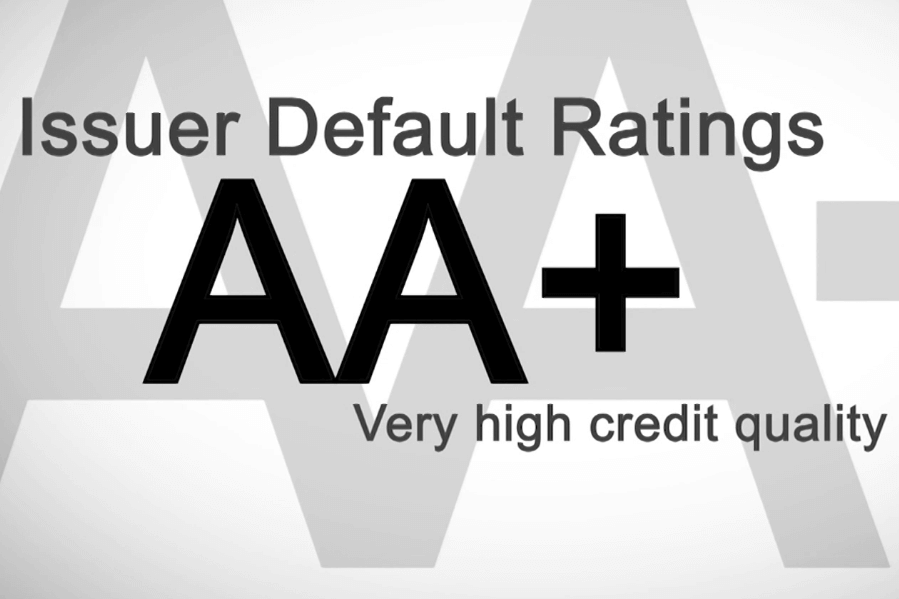
An issuer rating assesses the borrower's overall creditworthiness. This may be a government, a corporation, a bank, an insurer, or a local authority.
An issue rating evaluates a specific debt instrument, such as a senior bond, subordinated bond, preferred security, project finance loan, or structured finance product.
The two ratings can differ. A strong company may issue a bond with weaker creditor protection, making the bond riskier than the issuer itself. Senior secured debt may receive a higher rating than subordinated debt because investors have a stronger claim in the event of a borrower's default.
Ratings also differ by time horizon. Long-term ratings assess repayment capacity over several years. Short-term ratings focus on near-term obligations such as commercial paper or short-maturity debt.
Credit rating agencies also publish outlooks and watchlists. A stable outlook means the rating is unlikely to change in the near term. A positive outlook signals possible improvement. A negative outlook warns of downgrade risk. A rating watch usually signals a more immediate review after a major event, such as a merger, debt restructuring, fiscal shock, or banking stress.
Investment grade usually means BBB- or higher at S&P and Fitch, or Baa3 or higher at Moody’s. Ratings below that level are usually called speculative-grade, high-yield, or junk bonds.
International company credit ratings help investors compare companies across countries and industries.
For a manufacturer, analysts may focus on revenue stability, margins, debt-to-EBITDA, free cash flow, market share, and exposure to currency or trade shocks. For a bank, they look at capital ratios, asset quality, liquidity, profitability, deposit stability, and possible state support.
A downgrade can quickly raise borrowing costs. If a company falls from investment-grade to high-yield status, some institutional investors may be forced to sell its bonds. That selling pressure can push yields higher, making refinancing more expensive.
For shareholders, credit ratings also matter. Rising debt costs can reduce earnings, delay investment plans, and pressure dividends. A weak rating does not automatically mean a company is failing, but it signals that the margin for error has narrowed.
Credit rating agencies are useful, but they are not perfect.
Their biggest criticism is the issuer-pays model. In many cases, the borrower pays the agency for the rating. That creates a potential conflict of interest, even when agencies operate under strict rules and internal controls.
The 2008 financial crisis also damaged confidence in credit rating agencies. Many structured finance products carried high ratings before suffering severe losses. Critics argued that models relied too heavily on historical assumptions and underestimated correlated housing-market risk.
Ratings can also lag markets. Bond spreads often widen before an official downgrade. Equity prices may fall before rating committees act. Investors should treat ratings as one input, not a complete risk system.
Regulation has tightened since the crisis. In the EU, ESMA describes a credit rating as an opinion on creditworthiness expressed through rating categories, subject to professional analytical input, public disclosure, or subscription distribution, and with a specific regulatory scope.
A credit rating agency is a company that assesses the creditworthiness of issuers or debt instruments. It estimates a borrower's likelihood of repaying debt on time and expresses that view through rating symbols such as AAA, BBB, BB, or D.
International credit rating agencies are rating firms whose opinions are used across global financial markets. They rate governments, companies, banks, insurers, public finance issuers, and financial instruments, enabling investors to compare credit risk across countries and sectors.
A rating agency evaluates issuers and debt securities in capital markets. A credit reference agency collects credit history on individuals or businesses for lenders. The first supports bond and institutional credit decisions. The second supports lending and credit-score decisions.
The three main credit rating agencies are S&P Global Ratings, Moody’s Ratings, and Fitch Ratings. They are often called the Big Three because of their global coverage, regulatory relevance, and strong position in sovereign, corporate, and structured finance ratings.
Investment grade means a borrower or bond has relatively lower credit risk. The usual threshold is BBB- or higher at S&P and Fitch, or Baa3 or higher at Moody’s. Ratings below that level are speculative-grade or high-yield.
International credit rating agencies remain central to global finance because they turn complex credit analysis into a common risk language. Their ratings affect bond yields, refinancing costs, investment mandates, and sovereign market confidence.
They are not flawless, and they should never replace independent analysis. But for investors, lenders, and policymakers, credit ratings remain one of the most widely used tools for measuring repayment risk across borders.
Disclaimer: This material is for general information purposes only and is not intended as (and should not be considered to be) financial, investment or other advice on which reliance should be placed. No opinion given in the material constitutes a recommendation by EBC or the author that any particular investment, security, transaction or investment strategy is suitable for any specific person.