Jerome Powell did not predict a stock market crash. He did not tell investors to sell. His point was narrower and more useful: U.S. stocks are expensive by several common measures, and expensive markets have less room for error when inflation, oil prices, interest rates, or earnings disappoint.
That matters now because the Fed is still dealing with elevated inflation, higher global energy prices, and uncertainty over the timing of future rate cuts. At its April 29, 2026, meeting, the Fed held the federal funds target range at 3.5% to 3.75% and said inflation was elevated, partly due to higher global energy prices. (1)
The practical takeaway: Powell’s comment is not a sell signal. It is a risk-management signal.
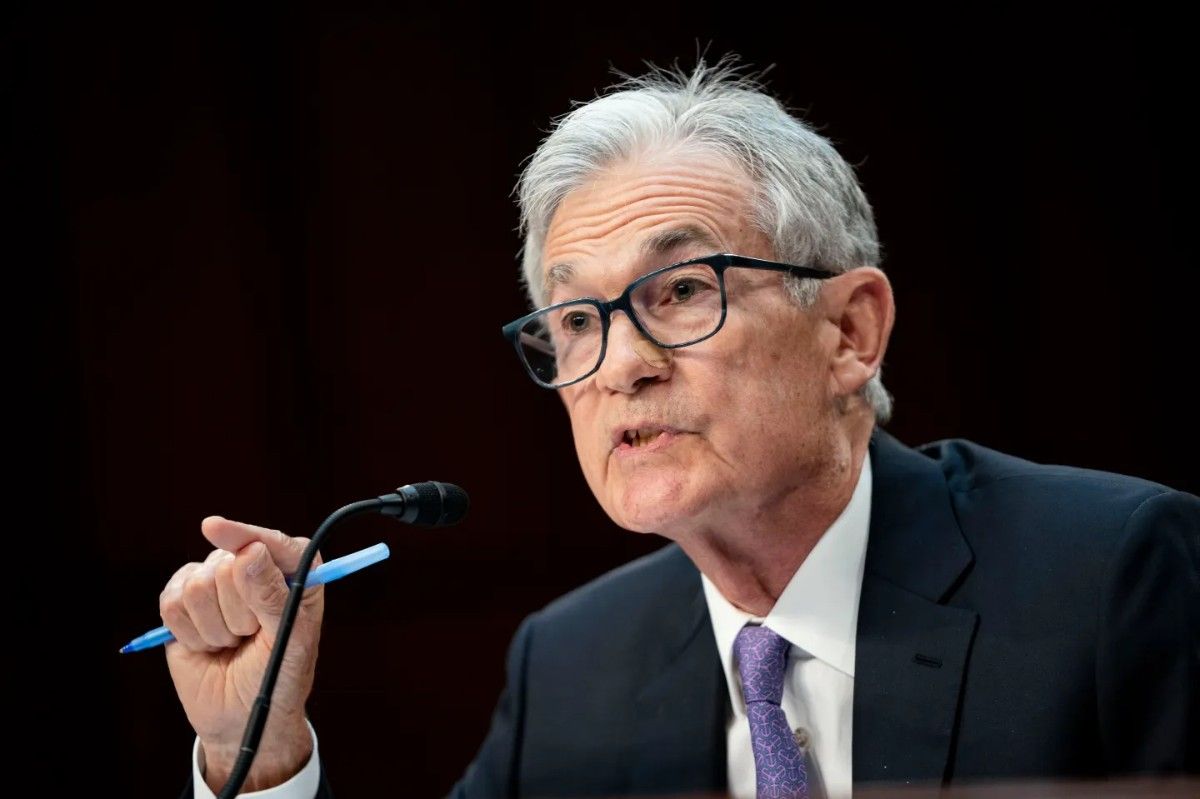
Powell made the stock-market comment after his September 23, 2025, economic outlook speech in Rhode Island. During a Q&A, he said the Fed looks at broader financial conditions and added that “by many measures,” equity prices were “fairly highly valued.” (2)
That distinction matters. The Fed does not have a mandate to manage the S&P 500. Its mandate is maximum employment and stable prices.
But stock prices, credit spreads, Treasury yields, and borrowing costs can affect financial conditions, which can influence spending, inflation, and the broader economy.
Powell did not say:
Stocks will crash.
Investors should sell.
A correction is imminent.
The Fed will raise rates because stocks are expensive.
The Fed is targeting a specific level for the S&P 500.
Headlines that turn Powell’s comment into a “crash warning” go too far. The accurate interpretation is narrower: high valuations make the market more vulnerable if the economic backdrop worsens.
Powell’s valuation comment matters more in 2026 because the macro backdrop has become less friendly for stocks.
The April FOMC statement said inflation remained elevated, partly reflecting higher global energy prices, and that future policy decisions would depend on incoming data, the evolving outlook, and the balance of risks. That means rate cuts are not guaranteed.
Energy is a major source of uncertainty. The World Bank said the Middle East war created a severe shock to global commodity markets, projected energy prices to rise sharply in 2026, and said Brent oil prices remained more than 50% higher in mid-April than at the start of the year, even after moderating from recent peaks. (3)
For stocks, high valuations are easier to justify when inflation is falling, rates are declining, and earnings are rising. They are harder to justify when inflationary pressures return, oil prices remain high, and the Fed delays easing.
As of the dates shown below, several valuation metrics indicated that U.S. equities were trading above many historical benchmarks. These metrics use different methodologies, so they should not be treated as identical signals.
| Metric | Recent reading | Why it matters |
|---|---|---|
| Shiller CAPE | 39.29 for February 2026 | CAPE smooths ten years of inflation-adjusted earnings. It is more useful for long-term return expectations than short-term timing. (4) |
| Forward 12-month P/E | 20.9 | FactSet said this was above the 5-year average of 19.9 and 10-year average of 18.9. (5) |
| Trailing 12-month P/E | 28.5 | FactSet said this was above the 5-year average of 24.6 and 10-year average of 23.3. (5) |
| Zacks S&P 500 P/E | 28.38 on May 1, 2026 | A second trailing-valuation source points to a similar high-20s reading. (6) |
These numbers do not prove stocks must fall soon. Expensive markets can stay expensive for a long time. But they reduce the margin of safety.
A stock’s price reflects expected future earnings. When interest rates rise, investors usually demand a higher return for holding risky assets. That can lower the price investors are willing to pay for each dollar of earnings.
For example, if a company earns $10 per share and investors pay 22 times earnings, the stock trades around $220. If the market later decides that 18 times earnings is more appropriate, the same $10 of earnings supports a price of $180.
The company’s earnings did not change. The valuation multiple changed.
That is the main risk in a highly valued market. Stocks do not need a recession to decline. They can fall because Treasury yields rise, rate-cut hopes fade, earnings estimates weaken, or investors demand a larger risk premium.
Oil matters because it can keep inflation sticky, delay rate cuts, pressure profit margins, and squeeze consumers.
Higher oil prices can increase transportation, shipping, airline, chemical, and manufacturing costs. They can also pressure households through gasoline and utility bills. If consumers and businesses come to expect higher inflation to persist, the Fed may become more cautious.
In April, Powell said total PCE prices rose 3.5% over the 12 months ending in March, boosted by the significant rise in global oil prices. He also said near-term inflation expectations had risen this year, likely due to higher oil prices. (7)
That does not mean the Fed will automatically raise rates. It means investors should not assume the next move is an easy rate cut.
Not exactly.
Valuations are high, and concentration risk is real. But today’s largest companies generally have stronger earnings, cash flow, and business models than many dot-com-era companies.
The better lesson is that central-bank valuation warnings are not market-timing tools. Alan Greenspan raised the question of “irrational exuberance” in 1996, years before the dot-com bubble finally peaked. His warning was directionally important but not a short-term trading signal. (8)
That is how investors should treat Powell’s comment: useful for risk awareness, weak for timing.
Do not panic-sell because of one Fed comment. Do not ignore it either.
Review position sizes. A portfolio that became more concentrated because winners kept rising may now carry more valuation risk than intended. Rebalancing back to target weights is more defensible than making an all-or-nothing market call.
Keep near-term cash needs out of volatile assets. Valuation compression can be painful if you are forced to sell during a drawdown.
Review withdrawal risk. A highly valued market can still rise, but the damage from a correction is larger when withdrawals are already starting. Cash reserves, bond duration, and equity exposure should match your spending needs.
Staying invested can still be reasonable. But high starting valuations usually reduce future return potential and increase sensitivity to bad news. Keep contributing according to a plan, but do not build that plan around guaranteed Fed cuts or permanently high P/E ratios.
Use Powell’s comment as context, not as a timing signal. Expensive markets can become more expensive before valuation risk finally matters.
| Scenario | What it could mean for stocks |
|---|---|
| Oil prices fall and inflation expectations stay anchored | Rate-cut expectations could recover, supporting valuations. |
| Oil stays high and core inflation stops improving | The Fed may stay restrictive for longer, pressuring P/E multiples. |
| Earnings keep beating expectations | High valuations become easier to defend. |
| Earnings estimates fall while rates stay high | This is the dangerous setup: lower earnings expectations plus lower valuation multiples. |
Powell did not predict a crash. His comment means valuations are high and stocks may be more vulnerable to disappointment. A correction is possible, but timing a crash based on one Fed comment is unreliable.
Not solely because of Powell’s comment. Investors should review concentration risk, rebalance if their portfolio has drifted from target allocations, and make sure short-term cash needs are not exposed to stock-market volatility. Powell’s comment is a risk-management prompt, not a market-timing signal.
Investors should check whether their portfolio still fits their time horizon, risk tolerance, and cash needs. The right response is usually to rebalance, reduce unintended concentration, and avoid assuming rate cuts are guaranteed.
The CAPE ratio compares the S&P 500’s price with ten years of inflation-adjusted earnings. It is mainly useful for judging long-term valuation risk, not predicting short-term market moves.
Powell’s stock-market comment was not a crash forecast. It was a reminder that investors are paying high prices for future earnings.
The risk is not simply that stocks are expensive. The risk is that stocks are expensive while inflation, oil prices, interest rates, and earnings expectations all matter more than usual.
The right response is to stress-test your portfolio: check concentration, rebalance if needed, protect short-term cash needs, and make sure your plan still works if rate cuts are delayed or valuation multiples fall.
(1) https://www.federalreserve.gov/newsevents/pressreleases/monetary20260429a.htm
(4) https://en.macromicro.me/series/1632/us-shiller-cape
(6) https://advisortools.zacks.com/Chart/Economic/sp-500-pe-ratio
(7) https://www.federalreserve.gov/mediacenter/files/FOMCpresconf20260429.pdf
(8) https://www.federalreserve.gov/boarddocs/speeches/1996/19961205.htm