Published on: 2026-02-27
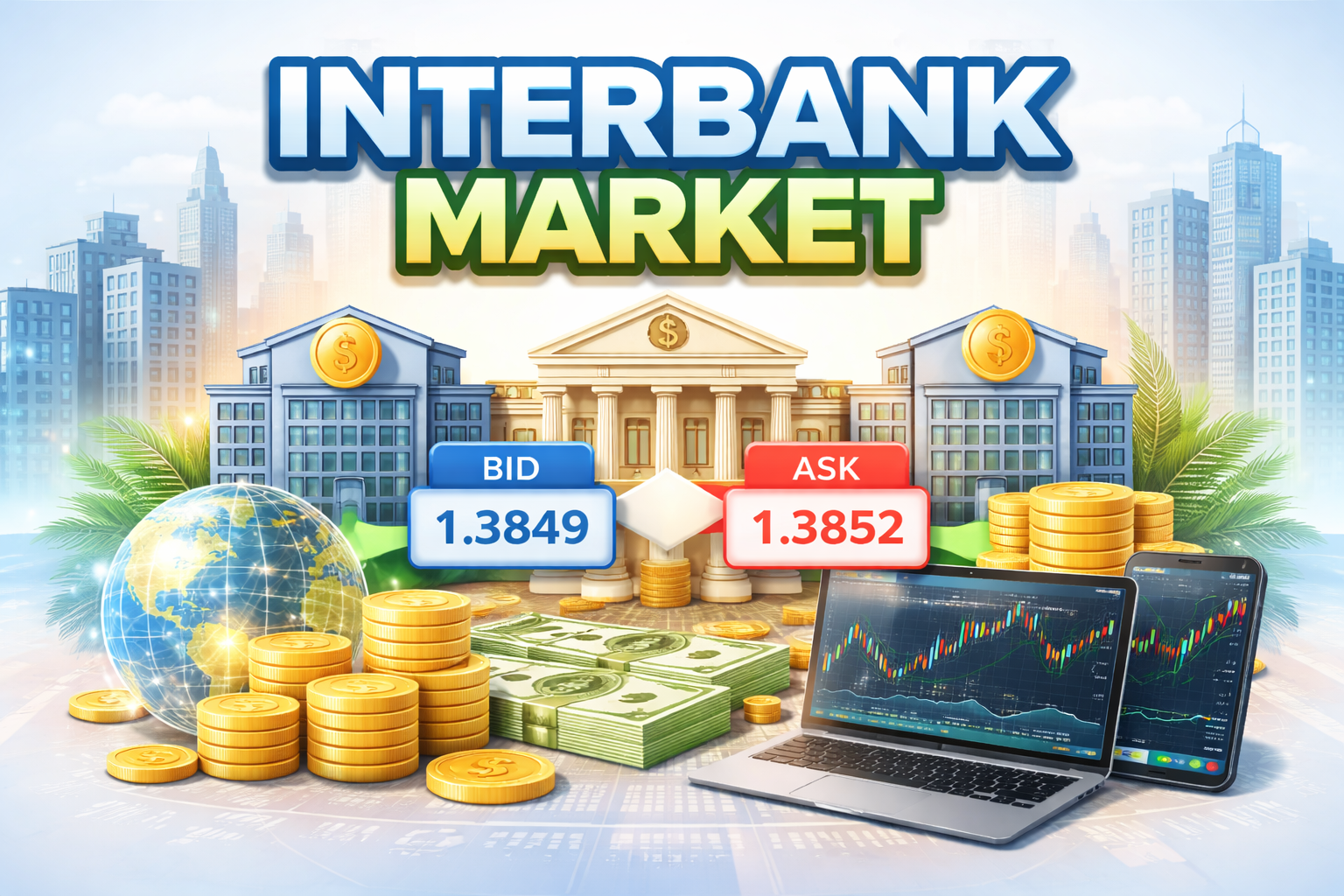
The interbank market is a global financial network where banks trade currencies directly with other banks. It is the institutional marketplace where exchange rates are formed before prices reach brokers and retail traders.
This market operates behind the scenes of everyday trading activity and represents the foundation of global foreign exchange pricing. Retail traders do not trade inside this system, but every forex price they see originates from it.
Processing international payments
Serving corporate and institutional clients
Hedging foreign exchange exposure
Managing internal currency reserves
Trading currencies for profit
Providing liquidity to financial markets
Transactions are extremely large, often ranging from millions to billions of dollars per trade.
Because of this scale and constant participation, interbank pricing is considered the most accurate reflection of real-time currency value.
The market is dominated by major global financial institutions that continuously quote prices to one another. Key participants include:
Investment and commercial banks such as JPMorgan Chase, Citigroup, Deutsche Bank, and HSBC
Central banks managing national currencies
Hedge funds accessing liquidity through banking relationships
Large multinational corporations conducting international business
Retail traders cannot access the interbank market directly. Instead, brokers connect to liquidity providers that source pricing from these institutions.
Banks facilitate these transactions by continuously exchanging currencies among themselves. The interbank market ensures that buyers and sellers can convert currencies efficiently at any time.
Without this system, international trade and global investment would function far less smoothly.
When a multinational company in Japan buys raw materials from Canada, it must convert Japanese yen (JPY) into Canadian dollars (CAD). This conversion happens through the foreign exchange (FX) market, a global decentralized market where currencies are traded so countries, businesses, and governments can make international payments.
In practice, the Japanese company’s bank obtains CAD by trading yen with another large bank in the interbank FX market. These continuous buy and sell transactions among major banks around the world determine the supply and demand for each currency and collectively establish the exchange rates that are later quoted to corporations and retail traders
| Feature | Interbank Market | Retail Forex Market |
| Participants | Banks and institutions | Individual traders |
| Trade Size | Extremely large | Small to medium |
| Pricing | Direct instuitional quotes | Broker-mediated prices |
| Spreads | Very tight | Slightly wider |
| Access | Restricted | Public via brokers |
This structure explains why retail traders encounter spreads, brokers add a small markup to institutional pricing to cover operational costs and risk.
The interbank rate is the exchange rate banks offer one another when trading currencies directly. Key characteristics include:
Very tight bid–ask spreads
Deep liquidity
Continuous price updates
Low transaction costs between institutions
Retail traders typically receive prices slightly different from interbank rates because brokers include execution costs and liquidity adjustments.
Major banks quote bids and ask prices to each other.
Large trading volumes determine supply and demand balance.
Interbank exchange rates continuously adjust.
Liquidity providers aggregate institutional pricing.
Brokers stream these quotes to retail trading platforms.
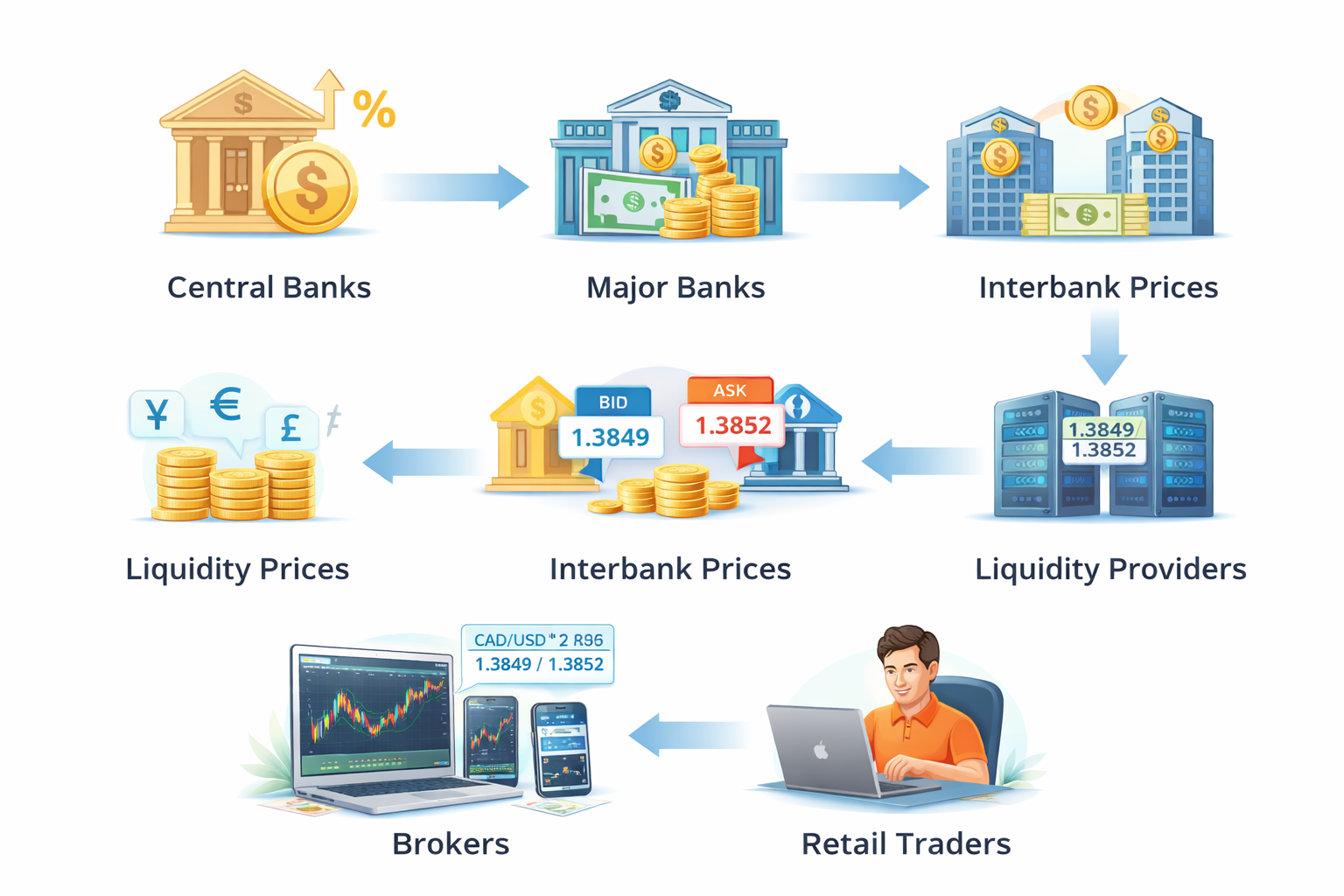
Central banks influence interest rates
Major banks trade currencies
Interbank prices form
Liquidity providers distribute quotes
Brokers stream prices
Retail traders execute trades.
This multi-layered structure allows the forex market to operate continuously across global time zones.
Even without direct access, understanding the interbank market helps traders interpret market behavior more clearly. It explains:
Why spreads widen during volatile news events
How liquidity affects trade execution
Why large institutional flows move markets
Why pricing differs slightly between brokers
Where exchange rates truly originate
Recognizing the institutional foundation behind forex prices reduces confusion about how markets function.
The interbank market is not a physical trading floor nor a centralized exchange. Instead, it is a global electronic network operating 24 hours a day across major financial centers such as London, New York, and Tokyo.
Banks communicate through secure trading systems, continuously updating prices as transactions occur worldwide.
Liquidity: Measures how easily trades can occur without large price movements.
Central Bank: A national authority responsible for monetary policy and currency stability.
Spread: The difference between buying and selling prices in a market.
Market Maker: A financial institution supplying continuous market pricing.
Forex Broker: An intermediary connecting retail traders to institutional liquidity.
Exchange Rate: The price relationship between two currencies.
No. Retail traders participate indirectly through brokers and liquidity providers that obtain pricing from interbank participants.
The term refers to transactions occurring between banks, which trade currencies directly with each other rather than through a centralized exchange.
Primarily yes. However, banks may also conduct short-term funding and liquidity transactions alongside currency trading to manage financial operations.
Yes. Although decentralized globally, participating banks operate under national financial regulations and international banking standards.
Large transaction sizes, deep liquidity, and direct trading relationships reduce costs between institutions compared to retail trading environments.
The interbank market is the hidden foundation of global currency trading. While retail traders interact with brokers and platforms, every forex price ultimately originates from institutional transactions between major banks.
Understanding this structure helps traders interpret spreads, liquidity conditions, and price movements more realistically, turning forex from a mysterious system into a clearly layered financial network.
Disclaimer: This article is for educational purposes only and does not constitute financial or investment advice. Trading involves risk, and market conditions can change rapidly. Always conduct independent research or consult a qualified financial professional before making trading decisions.
Sources:



World's Best Broker