Published on: 2026-02-13
Updated on: 2026-02-13
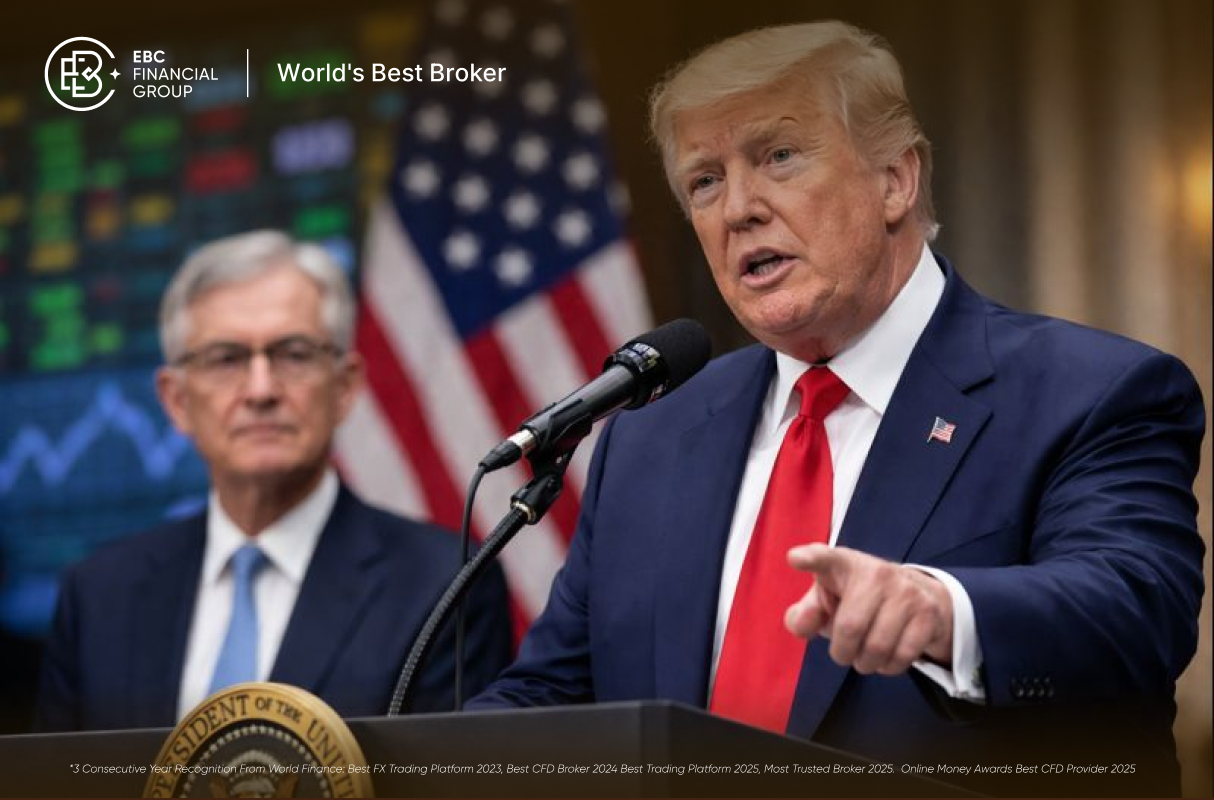
Financial markets are bracing for an unusual phenomenon: a central bank cutting interest rates whilst market conditions simultaneously tighten. On 30 January 2026, President Donald Trump nominated Kevin Warsh to replace Jerome Powell as chair of the Federal Reserve when his term concludes in May. The announcement triggered immediate market volatility, with gold plunging nearly 6% to around $4,893 per ounce, whilst the US Dollar Index surged towards 97 and Treasury yields climbed. This peculiar market response reveals a deeper tension in monetary policy that traders across emerging and developed markets must understand: the "Warsh Twist."
For traders in Asia, Europe, Latin America, and emerging markets, the Federal Reserve's policy stance represents far more than a domestic American concern. The US dollar functions as the world's reserve currency, meaning Fed decisions ripple through every currency pair, commodity contract, and equity index globally. When the Fed tightens monetary conditions, it effectively drains liquidity from the entire global financial system. Capital flows back towards US assets, emerging market currencies come under pressure, and funding costs rise for governments and corporations worldwide.
A CFD trader in Jakarta faces wider spreads on USDIDR positions. A commodities trader in Johannesburg watches rand-denominated gold positions swing wildly. A forex scalper in London navigates heightened volatility in cable. The "Warsh Twist" matters precisely because it threatens to create divergent monetary conditions where official rate cuts fail to translate into easier financial conditions for traders and businesses outside the United States.
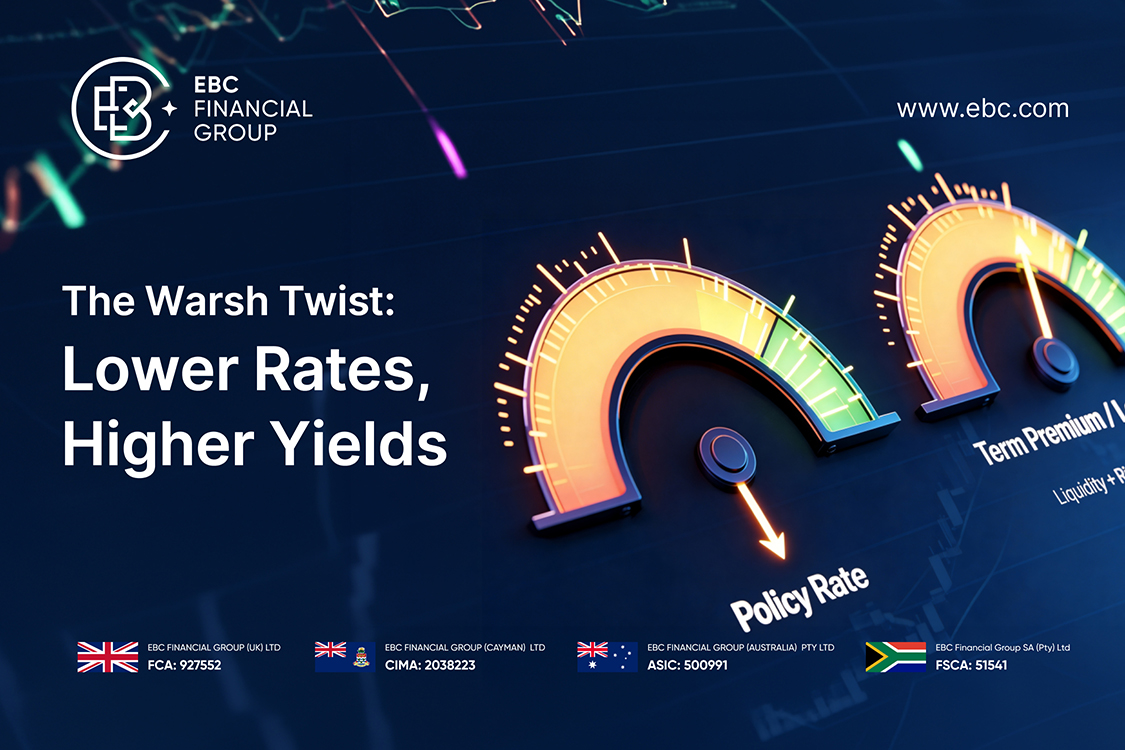
Conventional wisdom treats central bank policy as a single dial labelled "loose" or "tight." Reality proves far more nuanced. The Federal Reserve actually operates two distinct levers, and understanding both is essential for traders attempting to anticipate market moves.
This represents the price of money. When the Fed cuts its overnight rate, it directly reduces short-term borrowing costs for banks. These cuts typically pull down yields on short-dated government bonds, particularly the 2-year Treasury note. Lower policy rates generally weakenthe dollar (all else being equal), boost equity valuations, and support commodity prices.
This controls the supply of money in the system. Since the 2008 financial crisis, the Fed's balance sheet has become a powerful policy tool. When the central bank purchases government bonds (quantitative easing), it injects reserves into the banking system, creating abundant liquidity. Conversely, when the Fed allows bonds to mature without replacing them (quantitative tightening, or QT), it drains reserves from the financial system.
In January 2026, the Federal Reserve officially ended its quantitative tightening programme and began purchasing approximately $40 billion in Treasury bills monthly. However, Kevin Warsh has publicly advocated for substantial reductions in the Fed's balance sheet, creating uncertainty about whether this liquidity provision will continue under his potential leadership.
The "Warsh Twist" derives its power from an often-overlooked component of bond yields: the term premium. When an investor purchases a 10-year government bond, the yield comprises two distinct elements.
First, there is the expected path of short-term interest rates over the next decade. If markets anticipate the Fed will keep rates at 4% on average over the next ten years, this expectation gets priced into the 10-year yield.
Second, there is the term premium, which represents additional compensation investors demand for the risk of holding that bond for a full decade rather than simply "rolling" overnight cash deposits. This premium accounts for inflation uncertainty, interest rate volatility, and concerns about the bond's liquidity.
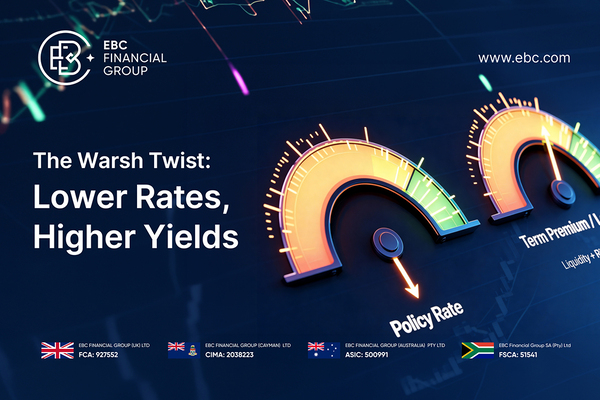
Research from Federal Reserve economists shows the term premium turned positive in November 2025 and increased to more than 0.7 percentage points by January 2026. This rise occurred even as markets anticipated Fed rate cuts, creating the paradox at the heart of the "Warsh Twist".
Consider the mechanics. The Federal Reserve announces a quarter-point rate cut. Ordinarily, this dovish move would push yields lower across the curve, weaken the dollar, and support risk assets. However, if markets simultaneously grow concerned about reduced Fed balance sheet support or increased policy uncertainty, the term premium rises.
The 2-year yield falls (reflecting the rate cut), but the 10-year yield remains elevated or even rises (as the term premium increases faster than the expected path declines). The yield curve steepens, but not in the benign way that typically signals economic recovery. Instead, this steepening reflects market discomfort with long-duration exposure to US government debt.
For currency traders, this creates an unusual environment. The dollar may initially weaken on rate cut headlines, but then strengthen as higher long-term yields attract global capital. For equity traders, the impact proves similarly complex. Rate cuts typically support valuations, but tighter financial conditions and higher term premiums work in the opposite direction.
One factor that can elevate term premiums is uncertainty about central bank independence. When investors question whether monetary policy decisions might become influenced by short-term political considerations rather than long-term economic objectives, they demand additional compensation for that uncertainty.
The nomination process for Warsh has occurred against an unusual backdrop, with ongoing tensions between the Trump administration and outgoing chair Jerome Powell. Some Republican senators have indicated they may delay Warsh's confirmation until these matters are resolved.
For traders, the political dynamics matter less than the market mechanics. When policy becomes harder to predict, volatility rises. Option prices increase. Spreads widen. Term premiums climb. Markets function as pricing mechanisms, not political commentators, but they do price uncertainty.
The 30 January announcement provided a vivid illustration of these dynamics in action. Despite expectations for eventual Fed rate cuts, the 10-year Treasury yield climbed above 4.27% as term premiums rose. The US Dollar Index surged, reaching levels near 97 as investors sought the relative safety and higher yields of dollar-denominated assets.
Most dramatically, gold experienced a sharp sell-off, falling from above $5,185 to around $4,893. Gold faces a triple headwind in this environment. First, a stronger dollar makes gold more expensive in other currencies, reducing demand. Second, higher yields increase the opportunity cost of holding non-yielding assets like gold. Third, if the Fed reduces balance sheet support, liquidity conditions tighten, which historically pressures precious metals.
Traders monitoring whether the "Warsh Twist" is intensifying or abating should focus on three specific data points.
This measures the difference between 2-year and 10-year Treasury yields. If 2-year yields fall (reflecting policy rate expectations) whilst 10-year yields hold steady or rise (reflecting elevated term premiums), the spread widens. A steepening curve under these conditions suggeststhe twist is active.
The Federal Reserve Bank of New York publishes daily estimates of the term premium using the Adrian-Crump-Moench model. When this measure rises, it signals that investors are demanding greater compensation for duration risk. Watching the trend in this indicator helps traders distinguish between moves driven by rate expectations versus risk premium changes.
The Fed publishes weekly data on reserve balances held by depository institutions. If these balances decline whilst the Fed is cutting rates, it indicates that Lever Two (the balance sheet) is tightening even as Lever One (the policy rate) loosens. This divergence sits at the heart of the twist.
The "Warsh Twist" creates several specific challenges and opportunities for traders working with contracts for difference.
Currency pairs may exhibit unusual patterns where typical correlations break down. Rate cuts might not weaken the dollar if term premiums and yields remain elevated. Traders relying on historical relationships between Fed policy and EURUSD or USDJPY may find those patterns disrupted.
Commodity positions face particular complexity. Gold and silver typically benefit from rate cuts and dollar weakness, but struggle when real yields rise and liquidity tightens. Industrial metals might receive support from rate cut hopes but face headwinds if financial conditions tighten globally.
Equity index CFDs must navigate the tension between lower discount rates (bullish) and tighter financial conditions (bearish). The net effect depends on sector composition, with growth stocks typically more sensitive to moves in long-term yields.
Bond futures and interest rate derivatives offer perhaps the most direct way to trade the twist. Positions that benefit from curve steepening (long the back end, short the front end) may profit if term premiums continue rising.
Heightened uncertainty demands rigorous risk management. Traders should consider several adjustments:
Position sizes may need to be reduced to account for elevated volatility. Stop losses might require wider placement as intraday swings increase. Correlation assumptions should be stress-tested against unusual scenarios where traditional relationships invert.
Diversification becomes both more important and more challenging. When policy uncertainty rises, correlations across asset classes tend to increase, reducing the benefits of diversification. Traders might consider allocating a portion of capital to truly uncorrelated strategies or holding higher cash balances.
Rather than attempting to predict whether Warsh will be confirmed or what policies he might implement, traders benefit more from recognising which regime currently prevails. Is Lever One (rates) dominant, or Lever Two (balance sheet)? Are term premiums rising or falling? Is the curve steepening because of growth optimism or policy uncertainty?
The markets themselves provide real-time answers to these questions through the indicators described above. By focusing on observable market dynamics rather than unpredictable political outcomes, traders can position themselves appropriately regardless of how the policy landscape evolves.
The Federal Reserve's recent transition from quantitative tightening to modest Treasury bill purchases represented an acknowledgment that reserve levels had fallen to uncomfortable levels. The September 2019 repo market disruption remains fresh in policymakers' memories. Yet the current programme of $40 billion monthly purchases pales compared to previous quantitative easing efforts.
If Warsh takes office with a mandate to reduce the balance sheet further, markets may face renewed pressure. For non-US traders, this matters because dollar liquidity ultimately determines the ease with which global trade and finance operate. Tight dollar funding conditions transmit rapidly through foreign exchange swap markets, affecting everything from Korean exporters' hedging costs to Brazilian corporates' debt service.
The "Warsh Twist" encapsulates a broader truth about modern monetary policy: headline rate decisions tell only part of the story. Traders must look beneath the surface to understand how liquidity, term premiums, and balance sheet dynamics interact to determine actual financial conditions.
As global markets navigate this transition, successful traders will distinguish between the price of money and the supply of it. They will monitor not just what the Federal Reserve says about rates, but what markets reveal about risk appetite, liquidity preferences, and uncertainty. They will recognise that in an environment where one policy lever loosens whilst another tightens, traditional playbooks may require revision.
The coming months will test whether central bank rate cuts can offset rising term premiums and tighter liquidity conditions. For traders positioned with awareness of this tension, the "Warsh Twist" represents not merely a risk to manage, but a dynamic to understand and potentially profit from. The key lies in monitoring the right indicators, maintaining disciplined risk management, and recognising that in finance, as in physics, forces can act in opposite directions simultaneously.
Trade US stocks with one click on EBC, the World’s Best* Broker.
*3 Consecutive Years of Recognition From World Finance: Best FX Trading Platform 2023, Best CFD Broker 2024, Best Trading Platform 2025, Most Trusted Broker 2025. Online Money Awards Best CFD Provider 2025.
Disclaimer & Citation
Disclaimer: This material is for information only and does not constitute a recommendation or advice from EBC Financial Group and all its entities ("EBC"). Trading Forex and Contracts for Difference (CFDs) on margin carries a high level of risk and may not be suitable for all investors. Losses can exceed your deposits. Before trading, you should carefully consider your trading objectives, level of experience, and risk appetite, and consult an independent financial advisor if necessary. Statistics or past investment performance are not a guarantee of future performance. EBC is not liable for any damages arising from reliance on this information.