Published on: 2026-02-23
Updated on: 2026-02-23
Europe’s transition away from Russian gas now has a defined legal timeline. The challenge is timing: the EU is tightening rules as winter storage levels decline rapidly, and most replacement supply will come from LNG. This increases Europe’s exposure to US weather, Atlantic Basin shipping, and chokepoint risks in daily gas security.
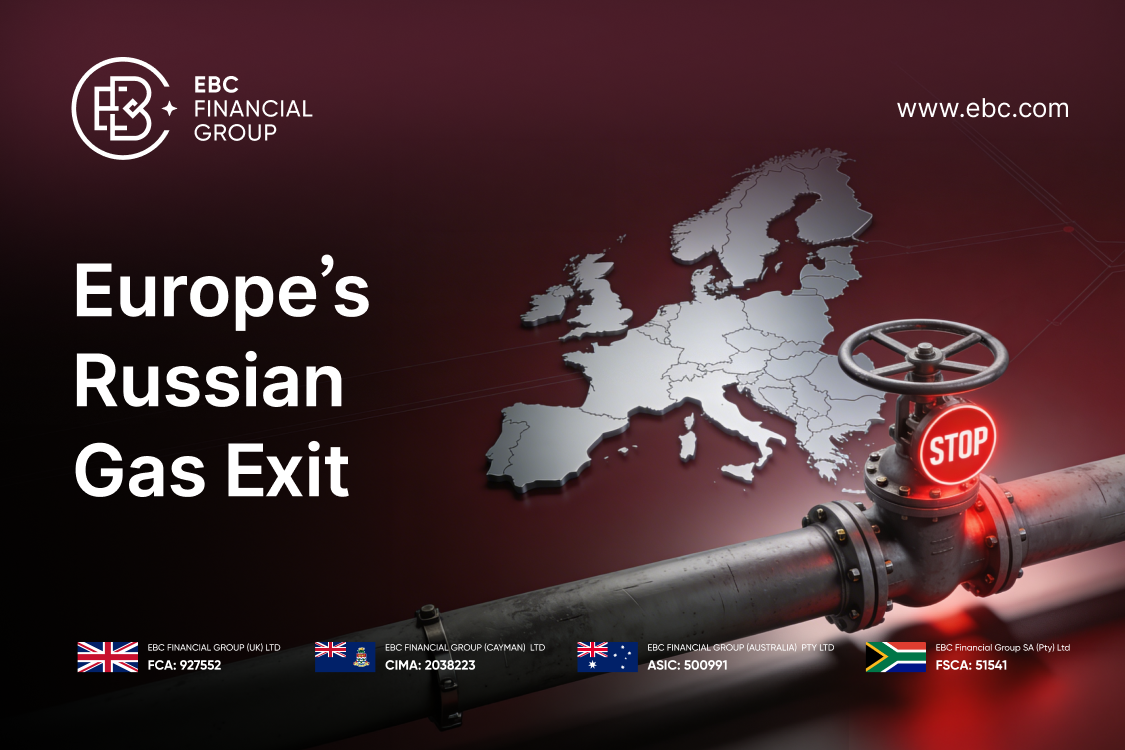
The EU has now locked in a phased ban on Russian gas imports. Russian LNG imports are phased out through 2026, with a full ban from 1 January 2027, and pipeline gas is banned from 30 September 2027, with a limited option to shift to 1 November 2027 if a country is struggling to fill storage.
Storage levels are already tight for this stage of winter. On 29 January, Europe’s gas storage was at 44%, the lowest since 2022. If this trend continues, storage could fall to 30% or lower by March, making summer refilling more difficult and increasing volatility risk.
The US is now the leading LNG supplier to the EU. In January 2026, it provided 60% of the EU’s LNG (5.36 million tonnes), up from 53% the previous year. As a result, US supply conditions and shipping routes are now more critical for Europe than before 2022.
On 26 January 2026, EU countries approved a regulation to phase out Russian pipeline gas and LNG imports. Slovakia and Hungary opposed the measure, and Bulgaria abstained, but it passed under the applicable voting rules. Hungary has indicated it may challenge the law in court, but the policy is now part of EU regulations.
The timeline:
Russian LNG: phased out through 2026, with a full ban from 1 January 2027.
Russian pipeline gas: ends 30 September 2027, with a possible shift to 1 November 2027 in defined “cannot fill storage” circumstances.
The immediate impact is contractual and operational. Even before the final deadlines, stricter rules reduce flexibility in renewals, scheduling, and compliance. While this may not cause an immediate supply shortfall, it can tighten the market, especially when storage is low and buyers have limited buffer against delays.
The scale of the transition is already evident. Council documents estimate Russian gas will account for 13% of EU imports in 2025, down from over 40% before the war. The policy aims to reduce this share to zero.
Storage acts as the market’s shock absorber. When storage is high, a delayed cargo is manageable. When storage is low, similar delays can impact prices due to reduced inventory.
As of 29 January, Europe’s gas storage was at 44%, below the 10-year average for this date. If current consumption continues, storage could fall to 30% or lower by March. Reuters estimates Europe will need about 60 billion cubic metres (bcm) to restore inventories to approximately 83% before next winter.
Low storage also changes market behavior. Buyers secure supply earlier and more consistently during summer, increasing sensitivity to LNG disruptions or unexpected demand. This often leads to higher volatility, even if supply remains adequate.
Additionally, the EU has revised its storage framework to avoid signaling a single “must buy” deadline. The 90% target can now be met at any point between 1 October and 1 December, with flexibility in challenging conditions. This may reduce price distortions but does not eliminate the refill challenge if winter ends with low storage.
The “Atlantic Basin” refers to the supply and shipping network connecting US LNG exports with European buyers, as well as nearby suppliers able to redirect cargoes quickly. Increased reliance on this system means shipping and weather risks are reflected in prices more rapidly.
Europe is on track for another record year of LNG imports. The IEA projects Europe will import 185 bcm of LNG in 2026, surpassing the previous record of 175 bcm in 2025.
That has two practical consequences:
Shipping disruption becomes “arrival risk”
If voyages lengthen or routes become less accessible, the market temporarily loses deliverable capacity. Prices then reflect arrival risk, not just theoretical supply.
In a low-storage environment, even brief disruptions can trigger significant price reactions. Some routes may be repriced quickly if the market anticipates delayed or missed cargo arrivals.
The EU is leaning heavily on the US, even before the ban fully bites
In January 2026, the US supplied 60% of EU LNG imports (5.36 million tonnes). Reuters also noted that around 19% of EU LNG in January still came from Russia, which is part of why the transition period and compliance details matter.
Most retail XNGUSD products are based on Henry Hub futures pricing, the main US natural gas benchmark (a pricing point in Louisiana used for the NYMEX gas contract), rather than daily cash prices. While price direction generally aligns over time, timing and magnitude can differ, especially around contract expiry and monthly roll periods.
In late January, Henry Hub spot prices surged. EIA data shows Henry Hub reached $30.72/MMBtu on 23 January before falling sharply to $3.25/MMBtu by 9 February.
EIA’s February Short-Term Energy Outlook also captured the futures “shape” of that shock. The February contract settled at $7.46 on 28 January, while March closed at $3.73, the widest front-to-next-month gap since at least 2014. That spread is a classic weather-stress signal. The market treated the tightness as acute rather than permanent.
Europe is not priced off Henry Hub, but US weather can still matter because it changes how much LNG the US can export, and at what opportunity cost. When export flows are steady, Europe gets more marginal supply. When US weather disrupts production or LNG operations, Europe has to compete harder for cargoes, which can lift delivered prices and increase volatility.
This impact is already evident. Reuters reported that a late-January winter freeze reduced US LNG export output, prompting Europe to increase its intake of US LNG during that period.
Weather remains the primary short-term driver.
The January price spike and February reversal demonstrated how quickly US weather can overshadow slower geopolitical developments. A mild period can restore feed gas flows and lower prices, even if Europe’s storage remains low and the refill challenge persists. Another freeze could reverse these gains rapidly, especially if Europe enters spring with low inventories.
Base case: managed tightness through the summer
Managed tightness means there is no forced demand curtailment or panic bidding for cargoes, but a more intensive summer refill effort is required.
Europe ends winter low, then refills steadily through summer.
US LNG flows remain strong, and shipping disruptions remain contained.
XNGUSD remains volatile but tends to revert to the mean, with weather continuing to drive the most significant price movements.
Trigger: mild US weather, stable refill pace through summer, and no meaningful chokepoint disruption.
Invalidation: a major Gulf Coast freeze-off or a large export facility outage that lasts long enough to materially reduce LNG liftings.
A refill shock occurs when Europe cannot rebuild storage quickly enough and begins bidding more aggressively against Asia for flexible cargoes.
A late-season cold snap or a major LNG terminal outage hits during the refill window.
Shipping delays extend voyages and reduce effective delivery capacity.
The market starts pricing in winter scarcity risk earlier, increasing volatility across European gas and Henry Hub-linked products.
Trigger: sustained freeze-offs or terminal outages during spring, with slower refill progress from a low starting point.
Invalidation: above-average US production and a soft Asian pull that redirects cargoes into Europe.
Soft demand means storage can be refilled without a prolonged price squeeze, even from a low starting point.
European demand is weak enough that refill progresses without panic.
Global LNG supply growth improves liquidity.
Henry Hub prices trend lower except during weather-driven spikes.
Trigger: weaker industrial demand and fewer sustained cold spells.
Invalidation: a cold spell in the US or Europe, or a shipping disruption that materially lengthens voyages for key exporters.
Monitor end-of-winter storage levels and the March trajectory, as these determine the summer refill burden and volatility sensitivity.
Track monthly EU LNG sourcing, particularly whether the US share remains near 60% or increases.
Observe the Henry Hub curve shape (front versus next month), as wide spreads often indicate weather-driven tightness and increased volatility.
Monitor shipping signals such as reroutes, freight spikes, and escalation risks around chokepoints, as these contribute to arrival risk.
Regulatory clarity on Russian LNG exposure, because uncertainty can change behaviour and effective supply, not only the legal end-date.
Europe’s exit from Russian gas is now legally binding, but it is occurring with low winter storage and increased reliance on LNG. This makes Europe more sensitive to Atlantic Basin shipping conditions and US weather shocks than before the shift away from Russian pipeline gas. The late-January Henry Hub spike and the rapid February reversal demonstrated how quickly weather can influence the market, even as the structural transition continues.
For XNGUSD traders, the key takeaway is that the US remains the primary driver. Europe’s storage levels, LNG logistics, and shipping disruption risks can amplify market movements, particularly if winter ends with low storage and summer refilling becomes urgent.
Traders interested in these themes can trade XNGUSD (US Natural Gas) with EBC Financial Group, the World’s Best* Broker.
*3 Consecutive Years of Recognition From World Finance: Best FX Trading Platform 2023, Best CFD Broker 2024, Best Trading Platform 2025, Most Trusted Broker 2025. Online Money Awards Best CFD Provider 2025.
Disclaimer & Citation:
This material is for information only and does not constitute a recommendation or advice from EBC Financial Group and all its entities (“EBC”). Trading Forex and Contracts for Difference (CFDs) on margin carries a high level of risk and may not be suitable for all investors. Losses can exceed your deposits. Before trading, you should carefully consider your trading objectives, level of experience, and risk appetite, and consult an independent financial adviser if necessary. Statistics or past investment performance are not a guarantee of future performance. EBC is not liable for any damages arising from reliance on this information.