Published on: 2026-01-08
Updated on: 2026-01-09
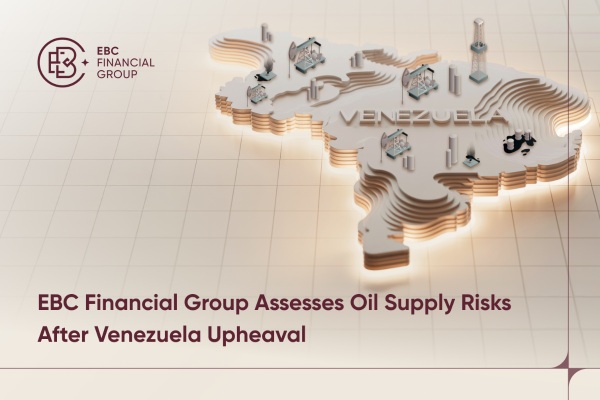
Global oil markets are navigating renewed global political tension and shifting supply dynamics as dramatic developments in Venezuela inject fresh uncertainty into crude pricing and risk assessment. While the country's current output is modest by global standards, the scale of the political shock has forced traders to reassess near-term supply risks against a backdrop of already fragile market positioning.
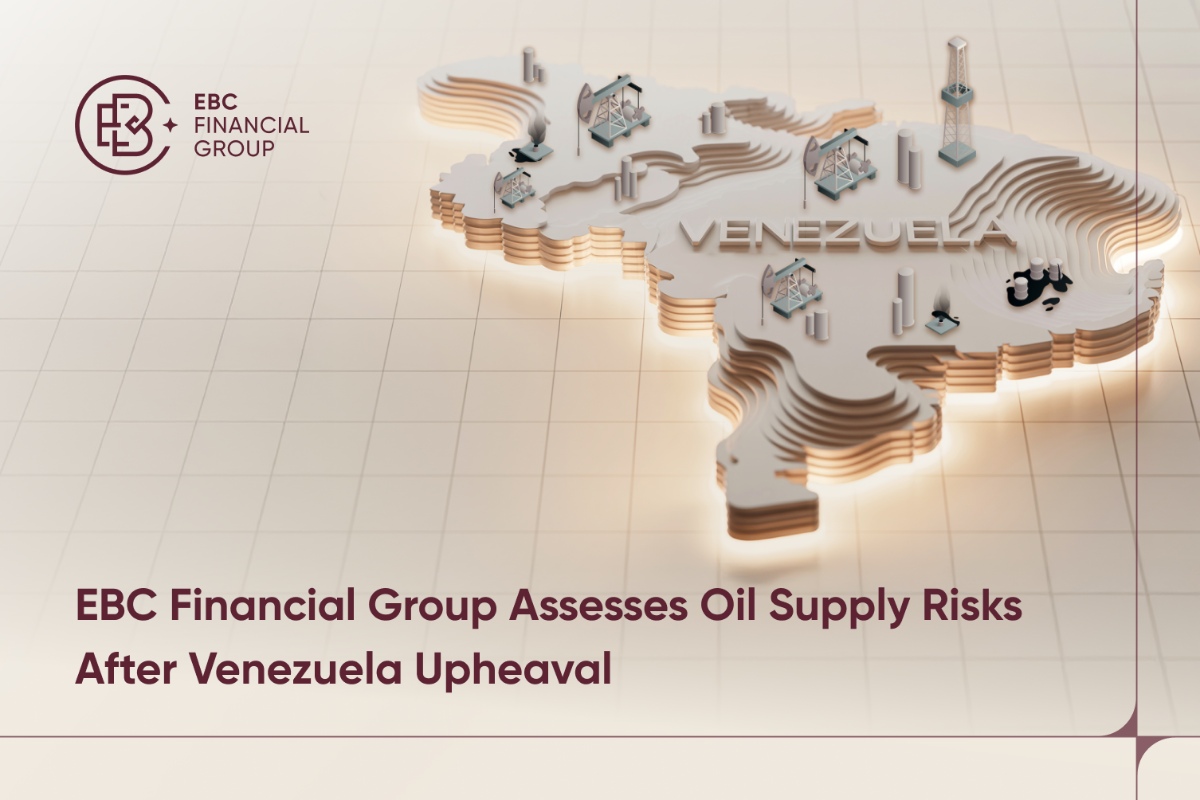
Recent events in Venezuela, including the capture of President Nicolás Maduro by U.S. forces and Washington's move to increase oversight of the country's oil sector, have intensified volatility across energy markets by adding a new layer of policy and sanctions risk. These developments are unfolding at a time when prices remain heavily influenced by global inventories, non-OPEC supply growth, and cautious policy from major producers.
"The immediate risk is not volume loss, but how quickly sentiment can shift when geopolitics collide with already fragile positioning," said David Barrett, Chief Executive Officer at EBC Financial Group (UK) Ltd. "Oil markets are trading headlines as much as fundamentals right now."
The U.S. military operation in Venezuela over the weekend and subsequent political upheaval have drawn immediate attention from oil traders and policymakers. Despite Venezuela's output currently representing a modest share of daily global supply with less than 1% of total crude production, the nation also holds roughly 17–20% of the world's proven oil reserves, predominantly heavy-sour grades that are technically demanding to produce and refine.
Following the upheaval, U.S. President Donald Trump stated that U.S. oil companies would be invited to invest in and rehabilitate Venezuela's energy infrastructure, while maintaining stringent sanctions on existing oil flows. At the same time, U.S. authorities have ordered the blockade of sanctioned Venezuelan oil tankers, effectively choking exports and forcing state-run PDVSA to cut production as storage facilities near capacity.
"Venezuela's reserves matter far more than its current output," Barrett said. "Any disruption or policy shift there tends to reprice risk across the curve, even if the physical impact remains limited in the short term."
The unfolding situation has already squeezed Venezuelan crude exports to a fraction of recent levels and has led to some traders and shipping sources reporting stranded barrels in domestic waters.
Crude prices experienced short-term swings following the news of Venezuelan instability. Brent and West Texas Intermediate (WTI) futures moved in reaction to headline risk, with markets striving to balance supply fears against lingering global oversupply concerns.
Analysts note that while Venezuela's direct output contribution is limited today, the prospects of a future increase in production could weigh on prices over the medium term if sanctions were lifted and infrastructure restored. Institutions such as Goldman Sachs project that sustained investment could make Venezuelan crude more available in the years ahead but emphasise that significant production growth remains distant due to the country's deteriorated energy infrastructure and regulatory uncertainty.
"We are seeing a classic gap between price action and positioning," Barrett said. "Volatility looks contained on the surface, but traders are quietly adjusting exposure as geopolitical risk premiums re-enter the market."
Against the backdrop of Venezuelan volatility, OPEC+ has opted to maintain production levels steady in the first quarter of the year. This cautious stance reflects ongoing concerns about oversupply after a notable drop in crude prices in 2025 and underscores the organisation's intent to avoid exacerbating market imbalances.
Despite headline-driven noise, core supply-demand fundamentals continue to shape price expectations. Global inventories remain elevated, and non-OPEC production continues to offset geopolitical risk premiums, particularly from U.S. shale, Brazil, and Guyana. Traders and analysts are closely watching actual export data, refinery inputs, and compliance with existing quota arrangements to assess the real supply picture.
Looking ahead, oil markets face a complex interaction between political disruption and structural supply dynamics. Short-term price sensitivity is likely to persist as traders respond to developments in Venezuela and ongoing uncertainty in the Middle East.
Venezuela's supply potential remains largely latent. Even if political conditions stabilise and sanctions ease, any production recovery would take time and is unlikely to alter the global balance immediately. In the meantime, OPEC+ discipline and non-OPEC output growth will remain the key anchors for price discovery.
For investors and traders, distinguishing between headline-driven volatility and genuine shifts in supply fundamentals will be critical in the months ahead.
"The danger for investors is assuming today's balance will hold," Barrett said. "Even small changes in sanctions, shipping access, or OPEC+ messaging can move prices quickly in a market this finely balanced."
Disclaimer: This material is for information only and does not constitute a recommendation or advice from EBC Financial Group and all its entities ("EBC"). Trading Forex and Contracts for Difference (CFDs) on margin carries a high level of risk and may not be suitable for all investors. Losses can exceed your deposits. Before trading, you should carefully consider your trading objectives, level of experience, and risk appetite, and consult an independent financial advisor if necessary. Statistics or past investment performance are not a guarantee of future performance. EBC is not liable for any damages arising from reliance on this information.