Published on: 2026-02-23
Updated on: 2026-02-23
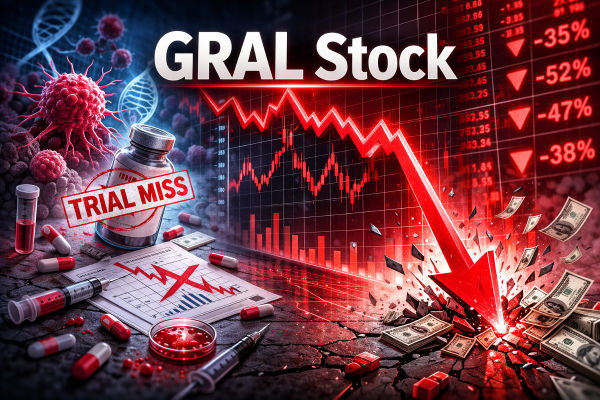
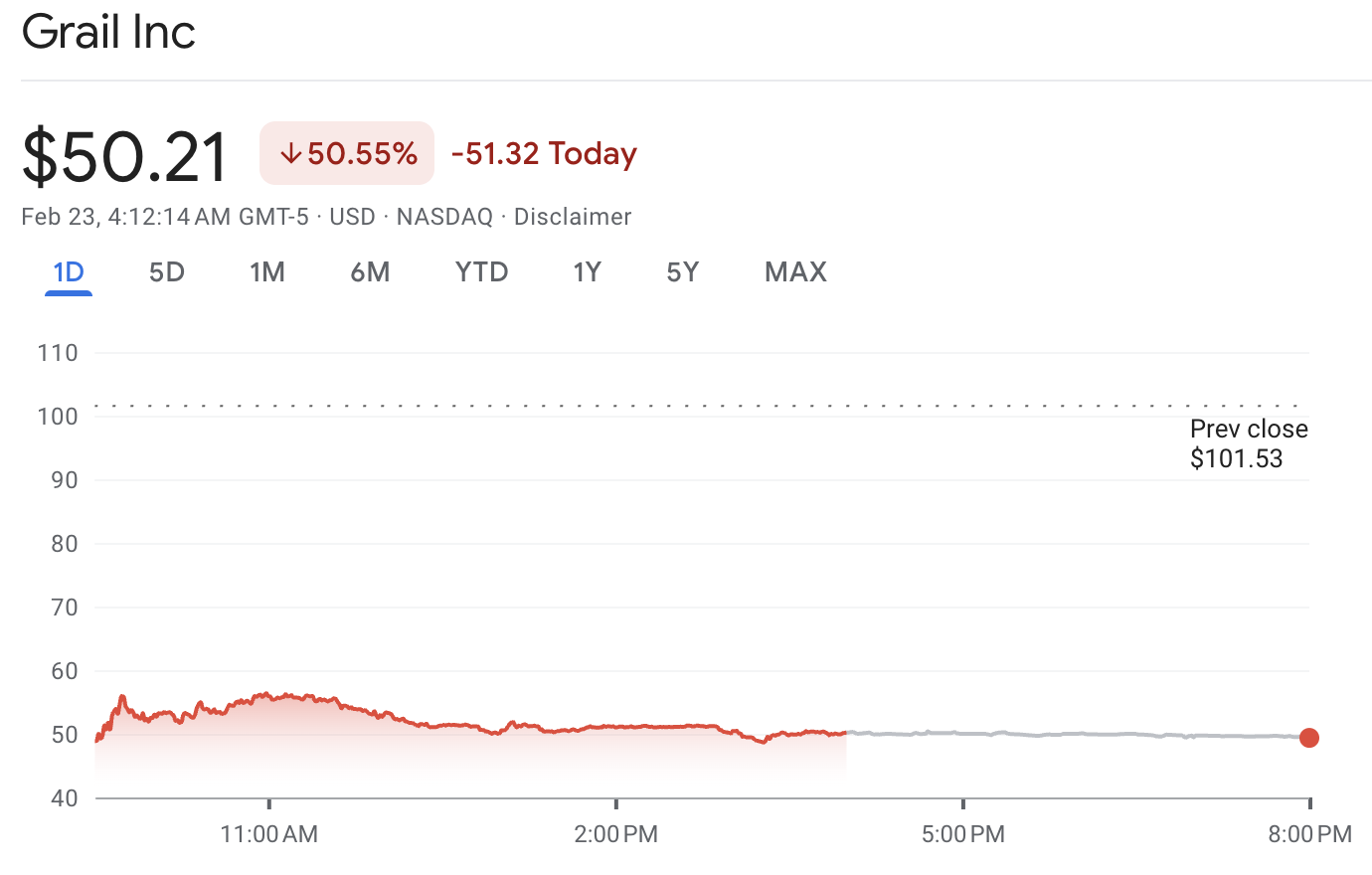
GRAL just had the kind of session that resets the entire debate around a stock. GRAL stock closed at $50.21, down roughly 51% on the day, after the company said its large, randomized NHS-Galleri study did not meet its primary endpoint of a statistically significant reduction in combined Stage III and Stage IV cancers.
The market reaction was brutal because expectations were already high. Trading volume also jumped to about 15.5 million shares, indicating this was not a slow, steady decline.
Now comes the hard question: after a move this sharp, should you buy the dip, or should you step back and let the dust settle?
Here is the clean timeline:
The company released topline results from the NHS-Galleri trial on Feb. 19.
The market focused on one sentence: the primary endpoint was not met.
The following day, the stock was repriced, resulting in a 50% reduction in its share price.
| Item | Value |
|---|---|
| Previous close | $101.53 |
| Close after selloff | $50.21 |
| One-day move | -50.55% |
| Day range | $48.00 to $56.75 |
| Volume | 15,475,811 |
| Market cap (after the drop) | ~$2.03B |
If the market cap is about $2.03B after a 50.55% drop, the implied market cap the day before was roughly $4.1B. Approximately $2.1 billion in value was lost in a single session, calculated using the market move and the post-drop market capitalization.
The NHS-Galleri trial is a randomized controlled trial evaluating whether annual multi-cancer screening using the Galleri blood test and standard screening methods can reduce late-stage cancer diagnoses in the general population.
The company said the trial included about 142,000 participants aged 50 to 77 in England's NHS.
The Key Miss
Primary endpoint: a statistically significant reduction in combined Stage III–IV cancers was not observed.
That phrase "statistically significant" is important. It means the study results did not clear the pre-set bar needed to say, with high confidence, that the reduction in late-stage cancers was not due to chance.
Despite the miss, the company also highlighted several positive signals, including reductions in Stage IV diagnoses and a higher cancer detection rate when Galleri was added to standard screening.
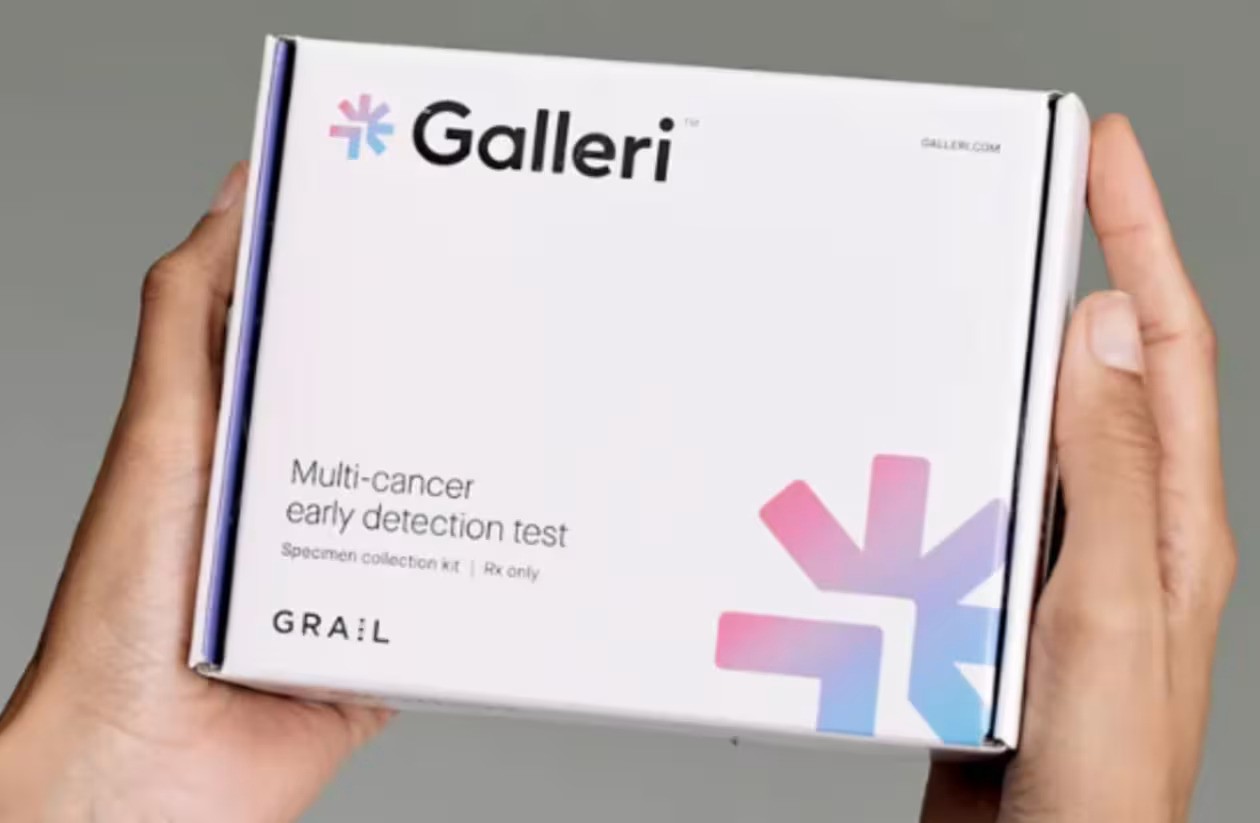
If you only read "missed primary endpoint," you miss why this is still a live debate. The company's topline summary highlighted several points that matter for the next chapter:
The study did not demonstrate a statistically significant reduction in combined Stage III–IV cancers, but it did indicate a positive trend toward fewer Stage III–IV cancers in a prespecified group of 12 lethal cancers after the initial screening round.
Adding Galleri to standard screening was associated with a substantial reduction in Stage IV diagnoses, with Stage IV diagnoses in those 12 cancers decreasing across sequential screening rounds, including more than a 20% reduction in rounds two and three.
The company stated that Galleri, combined with standard screening, achieved a fourfold increase in overall cancer detection rates compared with standard screening alone across several common screening categories.
The company highlighted that it plans to present more detailed data in mid-2026 and to extend follow-up by 6–12 months.
This is why GRAL stock is not a simple "trial failed, walk away" situation. It is a credibility and pathway situation, where the market now needs to see whether the positive signals are strong enough to support reimbursement and broader adoption, even without a primary endpoint win.
There is no one-size answer. GRAL is the kind of stock that can bounce hard after a crash, but it can also bleed lower for weeks if investors decide the story is now "wait and see."
A sensible approach is to split the question into three smaller questions.
This drop was driven by a real event: the trial's main goal was not met.
That is a value hit, not only fear.
However, the company also highlighted positive outcomes, such as the trend toward reduced Stage IV rates and improved early-stage detection in key cancers.
That is why a bounce is possible.
Short-term trader: You primarily focus on trading volatility and identifying support levels. You need strict risk rules.
Medium-term swing trader: You want clarity on the next data drop and whether the stock can build a base.
Long-term investor: You are betting on eventual coverage and adoption, which is a bigger, slower story.
This stock traded above $100 and fell to about $50 in a single day.
If that kind of move would force you to sell at the worst time, "buying the dip" is usually the wrong trade.
If you are thinking about buying after the GRAL stock crash, these are the boxes most disciplined traders want to tick:
The stock stops making new lows for several sessions.
The volume decreases after the panic day, indicating that the selling pressure is subsiding.
The company's upcoming updates clarify the timing of follow-up and the focus areas for regulators and payers.
You can name a clear invalidation point, meaning a price level where you admit the trade idea is wrong.
After a 50% drop, technical indicators often signal "oversold" conditions. That does not mean "it must go up." It means selling has been extreme, and prices can snap back quickly if sellers step away.
| Indicator | Latest value | What it usually signals |
|---|---|---|
| RSI (14) | 16.318 | The stock is oversold, but oversold can persist after a gap. |
| MACD (12,26) | -13.38 | Downtrend momentum is dominant. |
| ADX (14) | 65.921 | The trend is strong, which often means bounces are sold early. |
| ATR (14) | 6.1825 | Volatility is elevated, so position sizing matters more than usual. |
| Stochastic (9,6) | 6.803 | Short-term momentum is extremely stretched. |
| Moving average | Level | Read |
|---|---|---|
| MA5 (simple) | 50.86 | Price is near the very short-term mean. |
| MA10 (simple) | 66.35 | This is the first "serious" resistance band if a bounce starts. |
| MA20 (simple) | 84.57 | This level is now heavy overhead supply. |
| MA50 (simple) | 93.19 | A return here would require a narrative rebuild, not only a bounce. |
| MA200 (simple) | 99.98 | This is the line that defines long-term repair, and it is far away. |
| Level type | Price area | Why it matters |
|---|---|---|
| Near-term support | $45.50–$50.00 | The stock printed an intraday low near $45.51 and is clustering around $50. |
| Immediate resistance | $52.00–$59.00 | This zone often forms when volatility spikes and traders fade first bounces. |
| Bigger resistance | $66.00 | This lines up with the MA10 level and often acts as a "test" zone. |
| Gap supply zone | $95.00–$102.00 | This is the pre-gap area, and it is where many trapped holders want out. |
The daily pivot grid is currently centered on $50.49, with nearby support and resistance levels closely aligned due to recent sharp price movements.
If you want to trade or follow GRAL stock after this crash, focus on events that can change the story.
Detailed trial readout: The company stated that further analysis is underway and that results will be submitted for presentation in 2026.
Follow-up extension: The company plans to extend the follow-up period by 6 to 12 months, which could alter the discussion if later data indicates a stronger trend of late-stage reduction.
Commercial execution: Test volumes and U.S. revenue growth in 2025 are important because they indicate demand even without complete coverage.
Cash discipline: Investors will watch whether operating cash use continues to improve from 2024 to 2025 levels.
GRAL stock crashed because the NHS-Galleri trial did not meet its primary endpoint of a statistically significant reduction in combined Stage III–IV cancers.
Yes. The company reported a decrease in Stage IV cancer diagnoses within a specific group of 12 cancers. This resulted in an over 20% decrease in diagnoses during the second and third screening rounds, an increase in the detection of early-stage cancers, and no significant safety concerns.
Only if you can handle high volatility and you have a clear plan. After a primary endpoint miss, the stock often needs time to build a base while investors wait for deeper data and next steps.
Daily RSI readings were extremely low (around 16), which is a classic oversold signal. That can support bounces, but it does not guarantee one.
In conclusion, the GRAL stock crash was not a random selloff. The market adjusted its valuation after a key trial failed to meet its primary endpoint.
At the same time, the company is not starting from zero. It reported increased test volumes, higher revenue, and a substantial cash balance. Additionally, it noted positive trends, such as a decrease in Stage IV cancers over time in later screening rounds.
If you're considering buying the dip, treat it as a high-risk setup that requires confirmation. Let price stabilise, watch for clearer follow-up timing, and use strict risk limits.
Disclaimer: This material is for general information purposes only and is not intended as (and should not be considered to be) financial, investment or other advice on which reliance should be placed. No opinion given in the material constitutes a recommendation by EBC or the author that any particular investment, security, transaction or investment strategy is suitable for any specific person.