Published on: 2026-04-16
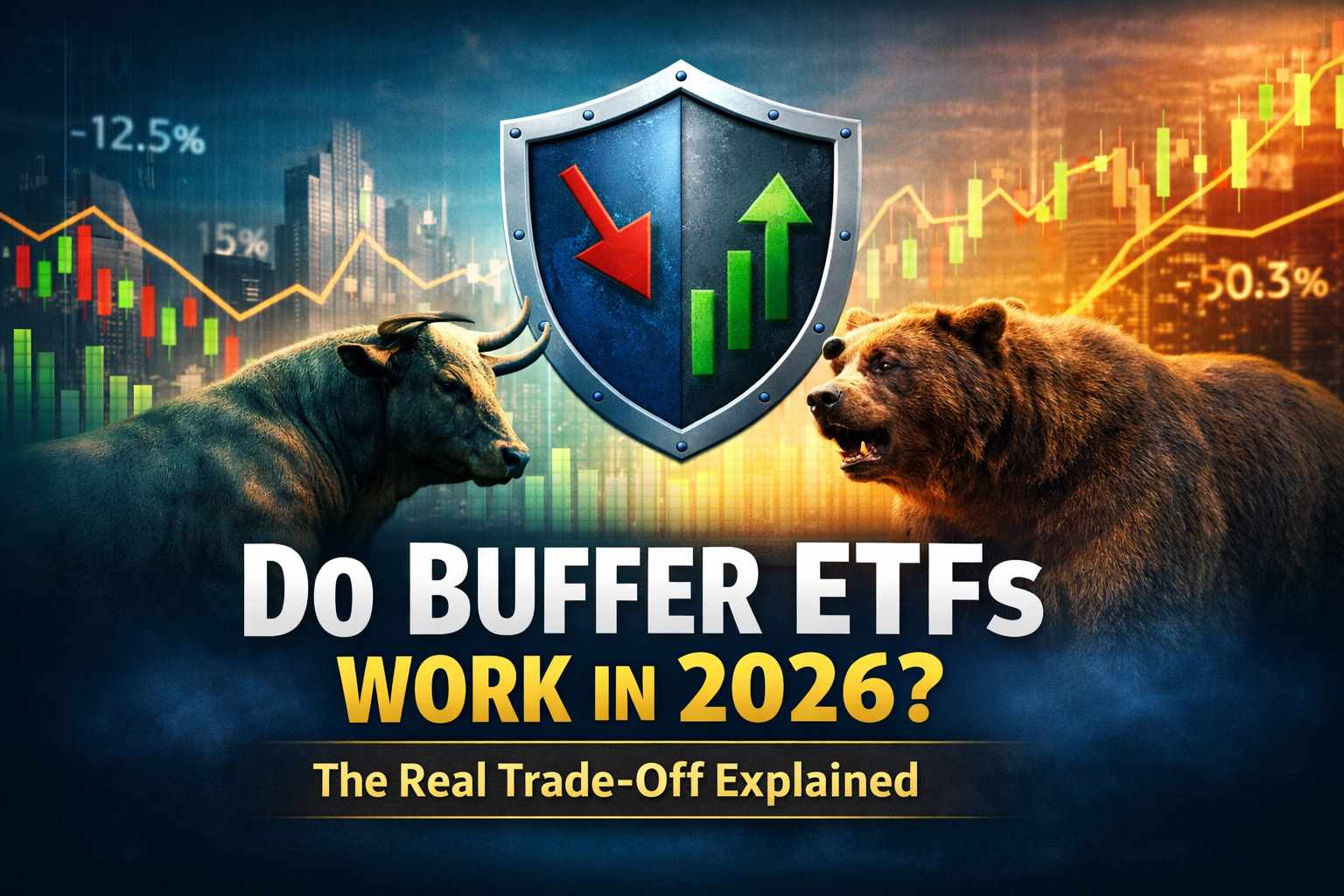
Buffer ETFs in 2026 are facing their clearest real-world test yet. Defined-outcome funds have grown from roughly $200 million in 2017 into an $80 billion equity ETF category, turning what was once a niche product into a mainstream portfolio tool. That matters because volatility is back, bond hedges have looked less reliable, and investors are again willing to trade some upside for more controlled downside.

The appeal is easy to understand. A buffer ETF aims to absorb a preset slice of market losses over a defined outcome period, while capping gains. The harder question is whether that trade still makes sense in 2026. The answer is yes, but only if investors understand the structure, the timing, and the cost of the protection they are buying.
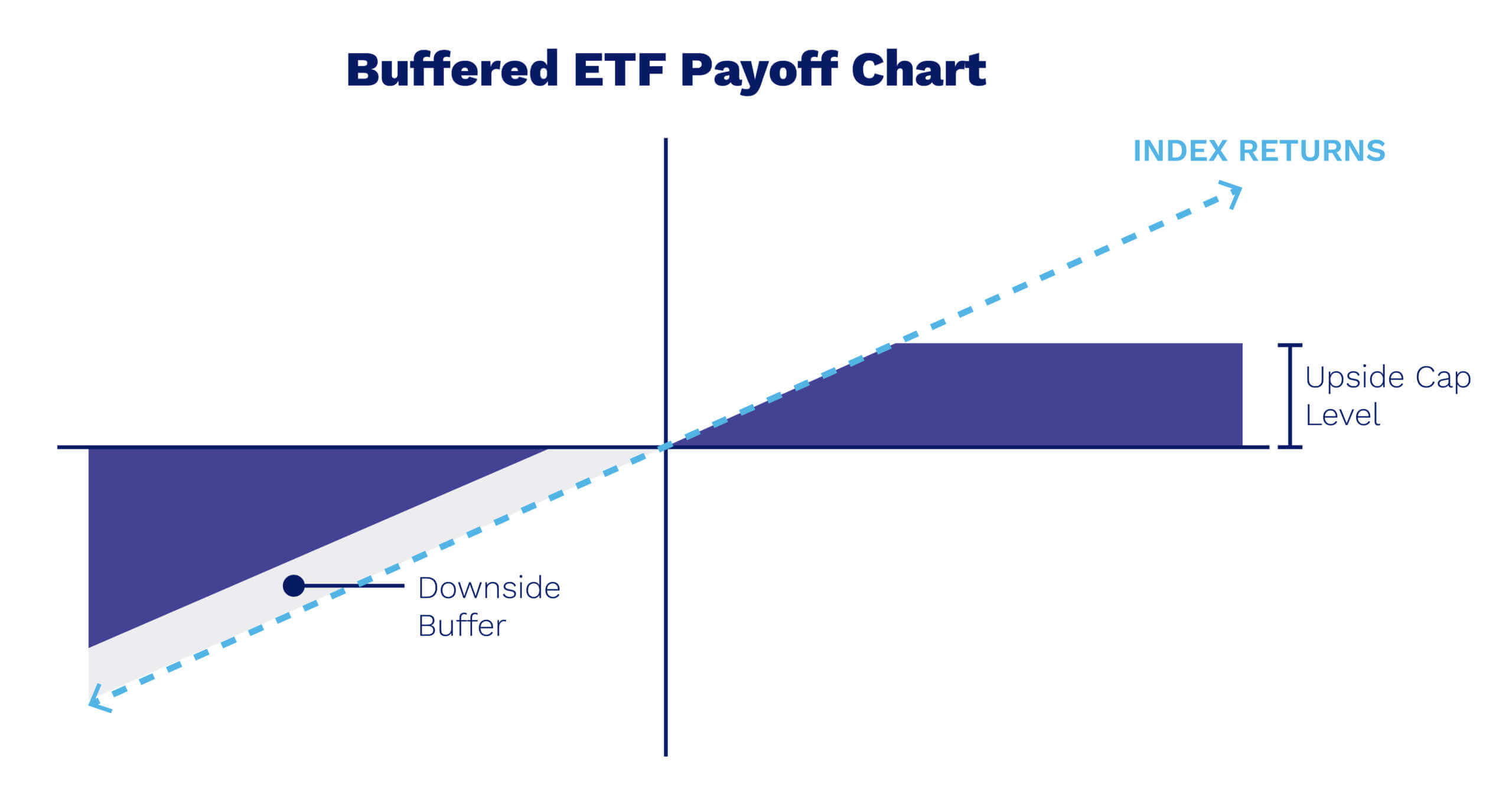
A buffer ETF, also called a defined-outcome ETF, is an options-based fund designed to reshape equity returns. It usually tracks a reference market such as the S&P 500, Nasdaq-100, or Russell 2000, but uses options to build two features into the return profile: a buffer against an initial layer of losses and a cap on upside gains.
That means the product is not eliminating market risk. It is repackaging it. Investors keep exposure to equities, but they give up part of the upside in exchange for partial downside protection. Innovator’s current product range shows how wide the category has become, spanning 9%, 15%, and 30% buffers, along with quarterly and multi-year versions.
The category has expanded because it solves a very specific investor problem. Many investors still want equity exposure, but they no longer trust the old assumption that bonds will always cushion stock-market stress. Bloomberg’s reporting on the March volatility episode captured that shift directly, noting that defined-outcome ETFs are being marketed as a form of downside protection that Treasuries may no longer deliver as consistently.
The growth numbers back that up. Morningstar said the defined-outcome ETF category had 420 funds and about $78 billion in assets at the end of 2025, making it the largest ETF category by fund count and one of the fastest-growing over the past three years.
That growth is not just about fear. It is also about product design. Buffer ETFs give advisers a way to keep clients invested in equities while making the risk feel more manageable. In practice, they are as much a behavioral tool as an investment tool.
This is where many investors misunderstand buffer ETFs. The advertised buffer does not apply in the same way every day. It is tied to a specific outcome period, often one year or one quarter.
That matters because investors who buy after the outcome period has already started may not get the same protection shown in the product name. Innovator states this clearly in its April 2026 material: investors buying after the start of an outcome period may not benefit fully from the buffer, and investors buying when the fund is already near its cap may have limited upside left.
This is the single biggest practical issue in the category. A buffer ETF can work as designed for an investor who buys at the start and holds to the end of the outcome period. It can behave very differently for someone who enters late, exits early, or treats it like a normal index ETF.
One reason buffer ETFs feel fresh in 2026 is that issuers are adapting the format to solve that timing problem. On April 1, Allianz launched eight new buffered ETFs, including shorter-reset strategies and an international product, showing how competition is shifting from simple annual buffers to more flexible structures.
That same trend is visible across the market. Newer quarterly-reset funds aim to reduce the mismatch between how the funds are designed and how investors actually buy ETFs. The Daily Upside, citing Morningstar Direct data, reported that investors put $1.4 billion into defined-outcome products in the first two months of 2026, while total category assets reached $66 billion at the end of February, up from $50 billion a year earlier.
The category is getting bigger, but it is also getting more complicated. That increases both its usefulness and the risk of investor confusion.
In a narrow sense, yes. If an investor buys at the start of the outcome period, holds through the full term, and understands the cap, a buffer ETF can deliver close to its stated design before fees and trading frictions.
The larger question is whether buffer ETFs work well enough to justify their trade-offs.
That depends on what the investor wants. A buffer ETF can soften a drawdown, which may help an investor stay invested during volatile periods. But the cost is real. The cap can materially reduce gains in strong bull markets. Over a full cycle, that forgone upside can matter just as much as the protection.
So the better question is not “Do they work?” It is “Do they fit the job you want them to do?”
Not really.
Buffer ETFs may replace some of the psychological role that bonds once played in diversified portfolios, but they do not replace the economic role of fixed income. Bonds provide income, duration exposure, and sensitivity to macro conditions that are very different from an options-based equity product. Buffer ETFs are still linked to stocks, and their protection is conditional, capped, and period-specific.
That makes them better understood as equity-risk redesign tools rather than bond substitutes. They are useful for investors who want to remain in equities with a narrower loss profile, not for investors seeking classic fixed-income characteristics.
Buffer ETFs tend to make the most sense for:
investors who want equity exposure but dislike open-ended downside
advisers trying to smooth client returns and reduce panic selling
portfolios redesigning part of their equity allocation for lower volatility
They tend to make less sense for:
long-term investors focused on maximum upside capture
active traders who move in and out frequently
buyers who do not understand outcome periods, caps, and entry timing
That last point matters most. These funds are not hard to explain, but they are easy to misuse.
A buffer ETF is a defined-outcome ETF that uses options to protect against a preset slice of downside losses over a set period, while capping upside gains.
No. They only protect against an initial layer of losses, and investors still absorb losses beyond the buffer. Mid-period buyers may also receive less protection than they expect.
They are popular because volatility has returned, bonds have not always cushioned stock losses cleanly, and investors want a way to stay in equities with more controlled downside.
Not automatically, but they can reduce timing risk by resetting more often. That can make them easier to use than annual structures for investors who do not buy exactly at the start of an outcome period.
Buffer ETFs in 2026 still work, but only for investors who understand the bargain. These funds are not simple safety products. They are structured trade-offs that exchange some upside for partial downside protection over a defined period.
That structure can be useful in a market where volatility is higher and traditional hedges feel less dependable. But it is not free, and it is not foolproof. The cap matters. The timing matters. The outcome period matters. Investors who understand those constraints may find buffer a practical risk-management tool. Investors who ignore them may end up paying for protection that never fully arrives.
Disclaimer: This material is for general information purposes only and is not intended as (and should not be considered to be) financial, investment or other advice on which reliance should be placed. No opinion given in the material constitutes a recommendation by EBC or the author that any particular investment, security, transaction or investment strategy is suitable for any specific person.