Published on: 2026-04-03
Updated on: 2026-04-03
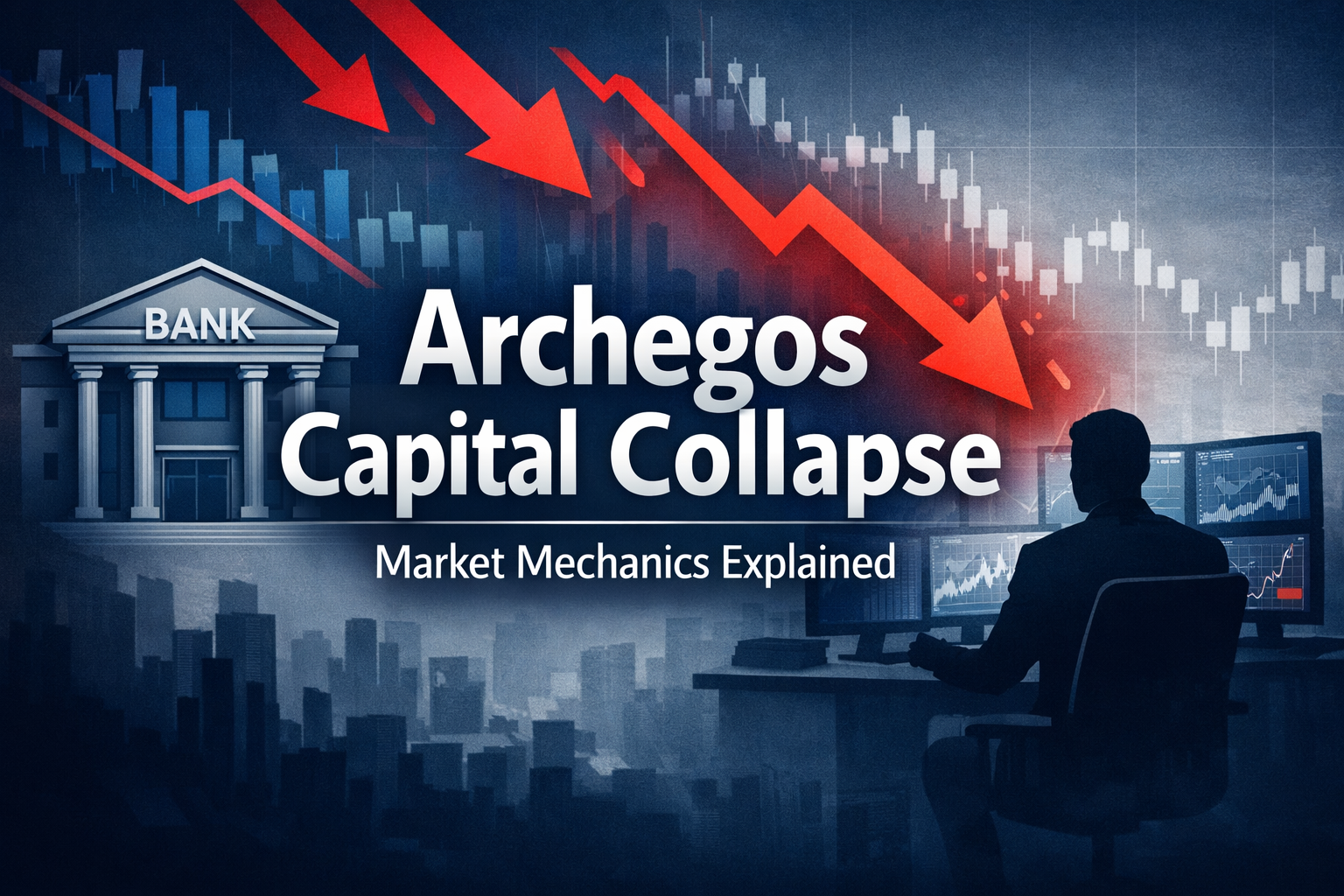
The collapse of Archegos Capital Management in March 2021 is one of the clearest modern examples of how leverage, hidden exposure, and broker dynamics can destabilise financial markets. The firm built massive, concentrated positions using derivatives, only to trigger a rapid liquidation that wiped out over $10 billion and caused billions more in losses for global banks.
For traders, this event is a practical case study in how markets behave under stress, how liquidity can disappear, and how broker actions can directly influence price movements.
Leverage-driven positions can trigger rapid, self-reinforcing market declines.
Forced liquidations can overwhelm liquidity and cause sharp price dislocations.
Prime brokers play a critical role in determining how crises unfold.
Hidden exposures can distort market signals and increase systemic risk.
Understanding market mechanics provides traders with a strategic edge during volatility.
Unlike traditional funds, Archegos, led by Bill hwang, relied heavily on total return swaps, a derivative that allowed it to gain exposure to stocks without directly owning them. This enabled the firm to:
Control billions in equities with limited capital.
Avoid public disclosure requirements that mask the true size of positions.
Use multiple prime brokers simultaneously to spread exposure across institutions.
Key holdings included ViacomCBS (now Paramount Global), Discovery Inc., and Baidu. Because positions were fragmented across banks, no single counterparty had a complete picture, creating hidden leverage, a systemic blind spot in the market.
The Archegos collapse is best understood through the liquidation cascade, a self-reinforcing cycle where falling prices trigger forced selling, which in turn drives prices even lower.
Initial Price Decline: A stock begins falling due to events such as a share issuance or profit-taking.
Leverage Magnifies Losses: Even a modest drop can translate into large percentage losses when positions are highly leveraged.
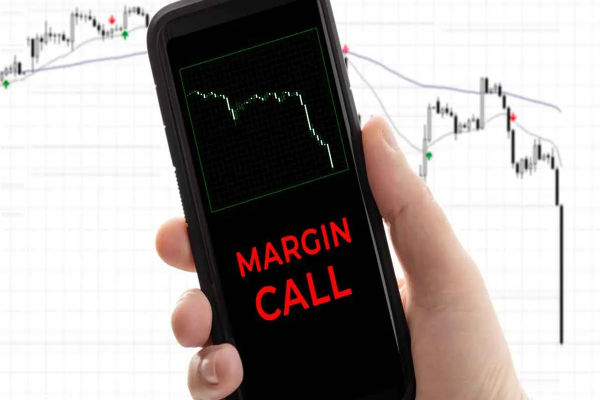
Margin Calls Triggered: Prime brokers demand additional collateral to maintain exposure.
Failure to Post Collateral: Brokers intervene to protect themselves.
Forced Liquidation: Brokers sell positions rapidly, regardless of price.
Liquidity Overwhelmed: The market cannot absorb the volume, causing sharp price gaps.
Cascade Intensifies: Further margin calls and cross-asset selling amplify the cycle.
This mechanism explains why stocks like ViacomCBS and Discovery experienced 20–30% declines within days, despite no change in fundamentals.
The conditions that allowed Archegos to collapse remain relevant:
Leverage and Derivatives: Modern markets still heavily use swaps, options, and structured products.
Hidden Exposure: Positions are often fragmented across brokers and not fully visible.
Conditional Liquidity: Market depth can vanish under stress, even in large-cap stocks.
Faster Markets: Algorithmic trading accelerates liquidation cascades, compressing crisis timelines.
Retail & Professional Impact: Even small traders can be affected by volatility caused by institutional deleveraging.
Key Insight: Markets are not always driven by fundamentals. Sometimes, they are driven by who is forced to buy or sell, and how quickly.
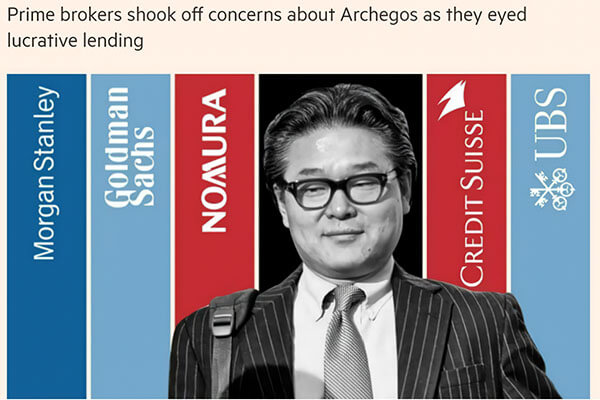
Archegos used multiple prime brokers, including Goldman Sachs, Morgan Stanley, Credit Suisse, and Nomura. These banks acted as counterparties, providing leverage and executing trades.
Goldman Sachs & Morgan Stanley: Sold positions early, limiting losses.
Credit Suisse & Nomura: Delayed selling and suffered large losses (~$5.5B for Credit Suisse).
Brokers act to protect themselves, not clients.
Margin calls and liquidation speed can create sudden, large price swings.
Understanding counterparty behaviour is crucial for anticipating market volatility.
The Archegos case provides several actionable insights for traders operating in modern markets.
Traders should monitor for:
Sudden, large price drops without clear news
Unusual spikes in trading volume
Correlated declines across related stocks
These patterns often indicate institutional deleveraging or margin unwinds.
Liquidity is not constant. During stress:
Bid-ask spreads widen
Market depth disappears
Prices can gap significantly
Even large-cap stocks can behave like illiquid assets under pressure.
Leverage amplifies both gains and losses. The Archegos collapse shows that:
Losses can escalate faster than expected
Margin calls can force exits at unfavourable prices
Disciplined position sizing is essential for survival.
When many institutions hold similar positions:
Exits become one-sided
Price declines accelerate
Monitoring market positioning and sentiment can help traders avoid these scenarios
The collapse was caused by falling stock prices, excessive leverage, and margin calls, which forced Archegos and its counterparties into rapid liquidations, resulting in billions of dollars in losses.
Prime brokers involved included Credit Suisse, Nomura, Goldman Sachs, Morgan Stanley, and MUFG. Credit Suisse suffered the largest loss, around $5.5 billion, highlighting the risks posed by concentrated exposures and leveraged positions.
Total return swaps are derivatives that provide exposure to a stock’s returns without direct ownership. They allow leverage but also magnify losses, making them high-risk tools in concentrated portfolios.
Traders can watch for unusual trading volume spikes, sudden price drops, and correlated declines across related assets, early signs of forced liquidations or concentrated leveraged positions.
Yes. High leverage, derivatives, and concentrated positions remain common in markets, meaning rapid liquidation cascades are still possible during periods of market stress or sharp price movements.
The Archegos collapse demonstrates how leverage, hidden exposure, and counterparty dynamics can drive extreme market outcomes. Traders should understand liquidation cascades, broker behaviour, and liquidity conditions to better anticipate volatility and manage risk effectively.
Disclaimer: This material is for general information purposes only and is not intended as (and should not be considered to be) financial, investment or other advice on which reliance should be placed. No opinion given in the material constitutes a recommendation by EBC or the author that any particular investment, security, transaction or investment strategy is suitable for any specific person.