Published on: 2023-12-06
Updated on: 2026-04-29
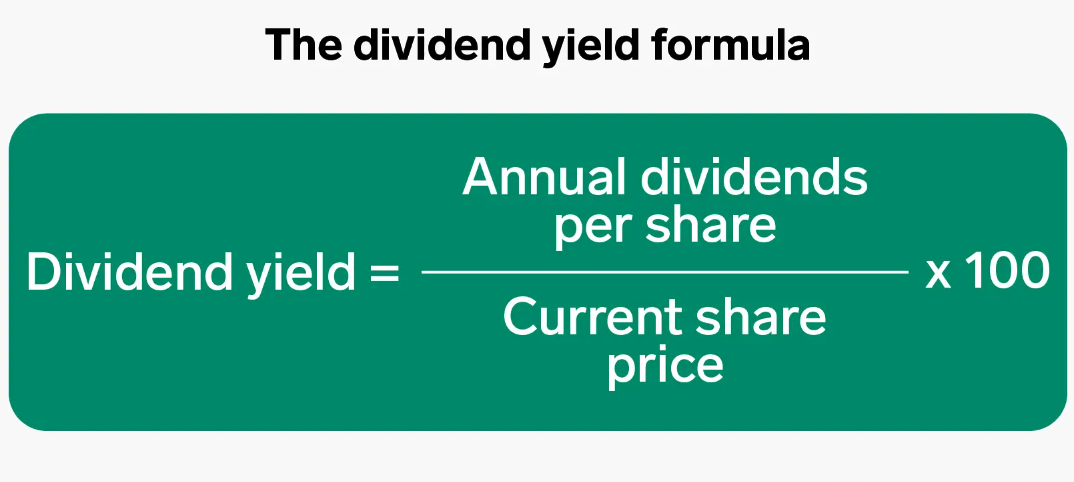
What is a dividend yield? It is the annual dividend income a stock pays, shown as a percentage of its current share price. A 5% dividend yield means a $10,000 investment would generate about $500 in annual dividends, assuming the company maintains its payout.
The dividend yield's meaning looks simple, but it can mislead investors. A rising yield may signal better income, or it may warn that the share price is falling because the market expects weaker earnings or a future dividend cut.

Dividend yield = annual dividend per share ÷ current share price × 100.
A high dividend yield can mean attractive income, but it can also signal a falling stock price.
A low yield is not always bad if the company is reinvesting cash into strong earnings growth.
Dividend yield should be checked alongside payout ratio, free cash flow, debt, and dividend history.
In 2026, investors should compare dividend stocks with bond yields, inflation, and sector averages.
A very high annual dividend yield is a warning sign unless earnings and cash flow support the payout.
The dividend yield is the income return an investor receives from a stock’s dividends, measured as a percentage of the stock price. It answers a direct question: how much annual dividend income does this stock pay relative to its current price?
For example, a company paying $2 in annual dividends per share at a $50 share price has a 4% dividend yield. If the share price rises to $80 and the dividend stays at $2, the yield falls to 2.5%. If the share price drops to $40, the yield rises to 5%.
This is why dividend yield changes even when the dividend per share does not. The yield moves with both the dividend and the share price. Investors asking “what does dividend yield mean?” should treat it as an income ratio, not a guaranteed return.
The dividend yield formula is:
Dividend yield = annual dividend per share ÷ current share price × 100
This is also called the dividend yield ratio formula.
This means the investor earns $4 in annual dividend income for every $100 invested, before taxes and excluding any share-price movement.
The dividend yield ratio is useful because it allows investors to compare income across companies with different share prices. A $100 stock paying $5 per year and a $20 stock paying $1 per year both have a 5% dividend yield.
There is no single answer to what the dividend yield investors should target. A good yield depends on the company, sector, interest-rate environment, and dividend safety.
A utility, telecom, bank, or REIT may naturally yield more than a fast-growing technology company. That does not automatically make it better. A lower-yielding company that steadily increases dividends may deliver stronger total returns than a high-yield stock with stagnant earnings.
Dividend yield and dividend payout ratio are often confused, but they measure different things.
The dividend payout ratio formula is:
Dividend payout ratio = dividends per share ÷ earnings per share × 100
If a company earns $5 per share and pays $2 in annual dividends, the payout ratio is 40%. That usually leaves room for reinvestment, debt repayment, and future increases. If a company earns $1 per share and pays $2, the payout ratio is above 100%, which may be unsustainable unless earnings are temporarily depressed.
A high dividend yield is not automatically better. It may reflect a mature company with stable cash flow and a shareholder-friendly payout policy. It may also reflect market concern.
The danger is mechanical. When a share price falls, the dividend yield rises if the dividend stays unchanged. A stock that paid a 4% yield can quickly show an 8% yield after a steep price decline. That higher yield may look attractive, but the market may already be pricing in a dividend cut.
This is called a dividend trap. The stock appears cheap because its yield is high, but the payout may not be sustainable. A high dividend yield is a question, not an answer.
A dividend yield deserves closer inspection when:
The share price has fallen sharply while the dividend has not changed.
The payout ratio is above 80% for a non-REIT company.
Free cash flow does not cover dividend payments.
Debt is rising while earnings are falling.
Dividend growth has slowed or stopped.
The yield is far higher than sector peers.
Management has shifted from dividend growth to “balance-sheet flexibility.”
A 9% yield may look better than a 3% yield, but it is only better if the company can fund it. Investors should check earnings quality, cash flow, leverage, and industry pressure before relying on the income.
The dividend per share formula is:
Dividend per share = total dividends paid ÷ total shares outstanding
If a company pays $100 million in dividends and has 50 million shares outstanding, dividends per share equal $2.00.
Investors asking how to calculate dividend per share should separate ordinary dividends from special dividends. A special dividend can temporarily boost the annual dividend yield, but it may not be repeated. For long-term income analysis, recurring dividends matter more.
Dividends per share also help investors compare income growth over time. If a company raises its dividend per share from $1.00 to $1.10, the dividend has grown by 10%. That matters even if the dividend yield falls because the share price rises.
Dividend yield should now be compared with alternative income sources. When Treasury yields are above broad equity dividend yields, investors need a stronger reason to own dividend stocks. That reason may be dividend growth, capital appreciation, inflation protection, or exposure to defensive sectors.
S&P 500 dividend payments reached a record $78.92 per share in 2025, up 5.5% from 2024. Still, broad index yields remained low because share prices and market concentration rose faster than dividends. In other words, US companies continued to pay out more cash, but investors paid even higher prices for those earnings streams.
A practical process is simple: calculate the annual dividend yield, check the dividend payout ratio, review five-year dividend growth, compare the yield with sector peers, and examine whether free cash flow covers the payment.
The most common mistake is buying a stock only because the yield looks high. Yield alone does not show safety. A company with shrinking earnings and rising debt can look attractive just before reducing its payout.
Another mistake is ignoring total return. A 2% dividend stock that compounds earnings and dividends may outperform a 7% yielder with no growth. Investors should also consider taxes, withholding tax on foreign dividends, and currency risk when buying international dividend stocks.
Dividend yield is the annual dividend income from a stock divided by its current share price. It shows the percentage of the stock price an investor receives as income.
Use the dividend yield formula: annual dividend per share divided by current share price, multiplied by 100. A $3 annual dividend on a $60 stock equals a 5% dividend yield.
It shows the income return from owning a stock, before taxes and excluding share-price changes. A 4% dividend yield means the stock pays $4 per year for every $100 invested, if the dividend continues.
A div yield is short for dividend yield. The dividend yield meaning is the same: annual dividend income expressed as a percentage of the current share price.
Not always. A high yield can signal high income, but it can also mean the share price has fallen because investors expect weaker earnings or a dividend cut.
Dividend yield is one of the simplest ways to measure stock income, but it should never be used alone. It explains how much income a stock pays today, not whether that income is safe tomorrow.
The strongest dividend analysis combines yield, payout ratio, free cash flow, debt, dividend growth, and sector context. In 2026, that discipline matters because investors can once again compare dividend stocks with meaningful bond yields.
A good dividend stock is not always the one with the highest yield. It is the one with the clearest ability to keep paying, keep growing, and protect shareholder value through changing market cycles.
Disclaimer: This material is for general information purposes only and is not intended as (and should not be considered to be) financial, investment or other advice on which reliance should be placed. No opinion given in the material constitutes a recommendation by EBC or the author that any particular investment, security, transaction or investment strategy is suitable for any specific person.