Published on: 2026-04-16
Dividend stocks in 2026 are back in focus, but not for the old reason. Investors still want income, yet the real debate is no longer whether dividend-paying shares look safer than growth stocks.
It is whether the income trade still makes sense when the S&P 500 yields only about 1.1%, while many of the stocks offering much higher payouts also carry slower growth, weaker balance sheets, or both. That tension is what makes dividend investing more interesting this year.

The attraction is obvious. Cash returns feel tangible in a market shaped by geopolitical shocks, uneven leadership, and expensive valuations. But a dividend is not automatically a sign of quality. In 2026, the best dividend stocks are not simply the highest-yielding ones. They are the companies that can sustain payouts, grow earnings, and avoid turning income into a value trap.
The broad market still offers a low income base, with the S&P 500 yielding roughly 1.1% to 1.15%, which keeps investor attention on dividend-paying stocks.
Yield alone is a poor filter. Kiplinger highlighted LyondellBasell as a recent example of a stock whose yield surged toward 11% after a sharp price decline, only for the company to then cut its dividend by 50%.
A Barron’s screen found only eight S&P 500 stocks with at least a 3% covered yield, projected earnings growth of 7% or more, modest volatility, and returns at least matching the index.
Procter & Gamble raised its dividend for the 70th consecutive year, but its stock still fell about 15% over the past year, showing that payout quality and total return are not the same thing.
Dividend stocks usually regain attention when investors want something more durable than pure momentum. That is happening again in 2026. A low broad-market yield means investors who want meaningful cash income must move beyond the index and into selected sectors or individual names.
At the same time, market volatility has made steady cash returns feel more valuable.
That does not mean dividend stocks are automatically cheap or defensive. In fact, a higher yield can mean one of two very different things. It can signal a mature company with stable free cash flow and disciplined capital allocation. Or it can signal a falling stock price, weak growth expectations, and rising doubt about whether the dividend is safe. That is the central distinction investors need to make this year.
The easiest mistake in dividend investing is to confuse high yield with high quality. A yield rises mechanically when a stock price falls. That means the most eye-catching yield on a screen can sometimes be the market’s way of warning that something is wrong.
The better test is a combination of factors:
payout sustainability
earnings growth
balance-sheet resilience
cash-flow consistency
valuation discipline
This is why Barron’s recent screen is so useful. It required a 3% or higher well-covered yield, projected earnings growth of at least 7%, beta below 1, and recent returns that kept pace with the market. Only eight S&P 500 stocks met that standard. That tells you how narrow the pool of truly attractive dividend names has become.
The old habit of buying dividend stocks purely for income looks weaker in 2026. Cash yields are higher than they were in the zero-rate era, so equities need to offer more than a payout. They need to offer a credible case for dividend durability and at least modest earnings growth.
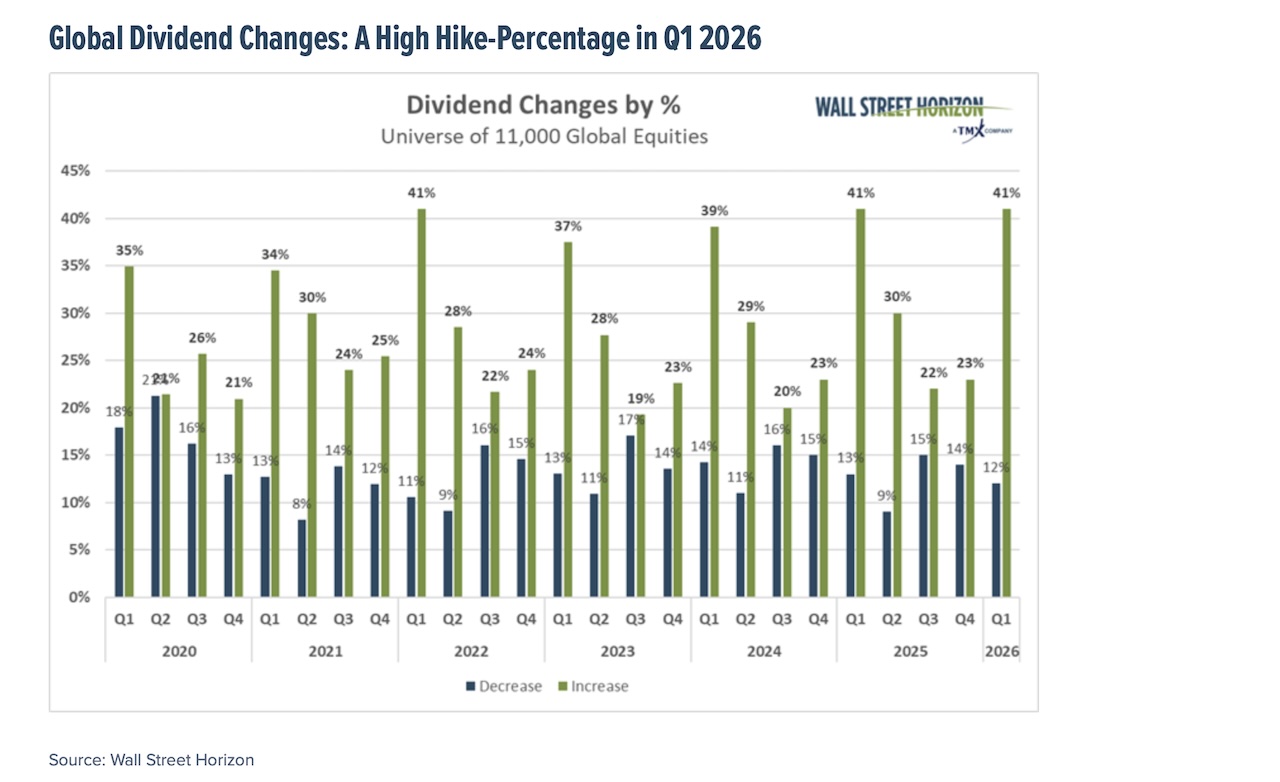
That is why some of the more interesting dividend names this year are not simply the highest-yielding. Barron’s pointed to Philip Morris, Darden Restaurants, and AT&T because they combined yields above 3% with earnings-growth expectations strong enough to support the payout.
Philip Morris was cited with a 3.6% yield and expected 12% earnings growth in 2026. Darden was cited with a 3.1%yield and expected 11% earnings growth. AT&T offered the highest yield of the group at 4.3%, with profit growth expected at 8% to 11% over the next two years.
The lesson is simple. In 2026, dividend investing works better when yield is paired with growth rather than used as a substitute for it.
Procter & Gamble is a useful case study because it shows both the strength and the limit of dividend investing. The company raised its quarterly dividend from $1.06 to $1.09 in April, marking its 70th consecutive year of dividend increases. That record matters. It speaks to discipline, stability, and a durable cash-generation model.
But the stock also shows why dividend history alone is not enough. Barron’s noted that P&G yielded around 3%, well above the S&P 500, yet the shares had fallen roughly 15% over the prior year even as the broader market rose nearly 30%.
The company still expects to return about $15 billion to shareholders in 2026, backed by around $20 billion in annual cash flow, but analysts remain cautious because profit growth looks modest and valuation still does not look cheap.
This is the real challenge in dividend stocks. A reliable payout can support sentiment, but it cannot fully offset slow growth or a stock that starts out overpriced.
The right way to think about dividend stocks in 2026 is not as a separate asset class, but as a filter on business quality. A dividend can improve total return and reduce behavioral pressure during volatile periods. It can also disguise a weak equity story if the market is pricing in future stress.
That is why the income trade and the value trap can sit right next to each other. The same screen that shows a 5% or 6% yield may be showing a healthy mature company, or it may be showing a stock whose price has already been damaged by deteriorating fundamentals.
Without growth, balance-sheet strength, and cash-flow coverage, yield becomes less a reward than a warning.
A cleaner framework for 2026 is to ask four questions before buying:
| Test | What to look for |
|---|---|
| Yield quality | Is the payout covered by earnings and free cash flow? |
| Growth support | Are earnings expected to grow enough to sustain future raises? |
| Valuation | Is the stock reasonably priced relative to its growth outlook? |
| Balance sheet | Can the company keep paying through a slowdown or rate shock? |
That framework will not produce the highest yields. It should, however, produce better outcomes.
They can be, but only if the payout is supported by cash flow, earnings growth, and a reasonable valuation. High yield alone is not enough.
They are attracting attention because the S&P 500 yield remains low, volatility is higher, and many investors want more tangible returns from equities.
A dividend trap is a stock that looks attractive because of a high yield, but the yield is being driven by a falling share price or weak fundamentals that can lead to underperformance or a payout cut.
Dividend growth matters more when it is supported by earnings growth and cash-flow strength. A stable or rising payout without growth in the business is less compelling.
Dividend stocks in 2026 still deserve a place in the market conversation, but the old approach of chasing yield is not enough. The most attractive dividend names are not the ones with the biggest payouts on a screen. They are the ones where yield, earnings growth, cash-flow coverage, and valuation still align.
That is why dividend investing this year is best understood as a quality test, not an income shortcut. Some stocks will justify the label of reliable income compounders. Others will prove to be value traps wearing a dividend badge. The difference is no longer the yield itself. It is the business underneath it.
Disclaimer: This material is for general information purposes only and is not intended as (and should not be considered to be) financial, investment or other advice on which reliance should be placed. No opinion given in the material constitutes a recommendation by EBC or the author that any particular investment, security, transaction or investment strategy is suitable for any specific person.