Published on: 2026-04-07
Persistent oil price strength is keeping inflation risk elevated, which is pushing Treasury yields higher across the curve.
The bond market is signaling caution that equity market valuations have not yet fully reflected.
Rising yields are extending beyond Wall Street, with mortgage rates now at their highest level since early September 2025.
The Federal Reserve meeting minutes and March CPI report, both due this week, are the next major catalysts for bonds and stocks alike.
Treasury yields today matter for more than bond traders. They are becoming one of the clearest signals that the market is still wrestling with an oil shock that could keep inflation sticky and make stocks harder to own.
U.S. crude stayed above $110, the 10-year Treasury yield held in the mid-4.3% range on April 6, and stocks still managed a modest rise. That gap is the story. It shows a bond market that looks more worried than equities do.
Higher oil prices do not remain confined to the energy sector. They move through the entire economy, raising the cost of transportation, manufacturing, and consumer goods.
When oil stays elevated for weeks rather than days, inflation expectations shift accordingly, and bond investors demand more compensation for holding long-duration debt.
U.S. oil prices held above $110 per barrel on April 6, sustained by the ongoing Strait of Hormuz crisis. This is not a temporary price spike. It is a structural inflation input that the bond market is treating with increasing seriousness.

Oil is now feeding directly into the part of the market that matters most for stocks: the cost of money. The cycle starts like this:
Oil prices rise and remain elevated for an extended period
Transportation and production costs increase across industries
Consumer prices follow, keeping CPI readings elevated
The Federal Reserve holds the federal funds rate higher for longer
Investors demand more yield on long-term Treasury bonds to compensate for inflation risk
This sequence is actively unfolding. The bond market has already begun pricing these risks independent of the CPI data due later this week.
Oil is not the only force at work. March payrolls also rose by 178,000, while the unemployment rate held at 4.3%, reinforcing the view that the economy is not rolling over. A labor market that is still adding jobs alongside a fresh energy shock makes it harder for investors to price in near-term relief on inflation.
At least one Fed official has stated publicly that a rate hike remains possible if inflation does not retreat. That kind of language is sufficient to push bond investors toward demanding higher compensation for holding long-duration debt, even without a formal policy change.
The FOMC meeting minutes from March 17 and 18 will be released on April 8 at 2:00 p.m. ET. The March CPI report will be released on April 10 at 8:30 a.m. ET.
When the 10-year Treasury yield was hovering near 3.5%, the case for holding equities at elevated valuations was straightforward. Risk-free bonds paid modest returns, and stocks offered a meaningful premium above that threshold.
At 4.35%, that calculation changes materially. Investors can now achieve reasonable returns from government bonds without assuming equity risk.
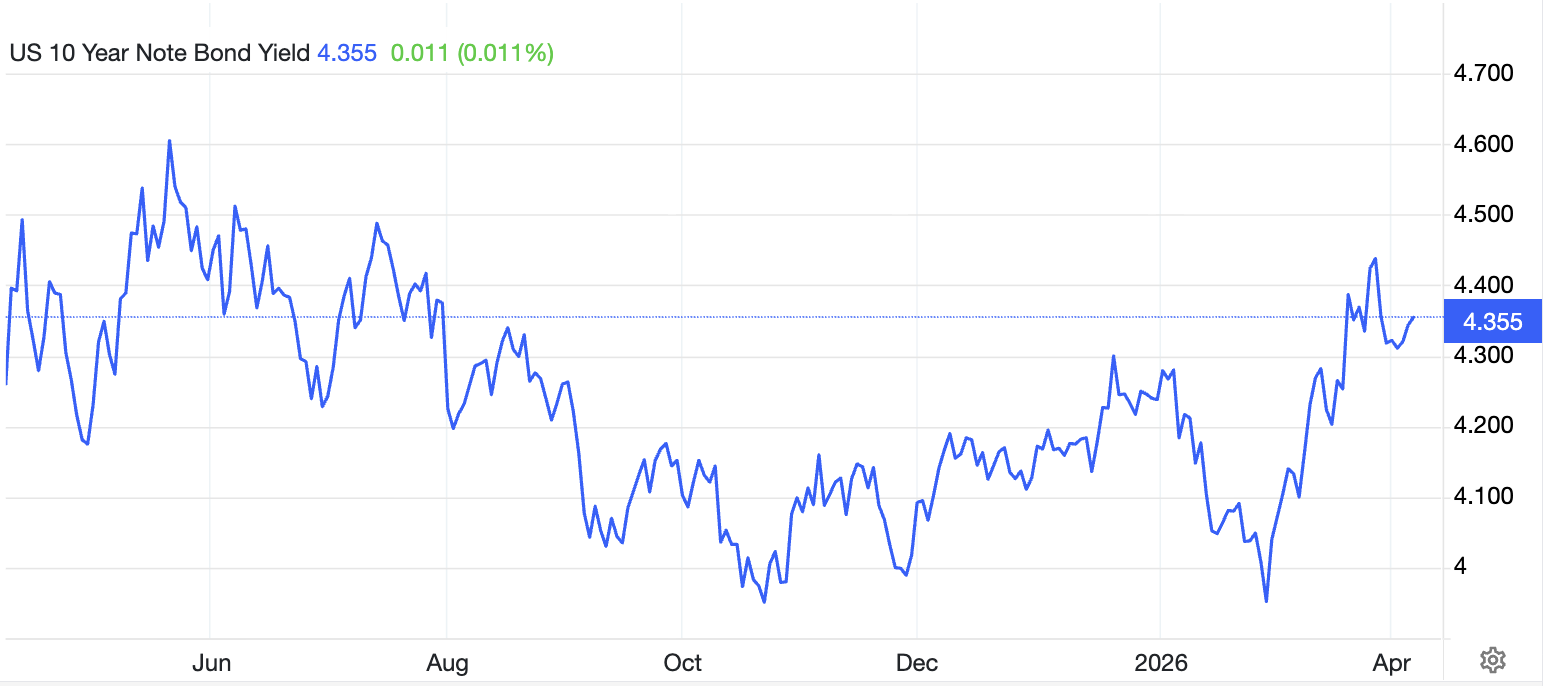
This dynamic puts pressure on premium valuations across the market, and it is particularly acute in growth sectors where future earnings are discounted at a higher rate. Higher yields make future profits worth less today. That is why expensive growth stocks feel the pressure first.
The table below shows official Treasury yields as of the April 6, 2026 close:
| Maturity | Yield |
|---|---|
| 2-Year | 3.84% |
| 10-Year | 4.34% |
| 30-Year | 4.89% |
The proximity of the 2-year and 30-year yields is a notable signal. It reflects a market that is simultaneously pricing in persistent short-term rate pressure and elevated long-term inflation risk.
Historically, this kind of curve compression has preceded periods of broader financial market stress.
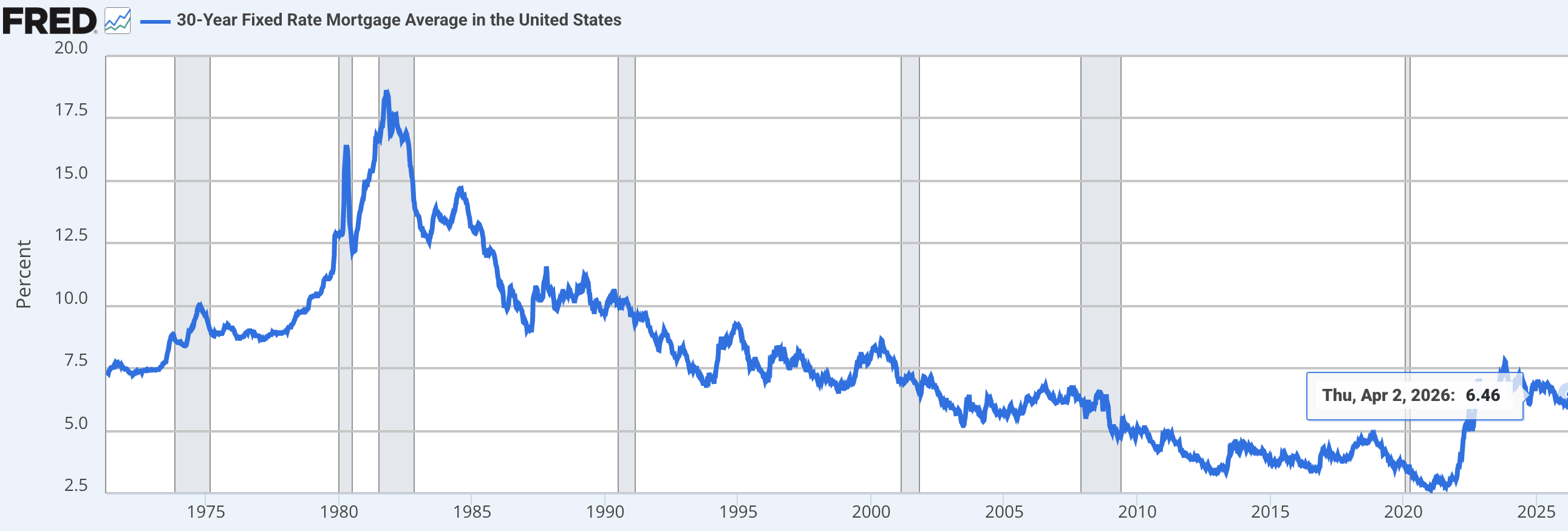
The most immediate spillover is housing. Freddie Mac’s Primary Mortgage Market Survey showed the average 30-year fixed mortgage rate at 6.46% as of April 2, up from 6.38% a week earlier. That is not just a bond-market statistic. It raises monthly payments, trims affordability, and makes the spring housing market harder for marginal buyers.
The same logic applies to corporate finance. When Treasury yields rise, borrowing costs tend to rise across investment-grade and high-yield credit as well.
Companies refinancing debt, funding buybacks, or expanding capital spending all face a less forgiving cost of capital. That pressure is manageable in isolation. It becomes more meaningful when paired with higher energy costs and still-firm labor data.
The next several trading days contain two of the most consequential scheduled releases for both fixed income and equity markets.
These minutes will reveal the depth of debate inside the Federal Reserve regarding rate policy at the March meeting.
Hawkish language, a firmer tone on inflation, or any signal that a rate hike is being actively considered would likely push yields higher and increase pressure on equity valuations. A more neutral tone could offer some relief.
This is the headline figure the market has been building toward. A reading above consensus would validate the bond market’s current pricing and could trigger a meaningful repricing in equities. A below-consensus reading would provide relief to both bonds and stocks.
That softer outcome is what equity bulls are counting on, but oil prices above $110 make it a less straightforward bet than it might otherwise appear.
Stocks and bonds do not always react at the same speed. Bonds often price inflation and rate risk first, while stocks can stay firm until higher borrowing costs start to hurt earnings and valuations.
There is no fixed line, but pressure tends to build when the 10-year yield rises fast and stays high. Speed matters as much as level because sudden moves tighten financial conditions quickly.
Not always. Banks can benefit from higher rates if loan margins improve. But gains can fade if rising yields slow credit demand, weaken housing activity, or raise funding stress across the economy.
Oil can lift inflation expectations almost immediately. Bond investors respond fast because inflation reduces the real return on fixed income. Stocks may react later, once higher costs begin to affect profits and consumer demand.
Yes. Mortgage rates usually follow long-term Treasury yields more closely than the Fed’s policy rate. If bond investors expect inflation to stay firm, mortgage costs can rise even with no new Fed move.
Treasury yields today are rising as a direct consequence of a sequence that begins with oil above $110, runs through elevated inflation expectations, and ends with bond investors demanding more compensation for holding long-duration government debt.
The 10-year Treasury yield at approximately 4.35% and the 30-year at 4.89% are meaningful indicators, not technical noise.
They signal that borrowing costs are increasing throughout the economy, from corporate balance sheets to the housing market, where the average 30-year fixed mortgage rate has now reached 6.46%.
Disclaimer: This material is for general information purposes only and is not intended as (and should not be considered to be) financial, investment or other advice on which reliance should be placed. No opinion given in the material constitutes a recommendation by EBC or the author that any particular investment, security, transaction or investment strategy is suitable for any specific person.