Published on: 2026-05-27
Updated on: 2026-05-27
The yen hovered close to its May low on Wednesday, near levels that spurred official currency intervention in recent weeks, as traders weighed the risks of a renewed flare-up in the Iran war.
BOJ Governor Kazuo Ueda struck a hawkish posture, saying the war-driven oil shock could become persistent in an environment of high inflation expectations and rising wages.
Markets currently lay around 68% odds for a 25-bp hike at the BOJ's next policy meeting in June, according to LSEG data. Japan's core inflation accelerated in April and pushed above 2%.
The strength of the yen in real terms has hit a new low going back to the 1970s, as the trade deficit and other structural selling pressure factor are exacerbated by rising energy costs.
Japan will build up an extra $19 billion in reserves to subsidise fuel costs and help tackle cost of living pressures, PM Takaichi said on Monday, aiming to assuage bond market concerns.
The government is considering cutting consumption tax on food, a move that could reduce tax revenue by as much as 5 trillion yen, while rising JGB yields threaten to push debt-servicing costs higher than expected.
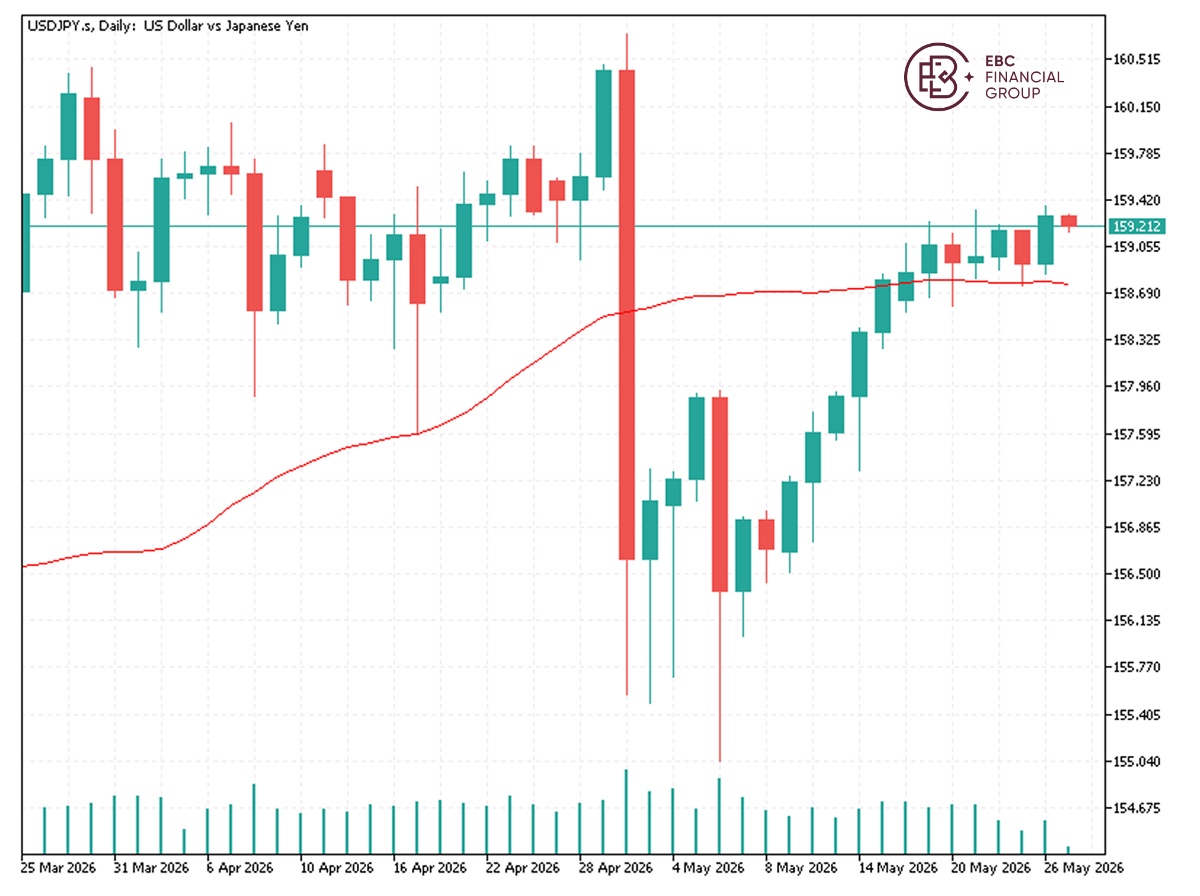
The yen was trading below 50 SMA, stuck in a tight trading range. As bears may be reluctant to make heavy bets for now, we see it strengthen to 158.8 per dollar.
As of market close on 26 May, among EBC major products, Micron Technology shares led gains after UBS more than tripled its price target on the memory chipmaker to $1,625
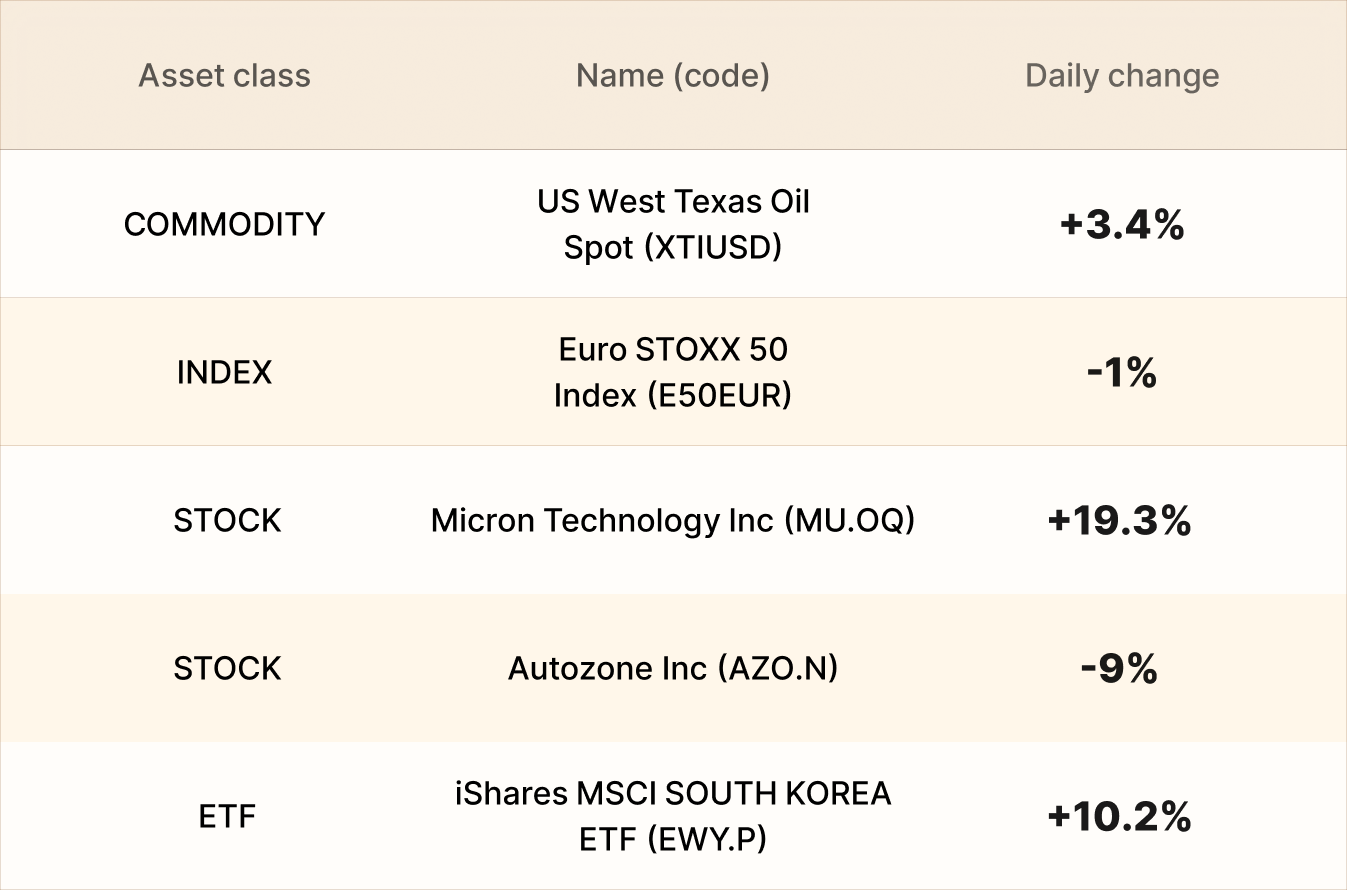
AutoZone recorded its worst trading day in more than four years despite earnings beat. Analysts were concerned about lacklustre growth internationally and margin compression that was more in line with competitors.
European shares slipped as doubts over the prospects of a deal to end the conflict with Iran weighed on sentiment after the US launched what it said were defensive strikes in the south of the country.