Published on: 2026-06-18
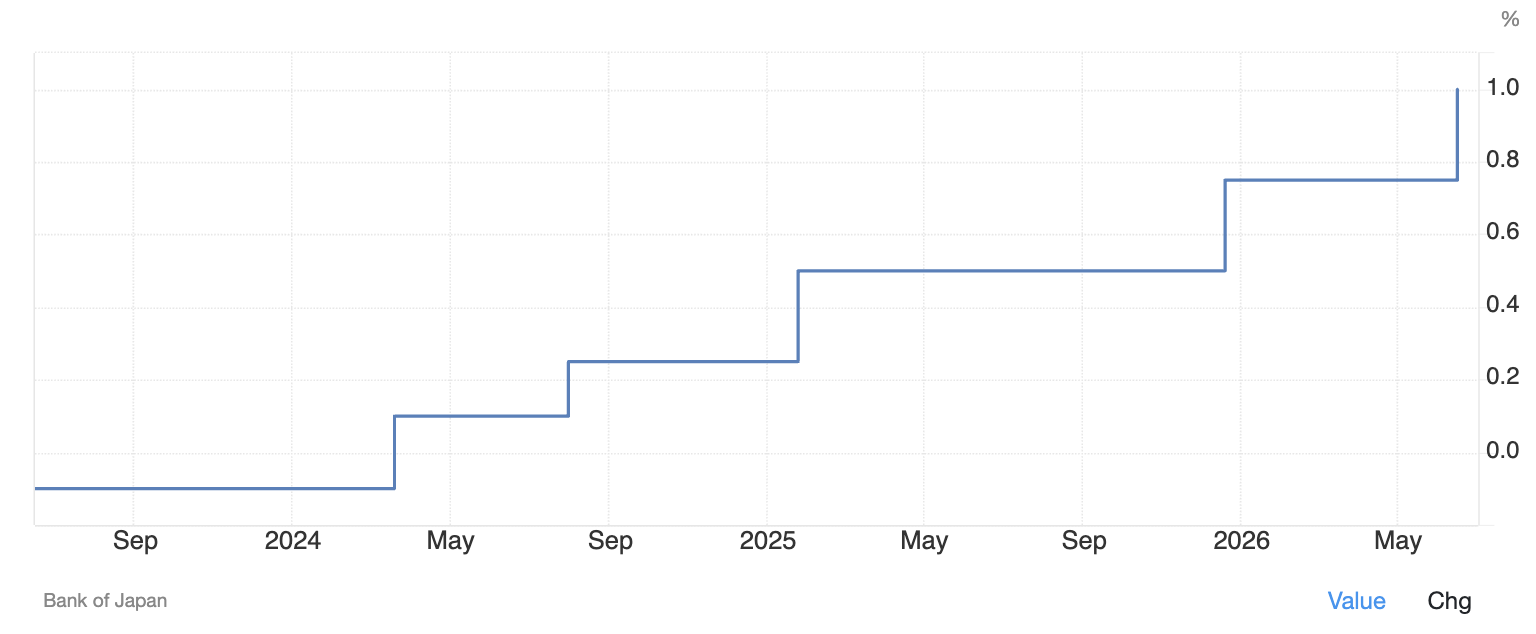
BoJ rate decision at 1% has ended Japan’s emergency-money era without ending yen weakness. The reason is not a failure of policy credibility. It is the arithmetic of global capital. The Bank of Japan has raised the floor under domestic interest rates, but the dollar still sits on the higher-yielding side of the world’s most important funding trade.
The June decision lifted Japan’s short-term policy setting to around 1.0%, with the complementary deposit facility rate at 1.0% and the basic loan rate at 1.25%. The Federal Reserve has kept the federal funds target range at 3.50% to 3.75%, leaving the dollar with a 250 to 275 basis-point policy premium.
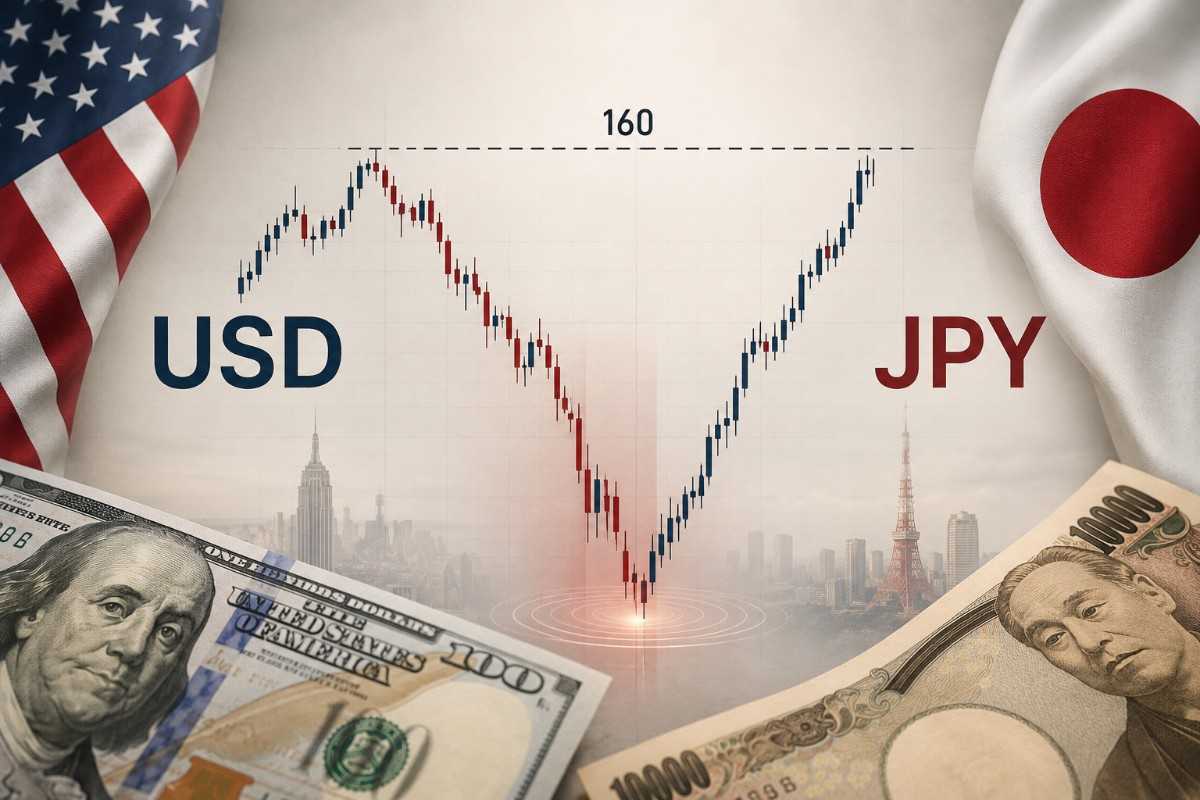
That explains why USD/JPY can remain near 160 after Japan’s most important monetary turn in a generation.
Japan’s 1.0% policy setting confirms the end of the zero-rate regime and takes the BoJ to its highest level in roughly three decades.
The Fed’s 3.50% to 3.75% range preserves a large dollar yield advantage and limits the yen’s post-hike recovery.
USD/JPY remains elevated because positive carry still compensates investors for borrowing yen and holding dollar assets.
Japan’s Ministry of Finance has deployed ¥21.5234 trillion across recent intervention windows, raising the risk of short-yen exposure.
A durable yen recovery needs lower US yields, firmer BoJ guidance above 1.0%, or a volatility shock that forces carry liquidation.
The BoJ’s move is historic for Japan. It changes bank profitability, household deposit income, corporate borrowing costs, and the pricing of yen liquidity. For USD/JPY, however, history is secondary. The exchange rate prices the return available from holding dollars against yen, adjusted for volatility and intervention risk.
A 1.0% yen rate is higher than Japan is used to, but it is still low by developed-market standards. Investors do not ask whether Japan has shocked its own past. They ask whether yen funding has become expensive enough to undermine long-dollar positions.
It has not. Borrowing yen is no longer almost free, but dollar assets still offer materially higher income. That keeps the carry trade alive, even if leverage is lower and stop-loss discipline is tighter.
| Variable | Current signal | FX implication |
|---|---|---|
| BoJ policy rate | Around 1.0% | Raises yen funding costs |
| BoJ deposit facility | 1.0% | Improves domestic yen return |
| BoJ basic loan rate | 1.25% | Tightens liquidity pricing |
| Fed funds range | 3.50% to 3.75% | Keeps dollar income superior |
| Policy gap | 250 to 275 bps | Sustains USD/JPY carry support |
| Intervention since 2024 windows | ¥21.5234 trillion | Raises reversal risk |
| USD/JPY zone | Around 160 | Marks the policy fault line |
The table shows why the yen response has been restrained. Japan has tightened enough to change domestic finance. It has not tightened enough to overturn the global return structure.
The weak yen is often described through “yield differentials,” but the mechanism is more precise. A trader can borrow yen, convert into dollars, and hold higher-yielding dollar instruments. The income comes from the rate spread. The risk comes from spot USD/JPY, volatility, and the possibility of official intervention.
At 1.0%, the yen no longer functions as costless funding. That raises the break-even point for long-dollar positions and reduces the attraction of crowded short-yen trades near intervention-sensitive levels. But carry is not eliminated by making funding less cheap. It is eliminated when the expected return no longer compensates for exchange-rate risk.
That has not happened yet. USD/JPY near 160 shows that investors still see enough income premium in dollars to tolerate the risk. The BoJ has changed the margin of the trade, not the direction of the trade.
The next question is whether markets view 1.0% as a ceiling or a waypoint. If investors believe Japan is heading toward 1.25% or 1.50%, short-yen exposure becomes harder to justify. Carry trades are forward-looking. Position reduction would begin before the next hike, because the funding curve would reprice in advance.
Japan’s currency intervention has changed market behaviour. The Ministry of Finance reported ¥9.7885 trillion of foreign-exchange intervention in April-June 2024 and ¥11.7349 trillion from April 28 through May 27, 2026. Combined, the two windows total ¥21.5234 trillion.
That scale tells traders that Tokyo will not tolerate disorderly depreciation, especially if USD/JPY rises quickly through politically sensitive levels. Intervention can force macro funds to reduce leverage, widen stops, and reassess crowded long-dollar exposure. When official dollar selling meets stretched positioning, the yen can rally sharply within hours.
But intervention does not create a recurring income stream. Carry does. Official flows can punish excess positioning, but they cannot permanently reverse USD/JPY while the rate structure still rewards dollar holdings. Traders can cut position size without changing their fundamental view that dollars remain more rewarding than yen.
The 160 zone has become the point where carry conviction meets official tolerance. Above that area, USD/JPY signals that dollar income still dominates Japan’s normalisation. It also enters a zone where Tokyo becomes more sensitive to speed, liquidity, and speculative concentration.
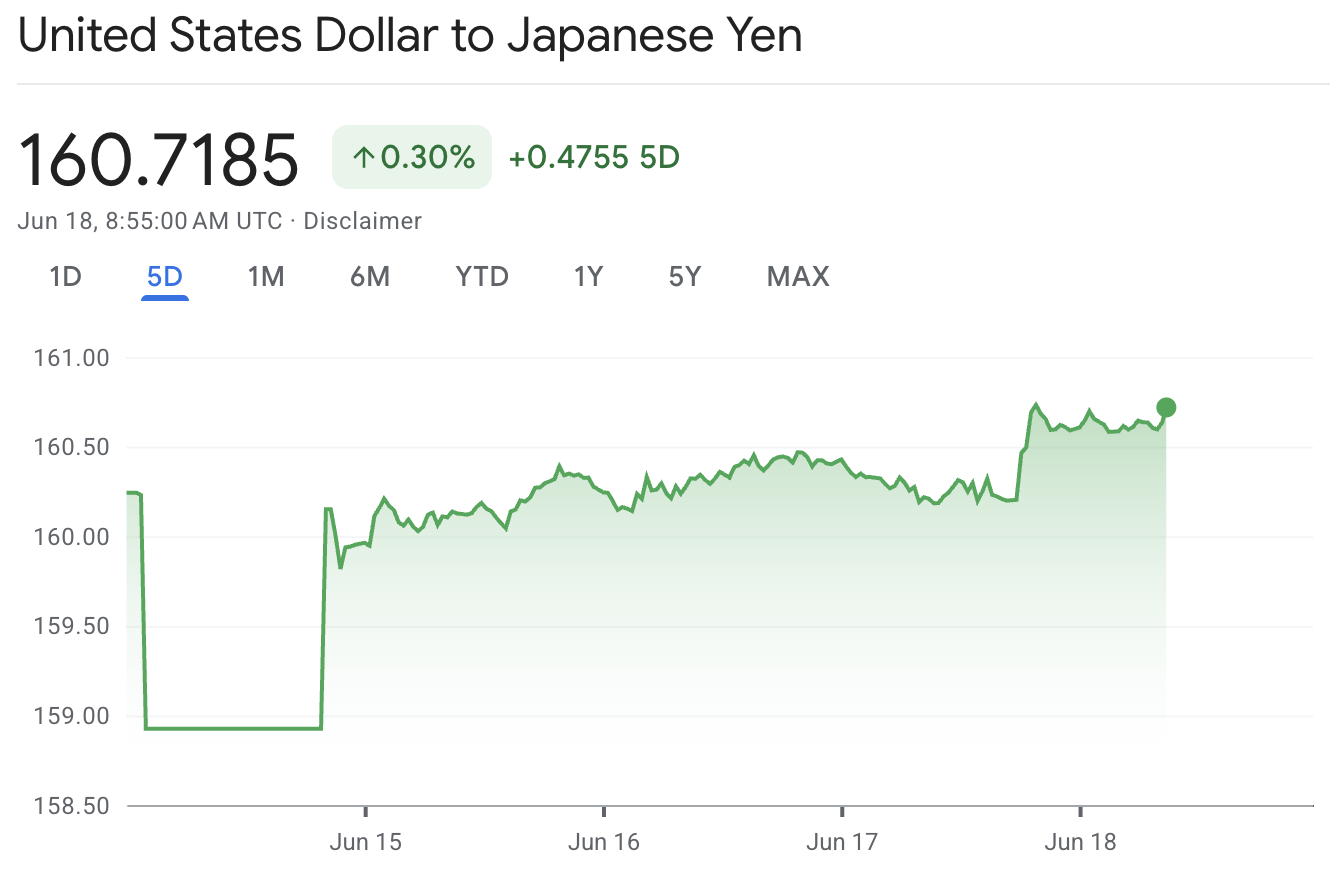
A slow move higher invites warnings. A disorderly advance invites action. That distinction matters because Japanese officials have focused on excessive volatility rather than defending a fixed exchange-rate target.
Below 158, the yen signal would improve. Such a move would suggest that investors are doing more than hedging against intervention risk. Below 157, the message would be stronger because it would point to actual liquidation of long-dollar exposure. Hedging protects a position. Liquidation removes it.
The first catalyst is lower US yields. USD/JPY is highly sensitive to front-end US rate expectations because the carry trade is funded through short-term spreads. If US inflation softens or growth weakens enough to revive Fed easing expectations, the dollar’s income advantage would compress quickly.
The second catalyst is firmer BoJ guidance. A 1.0% rate confirms normalisation, but a credible path toward 1.25% or 1.50% would force investors to model higher future yen funding costs. That would challenge the assumption that the yen remains the cheapest major funding currency.
The third catalyst is volatility. Carry strategies perform best when markets are calm. A risk-off shock, equity drawdown, geopolitical escalation, or abrupt bond-market repricing could force leveraged investors to close short-yen positions simultaneously.
The most powerful yen-positive setup would combine softer US data with a firmer Japanese rate path. That would compress the spread from both ends and shift investors from hedging into genuine position reduction.
The argument that Tokyo has failed to support the yen misses the structure of the problem. The BoJ has ended negative rates, lifted policy in stages, and accepted the domestic cost of higher borrowing costs. The Ministry of Finance has deployed intervention at a scale large enough to alter the risk profile of short-yen trades.
The yen remains weak because US policy is still restrictive. Japan cannot simply chase the Fed without damaging its own debt dynamics and domestic recovery. Its realistic task is to shrink the gap, make yen funding less attractive, and raise the penalty for speculative excess. It has done all three.
Softer US data, lower Treasury yields, or a volatility shock could do more for the yen than another isolated BoJ move. Japan has built the domestic architecture for recovery. The global signal has not yet confirmed it.
The yen did not strengthen decisively because USD/JPY is priced through relative return. A 1.0% BoJ rate is important for Japan, but the Fed’s 3.50% to 3.75% range still keeps the dollar-yen carry spread wide.
No. The rate hike makes yen funding more expensive and reduces the comfort of short-yen exposure. It does not end the carry trade while the dollar still offers a policy premium of 250 to 275 basis points.
A durable recovery would require lower US yields, clearer BoJ guidance above 1.0%, or a volatility shock that forces leveraged carry trades to unwind. The strongest scenario would combine softer US data with a firmer Japanese rate path.
BoJ at 1% marks Japan’s exit from emergency monetary policy, but not the end of yen weakness. The currency is more expensive to fund, and official intervention has made short-yen trades riskier.
The obstacle remains the Fed-BoJ rate gap. Until US yields fall, the BoJ signals a higher funding path, or volatility forces carry positions to unwind, Japan’s historic rate hike will limit yen weakness more than reverse it.