Published on: 2026-06-04
Updated on: 2026-06-04
Why is rupiah so weak in 2026 when Indonesia is still growing above 5%? GDP expanded 5.61% in Q1, but USD/IDR has pushed toward 18,000 as a $9.1 billion balance-of-payments deficit, thinner current-account support, oil risk, and capital outflows overpower headline growth.
The currency market is not saying Indonesia has stopped growing; it is asking whether that growth is backed by enough external dollar support.
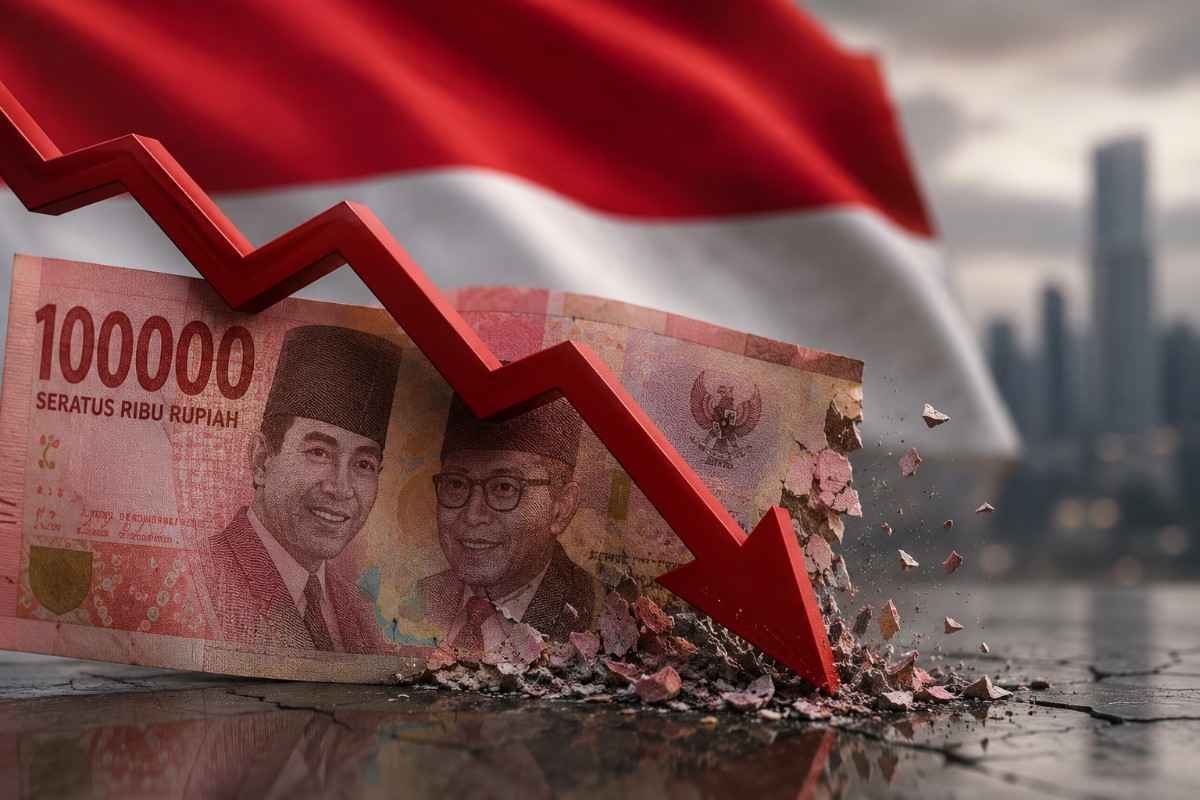
USD/IDR near 18,000 is the market’s pressure line, turning rupiah weakness from normal depreciation into a confidence test.
Indonesia’s 5.61% Q1 growth has not protected the currency, because FX markets are pricing external funding stress rather than output strength.
The $9.1 billion Q1 balance-of-payments deficit is the clearest warning signal, showing rupiah pressure has a balance-sheet cause, not only a sentiment cause.
Bank Indonesia’s 50 bps hike to 5.25% buys time, but it cannot lower oil prices, create export dollars, or force foreign capital back into rupiah assets.
The next signal is whether reserves, trade, and portfolio flows improve before 18,000 becomes the market’s accepted USD/IDR base.
The rupiah is not being hit by one shock. It is being squeezed by six forces that increase dollar demand, raise Indonesia’s risk premium, or reduce the currency’s natural support.
| Driver | Latest signal | Why it matters for the rupiah |
|---|---|---|
| US Dollar and yields | DXY near 99.4, US 10Y near 4.49% | Dollar assets stay attractive when global yields remain high. |
| USD/IDR threshold | Around 18,000 | A major level can pull hedging demand forward. |
| Current account | -$4.0 billion, 1.1% of GDP | Indonesia’s natural FX cushion has narrowed. |
| Balance of payments | -$9.1 billion | Pressure is broader than daily FX sentiment. |
| BI policy | 50 bps hike to 5.25% | Higher rates buy time but cannot remove external shocks. |
| FX reserves | $146.2 billion | Reserves remain adequate, but the direction now matters. |
The balance-of-payments row matters most because it shows rupiah weakness is not just a market mood swing; it reflects weaker external funding support.
Indonesia’s 5.61% Q1 growth has not protected the rupiah because currency markets are not judging Indonesia by output alone. They are judging whether the economy has enough foreign-currency support to absorb higher oil costs, capital outflows, and external payments.
Growth creates confidence inside the economy, but the exchange rate depends on the balance between dollar supply and dollar demand. When dollar demand rises faster than Indonesia’s natural FX inflows, strong GDP becomes less important than the external balance.
The most important data point is not GDP. It is the balance of payments. Indonesia recorded a $9.1 billion balance-of-payments deficit in Q1 2026, while the current-account deficit widened to $4.0 billion, or 1.1% of GDP, from $2.5 billion, or 0.7% of GDP, in Q4 2025.
That is the point where rupiah weakness stops looking like ordinary market volatility. A wider external deficit means Indonesia has less natural foreign-currency support at the exact moment when dollar demand is rising due to imports, debt payments, and capital outflows.
April trade data made that pressure harder to ignore. The surplus narrowed to only $0.09 billion, while imports rose 22.49% year on year, and oil and gas imports surged 85.52%.
This is the uncomfortable fact: when the trade cushion shrinks, and the balance of payments turns negative, policy support has to do more of the work because the external account is no longer carrying enough weight.
Oil matters because it turns rupiah weakness into a real import-cost problem. Crude traded around $95.15 per barrel on June 4, 2026 and remained about 50% higher than a year earlier.
That price matters for Indonesia because energy imports require dollars. When oil rises, the economy needs more foreign currency to pay for the same essential input. When the rupiah weakens, those imports become even more expensive in local-currency terms.
This is the pressure loop that makes the currency slide harder to contain: higher oil prices increase dollar demand, and a weaker rupiah raises the domestic cost of that dollar demand.
USD/IDR near 18,000 matters because it changes the psychology of rupiah weakness. At that level, depreciation stops looking like daily market noise and starts looking like a cost, hedging, and confidence problem.
Exchange-rate data showed USD/IDR reaching 18,005 on June 3, 2026, with the US Dollar up 7.97% against the rupiah so far this year. That move matters because major FX levels can become self-reinforcing when more dollar demand is pulled forward.
The risk is not one break above 18,000. The risk is 18,000 becoming the level around which expectations reset.
Bank Indonesia raised the BI Rate by 50 bps to 5.25% in May because rupiah stability had become too important to leave to market adjustment alone. The move sent a clear signal: currency defence is now a policy priority.
The hike helps because it raises the return on rupiah assets and makes one-way bets against the currency more expensive. That can slow the pressure and buy time.
But it cannot create export dollars, lower oil prices, or force foreign capital back into Indonesia. BI can defend the rupiah’s stability, but the currency needs external support to recover with conviction.
Capital outflows have made the currency harder to contain. Foreign selling reached Rp26.06 trillion in Indonesian equities and Rp25.1 trillion in government bonds in Q1 2026, adding pressure as rupiah proceeds were converted back into foreign currency.
There is a counterweight. Higher yields on BI Rupiah Securities helped attract renewed inflows, with net foreign inflows reaching $5.5 billion as of May 18 and foreign holdings of SRBI at Rp221.59 trillion. That shows yield support still works when the policy signal is credible.
The harder issue is confidence. Moody’s and Fitch both shifted Indonesia’s rating outlook to negative in 2026 while keeping investment-grade ratings intact. The downgrade risk is not immediate default pressure; it is the market charging a higher premium for policy uncertainty.
That is why the rupiah story is bigger than the dollar. The dollar creates the pressure, but credibility decides how much Indonesia has to pay to absorb it.
The rupiah stabilizes when Indonesia’s dollar demand falls or its dollar supply improves. That means the next recovery signal will come from external data, not from GDP alone.
US yields fall, and the US Dollar loses momentum.
Oil prices decline enough to reduce import pressure.
Indonesia’s trade surplus widens again.
The current-account deficit narrows from Q1 levels.
Foreign inflows return to bonds, equities, and SRBI instruments.
FX reserves stop falling while USD/IDR holds below the 18,000 area.
Not all six triggers carry the same weight. Lower US yields and cheaper oil would help quickly, but both sit largely outside Indonesia’s control. The more actionable test is whether policy credibility, SRBI yields, and fiscal discipline can bring foreign inflows back while trade data repairs the external cushion.
The most achievable near-term support is capital returning to rupiah assets. The most important support remains the external balance: without a wider trade surplus or a narrower current-account deficit, any rupiah rebound will look fragile.
The rupiah is falling because Indonesia’s external position has weakened while demand for dollars has risen. The clearest signal is the $9.1 billion Q1 balance-of-payments deficit, which shows pressure beyond normal exchange-rate volatility.
No. A weak currency does not automatically mean a weak economy. Indonesia grew by 5.61% in Q1 2026, but the rupiah is being priced based on external balances, oil costs, capital flows, and confidence in policy execution.
The 18,000 level matters because it can change expectations. Once a major FX level becomes accepted, hedging demand can rise and dollar buying can be pulled forward, making the currency move harder to reverse.
Bank Indonesia can slow the pressure through higher rates, intervention, liquidity tools, and SRBI yields. It cannot fully stop rupiah weakness unless external data improves or global dollar pressure eases.
Yes, if USD/IDR stays near 18,000 while reserves fall, trade weakens, oil prices remain high, and foreign inflows fail to recover. The bear case is not weak growth; it is a weaker external buffer.
The next test is the June 17–18 Bank Indonesia meeting, followed by data on reserves, trade, and portfolio flows. If USD/IDR stays near 18,000 while external balances fail to improve, the market will stop treating rupiah weakness as a temporary dollar shock.
Indonesia can keep growing above 5%. The rupiah will not recover with conviction until that growth is backed by stronger dollar inflows.