Published on: 2026-04-07
Updated on: 2026-04-07
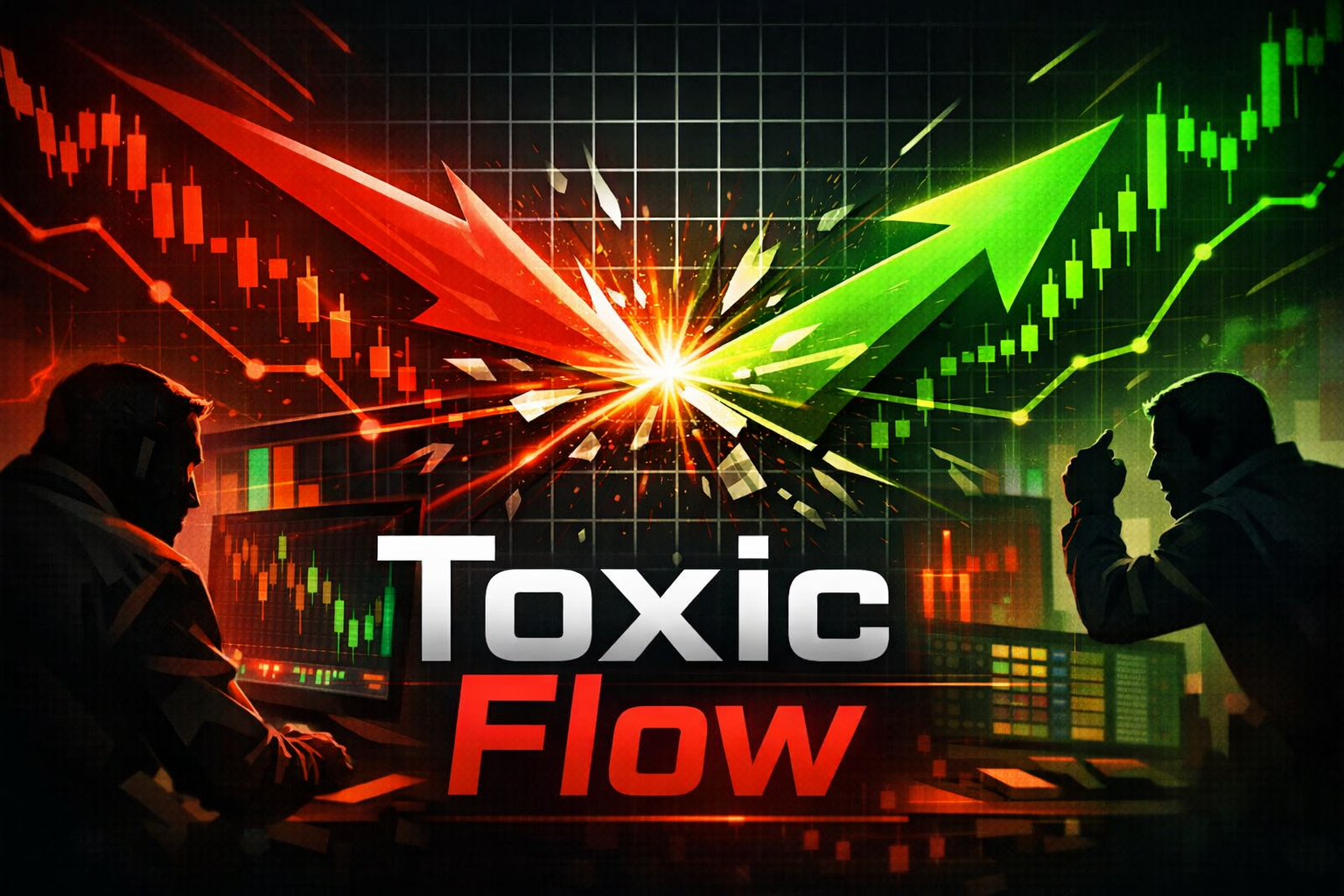
In financial markets, brokers play a critical role in facilitating trades between clients and the broader market. One term that often arises in trading discussions is “toxic flow.”
Understanding toxic flow is essential for beginner investors because it affects how brokers execute orders, manage risk, and determine pricing. Toxic flow refers to client orders or trading activity that are likely to generate losses for brokers if they take the other side of the trade.
Toxic flow represents trades that can be financially harmful to brokers.
It usually comes from high-frequency trading, informed institutional orders, or large aggressive trades.
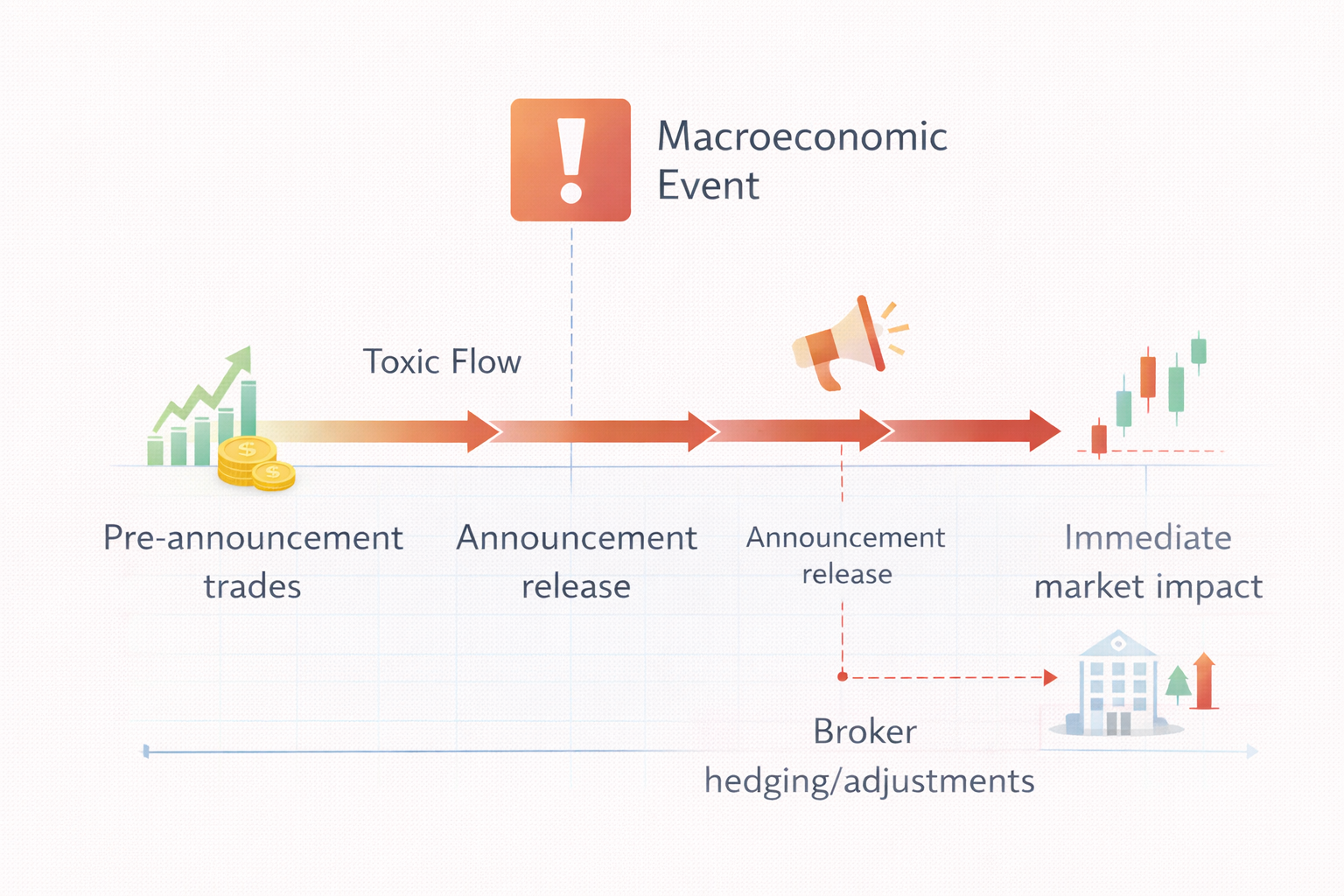
Brokers manage toxic flow by hedging, passing trades to the market, or adjusting spreads.
Recognising toxic flow helps investors understand broker behaviour and market dynamics.
Routine retail trades are generally non-toxic and profitable for brokers.
Brokers, particularly market-making brokers, often earn revenue by taking the opposite side of client trades. For example, if a client buys 1,000 shares of a company, the broker may temporarily sell from their own inventory before hedging in the market.
While this is profitable for standard client trades, certain types of orders, referred to as toxic flow, can generate losses instead of revenue. Toxic flow typically arises from sophisticated trading activity, including:
High-frequency trading strategies that exploit tiny pricing differences across markets.
Informed institutional trading based on analysis or non-public information.
Large or aggressive orders that move the market quickly.
In simple terms, toxic flow is adverse to a broker’s financial position, making it riskier for brokers to internalise these trades.
Toxic flow can take several forms, each affecting brokers differently.
These characteristics illustrate why brokers closely monitor client trades, adjusting strategies when they detect patterns indicative of toxic flow.
Brokers are concerned about toxic flows because they increase financial and operational risk. Unlike ordinary retail trades, which are typically small and predictable, toxic orders can result in:
Direct financial losses if the broker cannot hedge effectively.
Increased volatility in the broker’s internal inventory.
Operational strain from processing high-speed, high-volume trades.
For example, during periods of heightened geopolitical tension or macroeconomic announcements in 2026, such as Federal Reserve interest rate changes or unexpected earnings surprises, brokers may observe a surge in toxic flows from institutional clients trying to position ahead of anticipated market moves.
To protect themselves, brokers implement several strategies:
Passing the flow to the market: Brokers may immediately hedge or execute trades externally to avoid holding risky positions.
Adjusting spreads or margins: Wider spreads help compensate for the higher risk associated with toxic trades.
Segregating clients: Brokers distinguish between retail and institutional clients based on trading patterns, treating some orders as higher risk.
Monitoring algorithms: Advanced detection systems analyse order behaviour to flag potential toxic flows before they affect profitability.
By using these measures, brokers maintain stability and profitability while continuing to provide execution services to their clients.
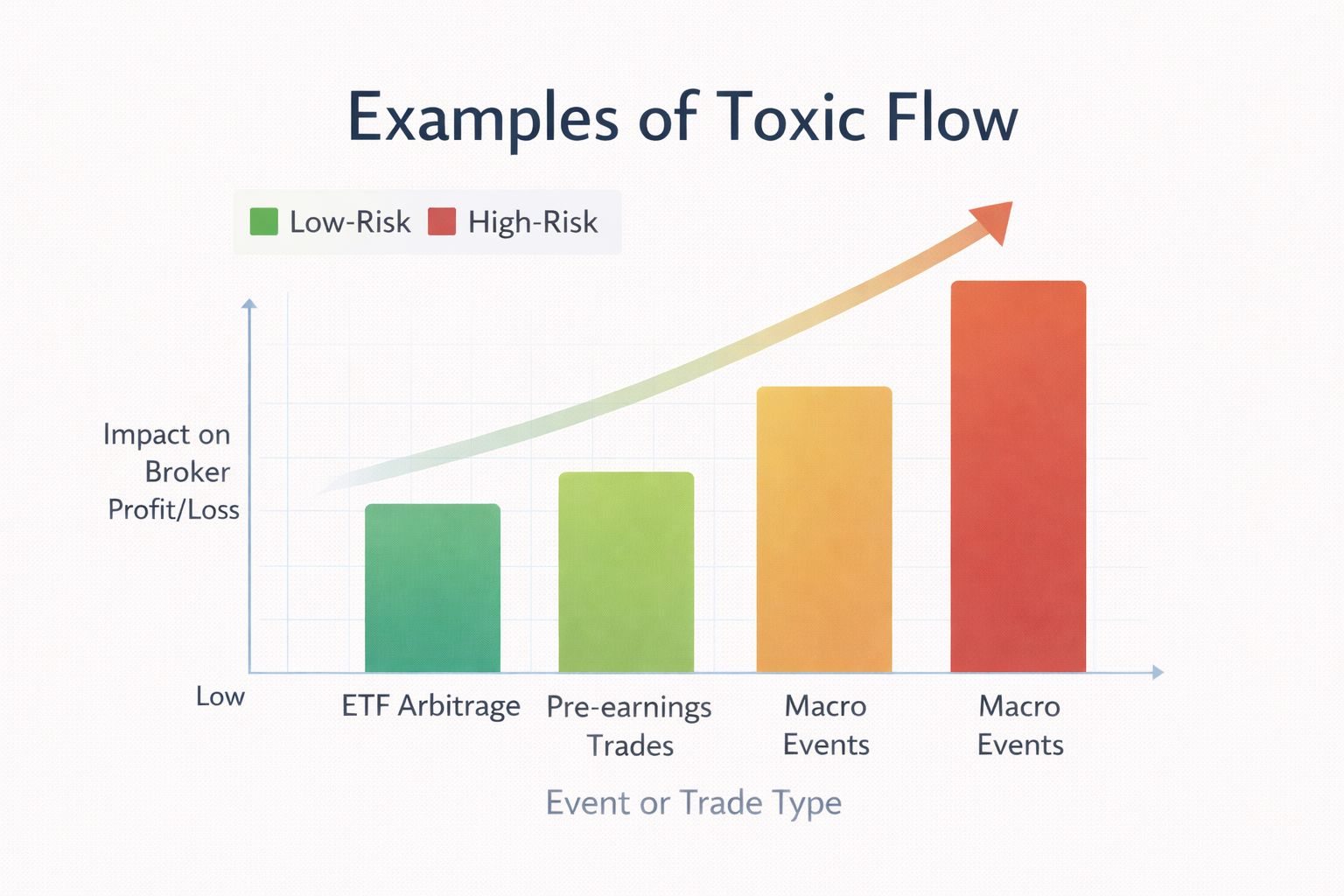
ETF Arbitrage: Suppose an algorithm detects a mispricing between the SPDR S&P 500 ETF (SPY) and the underlying index. Large orders executed to exploit this gap can move the market and become toxic for the broker.
Pre-Earnings Institutional Trades: Hedge funds placing large buy or sell orders before earnings announcements may act on non-public insights. Brokers internalising these trades face a higher risk of losses.
Macroeconomic Event Trading: High-volume orders on Treasury ETFs caused temporary volatility, illustrating how event-driven trading can generate toxic flow for brokers.
Toxic flow occurs when client orders are placed, executed, or executed aggressively, often moving the market against the broker’s positions. Such trades can originate from institutional investors, hedge funds, or high-frequency algorithms, creating financial risk and requiring careful management by brokers.
Most retail trades are non-toxic because they are small, predictable, and do not systematically exploit market inefficiencies. Toxic flow generally comes from professional traders or sophisticated strategies, while retail orders typically generate profits for brokers through the bid-ask spread without creating significant risk.
Brokers use advanced monitoring systems and risk analytics to detect unusual trading patterns. Large order sizes, rapid execution, event-driven strategies, or sudden market moves can indicate toxic flow, allowing brokers to adjust execution practices, hedge positions, or pass trades to the market to reduce potential losses.
Yes. When brokers detect toxic flow, they may adjust spreads, execution speed, or pricing to protect themselves. This can slightly affect execution for other clients, such as widening spreads or slowing order execution to avoid adverse market movements caused by high-risk trades.
Brokers manage toxic flow by passing risky trades directly to the market, hedging positions, adjusting spreads or margins, and monitoring client behaviour for patterns of informed or high-frequency trading. These measures help reduce financial exposure while maintaining efficient execution for all clients.
Toxic flow represents a crucial concept in trading, highlighting the interaction between client activity and broker risk. Understanding toxic flow helps beginner investors grasp why brokers treat certain orders differently, how trading strategies affect execution quality, and the importance of market liquidity, volatility, and informed trading. Awareness of toxic flow also clarifies broker behaviour during large market events and news-driven trading.
Disclaimer: This material is for general information purposes only and is not intended as (and should not be considered to be) financial, investment or other advice on which reliance should be placed. No opinion given in the material constitutes a recommendation by EBC or the author that any particular investment, security, transaction or investment strategy is suitable for any specific person.