Published on: 2026-06-23
Updated on: 2026-06-23
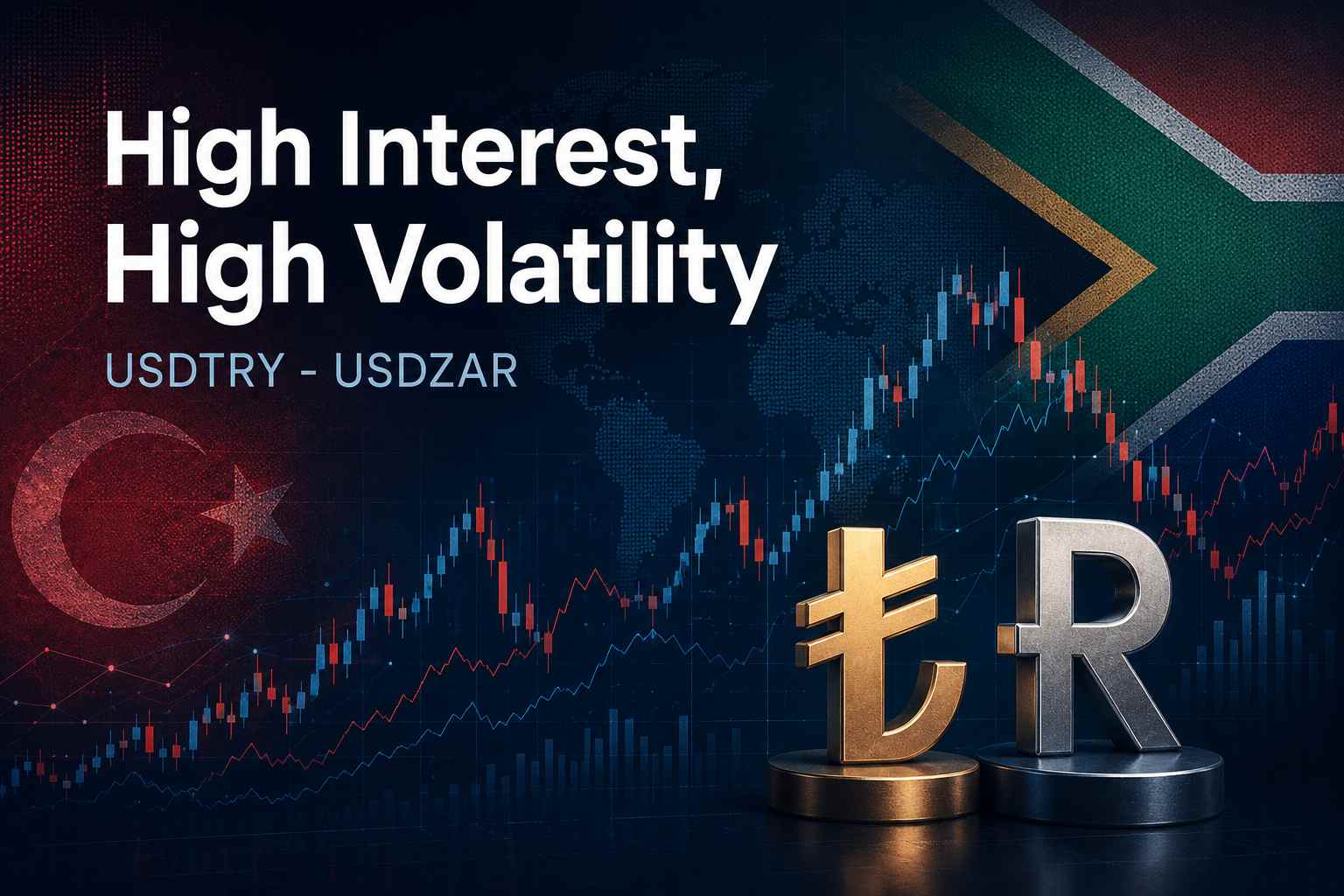
A high interest rate looks like a reason to own a currency. In foreign exchange, it is more often a reason for caution. Turkey’s policy rate is 37%, South Africa’s is 7%, and the Federal Reserve’s target range is 3.50% to 3.75%. Lira and rand rates sit far above dollar rates not because they are safe, but because the market has to be paid to hold the risk.
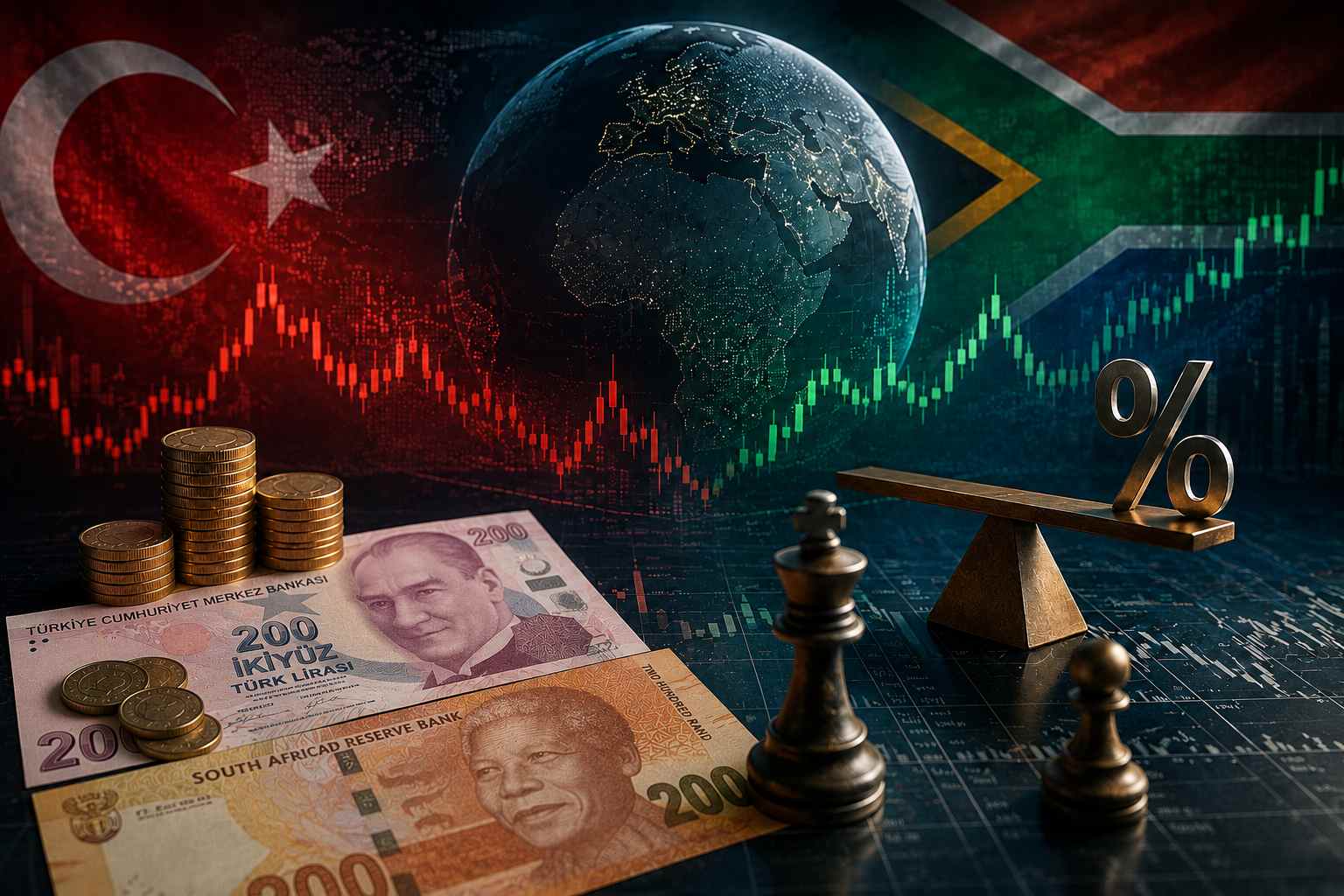
That payment is carry, the extra yield from holding a higher-rate currency against a lower-rate one. But interest is only half the story. What an investor keeps depends on what the exchange rate does next, and a currency can pay double digits and still lose money if it weakens faster than it pays.
USDTRY and USDZAR are useful here precisely because they represent two different kinds of that risk: the lira’s rooted in inflation and policy credibility, the rand’s in global shocks beyond its control.
A high interest rate is a price for risk, not a mark of safety. The market sets the rate high because it expects the currency to weaken or move sharply, so the yield is compensation for that uncertainty rather than protection from it.
Turkey's 37% policy rate against 32.61% May inflation leaves only a few points in real terms, and South Africa's 7% against 4.5% leaves a similarly modest real return.
USDTRY and USDZAR show two sources of the same risk. The lira's volatility stems from inflation and policy credibility, producing a steady drift higher of 8.15% in 2026; the rand's stems from global risk exposure, producing a roughly 9% two-way swing that ended near flat.
With the Federal Reserve at 3.50% to 3.75%, any currency has to offer more to attract holders, and the size of that excess tracks how risky it is.
Carry income accrues slowly and losses arrive quickly. Mobile capital exits high-yield currencies fast in a risk-off move, which gives these pairs a lopsided return profile rather than smooth gains.
It helps to be clear about what an interest rate is doing. A central bank sets the policy rate, but the level it has to offer is shaped by what the market will accept to hold the currency. When investors expect a currency to weaken or to move sharply, they want more yield to hold it, and the rate rises to meet that demand.
That is why a high rate signals risk rather than removing it. A currency seen as stable can pay little; one seen as risky has to pay a lot. The yield is the compensation, and its size is a rough gauge of the risk being compensated.
The interest also cushions a loss without preventing it. A 7% yield can vanish in days if the currency drops 5% to 10% in a risk-off move, when investors flee to safer assets, and even a 37% yield disappoints if inflation and depreciation keep eroding it together. What an investor truly earns is the rate minus whatever the currency gives back, so the headline number is never the whole return.
Volatility is that risk made visible. Whatever forces a currency to pay a high rate, high inflation or heavy exposure to outside shocks, is the same force that moves its price. Rate and volatility are not separate features; they are one risk seen from two sides.
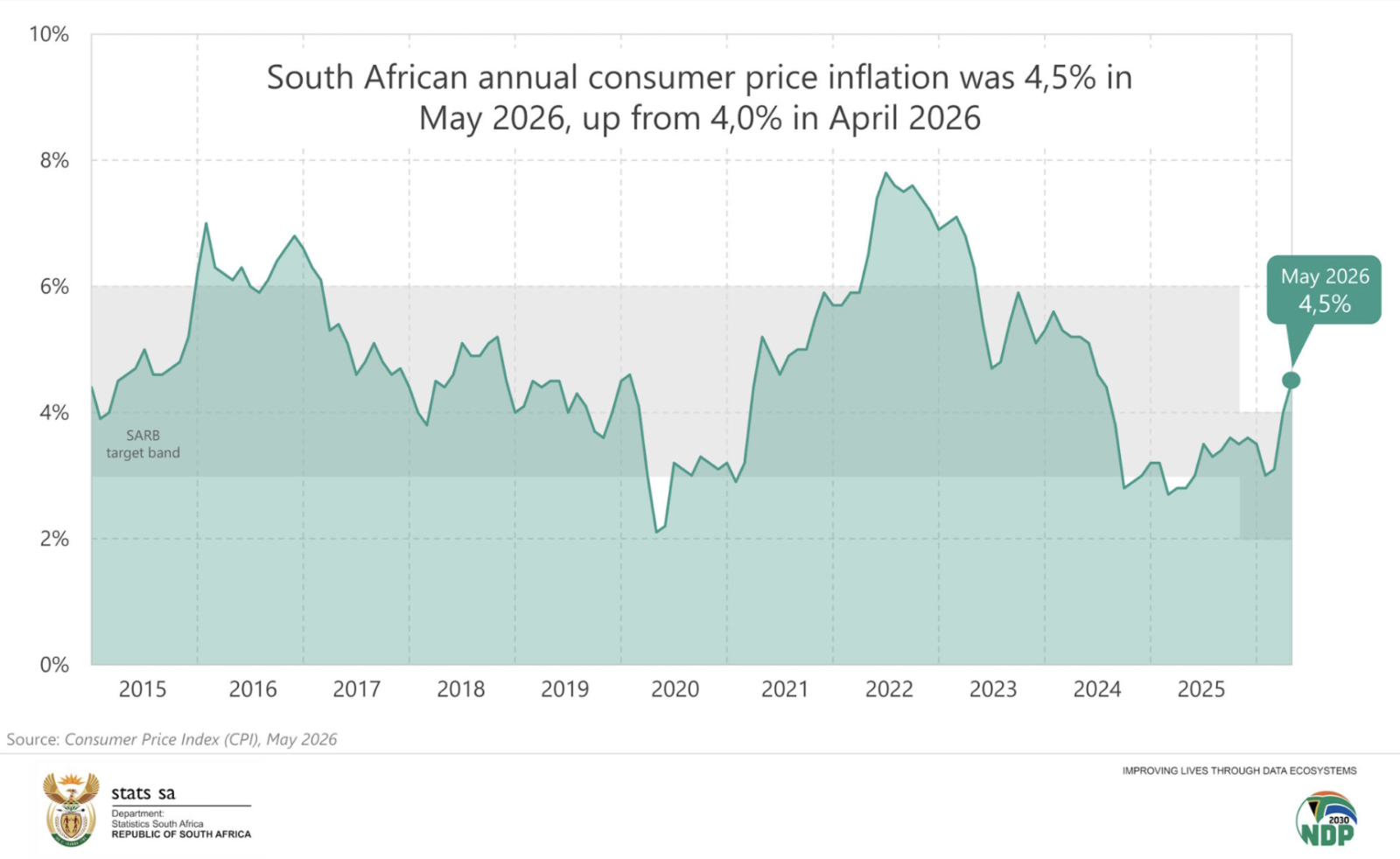
The number on the screen is rarely the one that matters. What matters first is the real-rate cushion: the nominal rate minus inflation. Turkey’s 37% looks far less commanding once May inflation of 32.61% is removed, leaving a real cushion of only a few points.
South Africa’s 7% against 4.5% inflation leaves a similarly modest real return. The eye-catching gap between the two headline rates narrows sharply once prices are accounted for, the first reason a large nominal rate is not the same as safety.
That real rate is also forward-looking. Markets price a currency on the inflation they expect, not the figure just reported, and this is where credibility earns its keep. A central bank investors trust can keep inflation expectations anchored, so its real rate is dependable.
Where expectations drift, investors cannot be sure today’s cushion survives into next quarter, so they demand extra compensation and react sharply when the outlook shifts.
In theory, a currency’s interest-rate advantage should be offset by how much the market expects it to weaken, a relationship economists call uncovered interest parity. If it held exactly, the carry trade would earn nothing in expectation, the yield collected cancelled by the depreciation suffered.
If it does not hold exactly, and the surplus is the risk premium: the genuine extra return investors require for bearing uncertainty. That premium is what emerging-market currencies pay for their yield.
The lira and the rand illustrate the two most common sources of that premium.
| Currency | Policy rate | Inflation (May 2026) | What the yield mainly pays for |
|---|---|---|---|
| Turkish lira, USDTRY | 37% | 32.61% | High inflation and fragile policy credibility |
| South African rand, USDZAR | 7% | 4.5% | Exposure to global risk, commodities, and U.S. rates |
Turkey’s rate is high because its inflation is high. With consumer prices up 32.61% in May, the central bank’s 37% is set to keep pace with inflation rather than to reward anyone for holding the currency.
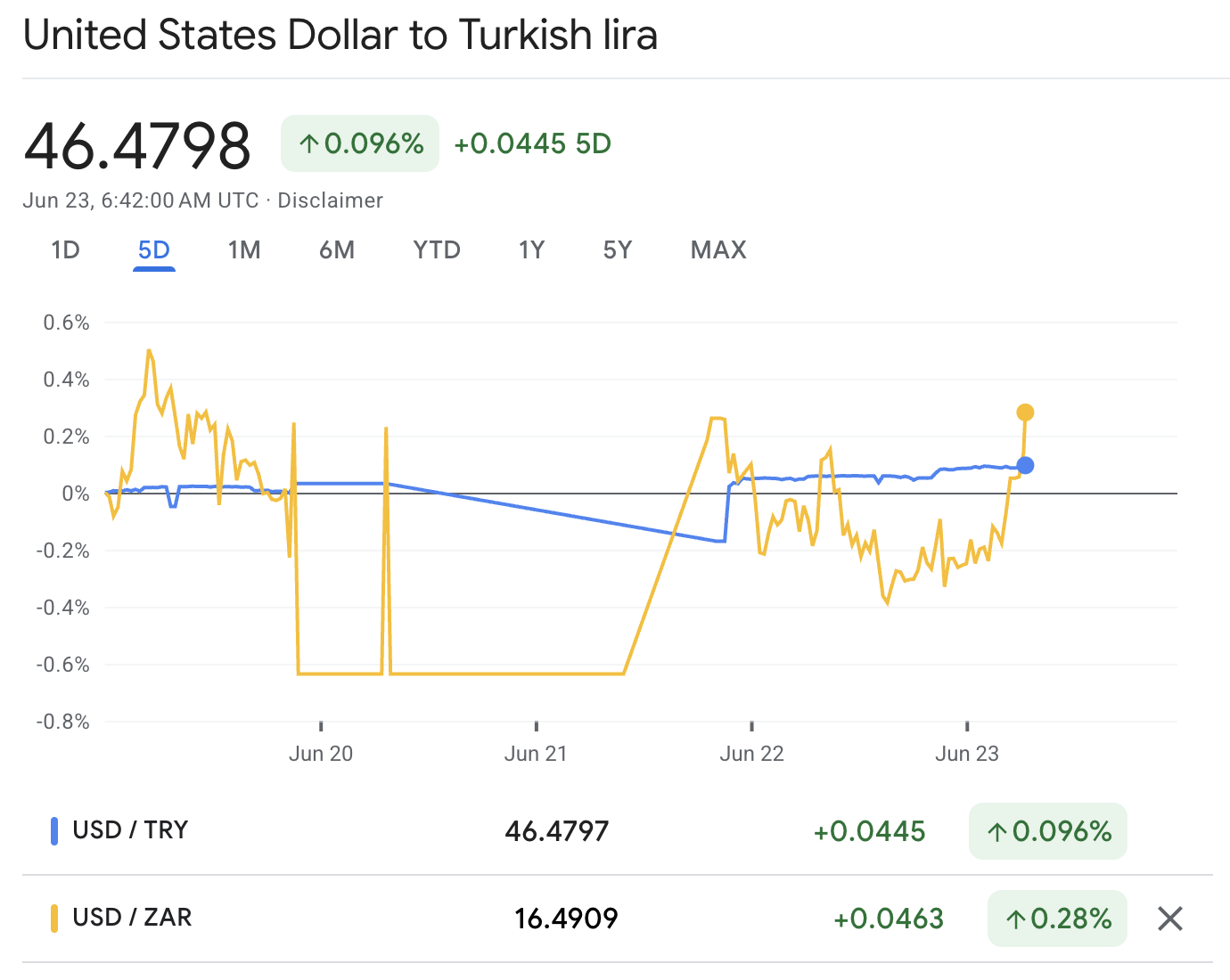
High inflation also tends to drag a currency lower over time, because each lira buys less than it did before. That is the slow part of the story: USDTRY rose 8.15% in 2026, from 42.971 in January to 46.473 by 22 June, a steady, near-constant drift higher rather than a single shock.
The volatility comes from doubt. When the market questions whether the rate is high enough, or whether policy will stay tight long enough to break inflation, it reprices quickly and demands more to stay in. For the lira, the danger is less the steady slide than the threat of a sharper move whenever confidence in policy slips.
South Africa shows the second source. Its inflation is far lower at 4.5% in May, and its policy rate far lower at 7%, yet rand rates still sit well above dollar rates, and the currency still moves a great deal.
The reason is exposure. The rand’s value turns on forces South Africa does not control: global risk appetite, commodity and metals prices, the oil market, and U.S. interest rates. A currency that swings with the global cycle has to pay investors for the chance of being caught on the wrong side of it.
That premium is smaller than the lira’s, because the risk is cyclical rather than rooted in chronic inflation, but it is real.
It shows up as two-way movement rather than a one-way slide. USDZAR ranged from 15.734 to 17.187 in 2026, a swing of roughly 9% from low to high, yet stood close to where it began, with the dollar down about 1% on the year. The rand firms quickly when global conditions are calm and gives it back just as fast when they sour.
Both currencies are judged against the same yardstick. The Federal Reserve held its target range at 3.50% to 3.75% in 2026, which lets an investor earn a meaningful return in dollar cash without taking any currency risk at all.
That baseline is what makes the risk premium legible. To pull capital away from dollars, a currency has to offer more than roughly 3.6%, and the size of the excess tracks how risky it is: a great deal for the lira, a moderate amount for the rand.
The baseline also moves, and capital moves with it; much of the money that chases high yields is mobile and quick to exit, so when U.S. rates rise or global nerves fray, investors can leave higher-yielding currencies all at once.
Those reversals are a major source of volatility, and they give carry a lopsided return profile: long runs of small, steady income broken by sudden, sharp losses. The income accrues slowly and the losses arrive quickly.
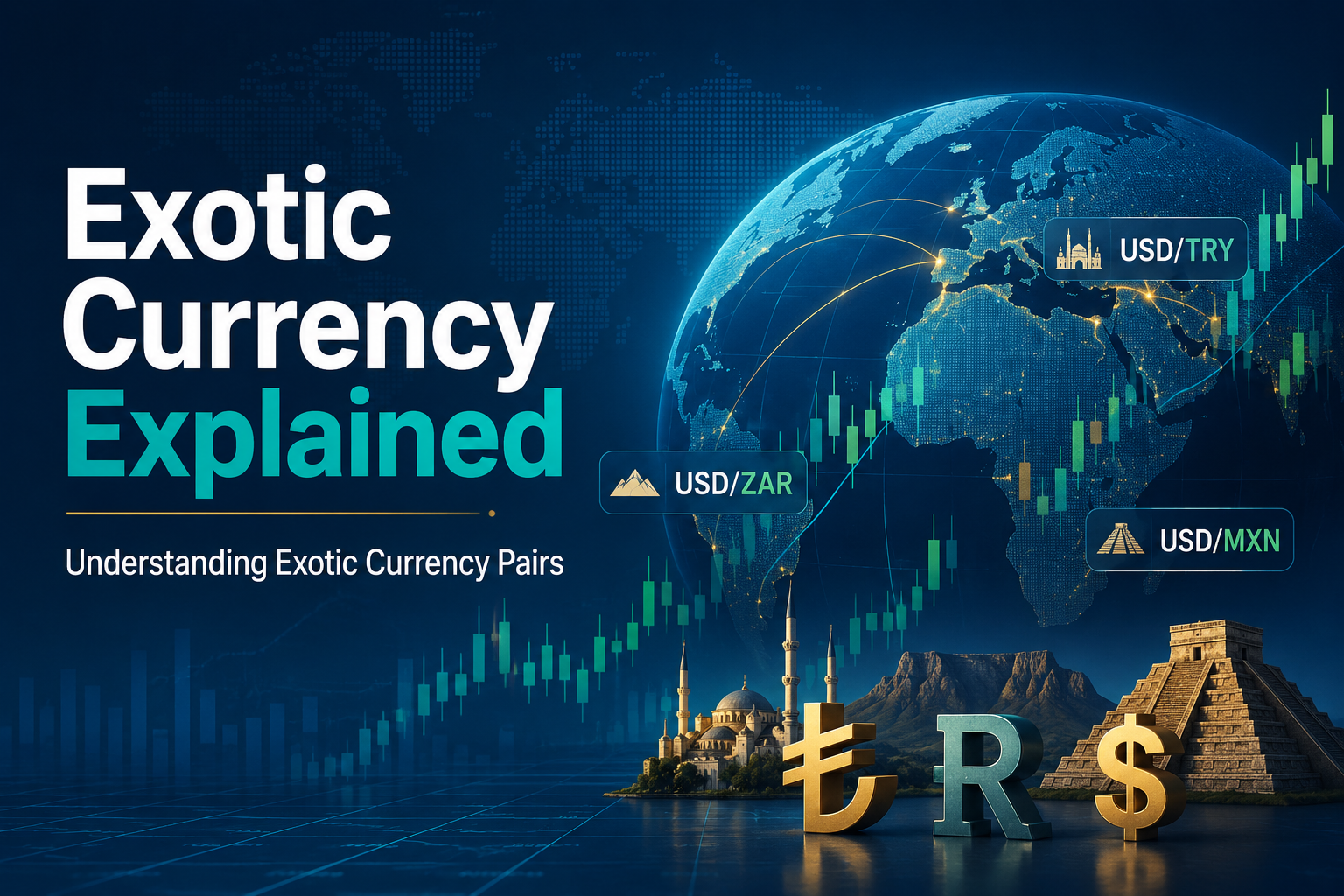
Carry trade currency pairs such as USDTRY and USDZAR are where this link between yield and volatility shows up most clearly. Traders who want to see how high-yield pairs move against the dollar can follow USDTRY, USDZAR and the wider currency-pair range on EBC’s forex offering.
High interest rates and high volatility travel together because they are the same fact stated twice. The rate is what the market pays to hold a risky currency; the volatility is the risk that makes the payment necessary. In practice that risk takes a specific shape in each pair: for USDTRY, the danger is that depreciation keeps outrunning the carry; for USDZAR, that a global risk-off move arrives faster than the yield can compensate.
The same logic shows what would calm each. The lira would need sustained disinflation and confidence that tight policy will hold long enough to anchor expectations. The rand would need a steadier global backdrop: calmer risk appetite, firmer commodity prices, and a less demanding U.S. rate path.
In each case the reward for lower risk is the same, a lower yield alongside smaller swings, because the rate and the volatility only ever ease together.