Published on: 2026-05-19
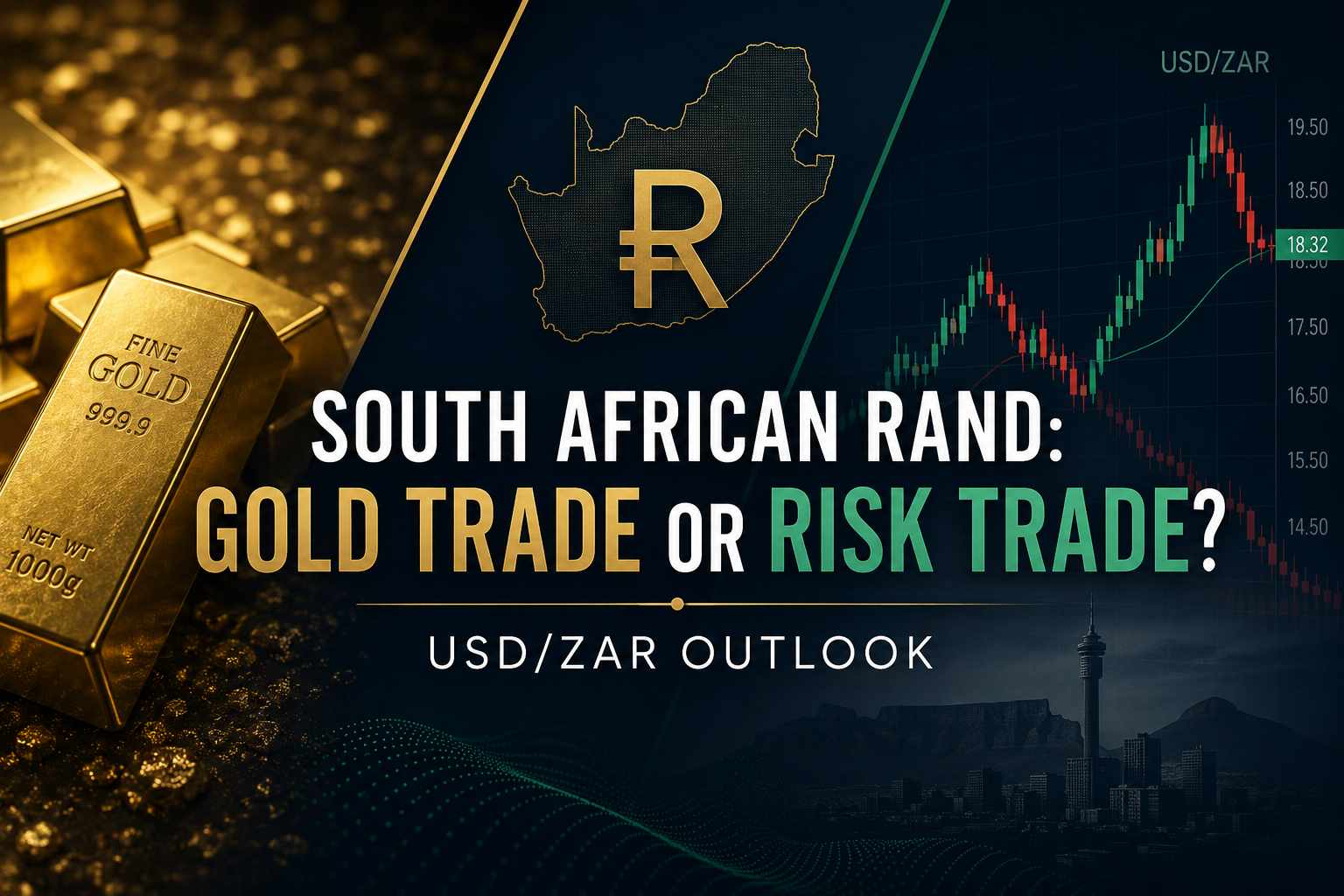
The South African Rand has gold behind it, but risk appetite still holds the wheel. USD/ZAR near the mid-16 area shows a currency supported by strong bullion prices, yet still exposed to oil shocks, US yields and sudden shifts in emerging-market sentiment.
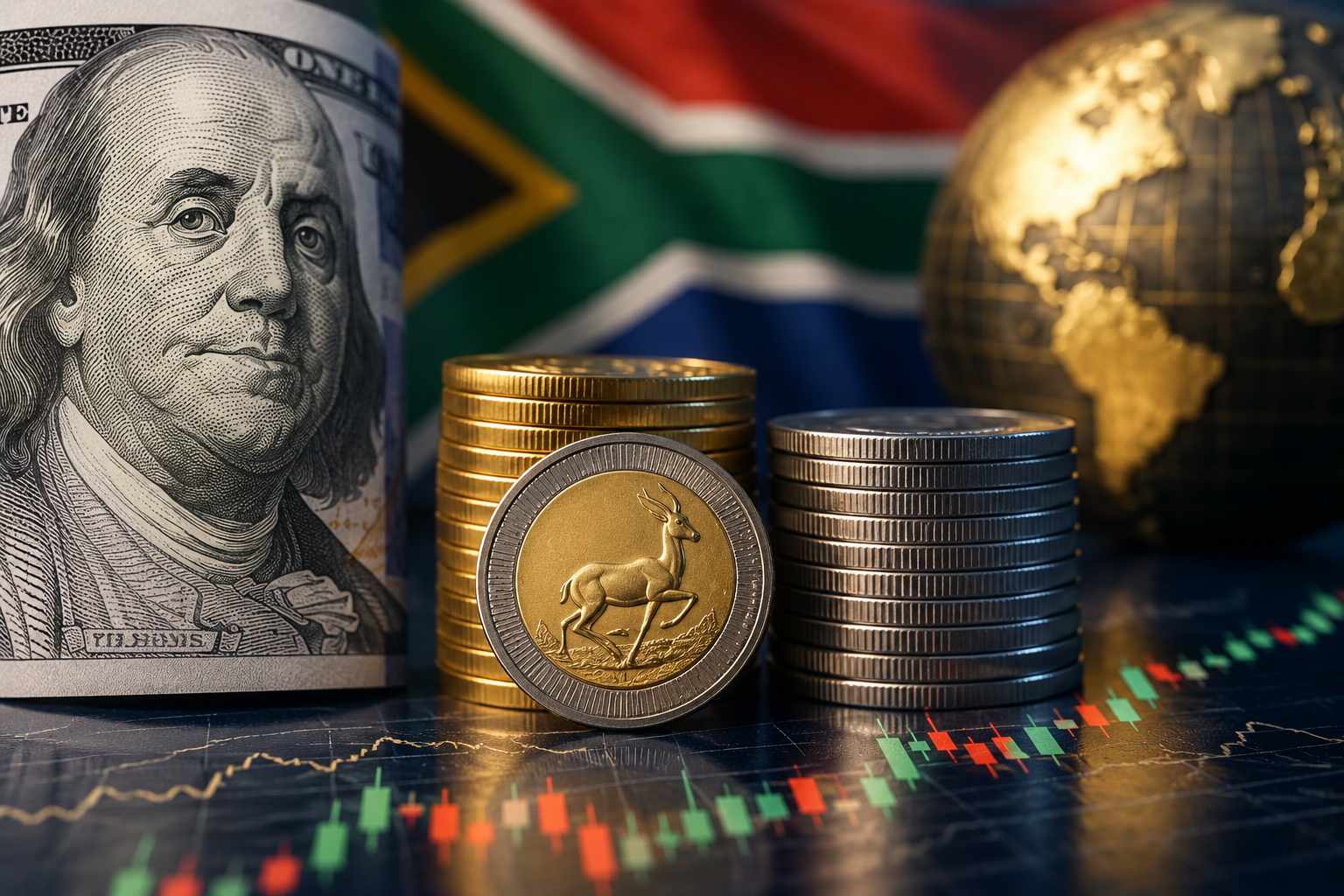 That is the central lesson for traders. The Rand is not a simple gold trade. It is a liquid risk currency with a commodity cushion, a carry advantage and a history of reacting quickly when global markets move from yield-seeking to capital protection.
Gold supports the Rand through export income, mining revenue and a stronger trade balance.
USD/ZAR reacts more quickly to US yields, oil prices and global risk appetite than to gold alone.
SARB policy gives the Rand carry support, with the repo rate at 6.75% and inflation close to 3%.
South Africa’s current account moved to a 0.6% of GDP surplus in Q4 2025, easing external funding pressure.
The important USD/ZAR range is 16.50 to 16.80. A break below favours Rand strength; a break above favours Dollar control.
Gold remains important because it improves South Africa’s external position. When bullion prices rise, mining exports earn more foreign currency. That supports the trade balance, improves mining-sector income and can lift fiscal revenue through stronger tax receipts.
The latest external data reinforce that point. South Africa’s current account shifted into surplus in Q4 2025, helped by a wider trade surplus and higher merchandise and net gold exports. This gives the Rand a stronger base than it would have in a weak commodity cycle.
Still, gold is a shield, not a steering wheel. A gold rally caused by falling real yields and easier liquidity is usually Rand-positive. A gold rally caused by fear is more complicated. Investors may buy gold for safety and the US Dollar for liquidity while cutting exposure to emerging-market currencies.
That is why USD/ZAR can rise even when bullion is firm.
The Rand’s link with gold is rooted in South Africa’s economic history. The currency was introduced in 1961 and takes its name from the Witwatersrand, the gold-rich ridge that shaped Johannesburg’s rise.
The Krugerrand, first issued in 1967, later turned South Africa into a global reference point for physical gold investment. That history still influences market psychology, but the modern Rand is broader than gold. It also reflects energy costs, portfolio flows, local rates, fiscal credibility and global risk appetite.
The Rand is one of the most liquid emerging-market currencies. Liquidity helps in calm markets. It hurts during stress.
When investors want carry, the Rand can attract capital quickly. South Africa offers a positive real-rate profile, which gives traders compensation for holding currency risk. This is why the Rand can strengthen when volatility is low and global funds move into higher-yielding assets.
When markets turn defensive, the same liquidity becomes a weakness. Fund managers can reduce Rand exposure quickly, especially when US yields rise or the Dollar becomes the preferred safety asset. That is why USD/ZAR often jumps during geopolitical stress or broad emerging-market selling.
The Federal Reserve remains central. With US policy rates still high, investors do not need to take as much emerging-market risk to earn yield. Rand strength depends on whether South Africa’s carry, gold support and improved external balance are enough to compensate for volatility.
Oil is the main reason a strong commodity backdrop does not always produce a stronger Rand.
South Africa benefits from gold exports, but it imports fuel. When Brent crude rises, import costs increase. That can weaken the trade balance, lift transport costs and raise inflation expectations. If the Rand weakens at the same time, imported inflation can build faster.
The split is clear:
Gold strength improves South Africa’s income side.
Oil strength raises South Africa’s cost side.
US yield strength raises the hurdle for holding Rand exposure.
Risk aversion reduces demand for emerging-market carry.
USD/ZAR sits where these forces meet. Single-factor explanations rarely work.
The Rand’s commodity story is not only about gold. It is about the balance between what South Africa earns and what it pays.

Gold strengthens the income side because it supports export receipts and mining revenue. Oil weakens the cost side because South Africa imports fuel. US yields then decide whether global investors are willing to hold Rand risk.
| Market Setup | What It Means for South Africa | Likely USD/ZAR Bias |
|---|---|---|
| Gold firm, oil lower, US yields softer | Better export income, lower import pressure and easier global funding | Rand-positive |
| Gold firm, oil higher, US yields steady | Export support is partly offset by energy costs | Range-bound |
| Gold firm, oil higher, US yields higher | Gold helps, but risk and inflation pressure dominate | Dollar-positive |
| Gold weaker, oil higher, risk appetite poor | Terms-of-trade pressure meets capital outflow risk | Strong Dollar-positive |
| Gold steady, oil lower, volatility falling | Carry demand becomes more important | Rand-positive |
This is why gold alone can mislead traders. A stronger gold price supports South Africa’s external position, but a higher oil price can absorb that benefit through the import bill. If US yields rise at the same time, the hurdle for holding Rand exposure increases further.
For USD/ZAR, the cleanest Rand-positive setup is not simply “gold up.” It is gold firm, oil contained and risk appetite stable. The weakest setup is oil up, US yields up and emerging-market appetite down, even if gold remains elevated.
USD/ZAR is trading like a market waiting for confirmation. The 16.50 to 16.80 area is the clean tactical range.
A break below 16.50 would suggest that gold support, carry demand and improved external data are winning. It would also show that investors are comfortable holding Rand risk despite global uncertainty.
A close above 16.80 would send the opposite message. It would suggest that oil pressure, Dollar yield and risk aversion are overpowering the Rand’s gold shield. In that case, 17.00 and 17.20 become the next upside zones to monitor.
Until either level breaks, range trading is more sensible than forcing a directional view.
The next USD/ZAR move will likely come from a change in one of five variables:
Gold holding firm without a wider risk-off shock.
Brent crude easing from elevated levels.
US yields declining, reducing Dollar support.
South African inflation staying close to target, preserving SARB credibility.
Local reform progress improving growth confidence and fiscal stability.
The Rand’s best setup is firm gold, lower oil and calmer global markets. Its weakest setup is rising oil, sticky US yields and renewed emerging-market outflows.
Not fully. Gold supports the Rand through exports and the trade balance, but USD/ZAR also depends on US rates, oil prices, risk sentiment and capital flows. The Rand is better described as a risk-sensitive currency with gold support.
USD/ZAR can rise if gold is strong because investors are seeking safety. In that environment, the US Dollar can rise alongside gold while emerging-market currencies weaken. The Rand benefits from gold income, but it can still lose through the risk channel.
The key range is 16.50 to 16.80. Below 16.50, Rand momentum improves. Above 16.80, Dollar momentum becomes more convincing. Until one side breaks, the pair remains range-bound.
Yes. A 6.75% repo rate with inflation near 3% creates positive real-yield support. That helps the Rand during calm markets, but it cannot fully offset oil shocks, rising US yields or broad risk aversion.
The South African Rand is best understood as a risk currency with a gold cushion. Gold strengthens South Africa’s export base and helps explain the Rand’s resilience, while SARB carry adds support when markets are calm.
USD/ZAR still depends on the broader risk cycle. If gold stays firm, oil cools and US yields ease, the Rand has room to strengthen. If oil rises or Dollar demand returns, the 16.80 area becomes the key test. For now, the Rand is protected by gold but priced by risk.
Sources used: (South African Reserve Bank, Statistics South Africa, National Treasury of South Africa, Federal Reserve, ICE, LBMA, ICE Benchmark Administration and South African Mint)