Published on: 2026-04-24
Updated on: 2026-04-24
The USD/JPY forecast now turns on a three-way standoff: the BOJ wants to preserve rate-hike optionality, the Ministry of Finance wants to deter disorderly yen selling, and leveraged funds still carry enough short-yen exposure to keep 160 a volatile liquidity trap.
The BOJ meets on April 27–28, with the Outlook Report’s “Bank’s View” scheduled for release on April 28. That makes the forecast language as important as the rate decision itself.
A hold can still support the yen if Governor Kazuo Ueda keeps the risk of June or July tightening alive. A cautious hold would leave markets asking whether yen defence has shifted from monetary policy to direct intervention.
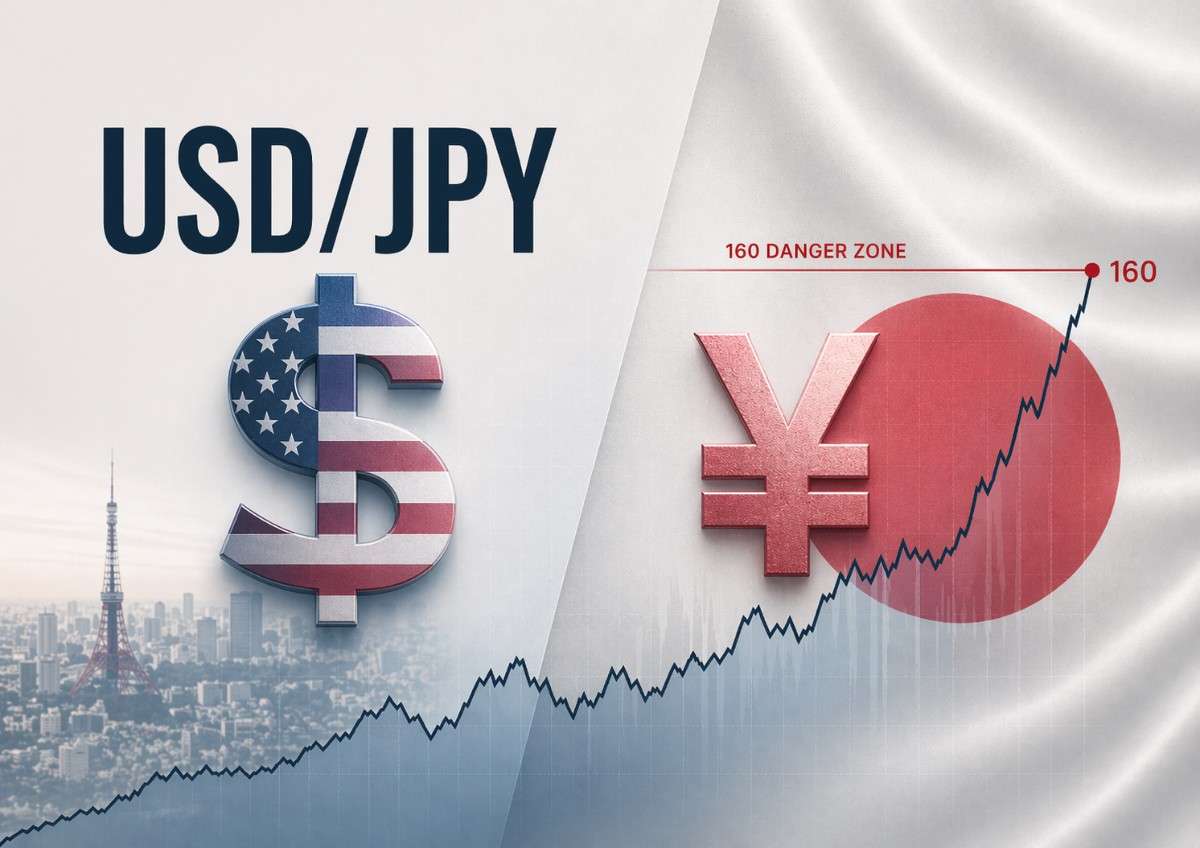
USD/JPY is trading around 159.74, close to its 52-week high of 160.48, turning the 160 zone into a live intervention threshold.
The BOJ held the overnight call rate around 0.75% in March by an 8-1 vote, with Hajime Takata dissenting in favour of 1.0%.
Japan’s March core CPI rose 1.8% year-on-year, while CPI excluding fresh food and energy rose 2.4%, creating an inflation mix that is uncomfortable but not cleanly hawkish.
Rengo’s third Shunto tally showed wage gains of 5.09%, strengthening the BOJ’s confidence in a wage-price cycle.
CFTC data show yen speculative net shorts at 83.2K contracts, while leveraged funds hold materially more short than long yen futures exposure.

April is not a simple hike-or-hold meeting. The BOJ can probably justify patience, but it cannot afford to sound indifferent to yen weakness. That distinction matters because USD/JPY is not waiting solely on the policy rate. It is pricing the credibility of Japan’s entire policy framework.
The March statement clearly showed the dilemma. The BOJ kept rates at 0.75%, but said real interest rates remain significantly low and that it would continue raising the policy rate if the January Outlook Report’s projections are realised.
At the same time, it warned that Middle East tensions, crude oil prices, wages, price-setting behaviour, and foreign exchange markets all require close attention.
That combination points to a hawkish-hold base case. The BOJ may avoid an April hike because energy and geopolitical risks cloud the growth outlook. But it still needs to keep the next hike alive. If markets conclude that the BOJ has pushed normalisation further into the year, USD/JPY can quickly retest 160.50.
The yield backdrop still favours the dollar. The Fed held the federal funds target range at 3.50% to 3.75% in March, while the US 10-year Treasury yield recently stood at 4.34% and Japan’s 10-year yield at 2.43%. That leaves a roughly 190-basis-point 10-year spread in favour of the dollar, enough to keep carry demand alive even as Japan tightens gradually.
Japan’s wage data gives the BOJ a stronger justification to keep tightening. The inflation mix makes that permission harder to use.
The wage signal is strong. Rengo’s third 2026 Shunto tally showed average wage increases of 5.09%, marking a third straight year above 5%. That supports the BOJ’s argument that inflation is becoming more domestically anchored rather than purely imported.
The CPI signal is less straightforward. March core CPI excluding fresh food rose 1.8%, accelerating from February’s 1.6%, partly because higher crude oil prices made energy disinflation less powerful. But core-core CPI, excluding fresh food and energy, rose 2.4%, showing that underlying price pressure is firm without delivering an effortless case for an immediate hike.
| Driver | Current signal | Policy meaning |
|---|---|---|
| BOJ rate | 0.75% | Still low relative to inflation pressure |
| Fed range | 3.50%–3.75% | Keeps dollar carry attractive |
| Shunto wages | 5.09% | Supports wage-price cycle confidence |
| Japan core CPI | 1.8% | Energy pressure is returning |
| Core-core CPI | 2.4% | Underlying inflation remains above target |
| USD/JPY | Around 159.74 | Raises import-cost and political risk |
This is the BOJ’s hardest problem. Wage-led inflation argues for higher rates. Oil-led inflation argues for caution because it squeezes real incomes and corporate margins. Yen weakness sits between the two, amplifying imported costs while making gradualism look increasingly expensive.
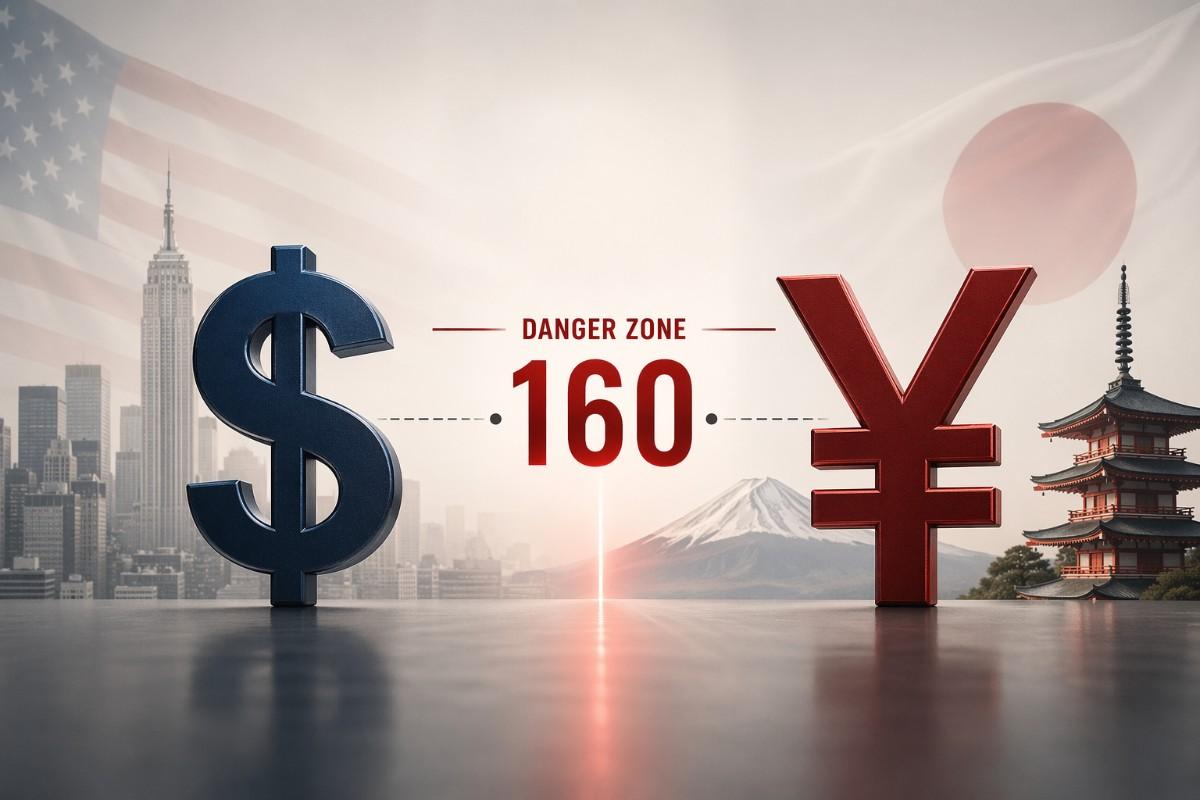
The 160 zone is not ordinary resistance. It is where stop-loss clusters, carry demand, speculative short-yen exposure, and official intervention risk collide.
Japan does not mechanically defend a fixed FX line. That means a brief move above 160 may not be enough by itself; the trigger is more likely a fast, speculative break that threatens to unanchor inflation expectations or domestic political confidence.
For instance, Tokyo reacts to speed, disorder, speculation, and political pressure. But 160 has become a remembered intervention zone because Japan spent ¥9.7885 trillion on dollar-selling, yen-buying operations in April–June 2024, followed by another ¥5.5348 trillion in July–September 2024.
Positioning makes the level more dangerous. CFTC data show non-commercial yen net shorts at 83.2K contracts as of April 14, improved from 93.7K but still heavily short. Leveraged funds held 77,737 long yen futures contracts versus 132,182 shorts. That leaves the market vulnerable to a short-covering scramble if intervention headlines or BOJ guidance trigger a sudden yen rally.
For dollar bulls, 160 is attractive because a break can trigger momentum buying. For Japanese officials, that same break can look disorderly. That is why upside becomes increasingly asymmetric near 160.50. The pair can still rise, but each additional push carries a larger intervention premium.
The technical picture remains constructive, but the quality of the upside is deteriorating. USD/JPY is holding above key moving averages, yet momentum is not extreme enough to validate a clean breakout through an intervention-sensitive level.
| Indicator | Current signal | Interpretation |
|---|---|---|
| RSI 14 | 58.34 | Bullish, but not overbought |
| MACD | 0.080 | Positive momentum remains intact |
| 20-day EMA | 159.69 | Short-term trend support is close to spot |
| 50-day EMA | 159.54 | Medium-term trend still constructive |
| 200-day EMA | 159.26 | Long-term bias remains positive |
| 14-day ATR | 0.861 | BOJ event risk can absorb normal daily ranges quickly |
| Resistance | 160.00–160.50 | Intervention-sensitive liquidity zone |
| Support | 158.00, then 156.50 | First downside targets if yen reprices |
Investing.com’s technical data show RSI at 58.342, MACD at 0.080, and the 20-, 50-, and 200-period exponential moving averages clustered below spot, while Barchart places the 14-day ATR at 0.861.
The signal is not bearish. It is late-cycle bullish. Momentum supports the trend, but a move above 160.50 without stronger confirmation would create a fragile breakout: price makes a new high while official risk rises faster than technical conviction.
The base case is a hawkish hold. The BOJ keeps rates unchanged, acknowledges energy and geopolitical uncertainty, but signals that further tightening remains likely if wages and inflation remain firm.
| Scenario | Probability bias | USD/JPY reaction | Market message |
|---|---|---|---|
| Surprise hike | Low | Sharp drop toward 158.00 or below | BOJ prioritises inflation credibility |
| Hawkish hold | Base case | Capped near 160.00–160.50 | June or July hike remains alive |
| Neutral hold | Dollar-positive | Stop-driven test of 160.50 | BOJ seen as too cautious |
| Dovish hold | Highest intervention risk | Breakout attempt above 160.50 | FX defence shifts to MOF |
The market reaction will depend less on the first policy line and more on the reaction function. If Ueda links yen weakness to inflation expectations, the yen can stabilise without a hike. If he treats currency pressure as secondary, USD/JPY may force the Ministry of Finance into the centre of the trade.
A hike is possible, but a hawkish hold is the stronger base case. The BOJ has wage and inflation evidence to justify further tightening, but energy-price uncertainty and geopolitical risk make an immediate hike harder to deliver.
The 160 zone combines technical resistance, speculative positioning, and memory of official intervention. It attracts breakout buyers, but it also raises the risk of verbal intervention, rate checks, or direct yen-buying operations.
The Ministry of Finance decides whether Japan intervenes in the currency market. The BOJ executes the operation as an agent. That means the risk of intervention can rise even if the BOJ keeps monetary policy unchanged.
The broader trend remains supported by yield differentials and dollar carry. The problem is risk-reward. Upside can extend, but late-stage long positions near 160 face rising exposure to yen reversals driven by headlines.
USD/JPY remains supported by carry, yield spreads, and the BOJ’s gradual approach to tightening. But 160 changes the structure of the trade. It is where policy credibility, speculative positioning, intervention memory, and technical momentum collide.
The BOJ does not need to hike in April to move the yen. It needs to convince markets that normalisation remains credible and that yen weakness will not be ignored.
A hawkish hold can defend the 160 area, while a cautious message could leave the Ministry of Finance as Japan’s next line of defence. At 160, USD/JPY is no longer trading only on rate spreads. It is trading on official tolerance.