Published on: 2026-04-24
Updated on: 2026-04-24
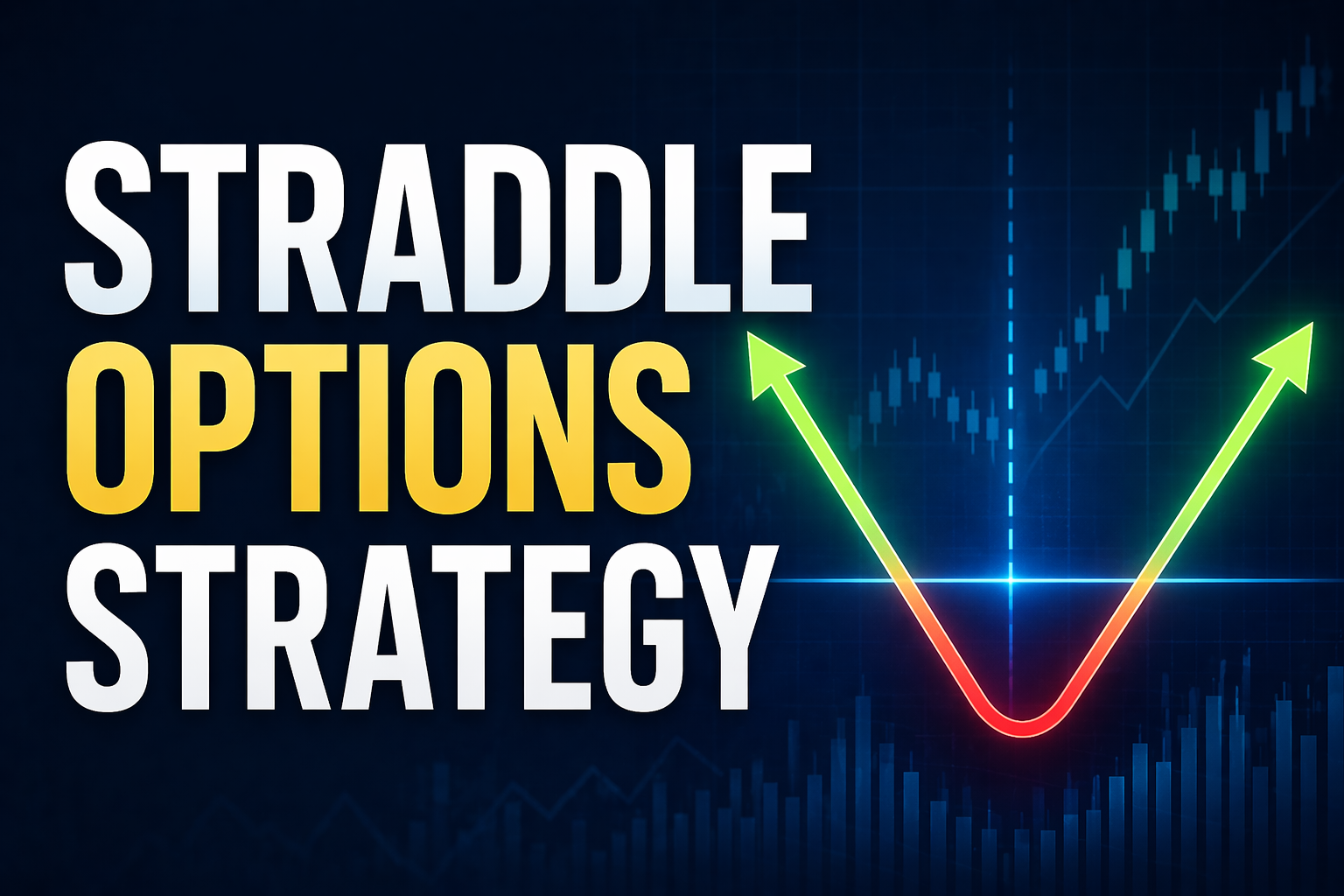
Markets often move hardest when the direction is least obvious. The straddle options strategy gives traders a way to position for that uncertainty by focusing on volatility, rather than on whether a stock or index will rise or fall.
This makes the strategy especially relevant around earnings reports, inflation data, central bank decisions, or other events that can reset market expectations. The key question is not “Will price go up or down?” It is “Will price move far enough to justify the cost of the options?”
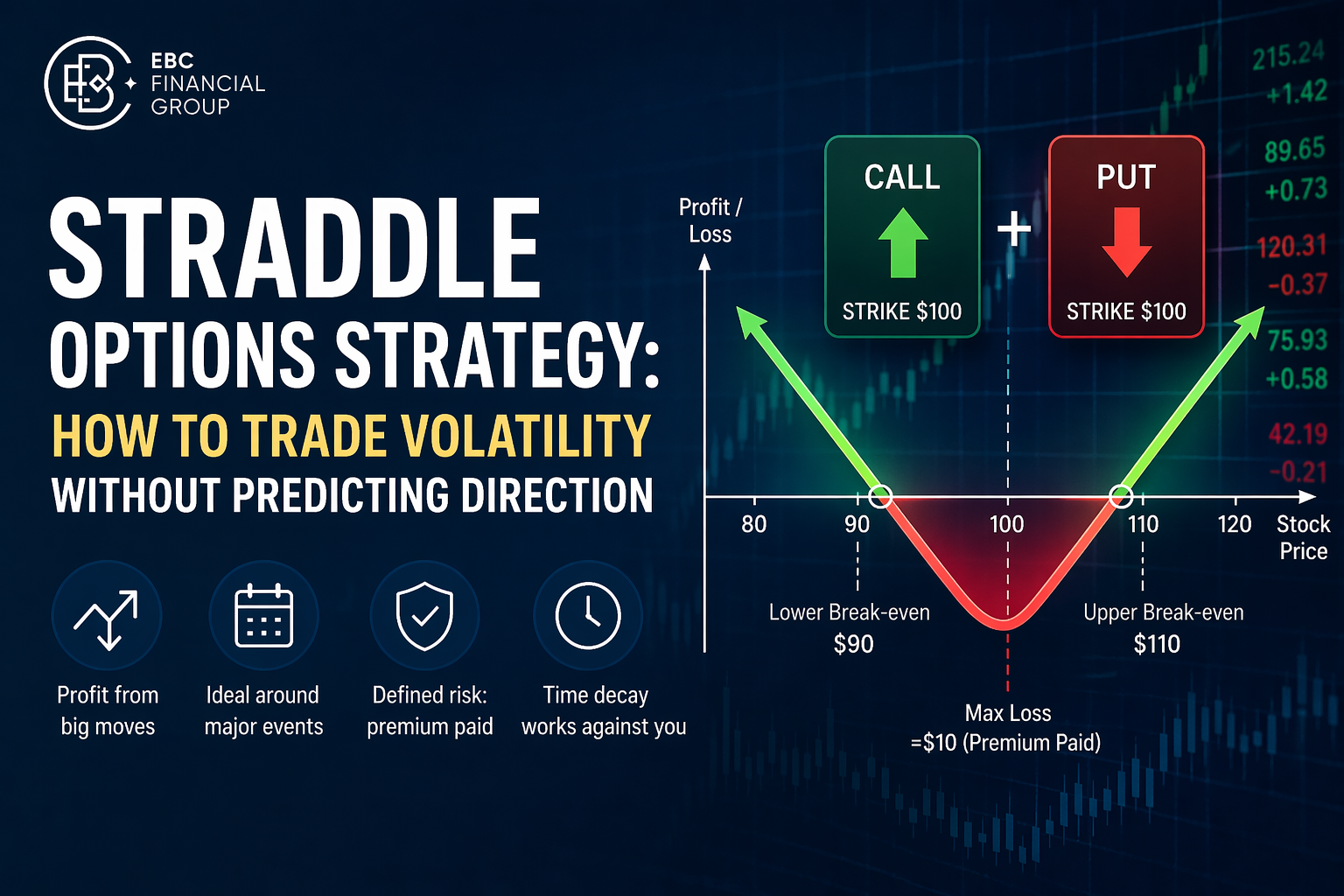
A straddle combines one call and one put with the same strike price and expiry.
The strategy profits when the underlying asset moves beyond the total premium paid.
Maximum loss is limited to the upfront premium.
Upside profit is theoretically unlimited; downside profit is large but capped at zero.
Implied volatility can make the trade expensive before major events.
Time decay works against the position every day the market stays quiet.
A straddle options strategy involves buying a call option and a put option on the same asset, with the same strike price and expiration date.
The call benefits if the asset rises. They benefit if the asset falls. Because both options are owned, the trader does not need to predict direction. The trade needs movement.
This is why straddles are often described as long-volatility strategies. The buyer is paying a premium today in exchange for exposure to a potentially sharp price move later.
Assume a stock trades at $100. A trader buys:
The total premium is $10. That creates two expiration break-even points:
At expiration, the trade needs the stock above $110 or below $90 to make a profit.
This table shows the real trade-off. The straddle can profit from a large move in either direction, but small moves are not enough. The market must move beyond what the trader paid to enter.
Straddles are most useful when a meaningful catalyst is approaching, and direction is uncertain.
Common examples include earnings announcements, inflation reports, employment data, central bank decisions, court rulings, product launches, and major geopolitical events.
For example, a stock may be expected to move sharply after earnings, but investors may disagree on whether results will beat or miss expectations. A straddle allows a trader to express a view on volatility rather than on the outcome itself.
This is not the same as blindly buying options before every event. A professional trader compares the straddle cost with the move the market is already pricing.
If a $100 stock has a $10 at-the-money straddle, the options market is implying roughly a 10% move by expiration. If the stock usually moves only 5% after similar events, the straddle may be overpriced. If the event could trigger a 15% repricing, the trade becomes more compelling.
Implied volatility is central to straddle pricing. Before major events, option demand often rises. That pushes premiums higher and increases the cost of the straddle.
After the event, implied volatility often falls quickly. This is known as IV crush. It can hurt both the call and the put, even if the stock moves.
That is why a trader can be right about volatility and still lose money. A stock may move 6%, but if the straddle is priced in a 10% move, the trade can disappoint.
The best straddle setups occur when realised volatility, meaning the actual movement after entry, exceeds implied volatility, meaning the movement already priced into options.
The first risk is premium loss. If the asset finishes near the strike price, both options may expire worthless.
The second risk is time decay. Long straddles have short theta, meaning the position loses value over time if the price does not move.
The third risk is volatility compression. When implied volatility falls, option values can decline quickly.
The fourth risk is poor execution. Wide bid-ask spreads can make entry and exit expensive, especially in less liquid options.
A straddle should therefore have a defined thesis: the catalyst, the expected move, the maximum acceptable premium, and the exit plan.
A straddle is suitable for traders who understand options pricing and want exposure to volatility rather than direction. It may suit investors who expect a large move but cannot confidently identify the likely direction.
It is less suitable for quiet markets, low-liquidity options, or situations where the event risk is already fully priced. Beginners should treat it as an educational strategy first, not a default trading tool.
The goal is to profit from a large price move in either direction. The trader buys both a call and a put, expecting the market to move enough to exceed the total premium paid.
A long straddle is neither purely bullish nor bearish. It is a volatility strategy. The position benefits from a sharp rally or a sharp decline, but loses if the price stays near the strike.
The biggest risk is paying too much premium for a move that never happens. Time decay and IV crush can reduce option values quickly after the expected event passes.
It is most useful before high-impact events where the outcome is uncertain and the potential price reaction may be larger than the market expects.
Beginners can study straddles, but trading them requires understanding premium, break-even levels, implied volatility, time decay, and liquidity. The concept is simple; the pricing is not.
The straddle options strategy is a disciplined way to trade volatility without making a directional forecast. Its strength lies in flexibility, but its weakness lies in cost. A successful straddle is not just about expecting movement. It is about identifying when the future move is likely to exceed the movement already priced into options.