Published on: 2026-07-15
Updated on: 2026-07-15
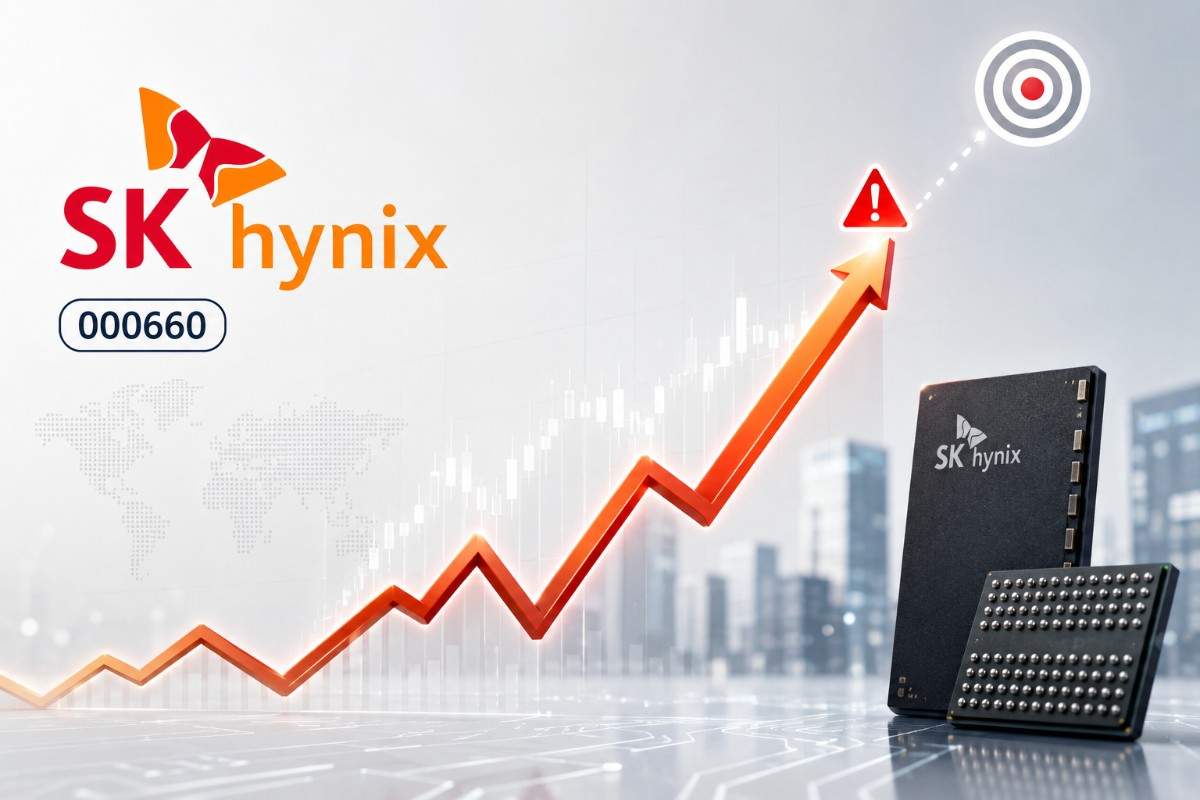
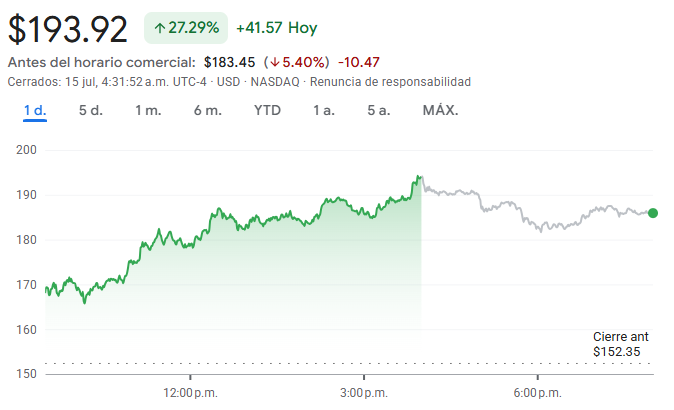
The global semiconductor landscape shifted on its axis this week as South Korean memory giant SK Hynix made a historic splash on Wall Street. In only its third full session of trading on the Nasdaq, the SK Hynix stock American Depositary Receipt (ADR) rocketed a staggering 27.29% on Tuesday, closing at an all-time high of $193.92.
The explosive single-session rally completely erased a painful 9.32% slump from Monday’s tech-driven market correction. It sent a resounding signal to global markets: despite growing debates over the near-term monetization of artificial intelligence, institutional hunger for the physical hardware powering the AI revolution remains completely insatiable.
Trading under the permanent ticker SKHY, the debut of the SK Hynix stock ADR on July 10 represents one of the most highly anticipated cross-border listings in recent memory. By opening a direct pipeline to U.S. capital markets, the South Korean chipmaker has given Western investors an easy, dollar-denominated vehicle to back the high-bandwidth memory (HBM) supply chain without dealing with the operational hurdles of the Seoul exchange.
Floor traders on Tuesday described a combination of structural market mechanics, highly bullish institutional research, and positive corporate commentary that caught short sellers flat-footed.
Three distinct factors came together to ignite the historic run in SK Hynix stock:
The primary fuse for Tuesday’s buying frenzy was lit by British investment banking giant Barclays. Equity analyst Simon Coles initiated coverage of the SK Hynix stock ADR with a resounding "Overweight" rating, setting an aggressive, street-high price target of $330.
Coles’ investment thesis rests on a looming, structural supply-demand imbalance. According to the bank's research, global capital expenditure on AI data centers continues to climb, yet the physical capacity of memory manufacturers to produce advanced High Bandwidth Memory is severely constrained. Barclays expects a severe, multi-year dynamic random-access memory (DRAM) deficit that will peak in 2027 and stretch well into 2028.
At current levels, Barclays argues that SK Hynix trades at a massive valuation discount compared to its American competitor Micron Technology, even though the South Korean firm holds a commanding lead in actual HBM market share.
Adding fundamental fuel to the fire was an unexpected disclosure from IBM. In a letter to investors detailing preliminary second-quarter performance, IBM Chief Executive Officer Arvind Krishna noted that corporate clients are actively pulling forward their hardware capital expenditures.
Fearing price hikes and capacity bottlenecks later in the year, enterprise buyers have begun stockpiling high-end servers, storage systems, and advanced memory chips. Krishna’s commentary validated Wall Street’s belief that enterprise hardware demand is accelerating rather than slowing, giving semiconductor bulls the green light to buy the dip.
Tuesday marked the official launch of options trading on the SKHY ADR at the Chicago Board Options Exchange (Cboe). At the same time, a wave of boutique asset managers rolled out specialized, single-stock leveraged exchange-traded funds (ETFs) tied directly to the performance of the chipmaker.
The introduction of these highly liquid derivative instruments triggered a mechanical buying loop:
As retail and institutional traders rushed to buy short-term call options on Tuesday morning, market makers were forced to buy shares of the underlying SK Hynix stock to hedge their delta exposure.
This delta-hedging feedback loop—commonly known on Wall Street as a "gamma squeeze"—created relentless upward buying pressure that amplified an already volatile session, pushing the stock up past key resistance levels.
Perhaps the most fascinating aspect of Tuesday’s trading is the sheer scale of the premium American investors are currently willing to pay. Historically, South Korean equities have traded at what economists call the "Korea Discount"—a structural undervaluation caused by corporate governance practices, geopolitical tensions with North Korea, and lower dividend payouts.
The Nasdaq debut of the SK Hynix stock has completely flipped that script, birthing an extraordinary "Korea Premium." At Tuesday’s closing price of $193.92. the New York-listed ADRs traded at a staggering 51.5% premium over the equivalent common shares listed on the Kospi in Seoul.
This massive price divergence is primarily a liquidity and structural issue. Because each ADR represents exactly one-tenth of a domestic common share, and because the initial supply of these ADRs is highly restricted, U.S. demand has vastly outstripped the available float.
More importantly, the ADRs are structured with "one-way fungibility." While global institutional desks can convert Seoul-listed shares into New York ADRs, the process is highly regulated, slow, and operationally restrictive. This prevents rapid, high-frequency arbitrage trading that would normally force the two prices back into parity, leaving the New York-listed shares to trade as a highly volatile, pure-play vehicle for U.S. momentum capital.
To understand why the market is assigning such an aggressive premium to SK Hynix stock, one has to look at the architecture of modern AI supercomputers.
Traditional DRAM memory sits relatively far away from the processor, creating a data bottleneck when training massive LLMs (Large Language Models). HBM solves this by stacking memory dies vertically directly on top of or immediately adjacent to the graphics processing unit (GPU), connected by ultra-microscopic physical pathways.
SK Hynix is the undisputed titan of this niche, holding roughly 56% of the global HBM revenue market share, followed by Samsung and Micron.
The company’s position as the primary supplier of HBM3 and next-generation HBM3E to Nvidia has made it an indispensable partner in the AI hardware boom. While Samsung has struggled with thermal and yield-rate qualification issues for its rival chips, SK Hynix has continued to execute flawlessly, securing lucrative long-term supply contracts that run deep into the late 2020s.
Despite the euphoria surrounding the 27.29% surge, veteran technology analysts warn that the memory sector is historically one of the most cyclical and brutal corners of the global tech economy.
The industry is defined by massive capital expenditure cycles. When times are good, chipmakers build massive fabrication facilities ("fabs") to meet demand. However, these fabs take years to bring online. If consumer demand or enterprise AI software monetization slows down just as new supply hit the market, prices can collapse overnight, turning fat operating margins into devastating losses.
Currently, SK Hynix is in the middle of an unprecedented capital expenditure push. The company is investing billions of dollars to construct a state-of-the-art packaging plant in West Lafayette, Indiana. While this facility secures the company’s footprints in the U.S. market and qualifies it for massive CHIPS Act subsidies, any delays in construction or shifts in U.S. trade policy present a real operational risk.
The historic Nasdaq debut and subsequent 27.29% spike in SK Hynix stock mark the beginning of a new era for global technology investing. For years, Western portfolio managers wanting exposure to the physical backbone of artificial intelligence had very few direct options outside of Nvidia.
By listing in New York, SK Hynix has not only solved its own capital-raising needs, but it has also offered Wall Street a highly liquid, pure-play bet on the hardware bottleneck. While the massive 51% ADR premium over local Korean shares suggests that short-term volatility and sharp technical corrections are almost guaranteed, the fundamental narrative remains incredibly robust. As long as the world's tech giants continue their relentless race to build out the global AI cloud, the road to the future will have to run directly through SK Hynix's silicon.