Published on: 2026-07-15
Updated on: 2026-07-15
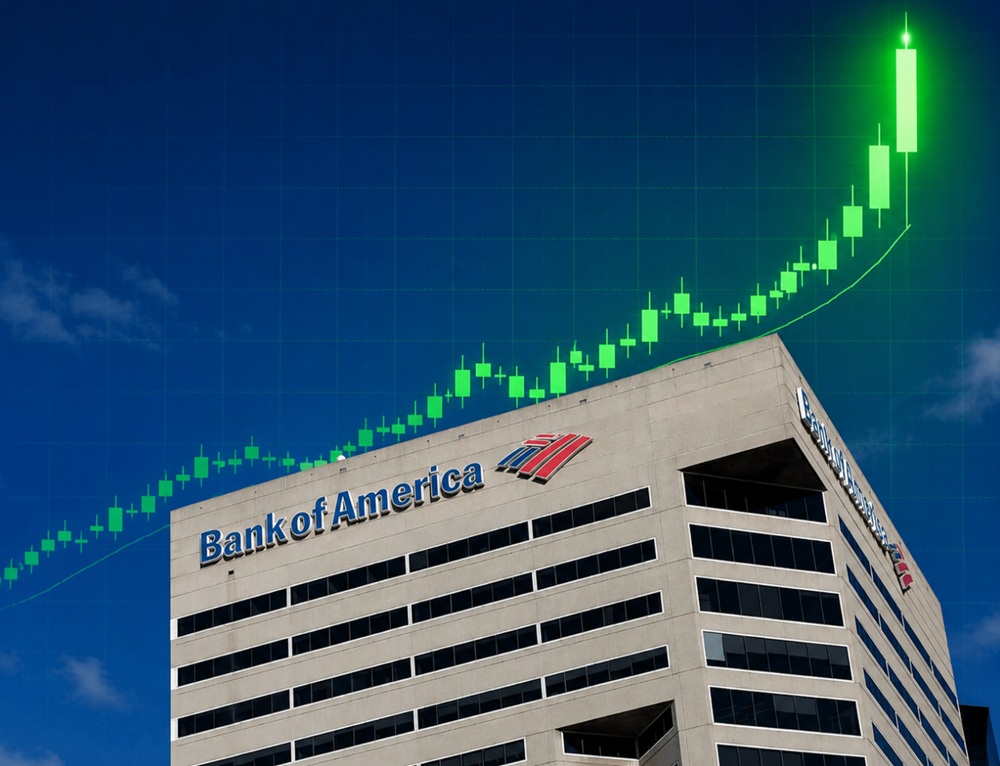
Wall Street hasn't seen a move quite like this in months. When the tape ran for the second quarter of 2026, shares of Bank of America Corp (BAC) didn't just beat earnings expectations—they blew past them, sending the ticker to a record intraday high of $61.21. For investors who have been waiting for the financial sector to find its footing, this wasn't just a win; it was a clear signal that the market's heavyweights are firing on all cylinders.
The math behind the rally was hard to ignore. The bank reported a net income of $9.1 billion, a 27% jump from the same quarter last year, with diluted earnings per share coming in at $1.21. That crushed the $1.12 estimate that analysts had been modeling. Since the results dropped, capital has been rotating back into Bank of America stock as traders bet that the bank’s recent momentum is no fluke.
What happened under the hood to justify such a massive move in Bank of America stock? It wasn't just one thing. It was a perfect storm of business units that have been dormant for a while suddenly waking up.
Market watchers are pointing to three key areas that did the heavy lifting this quarter:
The Investment Banking Resurgence: After a long, quiet period, the deal-making world is back. Fee revenue in investment banking surged 50% year-over-year. As corporate clients stopped waiting for a perfect rate environment and started executing on M&A and debt issuance, BofA was the primary beneficiary.
Volatile Markets Boosted Trading: Global macro instability is usually a headache, but for BofA’s massive sales and trading desks, it’s a goldmine. Institutional clients needed to adjust their positions constantly, driving a 33% revenue bump for the trading division.
Net Interest Income (NII) Stability: Despite the hyper-competitive environment for deposits, NII ticked up 9% to $16.2 billion. The bank has successfully balanced loan growth—nine straight quarters of it—against the cost of keeping customer deposits, a feat many smaller lenders haven't been able to pull off.
While revenues soared, the bank also kept a tight lid on the overhead. That’s a refreshing change from the typical "growth at any cost" narrative we see in other sectors.
When a ticker breaks out like Bank of America stock did this week, the inevitable question is: is the valuation getting stretched?
Looking at the balance sheet suggests the premium might be earned. Average deposits actually grew to $2.02 trillion—a sign that the bank’s digital platform is effectively fighting off the churn to online high-yield accounts. More importantly, the bank lowered its provision for credit losses to $1.4 billion.
In simple words, the bank doesn't think their borrowers are about to default.
Management also leaned into the shareholder-first mentality. With a CET1 capital ratio of 11.2%, they have more than enough cushion to play with. They returned $8.0 billion to shareholders this quarter between dividends and a $6.0 billion buyback program. When a company is aggressively shrinking its share count while its earnings are hitting record highs, it’s rarely a bad sign for the stock price.
For active participants, high-impact earnings reports like these serve as prime trading catalysts. Traders wanting exposure to Bank of America around earnings can access BAC.N as individual stock CFDs through EBC's stock CFD platform. For a broader sector view, the Financial Select SPDR ETF (XLF.P) is also available on EBC's ETF instruments page. Both are leveraged products with elevated volatility risk during major macro events.
The analyst community wasted no time ripping up their old price targets. The "sell-side" desks that were cautious just a month ago are now scrambling to adjust to the new reality.
They are particularly fixated on the bank’s Return on Average Tangible Common Equity (ROTCE), which jumped to 17.0%. When you see a bank of this size operating with that level of efficiency, the current price-to-earnings ratio of 15.1 starts to look less like a premium and more like a value play. As institutional money chases that kind of profitability, Bank of America stock is seeing the kind of buy-volume that usually precedes a sustained multi-quarter trend.
Is this a straight line to the moon? Probably not. The banking sector is cyclical, and the headwinds haven't disappeared.
Non-interest expenses crept up 8% this quarter, largely due to the massive investments the bank is pouring into cybersecurity and AI-driven banking. If that investment banking frenzy cools off—and it could, given the fickle nature of corporate deal-making—those expenses could start to weigh on the bottom line.
There is also the ongoing "deposit war." While BofA is winning, they are still paying up to keep those balances. If the Federal Reserve shifts its policy stance unexpectedly, that cost-of-funds dynamic could get a lot messier, and quickly.
At the end of the day, Bank of America stock is telling a story of resilience. The market has been waiting for a reason to buy, and this earnings report provided the catalyst.
Between the resurgence of corporate deal-making, the strength of the consumer, and a balance sheet that remains arguably the sturdiest in the country, the case for the stock is compelling. The rally might face some turbulence in the coming weeks as profit-takers step in, but the fundamentals are as strong as they’ve been in years. For now, the bulls are firmly in charge, and they have the data to back it up.
Ultimately, this latest run for Bank of America stock is more than just a headline; it's a statement that one of the country's oldest financial institutions is still very much the one to beat.